Dvapara Yuga
Learn about Dvapara Yuga, the Bronze Age of Hinduism. द्वापर युग की 8,64,000 वर्ष की आयु, भगवान श्री कृष्ण अवतार, महाभारत और मंदिर पूजा के बारे में जानें।
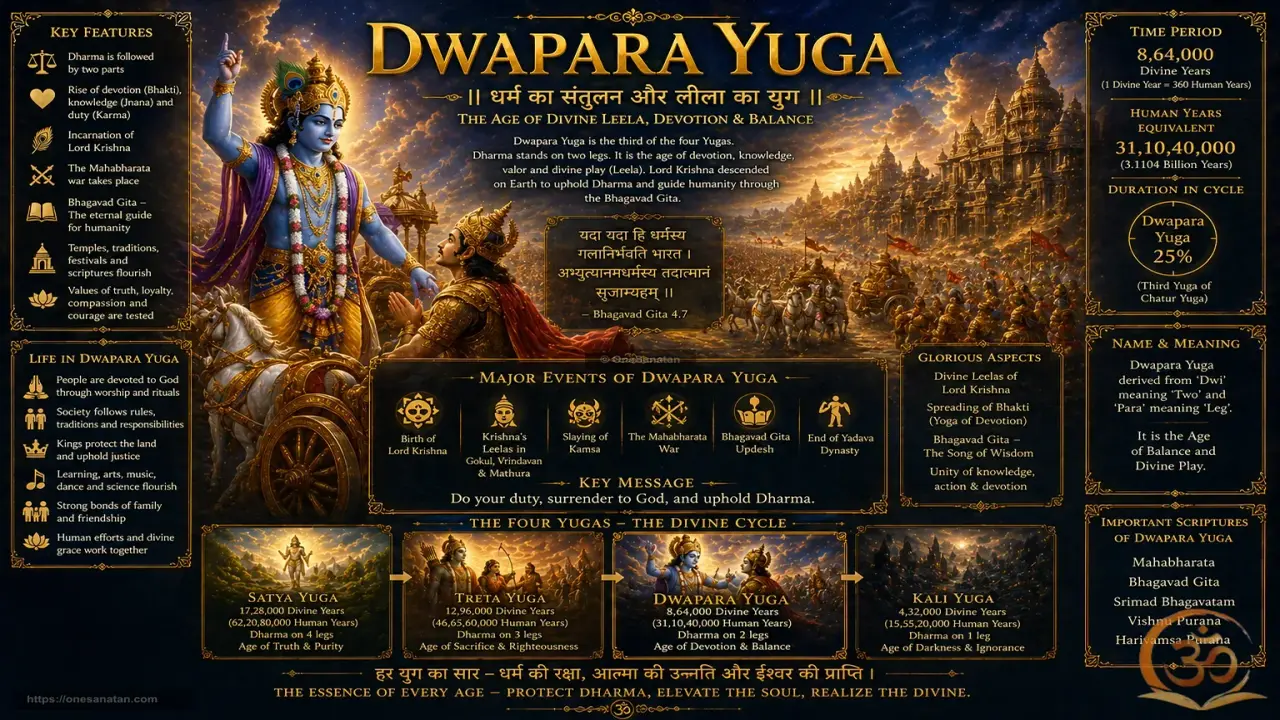
The Bronze Age Overview
द्वापर युग हिंदू काल गणना का तीसरा युग है। 'कांस्य युग' (Bronze Age) के रूप में जाना जाने वाला यह युग 8,64,000 मानव वर्षों तक चलता है। 'द्वापर' का अर्थ है 'दो', जो यह दर्शाता है कि धर्म अब केवल दो स्तंभों पर टिका है। इस युग में पिछले युगों की स्वाभाविक पवित्रता में काफी गिरावट आती है। लोग अधिक भौतिकवादी और प्रतिस्पर्धी हो जाते हैं, और बीमारियों का प्रकोप बढ़ने लगता है। यह महान महाकाव्य महाभारत का युग है, जिसका चरमोत्कर्ष कुरुक्षेत्र युद्ध और भगवान श्री कृष्ण द्वारा दिए गए भगवद्गीता के उपदेश में होता है।
Dvapara Yuga is the third of the four Yugas in Hindu cosmology. Often translated as the 'Bronze Age,' it spans 864,000 human years. The word 'Dvapara' means 'two,' indicating that Dharma (righteousness) now balances precariously on only two pillars: compassion and truthfulness (or purity, depending on the text). In this age, the natural piety of the previous eras declines significantly. People become increasingly materialistic, competitive, and prone to diseases and desires. It is the defining era of the great epic, the Mahabharata, culminating in the Kurukshetra war and the delivery of the Bhagavad Gita by Lord Krishna.
Core Characteristics
मूल रूप से एक वेद को महर्षि वेदव्यास द्वारा चार भागों (ऋग्वेद, सामवेद, यजुर्वेद, अथर्ववेद) में विभाजित किया जाता है ताकि घटती बुद्धि वाले लोग इसे आसानी से समझ सकें।
The Vedas, originally one, are systematically divided into four (Rig, Sama, Yajur, Atharva) by Sage Vedavyasa to make them easier for people with diminishing intellects to understand.
विशाल यज्ञों और गहरे ध्यान की क्षमता कम हो जाने के कारण, मुख्य आध्यात्मिक मार्ग 'अर्चन' (मंदिरों का निर्माण और मूर्ति पूजा) बन जाता है।
Since the capacity for massive Yajnas (fire sacrifices) and deep meditation decreases, the primary spiritual path becomes Archana—the building of temples and formal worship of deities.
भगवान विष्णु श्री कृष्ण और बलराम के रूप में अवतार लेते हैं ताकि अत्याचारी शासकों का नाश किया जा सके और भगवद्गीता के माध्यम से मानवता का मार्गदर्शन किया जा सके।
Lord Vishnu incarnates as Lord Krishna (and Balarama) to rid the earth of tyrannical rulers and guide humanity through the profound spiritual teachings of the Bhagavad Gita.
समाज में तीव्र राजनीतिक संघर्ष, छल और युद्ध होते हैं, जिसका सबसे बड़ा उदाहरण पांडवों और कौरवों के बीच का कुरुक्षेत्र युद्ध है।
Society experiences intense political conflicts, deceit, and warfare, perfectly illustrated by the feud between the Pandavas and Kauravas.
भगवान श्री कृष्ण के पृथ्वी लोक से विदा होने के साथ ही द्वापर युग का अंत होता है और अंधकारमय कलियुग की शुरुआत होती है।
The end of Dvapara Yuga is marked by the departure of Lord Krishna from the earthly realm, immediately triggering the onset of the dark Kali Yuga.
Spiritual Teachings
Timeless wisdom and moral foundations from this cosmic era.
जब पारिवारिक मोह और लालच धर्म पर हावी हो जाते हैं (जैसे धृतराष्ट्र और दुर्योधन में), तो विनाश निश्चित है।
When familial attachment and greed overshadow Dharma (as seen in Dhritarashtra and Duryodhana), utter destruction is inevitable.
सामाजिक स्थिति की परवाह किए बिना, भगवान भक्ति और पूजा (अर्चन) के माध्यम से सुलभ हैं।
God is highly accessible through devotion (Bhakti) and formal worship (Archana), regardless of one's social standing.
भगवद्गीता सिखाती है कि व्यक्ति को फल की आसक्ति के बिना अपना सही कर्तव्य (कर्म योग) करना चाहिए।
The Bhagavad Gita teaches that one must perform their righteous duty (Karma Yoga) without attachment to the results.
गंभीर नैतिक दुविधा के समय में भी धर्म का साथ देने से दैवीय सुरक्षा सुनिश्चित होती है, ठीक वैसे ही जैसे कृष्ण ने पांडवों की रक्षा की थी।
Even in times of severe moral ambiguity, siding with righteousness (Dharma) ensures divine protection, just as Krishna protected the Pandavas.
Frequently Asked Questions
Cultural Significance
द्वापर युग आधुनिक हिंदू धर्म के लिए दार्शनिक आधार प्रदान करता है। इस युग में बोली गई भगवद्गीता आज भी दुनिया भर में लाखों लोगों के लिए सर्वोच्च आध्यात्मिक मार्गदर्शक है। इसके अलावा, वैदिक अग्नि अनुष्ठानों (यज्ञों) से पौराणिक मंदिर पूजा (अर्चन) में परिवर्तन, जो आज हिंदू धर्म का मुख्य अभ्यास है, द्वापर युग में ही उत्पन्न हुआ था।
Vedic Heritage: Dvapara Yuga provides the philosophical foundation for modern Hinduism. The Bhagavad Gita, spoken in this era, remains the ultimate spiritual guide for millions worldwide. Furthermore, the transition from Vedic fire rituals (Yajnas) to Puranic temple worship (Archana), which is the standard mode of Hindu practice today, originated in the Dvapara Yuga.
Disclaimer
Data provided (Tithi, Muhurta, Panchang details, etc.) is based on traditional Hindu calculations and is intended for cultural and educational purposes only and not a substitute for professional advice. For important rituals, ceremonies, or personal decisions, please consult a qualified Vedic astrologer or local priest.
Explore More Panchang Modules
Explore the Timeline