Sacred Mahapurana
Position #5

Bhagavata Purana

Explore the Bhagavata Purana (Srimad Bhagavatam) — 18,000 verses across 12 Skandhas. Discover Krishna's life in the 10th Skandha, Gajendra Moksha, Prahlada's devotion, and the path of bhakti yoga.

Primary Deity

Krishna (Vishnu)

Approx. Verses

18,000

Main Author

Maharishi Vedavyasa

Category

Mahapurana
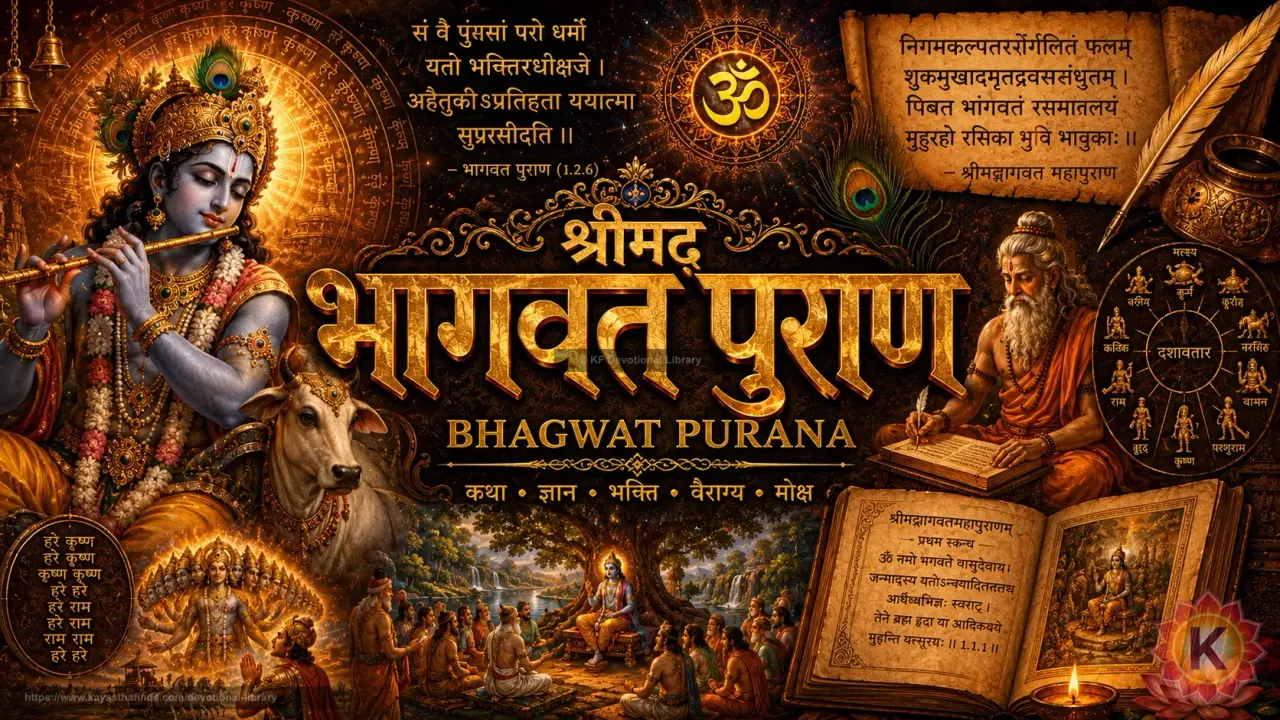
Bhagavata Purana

Join Our Devotional Community

Daily prayers, spiritual insights & divine blessings

Historical Essence

श्रीमद्भागवत पुराण को सभी पुराणों का मुकुटमणि माना जाता है। १२ स्कंधों और १८,००० संस्कृत श्लोकों में रचा यह पावन ग्रंथ शुकदेव जी द्वारा राजा परीक्षित को गंगा तट पर ७ दिनों में सुनाया गया था। यह पूर्णतः भगवान श्रीकृष्ण (स्वयं भगवान) को समर्पित है और भक्ति मार्ग को कर्म, ज्ञान और योग से भी ऊपर सर्वश्रेष्ठ मार्ग बताता है। इसका दशम स्कंध, जिसमें श्रीकृष्ण की लीलाएं हैं, विश्वभर में सबसे अधिक पढ़ा जाने वाला धार्मिक वृत्तांत है।

The Bhagavata Purana, revered as the Srimad Bhagavatam, stands as the crown jewel of all Puranic literature. Comprising 18,000 Sanskrit verses across twelve Skandhas (books) and 335 chapters, it was narrated by the sage Shuka to the dying king Parikshit over seven days on the banks of the Ganga. Centered on Lord Krishna as the supreme cosmic reality (Svayam Bhagavan), the Bhagavatam presents bhakti (devotional love) as the highest spiritual path — superior to karma, jnana, and yoga — and its tenth Skandha (containing Krishna's complete life story) remains the most beloved and widely read religious text in India.

Sacred Records

Cosmic Chronicles

  • Event {String(idx + 1).padStart(2, '0')}

    प्रथम स्कंध: कथानक — राजा परीक्षित को तक्षक सर्प का श्राप और शुकदेव जी से ७ दिनों तक भागवत श्रवण का संकल्प

    Skandha 1: The frame narrative — King Parikshit bitten by a cursed serpent chooses to spend his last seven days listening to Vishnu's glories as narrated by Sage Shuka


  • Event {String(idx + 1).padStart(2, '0')}

    द्वितीय स्कंध: ब्रह्मांडीय दर्शन — विराट पुरुष का वर्णन और योग मार्ग की व्याख्या

    Skandha 2: Cosmic cosmology — creation of the universe, description of Vishnu's universal form (Virata Purusha) and the path of Yoga


  • Event {String(idx + 1).padStart(2, '0')}

    तृतीय स्कंध: कपिल देव का सांख्य दर्शन — भगवान कपिल द्वारा अपनी माता देवहूति को सृष्टि और प्रकृति-पुरुष का ज्ञान

    Skandha 3: Kapila's Samkhya — the sage Kapila explains the Sankhya philosophy of creation, nature (prakriti), and the soul (purusha) to his mother Devahuti


  • Event {String(idx + 1).padStart(2, '0')}

    चतुर्थ स्कंध: भक्त ध्रुव की कथा और राजा पृथु का आदर्श शासन

    Skandha 4: Story of Dhruva (the boy who attained the pole star through meditation), King Prithu who milked the Earth, and Daksha's yajna


  • Event {String(idx + 1).padStart(2, '0')}

    पंचम स्कंध: खगोल और भूगोल — सात द्वीप, सात समुद्र, सुमेरु पर्वत और भरत मृग की कथा

    Skandha 5: Cosmic geography of the universe — seven continents, seven oceans, Mount Sumeru, the planetary systems, and the famous story of Bharata and a deer


  • Event {String(idx + 1).padStart(2, '0')}

    अष्टम स्कंध: गजेंद्र मोक्ष — संकट के समय हाथी राजा की पुकार और भगवान विष्णु द्वारा उनकी रक्षा

    Skandha 8: Gajendra Moksha — the elephant king's desperate prayer to Vishnu, showing that sincere surrender in any moment of crisis brings immediate divine response


  • Event {String(idx + 1).padStart(2, '0')}

    दशम स्कंध: कृष्ण चरित्र — सबसे महत्वपूर्ण भाग: कृष्ण का जन्म, बाल लीलाएं, रासलीला और कंस वध

    Skandha 10: Krishna Charitra — the most beloved book: Krishna's birth in Mathura prison, childhood in Vrindavan, Rasa Lila with Gopis, killing of demons, marriage to Rukmini, and life in Dvaraka


  • Event {String(idx + 1).padStart(2, '0')}

    द्वादश स्कंध: कलियुग वर्णन — धर्म के पतन की भविष्यवाणी और कल्कि अवतार का संदेश

    Skandha 12: The Kali Yuga prophecy — detailed description of the degeneration of dharma in the current age and Vishnu's future Kalki avatar

Dharmic Teachings

Eternal wisdom preserved through millennia.

भक्ति मार्ग सर्वश्रेष्ठ है — यह कर्म, ज्ञान और योग से भी अधिक सुगम और सीधा मार्ग है

Bhakti (pure devotional love) is the highest path to liberation — more direct and accessible than the paths of karma (rituals), jnana (knowledge), or ashtanga yoga

Verse 01

कोई भी जीव, चाहे उसका जन्म कहीं भी हुआ हो, पूर्ण शरणागति (गजेंद्र मोक्ष की तरह) से ईश्वर को प्राप्त कर सकता है

Any living being — regardless of birth, caste, or past sins — can attain liberation through sincere surrender (sharanagati) to the divine at any moment, as shown by Gajendra

Verse 02

भगवान श्रीकृष्ण विश्व के मूल स्त्रोत हैं, जिनसे अन्य सभी अवतार प्रकट होते हैं

Krishna is not merely a historical figure or an avatar of Vishnu — the Bhagavatam establishes him as Svayam Bhagavan, the original Supreme Being from whom all other Vishnu forms emanate

Verse 03

यह संपूर्ण ब्रह्मांड विष्णु की ही चेतना से ओत-प्रोत है, हर प्रेम और सुंदरता में उन्हीं का अंश है

The universe is pervaded by Vishnu's consciousness — every act of beauty, every act of love, and every moment of stillness is a manifestation of the divine

Verse 04

मानव जीवन का परम लक्ष्य (पुरुषार्थ) केवल सुख या कर्तव्य नहीं, बल्कि प्रभु के प्रति निस्वार्थ प्रेम विकसित करना है

The purpose of human life (Purushartha) is not mere pleasure or even duty, but the cultivation of love for the divine that ultimately dissolves the separate ego into cosmic consciousness

Verse 05

Frequently Asked Questions

भागवत पुराण की मुख्य पृष्ठभूमि (कथानक) क्या है? | What is the frame narrative of the Bhagavata Purana?
राजा परीक्षित को सर्पदंश से मृत्यु का श्राप मिला था। उन्होंने अपने अंतिम ७ दिन गंगा किनारे शुकदेव जी से भागवत कथा सुनने में बिताए और अंततः मोक्ष प्राप्त किया।
The Bhagavata Purana opens with King Parikshit — grandson of the Pandavas — being cursed to die from a snakebite within seven days. Rather than lamenting, he seeks out the sage Shuka (son of Vedavyasa) and asks which practice is most beneficial for a person facing death. Shuka narrates the entire Bhagavatam over those seven days, and at the end of the telling, Parikshit attains liberation as predicted.
गजेंद्र मोक्ष की कथा क्या सिखाती है? | What is the Gajendra Moksha story in Bhagavata Purana?
क्रोधित मगरमच्छ से हारने के बाद जब गजराज ने भगवान विष्णु को पुकारा, तो प्रभु तुरंत गरुड़ पर सवार होकर आए और उनकी रक्षा की। यह सिखाता है कि पूर्ण शरणागति से ईश्वर तुरंत कृपा करते हैं।
Gajendra, the king of elephants, was seized by a powerful crocodile in a lake (symbolizing the material world). After a thousand-year struggle, when the elephant's strength finally failed, he raised a lotus flower with his trunk and cried out to Vishnu in complete surrender. Vishnu immediately descended on his Garuda vehicle and freed Gajendra, granting him liberation. This story teaches that sincere, unconditional surrender to the divine brings immediate divine intervention regardless of past karma.
भागवत के १०वें स्कंध में क्या है? | What does the 10th Skandha of Bhagavata Purana contain?
यह भागवत का हृदय है। इसमें श्रीकृष्ण के जन्म से लेकर उनकी बाल लीलाओं, रासलीला, मथुरा गमन, कंस वध और द्वारका लीला का संपूर्ण वर्णन है।
The 10th Skandha (Book 10) is the largest and most revered section, containing the complete life story of Lord Krishna — from his birth in the prison of Kamsa in Mathura, his childhood in Vrindavan with the Gopis (Rasa Lila), his killing of Kamsa, his life in Dvaraka with his wives including Rukmini and Satyabhama, his role in the Mahabharata war, and finally his departure from the world. This Skandha has inspired countless works of devotional poetry, music, dance, and art.
भागवत के अनुसार भक्ति योग क्या है? | How does Bhagavata Purana define bhakti yoga?
भागवत 'नवधा भक्ति' का वर्णन करता है: श्रवण, कीर्तन, स्मरण, पाद-सेवन, अर्चन, वंदन, दास्य, सख्य और आत्म-निवेदन। प्रहलाद इस भक्ति के सर्वोत्तम उदाहरण हैं।
The Bhagavata Purana defines bhakti yoga as pure, unconditional devotional love for God — free from desire for material rewards, fear of heaven or hell, or pride in one's own spiritual status. The text identifies nava-vidha bhakti (nine forms of devotion): hearing (shravana), chanting (kirtana), remembering (smarana), serving (padasevana), worshipping (archana), praying (vandana), servanthood (dasya), friendship (sakhya), and complete self-surrender (atma-nivedana). The sage Prahlada exemplifies all nine.

Living Cultural Legacy

भगवद गीता के बाद श्रीमद्भागवत हिंदू धर्म का सबसे प्रभावशाली ग्रंथ है। मध्यकालीन भक्ति आंदोलन के संतों (मीराबाई, तुकाराम, चैतन्य महाप्रभु) की प्रेरणा का मुख्य स्रोत भागवत ही रहा है। २०वीं सदी में इस्कॉन के माध्यम से यह ग्रंथ विश्वव्यापी बन गया। आज भी भारत के हर कोने में होने वाली 'भागवत सप्ताह' की कथा जन-जन की आस्था का केंद्र बनी हुई है।

Vedic Heritage: The Bhagavata Purana is arguably the most intellectually and spiritually influential text in Hindu civilization after the Bhagavad Gita. The Bhakti movement of the 12th-17th centuries — including saints like Mirabai, Tukaram, Surdas, and Chaitanya Mahaprabhu — drew their primary inspiration from its tenth Skandha's portrayal of Krishna's love for the Gopis. In the 20th century, Srila Prabhupada's translations of the Srimad Bhagavatam made it a global scripture through ISKCON, reaching millions across 120 countries. The annual Bhagavata Saptaha (7-day recitation) is still performed in temples and households across India, Nepal, and the Hindu diaspora worldwide.

Divine Lineage
Krishna (Vishnu)
Sacred Volume
18,000 Shlokas

Continue Reading

Divine Library