Sacred Mahapurana
Position #10

Brahmavaivarta Purana

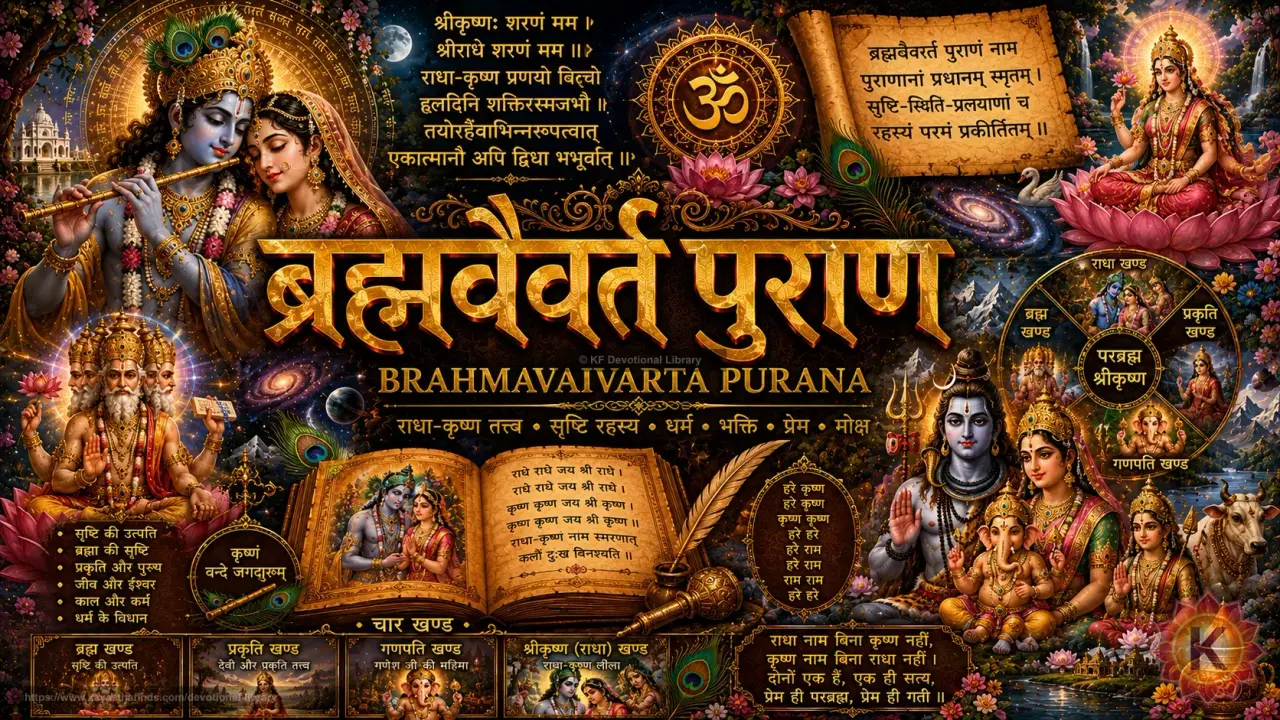
Explore the Brahmavaivarta Purana — 18,000 verses on Radha-Krishna philosophy, creation from Krishna as Parabrahman, the 4 Khandas including Krishna Janma Khanda, and the theology of divine love.
Primary Deity

Krishna

Approx. Verses

18,000

Main Author

Maharishi Vedavyasa

Category

Mahapurana

Brahmavaivarta Purana

Join Our Devotional Community

Daily prayers, spiritual insights & divine blessings

Historical Essence

ब्रह्मवैवर्त पुराण का अर्थ है - 'वह पुराण जो ब्रह्म के विवर्त यानी दिव्य लीलाओं के माध्यम से रूपांतरण करता है'। यह १८,००० श्लोकों वाला एक अत्यंत भक्तिपूर्ण ग्रंथ है। यहाँ भगवान कृष्ण केवल विष्णु के अवतार नहीं, बल्कि 'स्वयं परब्रह्म' हैं, जिनसे ब्रह्मा, विष्णु और महेश की उत्पत्ति हुई है। यह पुराण राधा को परम शक्ति और कृष्ण को परम पुरुष के रूप में प्रतिष्ठित करता है, जो दिव्य प्रेम के रहस्यमयी संबंधों की व्याख्या है।

The Brahmavaivarta Purana — meaning 'the Purana that transforms through Brahman's divine play' — is a deeply devotional Mahapurana comprising approximately 18,000 Sanskrit verses across four Khandas (books): Brahma Khanda, Prakriti Khanda, Ganapati Khanda, and Krishna Janma Khanda. It presents Lord Krishna not merely as an avatar of Vishnu but as Svayam Parabrahman — the ultimate, self-luminous reality from whom all creation — including Vishnu, Brahma, and Shiva — emanates. The text's theology of Radha as the supreme Shakti and Krishna as the supreme Purusha establishes one of Hinduism's most intimate and mystically profound frameworks of divine relationship.

Sacred Records

Cosmic Chronicles

  • Event {String(idx + 1).padStart(2, '0')}

    ब्रह्म खंड: कृष्ण से ब्रह्मांड की उत्पत्ति। ब्रह्मा, विष्णु और शिव को कृष्ण की इच्छा के विभिन्न रूपों के रूप में दर्शाया गया है।

    Brahma Khanda: Creation of the universe from Krishna — how Brahma, Vishnu, and Shiva emerge as aspects of Krishna's cosmic will rather than independent entities


  • Event {String(idx + 1).padStart(2, '0')}

    प्रकृति खंड: देवी के पांच रूपों (दुर्गा, लक्ष्मी, सरस्वती, सावित्री और राधा) का वर्णन, जो कृष्ण की मूल प्रकृति यानी ऊर्जा हैं।

    Prakriti Khanda: The five forms of the Divine Mother (Prakriti) — Durga, Lakshmi, Saraswati, Savitri, and Radha — as aspects of Krishna's primal energy; their stories and roles in sustaining creation


  • Event {String(idx + 1).padStart(2, '0')}

    गणपति खंड: भगवान गणेश का जन्म, उनके हाथी के मुख की कथा और कृष्ण के साथ उनका दिव्य संबंध।

    Ganapati Khanda: Complete mythology of Ganesha including his birth, the elephant head story, his role as remover of obstacles, and his relationship to Krishna


  • Event {String(idx + 1).padStart(2, '0')}

    कृष्ण जन्म खंड: सबसे बड़ा भाग, जिसमें कृष्ण के जन्म, वृंदावन की लीलाएं (रास लीला), द्वारका की कथाएं और 'प्रेम भक्ति' का दर्शन है।

    Krishna Janma Khanda: The most extensive and central section — covering Krishna's birth, the complete stories of his Vrindavan pastimes (Rasa Lila), his relationships with the 16,108 wives in Dvaraka, and his cosmic philosophy of divine love (Prema Bhakti)


  • Event {String(idx + 1).padStart(2, '0')}

    गोलोक वृंदावन: इस दिव्य धाम का वर्णन जो भौतिक संसार से परे है और जिसे केवल निस्वार्थ प्रेम से ही प्राप्त किया जा सकता है।

    The theology of Vrindavan as the eternal transcendental realm (Goloka Vrindavan) that exists beyond the material cosmos — accessible through pure love


  • Event {String(idx + 1).padStart(2, '0')}

    राधा महिमा: राधा को 'मूल प्रकृति' और कृष्ण की आह्लादिनी शक्ति के रूप में स्थापित करना, जिनका प्रेम ही अध्यात्म का सर्वोच्च शिखर है।

    Stories establishing Radha as the primal Shakti — the feminine face of the absolute — whose love for Krishna is the highest spiritual attainment


  • Event {String(idx + 1).padStart(2, '0')}

    पुनर्जन्म की कथाएं: देवताओं का पृथ्वी पर मनुष्य रूप में जन्म लेना ताकि वे अपने अधूरे संकल्पों को पूरा कर सकें।

    Unique narratives of gods being reborn as humans on earth to complete unfulfilled desires, illustrating the complexity of karma and divine grace

Dharmic Teachings

Eternal wisdom preserved through millennia.

कृष्ण ही पूर्ण सत्य हैं: वे स्वयं परब्रह्म हैं। यह पूरा ब्रह्मांड उनकी 'प्रेम लीला' का ही विस्तार है जो अंत में उन्हीं में समा जाता है।

Krishna is Svayam Parabrahman — the self-existing, self-luminous, uncaused divine source from whom the entire manifest universe emerges as a play of love (Lila) and from whom it eventually returns

Verse 01

राधा भाव: राधा निस्वार्थ प्रेम का प्रतीक हैं। उनका प्रेम जीव और परमात्मा के बीच के आदर्श संबंध का मार्गदर्शन करता है।

Radha represents the highest form of devotional consciousness (Para Bhakti) — her love for Krishna is selfless, total, and without any desire for reward; this models the ideal relationship between the soul and the divine

Verse 02

दिव्य नारीत्व: 'प्रकृति' के सभी रूप (शक्ति, विद्या, लक्ष्मी) कृष्ण की उस सक्रिय ऊर्जा का प्रकटीकरण हैं जो संसार को चलाती है।

The Divine Feminine (Prakriti) in all her forms — from cosmic nature to motherly love to creative intelligence — is the active expression of Krishna's passive absolute consciousness

Verse 03

प्रेम ही भक्ति है: निस्वार्थ प्रेम मोक्ष से भी बड़ा है। मुक्त आत्मा भी ईश्वर के प्रेम में मग्न रहना चाहती है।

Prema Bhakti (pure love) transcends even liberation (moksha) — the soul that loves God freely chooses to remain in relationship with the divine rather than merge into formless infinity

Verse 04

लीला का आनंद: यह संसार कृष्ण की दिव्य क्रीड़ा है। जीवन की हर परिस्थिति को आनंद और कृतज्ञता के साथ स्वीकार करना ही साधना है।

Our world, including all its beauty and complexity, is Krishna's Lila (divine playful creation) — responding to life with joy, love, and wonder is itself a form of spiritual practice

Verse 05

Frequently Asked Questions

ब्रह्मवैवर्त पुराण के चार खंड कौन से हैं? | What are the four Khandas of the Brahmavaivarta Purana?
१. ब्रह्म खंड (विराट पुरुष की उत्पत्ति), २. प्रकृति खंड (देवी के रूप), ३. गणपति खंड (गणेश जन्म), और ४. कृष्ण जन्म खंड (सबसे विस्तृत भाग)।
The Brahmavaivarta Purana is divided into four Khandas: (1) Brahma Khanda — describes creation of the universe from Krishna as Parabrahman; (2) Prakriti Khanda — narrates the five forms of the Divine Mother and their cosmic roles; (3) Ganapati Khanda — complete mythology of Lord Ganesha; and (4) Krishna Janma Khanda — the largest section, covering Krishna's birth, Vrindavan pastimes, Rasa Lila, and the theology of divine love.
ब्रह्मवैवर्त पुराण में राधा रानी का क्या स्वरूप बताया गया है? | How is Radha described in the Brahmavaivarta Purana?
राधा को साक्षात 'मूल प्रकृति' कहा गया है। वे कृष्ण से अलग नहीं, बल्कि उनकी अपनी शक्ति हैं। उनके बिना कृष्ण सृष्टि की रचना नहीं कर सकते।
The Brahmavaivarta Purana describes Radha as the supreme Shakti — the primordial divine feminine who is inseparable from Krishna as his own cosmic energy. She is not merely a devoted Gopi but the very soul from whom the universe's feminine principle derives. Her love for Krishna — described in the Rasa Lila passages of the Krishna Janma Khanda — is the standard of pure, selfless, divine love (Prema Bhakti) that all souls aspire toward. The text states: 'Without Radha, Krishna alone cannot create; without Krishna, Radha alone cannot sustain.'
रास लीला का आध्यात्मिक अर्थ क्या है? | What is the Rasa Lila described in the Brahmavaivarta Purana?
यह केवल एक नृत्य नहीं, बल्कि जीवात्मा और परमात्मा का मिलन है। कृष्ण का प्रत्येक गोपी के साथ नृत्य करना दर्शाता है कि ईश्वर हर भक्त के लिए व्यक्तिगत रूप से उपलब्ध हैं।
The Rasa Lila is the mystical circular dance-meditation of Krishna with the Gopis (cowherd women) of Vrindavan on an autumn full moon night. The Brahmavaivarta Purana describes this as a cosmic event — not an earthly romance but a spiritual gathering in which each Gopi represents a soul in the highest state of love-consciousness, and Krishna multiplies himself to dance simultaneously with each one. The Rasa Lila is the symbol of the divine-human relationship at its most intimate — where the individual soul loses itself completely in the joy of the divine.
कृष्ण के वर्णन में यह पुराण 'श्रीमद्भागवत' से कैसे अलग है? | How does the Brahmavaivarta Purana differ from the Bhagavata Purana in describing Krishna?
भागवत कृष्ण को 'विष्णु अवतार' मानकर भक्ति पर बल देता है, जबकि ब्रह्मवैवर्त उन्हें 'सर्वोच्च सत्ता' (परब्रह्म) मानता है जिनसे विष्णु भी उत्पन्न हुए। यहाँ राधा का स्थान बहुत व्यापक है।
While both texts exalt Krishna, they approach his nature differently. The Bhagavata Purana presents Krishna as an avatar of Vishnu (though the supreme among avatars) and emphasizes bhakti as the means to reach him through loving service. The Brahmavaivarta Purana goes further by establishing Krishna as Svayam Parabrahman — the original source from whom even Vishnu and all other gods emerge — making it more radical in its Krishnacentrism. The Brahmavaivarta also elaborates Radha's theology far more extensively, giving her a cosmic cosmic status not found in the Bhagavata.

Living Cultural Legacy

यह पुराण उत्तर भारत और बंगाल की राधा-कृष्ण भक्ति परंपरा का मुख्य स्तंभ है। चैतन्य महाप्रभु और इस्कॉन (ISKCON) की विचारधारा का आधार यही ग्रंथ है। इसमें वर्णित गोलोक वृंदावन की महिमा ने ही मथुरा-वृंदावन को विश्व प्रसिद्ध तीर्थ बनाया।

Vedic Heritage: The Brahmavaivarta Purana has deeply shaped Radha-Krishna devotional traditions across North India and Bengal. The Gaudiya Vaishnava tradition founded by Chaitanya Mahaprabhu (16th century) draws heavily from its mystical theology of Radha-Krishna Prema — a tradition carried forward by ISKCON globally. The text's elaborate descriptions of Goloka Vrindavan inspired the Vrindavan pilgrimage culture that continues to draw millions to Mathura-Vrindavan annually. The Prakriti Khanda's narratives of the five forms of Devi created a theological bridge between Vaishnavism and Shaktism, enabling the integrated Hindu tradition of worshipping both Krishna and the Mother Goddess. The Ganapati Khanda remains an important reference for Ganesha devotion and iconography in Maharashtra.

Divine Lineage
Krishna
Sacred Volume
18,000 Shlokas

Continue Reading

Divine Library