Hinduism Explained - हिंदू धर्म की सम्पूर्ण जानकारी: विश्वास, रीति-रिवाज, दर्शन और त्योहार
Your complete guide to Hinduism — explore karma, dharma, moksha, sacred symbols, festivals, deities, and scriptures. Written for global readers, NRIs & spiritual seekers.
Hinduism: The World's Oldest Living Tradition
Hinduism, formally known as Sanatan Dharma (Sanskrit: सनातन धर्म — "the eternal way of being"), is the world's oldest practised religion, with origins tracing back more than 5,000 years to the Vedic civilisation of the Indian subcontinent. Unlike most world religions, Sanatan Dharma has no single founder, no single scripture, and no single unified theology — it is, by its very nature, a vast, living, pluralistic tradition that encompasses an extraordinary diversity of philosophies, deities, rituals, and ways of life.
सनातन धर्म विश्व का प्राचीनतम जीवंत धर्म है। यह केवल एक पूजा पद्धति नहीं, बल्कि एक सम्पूर्ण जीवन-दर्शन है — जो धर्म, अर्थ, काम और मोक्ष के चार पुरुषार्थों पर आधारित है। वेद, उपनिषद, पुराण और भगवद्गीता इसके मूल ग्रंथ हैं।
At its philosophical core, Hinduism is guided by the concepts of Dharma (righteous duty), Karma (the law of cause and effect), Moksha (liberation from the cycle of birth and death), and Ahimsa (non-violence and compassion toward all living beings). These principles are not merely religious doctrines but practical ethical frameworks that have shaped societies, legal systems, arts, sciences, and daily life across millennia.
The canonical literature of Sanatan Dharma divides into two profound streams: Śruti ("that which is directly revealed"), comprising the four Vedas and 108 classical Upanishads exploring the non-dual identity of the individual soul (Ātman) with the ultimate reality (Brahman); and Smṛti ("that which is remembered"), encompassing the Itihāsas (the Valmiki Ramayana and Mahabharata, including the Bhagavad Gita) and the 18 Mahāpurāṇas that translate cosmic truths into living cultural wisdom.
Unlike rigid dogma, Sanatan Dharma harmonizes the three classical spiritual paths (Tri-Mārga): Karma Yoga (action performed without selfish attachment), Bhakti Yoga (loving surrender to the personal Divine), and Jñāna Yoga (contemplative discernment of timeless truth). Through the six classical philosophical systems (Ṣaḍ-Darśanas — Nyāya, Vaiśeṣika, Sāṁkhya, Yoga, Mīmāṁsā, and Vedānta), seekers are encouraged to question, debate, and verify spiritual truths through direct inner experience (Anubhūti).
Philosophy - दर्शन
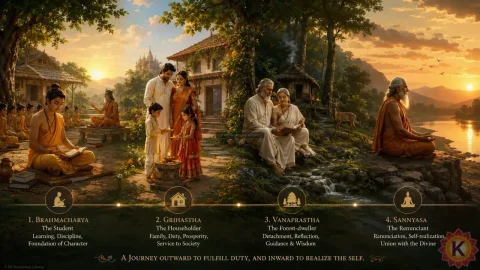
4 Ashram System 4 आश्रम क्या हैं?
हिंदू धर्म में जीवन की चार अवस्थाएं — ब्रह्मचर्य, गृहस्थ, वानप्रस्थ और संन्यास। एक सार्थक जीवन का कालजयी मार्गदर्शन।
The four stages of life in Hindu Dharma — Brahmacharya, Grihastha, Vanaprastha, and Sannyasa. A timeless roadmap for a purposeful human life.
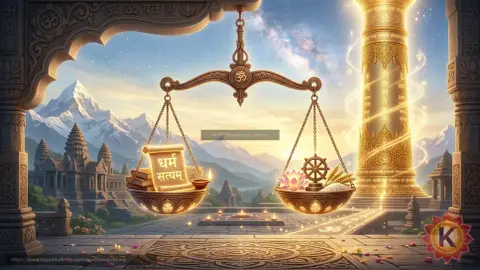
What is Dharma? Understanding Your Purpose in Life धर्म क्या है?
धर्म का एक अर्थ नहीं — यह एक साथ ब्रह्मांडीय व्यवस्था, व्यक्तिगत कर्तव्य और नैतिक नियम है। इसे समझना समस्त हिंदू दर्शन को समझने की कुंजी है।
Discover the profound meaning of Dharma in Hinduism. Learn how Sanatana Dharma and Svadharma guide you to discover your true purpose in life.
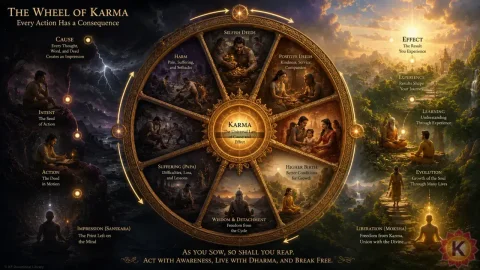
What is Karma? Understanding Why Our Actions Matter कर्म क्या है?
कर्म भाग्य या सजा नहीं — यह ब्रह्मांडीय कार्य-कारण का नियम है। अच्छे कर्म का असली अर्थ और यह आपके अगले जन्म को कैसे प्रभावित करता है।
Discover the true meaning of Karma in Hinduism. Understand the universal law of cause and effect and learn why every action, word, and thought shapes your future.
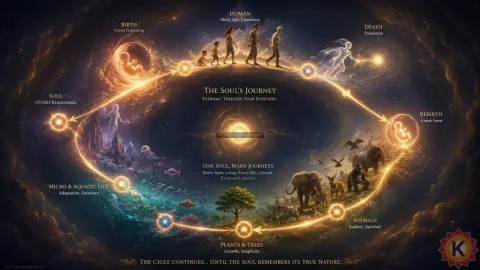
Reincarnation in Hinduism पुनर्जन्म क्या है?
हिंदू धर्म में आत्मा अमर है — वह केवल शरीर बदलती है। पुनर्जन्म का वैज्ञानिक, दार्शनिक और पौराणिक आधार और इसे समझने का सरल तरीका।
Hinduism teaches that the soul never dies — it simply changes bodies. Understand the science, stories, and spiritual logic of reincarnation in Sanatan Dharma.
What is Moksha? Understanding True Freedom in Hinduism मोक्ष क्या है?
मोक्ष हिंदू जीवन का अंतिम लक्ष्य है — जन्म-मृत्यु के चक्र से मुक्ति। मोक्ष के चार मार्ग और 'मुक्त होना' का वास्तविक अर्थ क्या है?
Discover the meaning of Moksha in Hinduism—the ultimate state of spiritual freedom, self-realization, and liberation from the cycle of birth and rebirth.

What Happens After Death मृत्यु के बाद क्या?
मृत्यु के बाद आत्मा कहाँ जाती है? हिंदू धर्म में 13 दिन के संस्कार, पितृलोक और अगले जन्म से पहले आत्मा की यात्रा का पूरा विवरण।
Where does the soul go after death? Hinduism has a precise answer — the 13-day rituals, Pitru Loka, and the soul's journey before the next birth.

Meaning of Antyeshti अंत्येष्टि संस्कार क्या है?
अंत्येष्टि 16वां और अंतिम संस्कार है। आँखें बंद करने से लेकर 13 दिन के शोक तक — हिंदू अंतिम संस्कार के हर चरण का आध्यात्मिक अर्थ।
Antyeshti (Hindu last rites) is the 16th and final Sanskar. From closing the eyes to the 13-day mourning period — understand every step and its meaning.

Vasudhaiva Kutumbakam वसुधैव कुटुंबकम क्या है?
'वसुधैव कुटुम्बकम्' (विश्व एक परिवार है) महा उपनिषद से लिया गया है — संयुक्त राष्ट्र की स्थापना से 1500 वर्ष पहले ही यह विचार भारत ने दिया था।
'Vasudhaiva Kutumbakam' (The World is One Family) is from the Maha Upanishad — 1500+ years before the United Nations even imagined world unity.
What is Brahman and Atman? ब्रह्म और आत्मा क्या है?
'अहं ब्रह्मास्मि' — मैं ब्रह्म हूँ। बृहदारण्यक उपनिषद का यह एक वाक्य हिंदू दर्शन का सार है: व्यक्ति की आत्मा और परमात्मा एक ही हैं।
'Aham Brahmasmi' — I am Brahman. This single statement from the Brihadaranyaka Upanishad is the core of Hindu philosophy: the individual soul IS the cosmic soul.

What is Maya? माया क्या है?
माया का अर्थ यह नहीं कि संसार झूठा है — बल्कि यह वैसा नहीं जैसा दिखता है। आदि शंकराचार्य के अद्वैत वेदांत में माया के असली अर्थ को समझें।
Maya does not mean the world is fake — it means it is not what it appears to be. Adi Shankaracharya's Advaita Vedanta explains why we mistake the temporary for eternal.
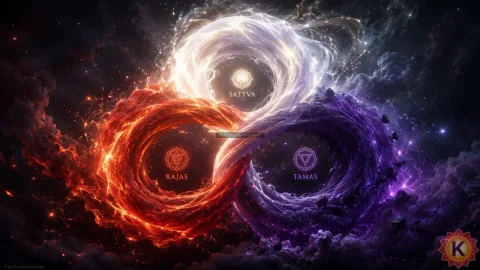
What are the 3 Gunas? त्रिगुण (3 गुण) क्या हैं?
हर मानव कार्य, भोजन और विचार तीन गुणों से प्रभावित है: सत्व (शुद्धता), रजस (जुनून), तमस (जड़ता)। आपका प्रमुख गुण आपका भाग्य तय करता है।
Every human action, food, and thought is influenced by 3 Gunas: Sattva (purity), Rajas (passion), Tamas (inertia). Your dominant Guna shapes your destiny.
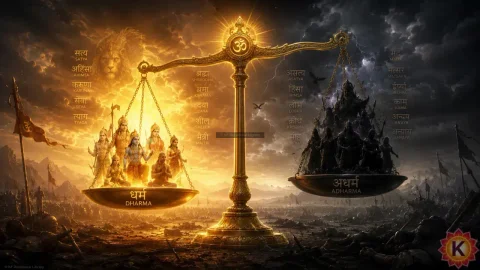
Dharma vs Adharma धर्म और अधर्म क्या है?
जब अर्जुन अपने कुटुंब से लड़ने से इनकार करते हैं, कृष्ण धर्म को परिभाषित करते हैं: धर्म सुविधा नहीं — कठिन होने पर भी सही करना है।
When Arjuna refuses to fight his cousins, Krishna redefines Dharma: it is not about comfort — it is about doing what is right even when it is hard.
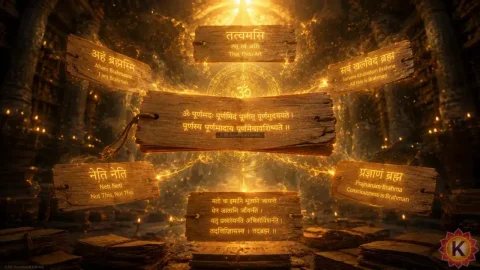
What are the Upanishads? उपनिषद क्या हैं?
उपनिषद विश्व के सबसे प्राचीन दार्शनिक ग्रंथ हैं — कुल 108। 'तत्त्वमसि' (वह तुम हो) इनका सबसे प्रसिद्ध सत्य है: तुम स्वयं परमात्मा हो।
The Upanishads are the world's oldest philosophical texts — 108 in total. 'Tat tvam asi' (That Thou Art) is their most famous revelation: you are the Divine.
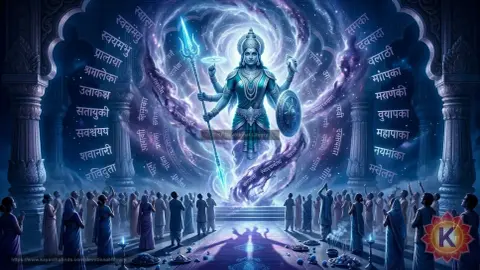
What is an Avatar? अवतार क्या होता है?
'अवतार' शब्द संस्कृत 'अवतरण' से आया है — परमात्मा का भौतिक जगत में उतरना। यह पुनर्जन्म नहीं है। दोनों में क्या अंतर है और अवतार का उद्देश्य क्या है?
The word 'Avatar' comes from Sanskrit 'Avatara' — descent of the Divine into the physical world. It is not reincarnation. Learn the difference and the purpose.
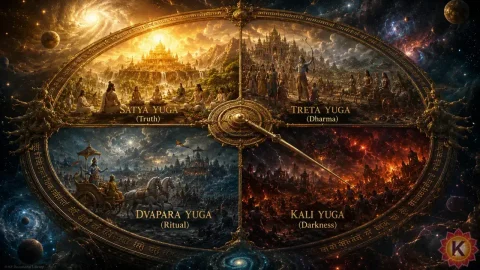
What is a Yuga? (The 4 Ages) युग क्या है? 4 युगों का रहस्य
हिंदू धर्म काल को चक्र में मापता है: सत्य, त्रेता, द्वापर, कलि युग। हम कलियुग में हैं — अंधकार का युग। यह कब समाप्त होगा? युग-चक्र का पूरा गणित।
Hinduism maps time in cycles: Satya Yuga (truth), Treta (3/4 truth), Dvapara (1/2), Kali (1/4). We live in Kali Yuga — the age of darkness. When does it end?
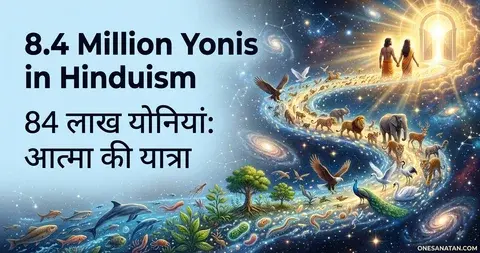
84 Lakh Yonis 84 लाख योनियां
हिंदू दर्शन के अनुसार, आत्मा मानव जन्म लेने से पहले 84 लाख विभिन्न योनियों से होकर गुजरती है। जानें 84 लाख योनियों के पीछे के रहस्य।
According to Hindu philosophy, the soul travels through 84 lakh species before taking birth as a human. Discover the meaning of the 84 Lakh Yonis.
Deities - देवी-देवता
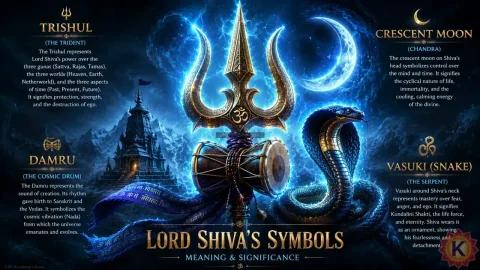
Who is Lord Shiva? भगवान शिव कौन हैं?
शिव एक साथ संहारक भी हैं और सबसे शुभ भी — 'शिव' का अर्थ ही 'कल्याणकारी' है। भस्म रमाए तपस्वी, नटराज और अनंत शून्य — महादेव का सम्पूर्ण स्वरूप।
Shiva is simultaneously the destroyer and the most auspicious — 'Shiva' means 'the benevolent one'. He is ash-covered ascetic, cosmic dancer, and the infinite void.
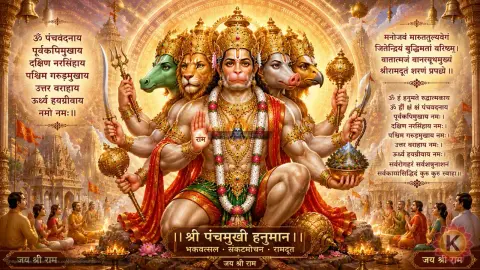
Who is Hanuman हनुमान जी कौन हैं?
हनुमान जी केवल भक्त नहीं — वे एक सिद्ध योगी, वायुपुत्र और सनातन रक्षक हैं। बजरंगबली की शक्ति, कथा और आराधना का पूरा सार।
Hanuman is not just a devotee — he is the perfect yogi, the son of Vayu, and the eternal guardian. Learn the full story of Bajrangbali.
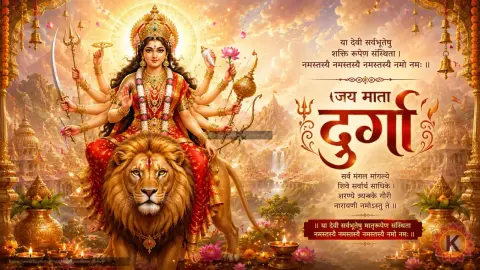
Who is Maa Durga माँ दुर्गा कौन हैं?
माँ दुर्गा ने महिषासुर का वध किया — लेकिन वे कौन हैं? उनके नौ रूप (नवदुर्गा), दिव्य शस्त्र और सृष्टि में उनकी भूमिका को जानें।
Goddess Durga is the invincible warrior who slayed Mahishasura. Understand her nine forms (Navadurga), divine weapons, and cosmic significance.
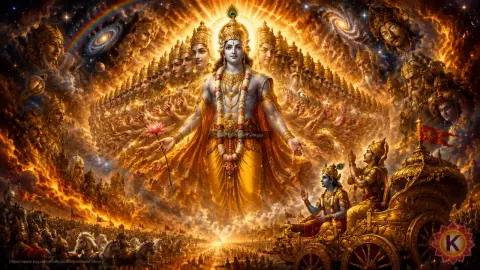
Who is Lord Krishna श्री कृष्ण कौन हैं?
श्री कृष्ण एक साथ दार्शनिक, योद्धा, प्रेमी और परमात्मा हैं। भगवद्गीता से वृंदावन की रासलीला तक — कृष्ण कौन हैं, विस्तार से जानें।
Lord Krishna is philosopher, warrior, lover, and God — all in one. From the Bhagavad Gita to Vrindavan's rasleela, understand his divine nature.
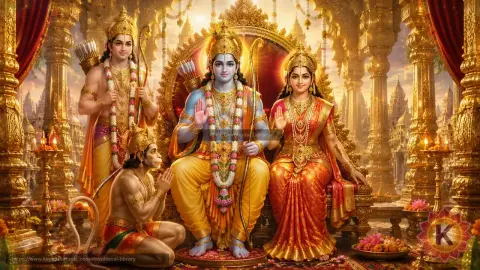
Who is Lord Rama भगवान राम कौन हैं?
भगवान राम 'मर्यादा पुरुषोत्तम' हैं — एक आदर्श पुत्र, पति और राजा। उनके 14 वर्ष के वनवास और रावण पर विजय में धर्म का सार निहित है।
Lord Rama is 'Maryada Purushottam' — the ideal of perfect human conduct. His 14-year exile, devotion to Sita, and defeat of Ravana define Dharma.
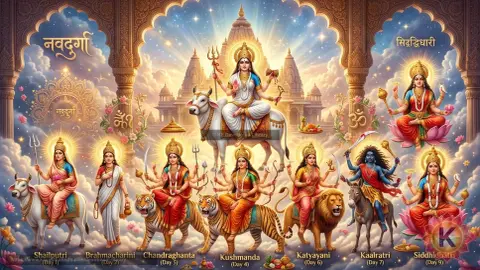
Durga Forms Explained नवदुर्गा कौन हैं?
नवरात्रि में 9 रातें माँ दुर्गा के 9 रूपों की पूजा होती है। शैलपुत्री से सिद्धिदात्री तक — हर रूप की कथा, मंत्र और महत्व जानें।
Navratri honors 9 forms of Durga over 9 nights. Each form — from Shailputri to Siddhidatri — represents a distinct cosmic power of the Divine Mother.
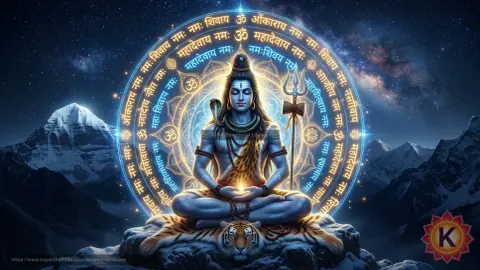
108 Names of Shiva शिव के 108 नाम
भगवान शिव के 108 नाम (अष्टोत्तर शतनामावली) केवल सूची नहीं — हर नाम एक दिव्य गुण है। सबसे शक्तिशाली नामों का अर्थ और जप विधि जानें।
The 108 Names of Lord Shiva (Ashtottara Shatanamavali) are not just a list — each name is a divine attribute. Learn the most powerful and their meanings.
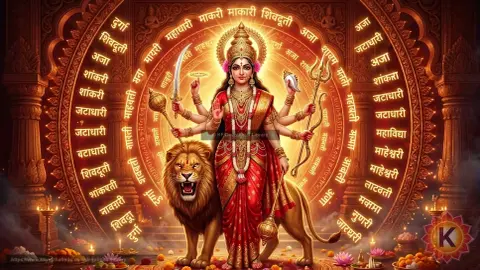
108 Names of Durga दुर्गा के 108 नाम
नवरात्रि में माँ दुर्गा के 108 नामों का जाप सबसे शक्तिशाली पूजा मानी जाती है। हर नाम का अर्थ, उसके पीछे की कथा और जप की विधि जानें।
Chanting the 108 Names of Durga during Navratri is considered the most potent form of worship. Learn the names, their meanings, and the story behind each.
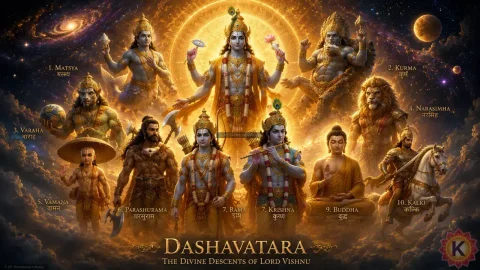
10 Avatars of Vishnu विष्णु अवतार कौन हैं?
विष्णु के 10 अवतार (दशावतार) केवल पुराण नहीं — ये विकासवाद के सिद्धांत को दर्शाते हैं। हर अवतार के पीछे ब्रह्मांडीय तर्क और कथा जानें।
The 10 Avatars of Vishnu (Dashavatara) are not mythology — they mirror the theory of evolution from fish to man. Discover the cosmic logic behind each avatar.
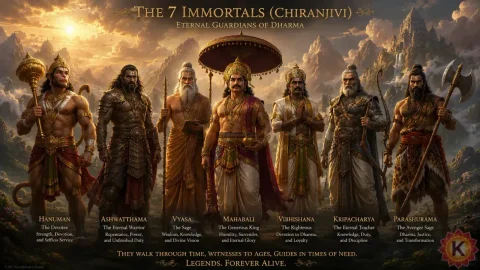
7 Chiranjivi 7 चिरंजीवी कौन हैं?
हिंदू धर्म 7 अमर प्राणियों का उल्लेख करता है — अश्वत्थामा, बलि, व्यास, हनुमान, विभीषण, कृपाचार्य और परशुराम। वे अभी भी जीवित क्यों हैं?
Hinduism names 7 immortal beings — Ashwatthama, Bali, Vyasa, Hanuman, Vibhishana, Kripacharya, and Parashurama. Why are they still alive? Know the reason.
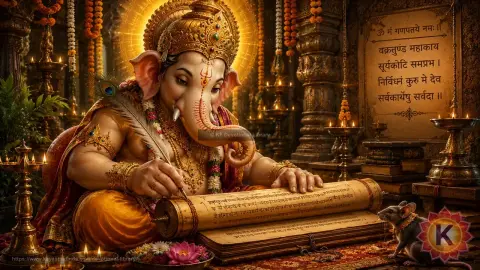
Who is Lord Ganesha? भगवान गणेश कौन हैं?
गणेश जी का सिर हाथी का क्यों है? शिव ने क्रोध में उनका सिर क्यों काटा? और चूहा उनका वाहन क्यों? विघ्नहर्ता की पूरी पौराणिक कथा।
Ganesha has an elephant head because Shiva cut off his original head in anger — but why? And why is a mouse his vehicle? The complete story of Vighnaharta.
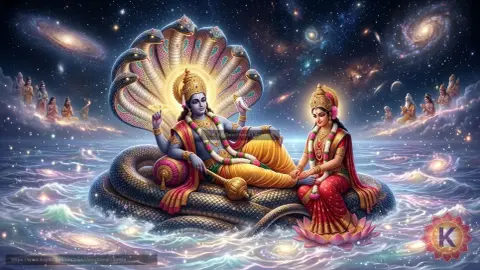
Who is Lord Vishnu? भगवान विष्णु कौन हैं?
विष्णु ब्रह्मांड के पालनहार हैं — लेकिन वे अवतार तभी लेते हैं जब धर्म संकट में हो। मत्स्य से कल्कि तक, इस दिव्य योजना को समझें।
Vishnu is the Preserver of the Universe — but he takes birth as an avatar only when Dharma is in crisis. From Matsya to Kalki, understand the cosmic plan.
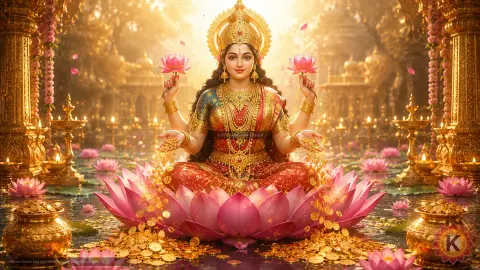
Who is Maa Lakshmi? माँ लक्ष्मी कौन हैं?
लक्ष्मी केवल धन की देवी नहीं — वे अष्टलक्ष्मी हैं, समृद्धि के 8 रूपों की देवी। वे कमल पर क्यों खड़ी हैं और सोना क्यों बरसाती हैं? जानें।
Lakshmi is not just the goddess of money — she is the goddess of Ashta Lakshmi (8 forms of abundance). Learn why she stands on a lotus and holds coins.
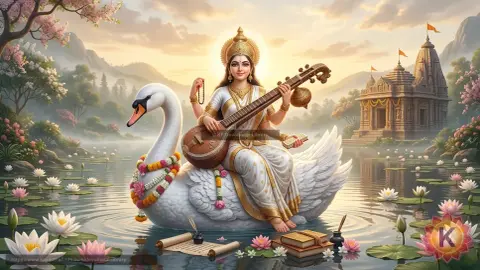
Who is Maa Saraswati? माँ सरस्वती कौन हैं?
सरस्वती वीणा धारण करती हैं पर पूजा से पहले बजाती नहीं — क्योंकि ज्ञान मौन में प्रवाहित होता है। वाणी, विद्या और चेतना की देवी की पूरी कथा।
Saraswati holds a Veena but never plays it before worship — because knowledge must flow in silence. The goddess of wisdom, speech, and pure consciousness.
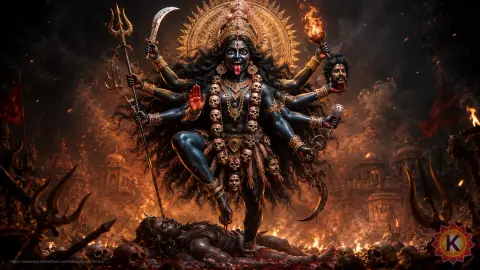
Who is Maa Kali? माँ काली कौन हैं?
काली का रूप भयंकर लगता है — लेकिन वे सबसे प्रेममयी माँ हैं। उनका काला रंग अनंत आकाश है। वे शिव पर क्यों खड़ी हैं और मुंडमाला क्यों पहनती हैं?
Kali's appearance is terrifying — but she is the most loving mother. Her dark skin represents infinite space. Why she stands on Shiva and has a garland of skulls.
Festivals - त्योहार
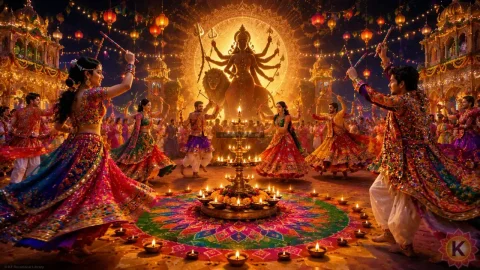
Navratri Significance नवरात्रि क्यों?
नवरात्रि क्या है और क्यों मनाई जाती है? नौ रातें, नवदुर्गा के नौ रूप और भारत के सबसे जीवंत उत्सव का गहरा आध्यात्मिक अर्थ।
What is Navratri and why is it celebrated? The nine nights, nine forms of Durga, and the deep spiritual meaning behind India's most vibrant festival.
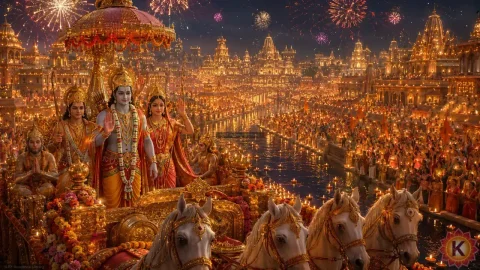
Significance of Diwali दीवाली का महत्व
दिवाली साल की सबसे अंधेरी रात — कार्तिक अमावस्या — को मनाई जाती है। इस रात राम लौटे, लक्ष्मी समुद्र से प्रकट हुईं और प्रकाश ने अंधेरे को हराया।
Diwali is celebrated on the darkest night of the year — the new moon of Kartik. On this night, Rama returned, Lakshmi was born from the ocean, and light defeated darkness.
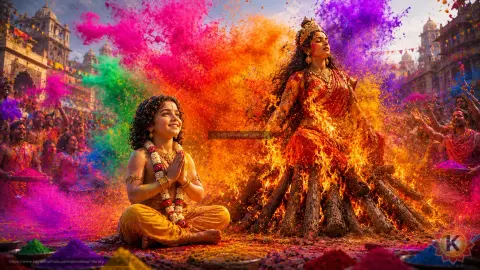
Significance of Holi होली क्यों मनाई जाती है?
होली सिर्फ रंगों का त्योहार नहीं — यह भक्त प्रह्लाद की विजय, बुराई पर अच्छाई की जीत और वसंत ऋतु के स्वागत का उत्सव है।
Why do Hindus drench each other in colors every spring? The story behind Holi goes back to Prahlad, Holika, and the victory of devotion over evil.
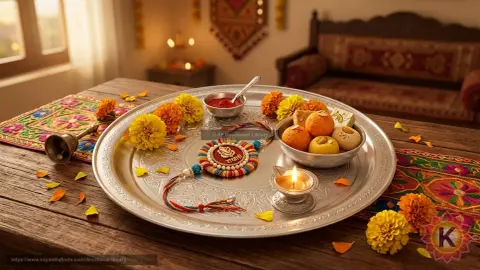
Raksha Bandhan Meaning रक्षाबंधन क्यों?
रक्षाबंधन सिर्फ राखी नहीं — यह वैदिक सुरक्षा का प्रतीक है। देवराज इंद्र से लेकर भगवान कृष्ण तक, इस बंधन की पौराणिक कथाएं जानें।
More than a thread — Raksha Bandhan is a Vedic bond of protection. Learn its mythological roots, from Indrani tying a thread to Indra before war.
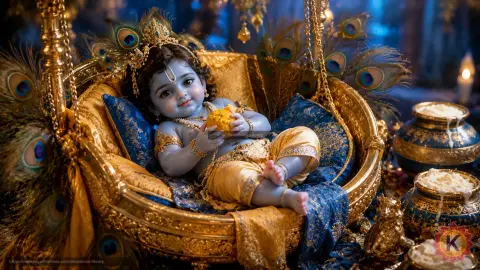
Janmashtami Significance जन्माष्टमी क्यों?
भगवान श्री कृष्ण का जन्म आधी रात को, कारागार में, तूफान के बीच क्यों हुआ? जन्माष्टमी का आध्यात्मिक रहस्य और उत्सव का अर्थ जानें।
Why is Lord Krishna born at midnight, in a prison, during a storm? Janmashtami reveals how the Divine enters the world to restore Dharma.
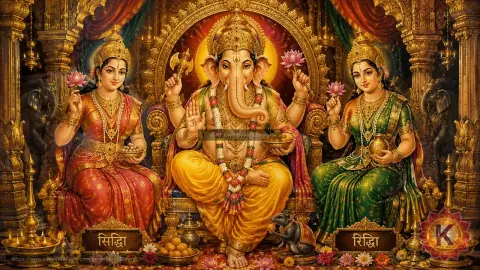
Ganesh Chaturthi Significance गणेश चतुर्थी क्यों?
किसी भी शुभ कार्य से पहले गणेश जी की पूजा क्यों होती है? गणेश चतुर्थी का धार्मिक अर्थ, कथा और इसे 10 दिन मनाने का कारण।
Why is Lord Ganesha worshipped first before any ritual or new beginning? Ganesh Chaturthi explains the cosmic role of the Vighnaharta.
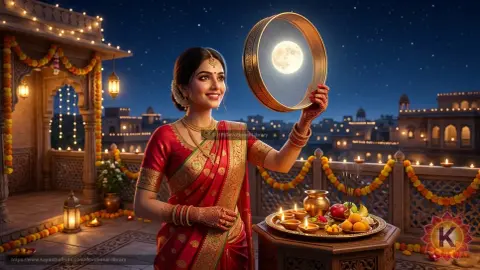
Karwa Chauth Meaning करवा चौथ क्यों?
विवाहित महिलाएं बिना पानी के पूरे दिन व्रत क्यों रखती हैं? करवा चौथ की पौराणिक कथा, चंद्रमा की भूमिका और इसका प्रेम-आधारित अर्थ।
Why do married women fast all day without water for their husbands? Karwa Chauth is a love ritual rooted in Vedic devotion and ancient sisterhood.
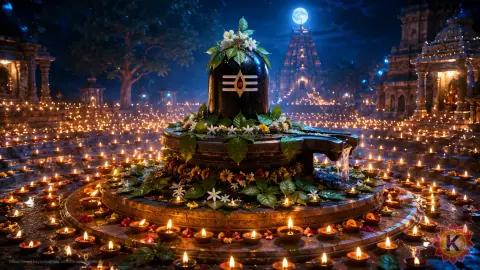
Maha Shivratri Significance महाशिवरात्रि क्यों?
महाशिवरात्रि की रात भगवान शिव तांडव करते हैं। जानें क्यों इस रात जागरण, उपवास और 'ॐ नमः शिवाय' जाप इतना शक्तिशाली माना जाता है।
Maha Shivratri is the night Lord Shiva performs the Tandava. Discover why fasting overnight and chanting Om Namah Shivaya is transformative.
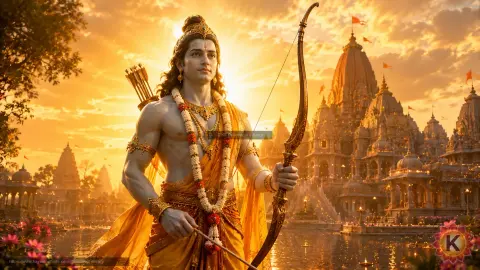
Ram Navami Significance राम नवमी क्यों?
राम नवमी भगवान राम के जन्म का उत्सव है। एक आदर्श राजा, पुत्र और पति के रूप में उनका जीवन आज भी धर्म का सर्वोच्च उदाहरण क्यों है?
Ram Navami marks the birth of Lord Rama — the ideal king, devoted husband, and obedient son. Learn why his life is the ultimate guide to Dharma.
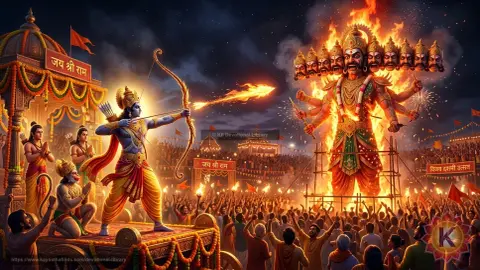
Dussehra Meaning दशहरा का महत्व
दशहरा केवल रावण दहन नहीं — रावण के 10 सिर 10 बुराइयों के प्रतीक हैं। जानें इस पर्व का असली आध्यात्मिक संदेश क्या है।
Dussehra marks the day Rama defeated Ravana — but it also celebrates the victory of truth over ego. Learn all 10 heads Ravana represents.
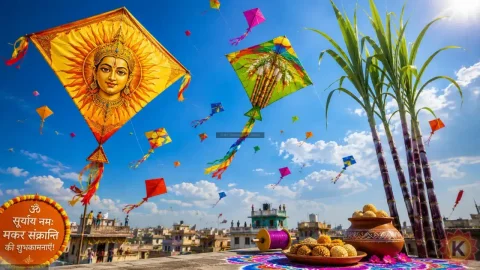
Makar Sankranti Meaning मकर संक्रांति क्यों?
मकर संक्रांति एकमात्र हिंदू त्योहार है जो सौर कैलेंडर पर आधारित है। तिल-गुड़, पतंगबाजी और गंगा स्नान का वैज्ञानिक और आध्यात्मिक कारण।
Makar Sankranti is the only Hindu festival that follows the solar calendar. Discover why kite-flying, sesame sweets, and Ganga bathing mark this day.
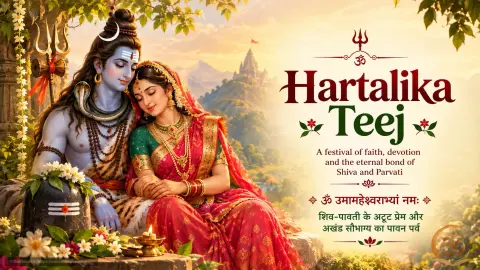
Hartalika Teej Puja Vidhi and Katha हरतालिका तीज पूजा विधि और कथा
हरतालिका तीज व्रत की संपूर्ण जानकारी: पूजा विधि, सामग्री लिस्ट, व्रत कथा, आरती, नियम और महत्व को विस्तार से जानें।
Step-by-step guide to celebrating Hartalika Teej, featuring puja rituals, authentic material checklists, traditional fast rules, and sacred hymns.
Rituals - रीति-रिवाज
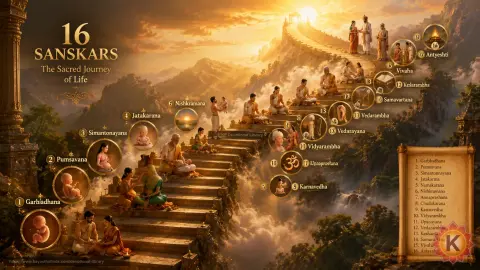
16 Hindu Sanskar 16 संस्कार क्या हैं?
हिंदू धर्म के 16 पवित्र संस्कार — जन्म से पूर्व से मृत्यु तक। प्रत्येक संस्कार के हिंदी और अंग्रेजी अर्थ के साथ पूरी सूची।
The 16 sacred rites of passage in Hinduism — from conception to death. Explore the complete list with Hindi and English meanings of each Sanskar.
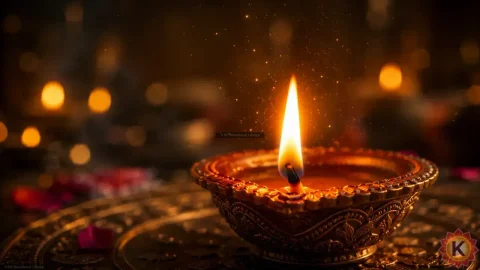
Significance of Lighting a Diya दीपक क्यों जलाते हैं?
पूजा में जलाया दीया सजावट नहीं — इसकी लौ आत्मा है, बाती शरीर है, और तेल वह कर्म है जो भक्ति से धीरे-धीरे जल रहा है। दीपक का गहरा दार्शनिक अर्थ।
A Diya (oil lamp) lit before prayer is not decoration — the flame symbolizes the Atman, the wick is the body, and the oil is karma being slowly consumed by devotion.
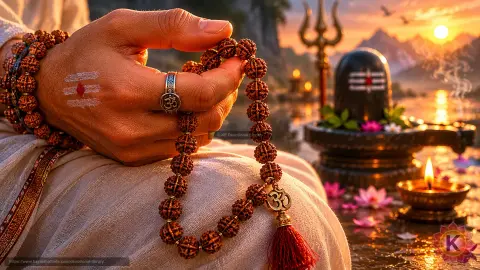
How to Use Rudraksha Mala रुद्राक्ष माला का उपयोग
रुद्राक्ष माला सिर्फ गहना नहीं — यह एक शक्तिशाली आध्यात्मिक साधन है। इसे पहनने, जप करने और शुद्ध रखने के सही नियम जानें।
Rudraksha Mala is not just jewellery — it's a powerful spiritual tool. Learn the correct rules for wearing, chanting, and maintaining your Mala.
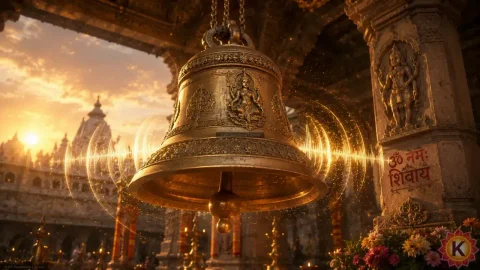
Why Ring Bells in Temple मंदिर की घंटी
मंदिर में घंटी क्यों बजाते हैं? देवता को जगाने के अलावा, विज्ञान कहता है इसकी ध्वनि 7 सेकंड तक मन को एकाग्र करती है। जानें पूरी बात।
Temple bells are rung to awaken the deity — but science shows the sound also clears the mind for 7 seconds. Learn the ritual and its real purpose.
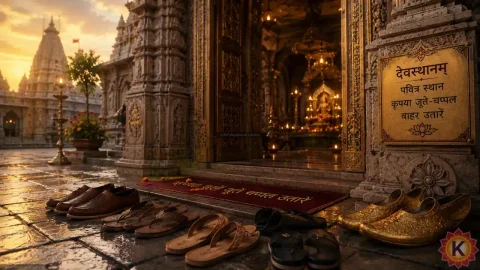
Why Remove Shoes in Temple मंदिर में जूते क्यों?
मंदिर में जूते उतारना केवल परंपरा नहीं — यह पवित्रता, विनम्रता और दिव्य ऊर्जा से जुड़ा है। इस हिंदू प्रथा का वैज्ञानिक और आध्यात्मिक कारण।
Removing shoes at temples is about purity, humility, and sacred energy — not just tradition. Learn the spiritual science behind this universal Hindu practice.
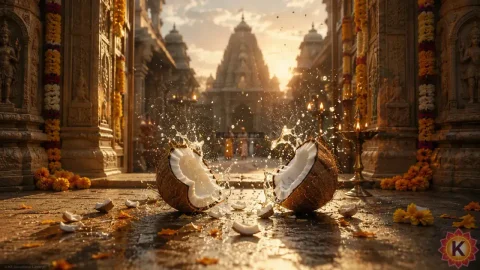
Why Break Coconut in Puja नारियल क्यों तोड़ते हैं?
पूजा में नारियल तोड़ना अहंकार को परमात्मा के सामने समर्पित करने का प्रतीक है। नारियल की तीन आँखें और त्रिकाल का आध्यात्मिक संबंध जानें।
Breaking a coconut in Hindu rituals symbolizes the shattering of the ego before God. The three eyes of coconut also represent the Trikaal (past, present, future).
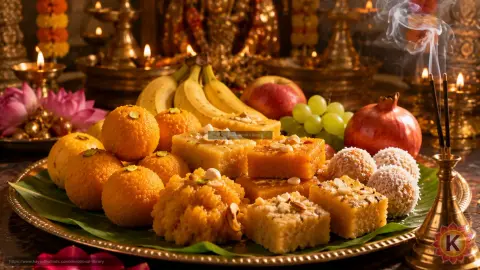
Meaning of Prasad प्रसाद क्या है?
प्रसाद केवल भोजन नहीं — यह परमात्मा की कृपा का प्रतिफल है। इसे दोनों हाथों से क्यों लेते हैं और इसे खाने का आध्यात्मिक महत्व क्या है।
Prasad is not just food — it is God's grace returned to the devotee. Learn why it must be accepted with both hands and what makes it spiritually significant.
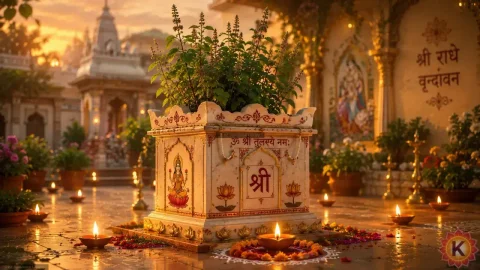
Why Offer Tulsi तुलसी का महत्व
तुलसी ही एकमात्र पौधा है जिसे भगवान विष्णु लक्ष्मी के समान पवित्र मानते हैं। हर हिंदू घर में तुलसी के होने का आध्यात्मिक और औषधीय कारण।
Tulsi (Holy Basil) is the only plant that Vishnu considers as sacred as Lakshmi. Its placement in every Hindu home has both spiritual and medicinal logic.
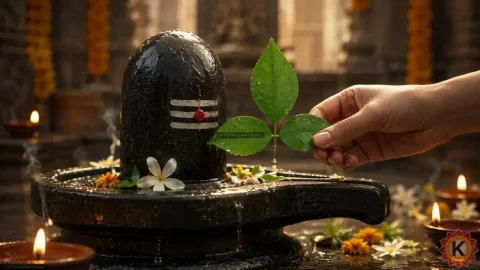
Why Offer Bel Patra to Shiva बेलपत्र का महत्व
शिव को केवल बेलपत्र चढ़ाया जाता है — फूल नहीं। इसकी तीन पत्तियाँ त्रिमूर्ति की प्रतीक हैं और शिव की तीसरी आँख की ऊष्णता को शांत करती हैं।
Only Bel Patra is offered to Shiva — not flowers. Its three-leafed form represents the Holy Trinity and is believed to cool Shiva's fiery third eye.
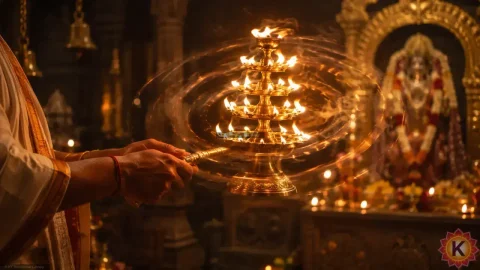
Meaning of Aarti आरती का अर्थ और महत्व क्या है?
आरती केवल दीप घुमाना नहीं — यह परमात्मा को सम्पूर्ण इंद्रिय समर्पण है: दीया (प्रकाश), घंटी (ध्वनि), अगरबत्ती (सुगंध) और भक्त का पूर्ण आत्मसमर्पण।
Aarti is not just waving a flame — it is a full sensory offering to God: light (diya), sound (bells), smell (incense), and the devotee's complete surrender.
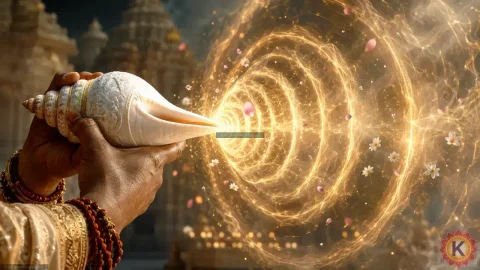
Why do Hindus blow the Shankh? पूजा में शंख क्यों बजाते हैं?
शंख की ध्वनि 'ॐ' की आवृत्ति पर गूंजती है। आधुनिक विज्ञान ने पाया यह हवा के जीवाणु नष्ट करती है। हर पूजा और युद्ध से पहले शंख क्यों बजाते हैं?
The sound of Shankh resonates at the frequency of 'Om'. Modern science found it kills bacteria in the air. Why Hindus blow it before every puja and battle.
Symbols - प्रतीक
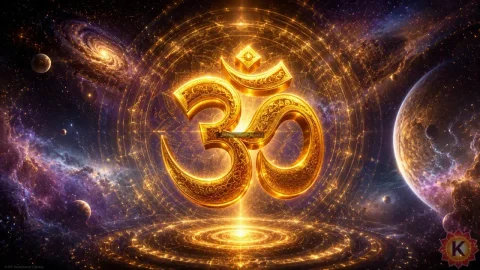
Meaning of Om (ॐ) ॐ (Om) का अर्थ क्या है?
OM (ॐ) का वास्तविक अर्थ क्या है? हिंदू धर्म के सबसे पवित्र प्रतीक का आध्यात्मिक, दार्शनिक और वैज्ञानिक महत्व जानें।
What does Om (ॐ) truly mean? Explore the spiritual, philosophical, and scientific significance of the most sacred symbol in Hinduism.
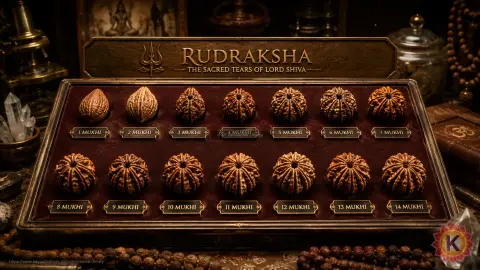
Types of Rudraksha रुद्राक्ष क्या है?
14 प्रकार के रुद्राक्ष की पूरी जानकारी — उनके मुखी, अधिष्ठात्री देवता और लाभ। आध्यात्मिक साधकों के लिए प्रामाणिक जानकारी।
A complete guide to the 14 types of Rudraksha beads — their Mukhi count, ruling deity, and benefits. Authentic information for spiritual seekers.
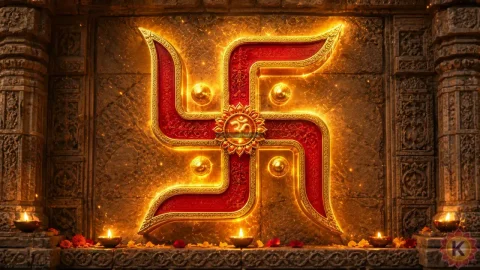
Meaning of Swastik स्वस्तिक का अर्थ
स्वस्तिक हिंदू धर्म के सबसे प्राचीन शुभ प्रतीकों में से एक है। जानें इसका सही अर्थ, उत्पत्ति और यह कल्याण का प्रतीक क्यों है।
The Swastik (स्वस्तिक) is one of Hinduism's oldest auspicious symbols. Learn its true meaning, origin, and why it is a symbol of wellbeing — not hate.
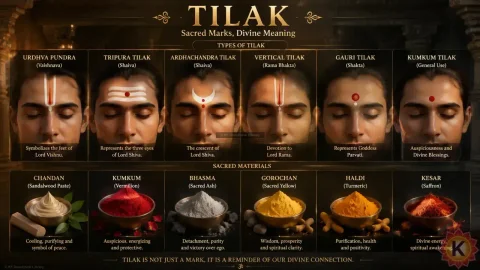
Meaning of Tilak तिलक क्यों लगाते हैं?
तिलक हिंदुओं द्वारा माथे पर लगाया जाने वाला पवित्र चिह्न है। विभिन्न प्रकार के तिलक, उनका अर्थ और संबंधित देवताओं को जानें।
The Tilak is a sacred mark worn on the forehead by Hindus. Explore the different types of Tilak, what each represents, and which deities they are associated with.
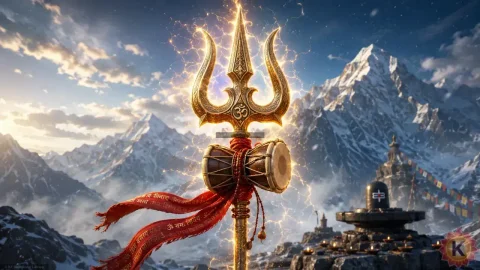
Meaning of Trishul त्रिशूल का अर्थ
शिव का त्रिशूल तीन सत्यों का प्रतीक है — सृजन, पालन, संहार। यह भूत, वर्तमान और भविष्य भी है। एक अस्त्र जो वास्तव में ब्रह्मांड का नक्शा है।
Shiva's Trishul has three prongs — Creation, Preservation, Destruction. It also represents past, present, future. A weapon that is really a map of the cosmos.
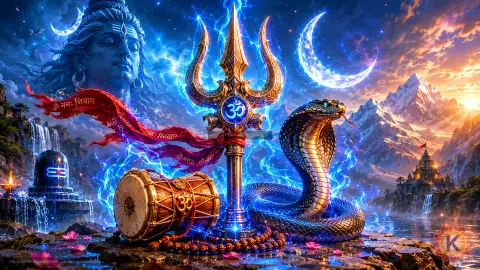
Shiva Symbols Meaning शिव प्रतीक क्या हैं?
शिव के अर्धचंद्र, त्रिशूल, डमरू और तीसरी आँख का क्या अर्थ है? महादेव के स्वरूप का हर प्रतीक ब्रह्मांड के एक सत्य को दर्शाता है।
Why does Shiva wear a crescent moon, hold a Trishul, and have a third eye? Every symbol on Mahadev's form carries a profound cosmic meaning.
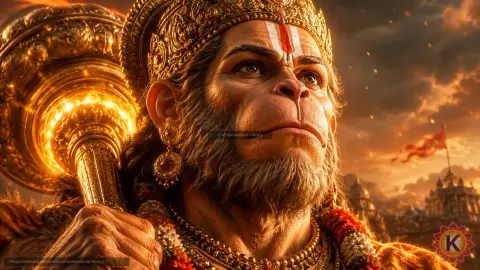
Hanuman Symbols Meaning हनुमान प्रतीक क्या हैं?
हनुमान जी की गदा, सिंदूरी रंग, पर्वत उठाने का दृश्य — इन सबके पीछे क्या आध्यात्मिक अर्थ है? भक्ति और शक्ति के प्रतीक हनुमान।
Hanuman's mace, saffron color, and mountain-lifting all carry deeper meaning. Decode the symbolism behind the icon of strength and devotion.
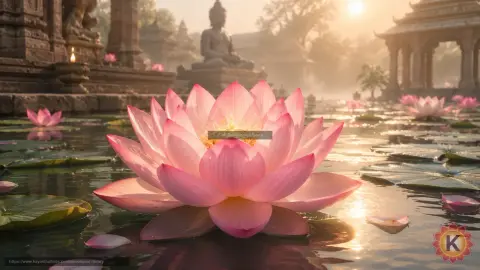
Lotus Meaning कमल का महत्व क्या है?
कमल कीचड़ में खिलता है पर दाग नहीं लगता — इसीलिए यह लक्ष्मी, ब्रह्मा और ज्ञान का प्रतीक है। हिंदू धर्म में कमल के इस गहरे अर्थ को जानें।
The lotus blooms in mud but stays unstained — it is the symbol of Lakshmi, Brahma, and enlightenment itself. Learn what makes the lotus so sacred.
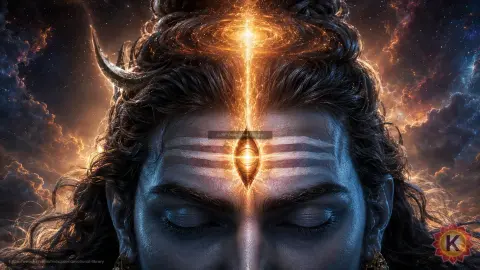
Third Eye Meaning तीसरी आँख का अर्थ
शिव की तीसरी आँख हथियार नहीं — यह ज्ञान की आँख है जो काल से परे देखती है। जब यह खुलती है, तो माया जलती है, दुनिया नहीं। इसका सत्य जानें।
Shiva's third eye is not a weapon — it is the eye of wisdom that sees beyond time. When it opens, it burns illusion, not the world. Understand its true meaning.
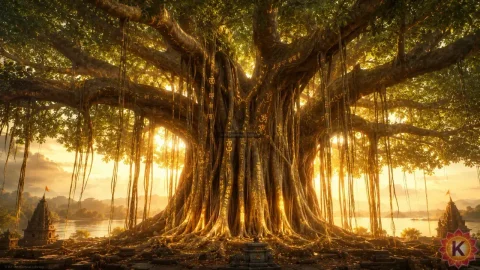
Significance of the Banyan Tree बरगद के पेड़ का धार्मिक महत्व क्या है?
बरगद का पेड़ कभी नहीं मरता — इसकी शाखाओं से जड़ें उगती हैं जो नए तने बनती हैं। इसीलिए यह ब्रह्मा, शाश्वतता और अविनाशी आत्मा का प्रतीक है।
The Banyan tree (Vata Vriksha) never dies — it sends aerial roots that become new trunks. This is why it symbolizes Brahma, eternity, and the indestructible soul.
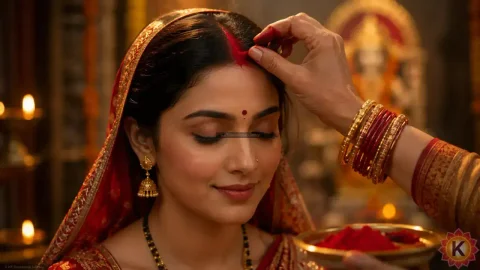
Meaning of Sindoor सिंदूर का महत्व
सिंदूर ब्रह्मरंध्र पर लगाया जाता है — जहाँ पिट्यूटरी ग्रंथि होती है। हल्दी और चूने वाला पारंपरिक सिंदूर हार्मोन संतुलित करता है और तनाव कम करता है।
Sindoor is applied at the Brahmarandhra — the point where the pituitary gland sits. Traditional Sindoor with turmeric and lime helps balance hormones and calm nerves.
Scriptures - शास्त्र
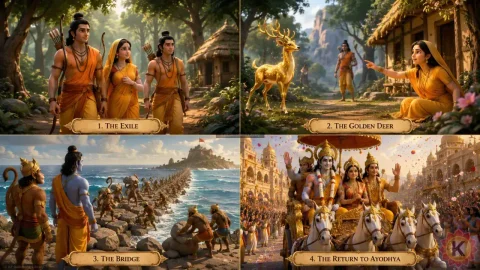
Ramayana Summary: Lessons on Duty, Leadership and Integrity रामायण क्या है?
रामायण की पूरी कहानी का सार: भगवान राम, माता सीता और रावण के वध की महागाथा को संक्षेप में समझें।
Read the complete Ramayana summary. Discover the ancient epic of Lord Rama and uncover timeless lessons on duty, leadership, and moral integrity.
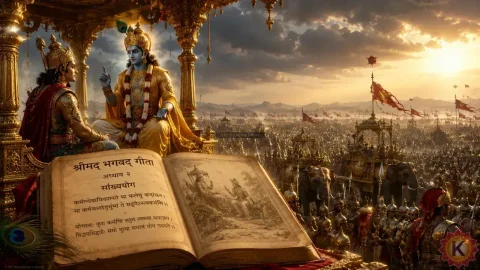
Mahabharata Summary: The World's Greatest Story of Moral Conflict महाभारत क्या है?
महाभारत केवल एक महाकाव्य नहीं — यह मानव जीवन का विश्वकोश है। 18 अध्याय, 18 अक्षौहिणी सेना और इसमें समाहित भगवद्गीता का सार।
Read the complete Mahabharata summary. Discover why the world's longest epic is still the most relevant guide to justice, family conflict, and moral grey areas.
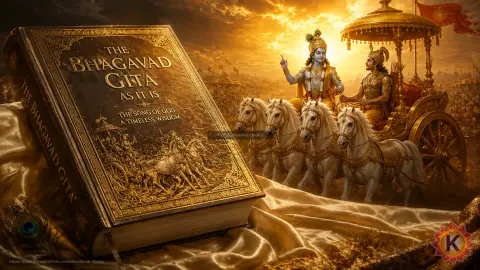
Bhagavad Gita: One of the World's Greatest Guides to Life गीता का सार क्या है?
भगवद्गीता के 700 श्लोकों में जीवन के गहरे प्रश्नों के उत्तर हैं। युद्धभूमि पर अर्जुन को दिया कृष्ण का उपदेश आज भी जीवन का मार्गदर्शक है।
Read the complete Bhagavad Gita summary. Discover why this ancient Hindu scripture is considered one of the world's greatest guides to life, duty, and peace.
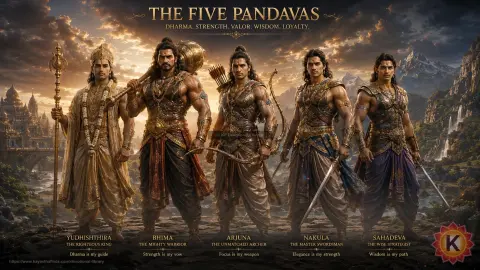
Pandavas Names पांडव कौन थे?
पाँच पांडव — युधिष्ठिर, भीम, अर्जुन, नकुल, सहदेव — पाँच गुणों के प्रतीक हैं। उनकी कथाएं, दिव्य जन्म और महाभारत में भूमिका जानें।
The five Pandavas — Yudhishthira, Bhima, Arjuna, Nakula, and Sahadeva — represent five virtues. Learn their stories, divine parentage, and roles in the Mahabharata.
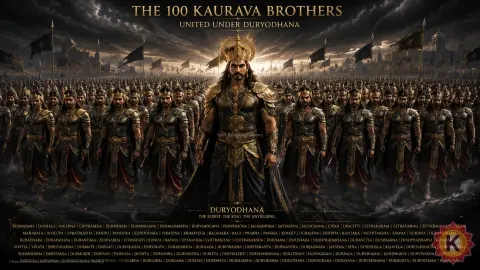
Kauravas Meaning कौरव कौन थे?
100 कौरव एक माँ से घड़ों में पैदा हुए थे। गांधारी के श्राप, दुर्योधन के अहंकार और उनके पतन की पूरी कथा — महाभारत का वह पक्ष जो कम जाना है।
The 100 Kauravas were born from one mother in jars — not natural birth. Learn the story of Gandhari's curse, Duryodhana's ego, and their tragic downfall.
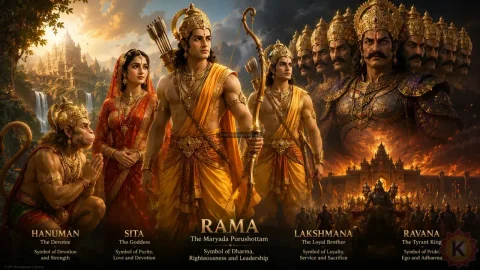
Ramayana Characters रामायण के पात्र
राम, सीता, हनुमान, रावण, लक्ष्मण — और भी कई। रामायण के प्रमुख पात्रों से मिलें और जानें इस महाकाव्य में हर किरदार की भूमिका।
Rama, Sita, Hanuman, Ravana, Lakshmana — and dozens more. Meet the key characters of the Ramayana and understand the role each played in this timeless epic.
Pilgrimage - तीर्थ
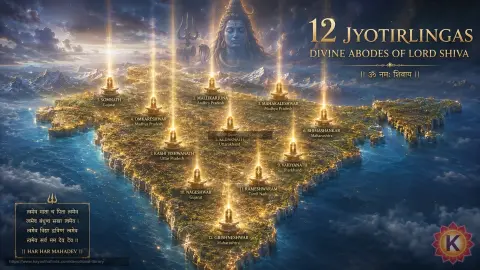
12 Jyotirlingas 12 ज्योतिर्लिंग कहाँ हैं?
12 ज्योतिर्लिंग भारत में शिव के स्वयंभू धाम हैं। सभी 12 का पूरा विवरण — स्थान, कथा और तीर्थयात्रा का महत्व — एक ही जगह।
The 12 Jyotirlingas are self-manifested shrines of Shiva across India. A complete guide to all 12 — their locations, stories, and pilgrimage significance.
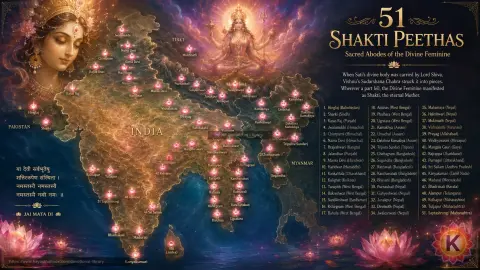
51 Shakti Peeth 51 शक्तिपीठ कहाँ हैं?
51 शक्तिपीठ वे स्थान हैं जहाँ सती के अंग गिरे थे। विष्णु के सुदर्शन चक्र की कथा और सभी 51 शक्तिपीठों की सूची व महत्व।
The 51 Shakti Peeths are where Sati's body parts fell after Vishnu's Sudarshana Chakra cut her body. A complete guide to these sacred goddess temples.
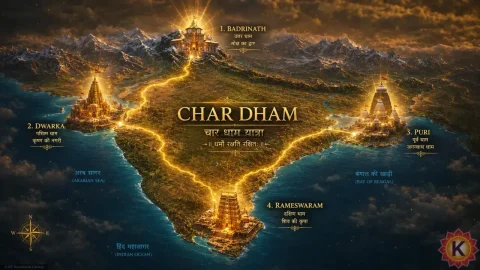
Char Dham Yatra चार धाम यात्रा क्या है?
चार धाम — बद्रीनाथ, द्वारका, पुरी, रामेश्वरम। आदि शंकराचार्य द्वारा स्थापित यह यात्रा मोक्ष प्राप्ति का सर्वोच्च तीर्थ मार्ग क्यों मानी जाती है?
Four shrines, four cardinal directions — Badrinath, Dwarka, Puri, Rameshwaram. Adi Shankaracharya's Char Dham Yatra is Hinduism's ultimate pilgrimage circuit.
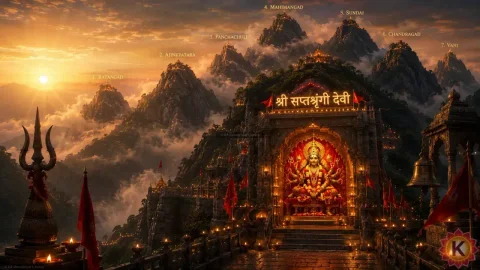
Saptashrungi Devi सप्तशृंगी देवी का महत्व
सप्तश्रृंगी देवी महाराष्ट्र के साडे तीन शक्तिपीठों में से एक हैं। सात पर्वत शिखरों पर विराजमान इस देवी के दर्शन से सभी मनोकामनाएं पूर्ण होती हैं।
Saptashrungi Devi in Nashik is one of Maharashtra's 'Sade Teen Shaktipeeths'. The goddess sits atop seven peaks and is believed to grant all wishes.
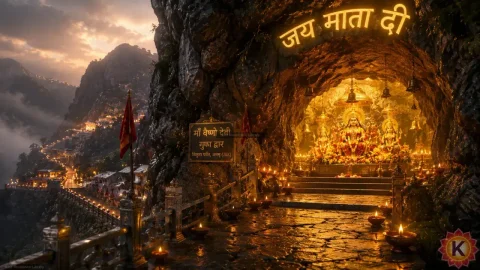
Vaishno Devi Shrine माँ वैष्णो देवी की कहानी
माँ वैष्णो देवी के दर्शन 14 किमी की चढ़ाई के बाद मिलते हैं — यह आस्था और समर्पण की परीक्षा है। हर साल 80 लाख श्रद्धालु क्यों आते हैं? जानें कथा।
Maa Vaishno Devi's cave shrine in the Trikuta Mountains grants wishes — but only after a 14 km trek that tests your dedication. Why do 8 million visit every year?

Amarnath Yatra अमरनाथ यात्रा क्या है?
3,888 मीटर पर एक हिमालयी गुफा में चाँद के साथ बनती-पिघलती बर्फ की शिवलिंग — यही अमरनाथ है। इस तीर्थयात्रा की पौराणिक कथा और महत्व।
Inside a Himalayan cave at 3,888 metres, an ice stalagmite forms and melts with the moon — this is the Amarnath Shivling. The pilgrimage and its sacred legend.
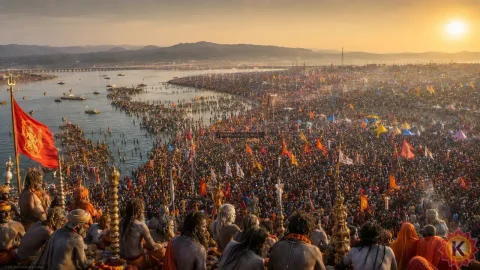
Kumbh Mela कुंभ मेला क्या है?
कुंभ मेला 40 करोड़ लोगों को आकर्षित करता है — मानव इतिहास का सबसे बड़ा शांतिपूर्ण जमावड़ा। समुद्र मंथन और अमृत की खोज से जुड़ी इसकी कथा।
Kumbh Mela draws 400 million people — more than any gathering in human history. It is rooted in the Samudra Manthan and the quest for the immortal nectar.
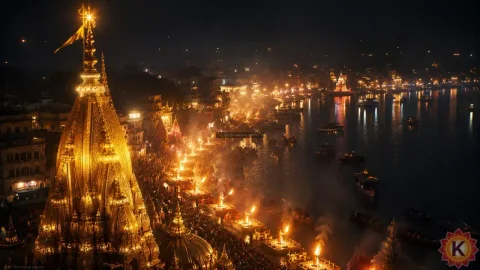
Kashi Vishwanath काशी विश्वनाथ मंदिर कहाँ है?
काशी (वाराणसी) इतिहास से भी पुरानी है — यहाँ स्वयं शिव 'विश्वनाथ' रूप में निवास करते हैं। यहाँ मृत्यु को मोक्षदायिनी क्यों माना जाता है?
Kashi (Varanasi) is older than history — it is where Shiva himself resides as the 'Vishwanath'. Dying here is said to grant Moksha. Know why it's eternal.
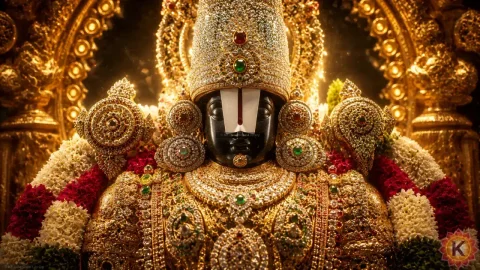
Tirupati Balaji तिरुपति बालाजी कौन हैं?
तिरुपति बालाजी पृथ्वी का सबसे धनी मंदिर है। लाखों लोग अपने बाल क्यों चढ़ाते हैं? भगवान वेंकटेश्वर के ऋण और उनकी दिव्य प्रतिज्ञा की कथा।
Tirupati Balaji is the richest temple on Earth — receiving ₹1000 crore annually. Why do millions donate their hair? The legend of Lord Venkateswara's debt.

Kailash Mansarovar कैलाश मानसरोवर क्या है?
कैलाश पर्वत पर आज तक कोई नहीं चढ़ा — न किसी नियम से, बल्कि इसलिए कि यह शिव का सिंहासन है। दुनिया के सबसे पवित्र वर्जित पर्वत की कथा।
No one has ever climbed Mount Kailash — not by government rule, but because it is believed to be Shiva's earthly throne. The world's most sacred forbidden mountain.
Traditions - परम्पराएं
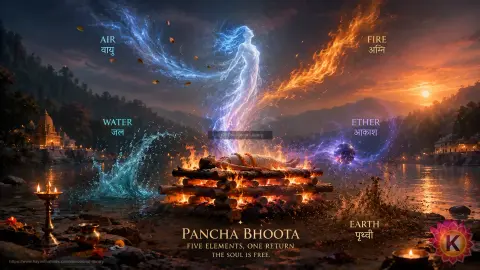
Why Hindus Cremate दाह संस्कार क्यों?
हिंदू धर्म में दाह संस्कार ही क्यों? अंत्येष्टि संस्कार के पीछे के आध्यात्मिक और दार्शनिक कारणों की स्पष्ट व सम्मानजनक व्याख्या।
Why is cremation the primary funeral rite in Hinduism? A clear, respectful explanation of the spiritual and philosophical reasoning behind Antyesti.
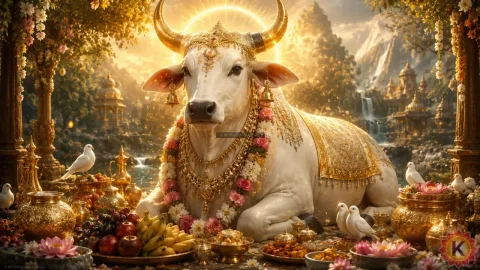
Why Hindus Worship Cows गाय की पूजा क्यों?
हिंदू धर्म में गाय पवित्र क्यों है? गौ माता की वैदिक, आर्थिक और दार्शनिक महत्ता की तथ्यात्मक एवं सम्मानजनक व्याख्या।
Why is the cow sacred in Hinduism? A factual, respectful guide to Gau Mata — exploring the Vedic, economic, and philosophical reasons for cow reverence.
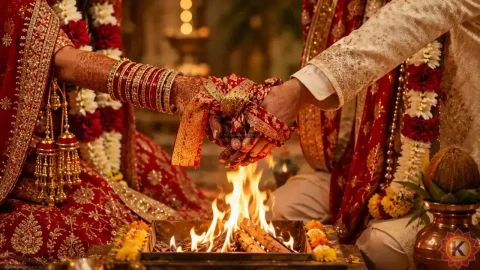
Hindu Marriage (Vivaha) हिंदू विवाह क्या है?
हिंदू विवाह (विवाह संस्कार) केवल रस्म नहीं — यह एक पवित्र बंधन है। अग्नि के सात फेरे (सप्तपदी) और सात जन्मों के वचन का आध्यात्मिक अर्थ।
Hindu marriage (Vivaha) is a Samskar — a sacred rite, not just a ceremony. The 7 vows (Saptapadi) taken around fire bind two souls across seven lifetimes.

Atithi Devo Bhava अतिथि देवो भव क्या है?
'अतिथि देवो भव' — मेहमान भगवान के समान है। तैत्तिरीय उपनिषद की यह शिक्षा भारत की आतिथ्य संस्कृति की नींव है। इसका गहरा अर्थ जानें।
'Atithi Devo Bhava' — The Guest is God. This ancient Taittiriya Upanishad teaching shaped India's culture of unconditional hospitality for millennia.
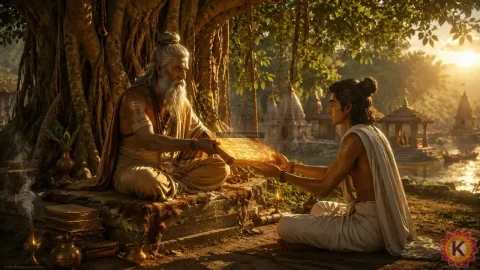
Guru-Shishya Parampara गुरु-शिष्य परंपरा क्या है?
गुरु-शिष्य परंपरा दुनिया की सबसे पुरानी ज्ञान-प्रणाली है। यह केवल पढ़ाना नहीं — यह एक आत्मा से दूसरी आत्मा तक जीवित अनुभव का संचार है।
The Guru-Shishya bond is the oldest knowledge system in the world. It is not just teaching — it is the transmission of lived experience, soul to soul.
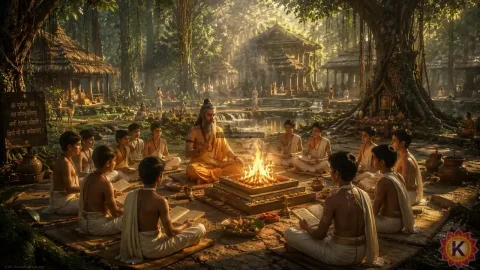
Gurukul System गुरुकुल शिक्षा क्या है?
गुरुकुल में शिष्य वर्षों तक गुरु के साथ रहकर वेद से युद्धकला तक सब सीखते थे। आधुनिक भारत ने इस प्रतिभाशाली शिक्षा-व्यवस्था को क्यों छोड़ा?
In the Gurukul system, students lived with their Guru for years and learned everything from Vedas to warfare. Why did modern India abandon this genius model?
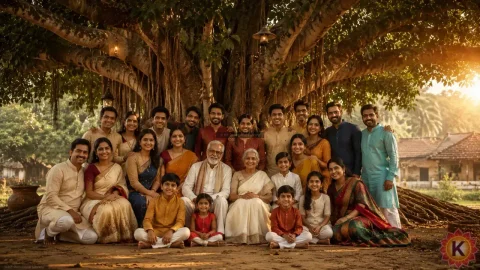
Joint Family System संयुक्त परिवार क्या है?
हिंदू संयुक्त परिवार कोई पुरानी बात नहीं — यह एक प्राचीन सामाजिक सुरक्षा प्रणाली है। दादा-दादी से पोते-पोतियों तक एक छत के नीचे क्यों जरूरी है?
The Hindu Joint Family is not backward — it is an ancient social security system. Grandparents, parents, children, uncles all under one roof: why it works.
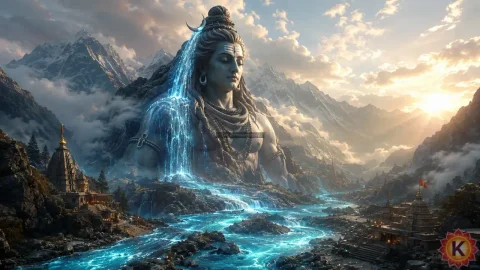
Why is the Ganges Sacred? गंगा नदी इतनी पवित्र क्यों है?
गंगाजल सड़ता नहीं — वैज्ञानिकों ने इसमें बैक्टीरिया-भक्षी तत्व खोजे। हिंदुओं को यह 5000 साल पहले पता था। गंगा की पवित्रता के पीछे का विज्ञान और शास्त्र।
Ganga water never rots — scientists found bacteriophages that kill bacteria. Hindus knew this 5000 years ago. The science and scripture behind Ganga's sacredness.
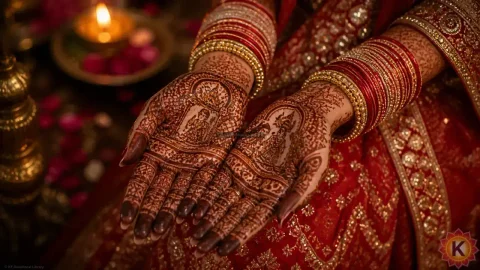
Why is Mehndi Applied in Hindu Marriages? शादी में मेहंदी क्यों?
मेहंदी सोलह श्रृंगार में से एक है — पर यह दवा भी है। मेहंदी तंत्रिका तंत्र को शांत करती है। रंग जितना गहरा, प्रेम उतना गहरा — इसके पीछे का अर्थ।
Mehndi is one of the Solah Shringar — but it's also medicine. Henna cools the nervous system, reducing wedding-day anxiety. The darker the color, the deeper the love.
Practices - प्रथाएं
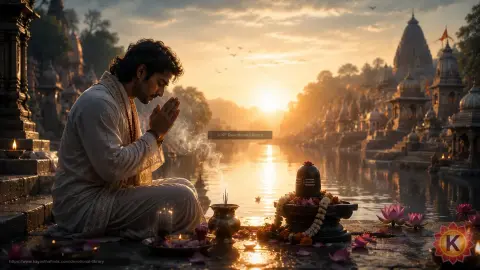
Why Hindus Fast व्रत क्यों रखते हैं?
हिंदू धर्म में व्रत (उपवास) एक गहन आध्यात्मिक अभ्यास है। व्रत के वास्तविक कारण, विभिन्न प्रकार और उनके महत्व को समझें।
Fasting (Vrat/Upvas) in Hinduism is a deeply personal spiritual practice. Learn the real reasons, the different types of fasts, and their significance.
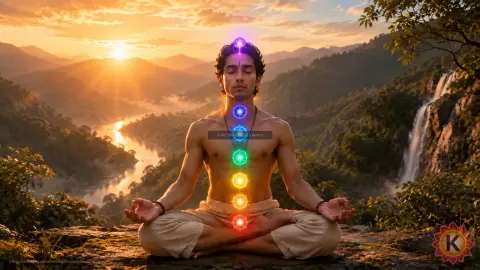
What is Yoga? योग क्या है?
योग का अर्थ सिर्फ आसन नहीं — यह परमात्मा से मिलन है। भक्ति योग, ज्ञान योग, कर्म योग और राज योग — इन चार मार्गों में कौन सा मार्ग आपके लिए है?
Yoga is not stretching — the word means 'union with the Divine'. Hinduism has four paths: Bhakti, Jnana, Karma, and Raja Yoga. Which one is yours?
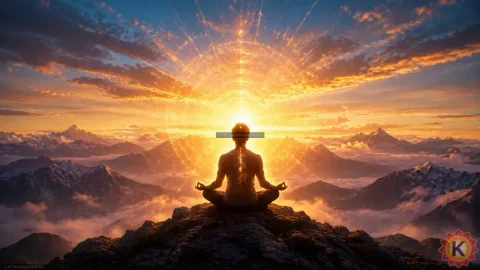
Meditation (Dhyana) ध्यान क्या है?
ध्यान (Meditation) अष्टांग योग का सातवां अंग है। हिंदू ग्रंथों में यह चंचल मन और भीतर के शाश्वत आत्म के बीच सेतु का काम करता है।
Dhyana (Meditation) is the 7th limb of Ashtanga Yoga. Hindu texts describe it as the bridge between the restless mind and the eternal self within.
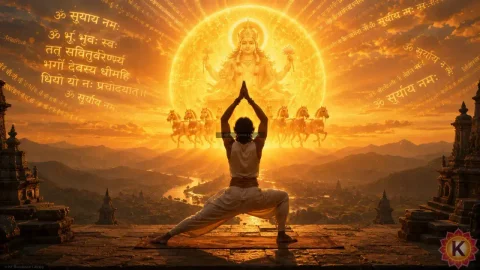
Surya Namaskar सूर्य नमस्कार क्या है?
सूर्य नमस्कार 12 योग आसन और 12 संस्कृत मंत्रों का संयोजन है। यह केवल व्यायाम नहीं — यह सूर्योदय पर की जाने वाली एक जीवंत प्रार्थना है।
Surya Namaskar is 12 yoga postures, each with a Sanskrit mantra saluting the Sun. It is not just exercise — it is a moving prayer performed at sunrise.
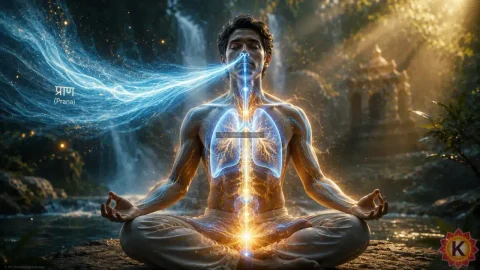
Pranayama प्राणायाम क्या है?
प्राणायाम प्राण (श्वास में जीवन-शक्ति) को नियंत्रित करता है। प्राचीन योगियों ने सिखाया: श्वास पर नियंत्रण = मन पर नियंत्रण। अनुलोम-विलोम और कपालभाति जानें।
Pranayama controls Prana — the life force within breath. Ancient yogis taught that controlling breath controls the mind. Learn Anulom Vilom, Kapalbhati & more.
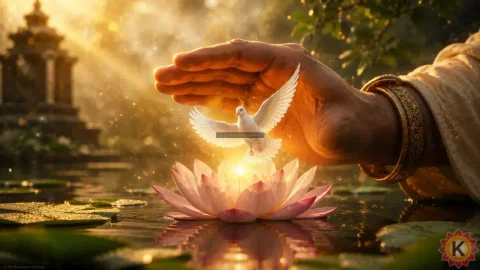
Ahimsa (Non-Violence) अहिंसा क्या है?
अहिंसा योग का पहला यम और हिंदू धर्म का सर्वोच्च धर्म है। इसी ने गांधी के स्वतंत्रता आंदोलन और जैन दर्शन को प्रेरित किया। इसका सही अर्थ जानें।
Ahimsa (Non-violence) is the first Yama in Yoga and the highest virtue in Hinduism. It inspired Gandhi's freedom movement and Jainism's entire philosophy.
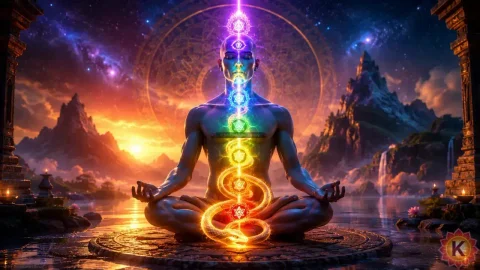
What is Kundalini Awakening? कुंडलिनी जागरण क्या है?
कुंडलिनी मेरुदंड के आधार पर कुंडली मारे सोई सर्पशक्ति है। जब यह 7 चक्रों से होती हुई सहस्रार तक उठती है — तब ज्ञान का प्रकाश होता है।
Kundalini is described as a coiled serpent sleeping at the base of the spine. When it rises through the 7 chakras to the crown, it is said to grant enlightenment.
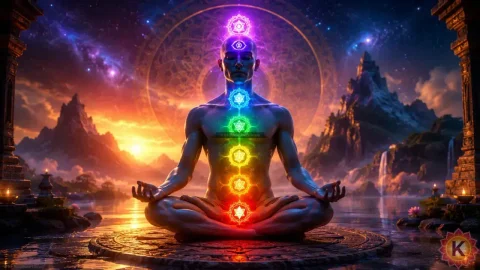
What are the 7 Chakras? 7 चक्र क्या हैं?
7 चक्र केवल कल्पना नहीं — योगिक ग्रंथ इन्हें भावनाओं, स्वास्थ्य और चेतना को नियंत्रित करने वाले ऊर्जा केंद्र बताते हैं। हर चक्र का रंग और अर्थ।
The 7 Chakras are not metaphysical fantasy — yogic texts describe them as spinning energy centers governing emotions, health, and consciousness. Learn each one.
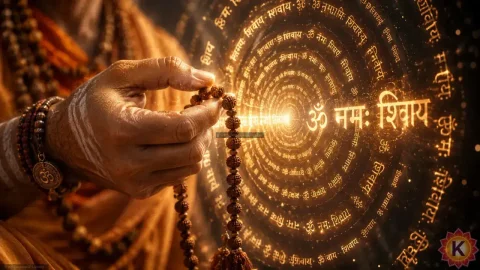
What is Mantra Japa? मंत्र जाप क्या है?
मंत्र जादुई शब्द नहीं — संस्कृत का हर अक्षर एक विशिष्ट ध्वनि आवृत्ति है। जप (दोहराना) मन को अहंकार से मुक्त कर परमात्मा तक पहुँचने का प्रशिक्षण है।
A mantra is not magic words — each Sanskrit syllable is a specific sound frequency. Japa (repetition) trains the mind to drop the ego and touch the Divine.
Sages & Gurus - ऋषि-मुनि
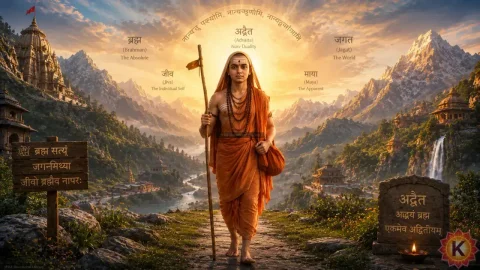
Who was Adi Shankaracharya? आदि शंकराचार्य कौन थे?
8 वर्ष में वेदों का कंठस्थ, 32 में पूरे भारत की पैदल यात्रा करके हिंदू धर्म को एकजुट किया — आदि शंकराचार्य की अविश्वसनीय जीवन गाथा।
At age 8, Adi Shankaracharya had memorized the Vedas. By 32, he had walked across India and unified Hinduism under Advaita Vedanta. His story defies belief.
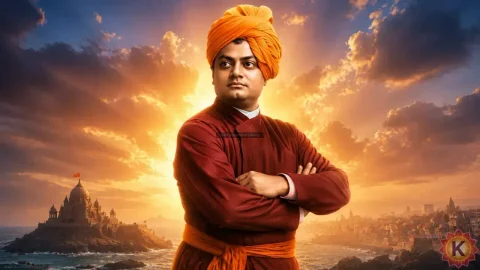
Who was Swami Vivekananda? स्वामी विवेकानंद कौन थे?
1893 में शिकागो में 'अमेरिका के भाइयों और बहनों' कहते ही तालियों की गड़गड़ाहट — स्वामी विवेकानंद ने पश्चिम को योग और वेदांत से परिचित कराया।
In 1893, Vivekananda stood in Chicago and said 'Sisters and Brothers of America' — the crowd erupted. He introduced yoga and Vedanta to the modern West.
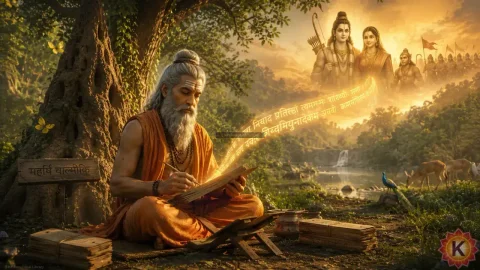
Who was Maharishi Valmiki? महर्षि वाल्मीकि कौन थे?
वाल्मीकि पहले 'रत्नाकर' नाम के डाकू थे — नारद से एक मुलाकात ने उन्हें आदिकवि बना दिया जिन्होंने 24,000 संस्कृत श्लोकों में रामायण की रचना की।
Valmiki was once a robber named Ratnakar — a single meeting with Narada transformed him into the Adi Kavi who wrote the Ramayana in 24,000 Sanskrit verses.
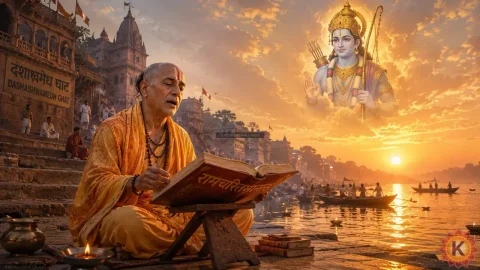
Who was Goswami Tulsidas? गोस्वामी तुलसीदास कौन थे?
तुलसीदास अपनी पत्नी पर इतने आसक्त थे कि उनकी फटकार ने उन्हें राम-भक्त बना दिया। उसी पीड़ा से जन्मी रामचरितमानस — हिंदी साहित्य का सर्वश्रेष्ठ ग्रंथ।
Tulsidas was so obsessed with his wife, she shamed him into seeking God. That rebuke gave the world the Ramcharitmanas — Hinduism's most beloved Hindi scripture.
Frequently Asked Questions
Hinduism is built on several core beliefs: Dharma (living righteously), Karma (the law of cause and effect), Samsara (the cycle of birth and rebirth), and Moksha (spiritual liberation). Hindus believe in one supreme reality (Brahman) that manifests through many deities, and that every soul is on an eternal journey toward self-realization.
'Hinduism' is the modern Western term coined in the colonial era. 'Sanatan Dharma', meaning the 'Eternal Way of Right Living', is the original self-designation used by practitioners. Sanatan Dharma emphasizes that these are not merely religious rituals but universal, eternal laws of existence applicable to all of humanity.
Karma is the universal law of cause and effect. Every action, word, and thought generates energy that will return to the doer. It is not a punishment system but a neutral law of nature — like gravity. Your present circumstances are the result of past actions, and your current choices shape your future.
Hinduism is best described as monistic — it believes in one supreme, formless reality (Brahman). The many deities like Vishnu, Shiva, and Durga are divine manifestations of that single universal consciousness, much like light passing through a prism creates many colors from one source.
The Bhagavad Gita is a 700-verse dialogue between Lord Krishna and the warrior Arjuna on the battlefield of Kurukshetra. When Arjuna breaks down before the war, Krishna teaches him about duty (Dharma), the immortality of the soul, and three paths to liberation: Karma Yoga (action), Bhakti Yoga (devotion), and Jnana Yoga (knowledge). Its core teaching: perform your duty without attachment to the outcome.
Navratri (Nine Nights) celebrates the victory of the goddess Durga over the demon Mahishasura. Over nine nights, nine forms of Shakti (Navadurga) are worshipped, representing the triumph of divine feminine power, righteousness, and light over evil.
Disclaimer
The content provided in this section is for educational and informational purposes only. OneSanatan makes no claims or guarantees regarding spiritual results, historical absolute accuracy, or religious outcomes. We are not responsible or liable for any personal interpretations or actions taken based on this information.