Why Bel Patra? - बेलपत्र का महत्व
Learn the spiritual and scientific reasons behind offering Bel Patra (Bilva leaves) to Lord Shiva. Discover the symbolism of the three leaves and its healing properties.
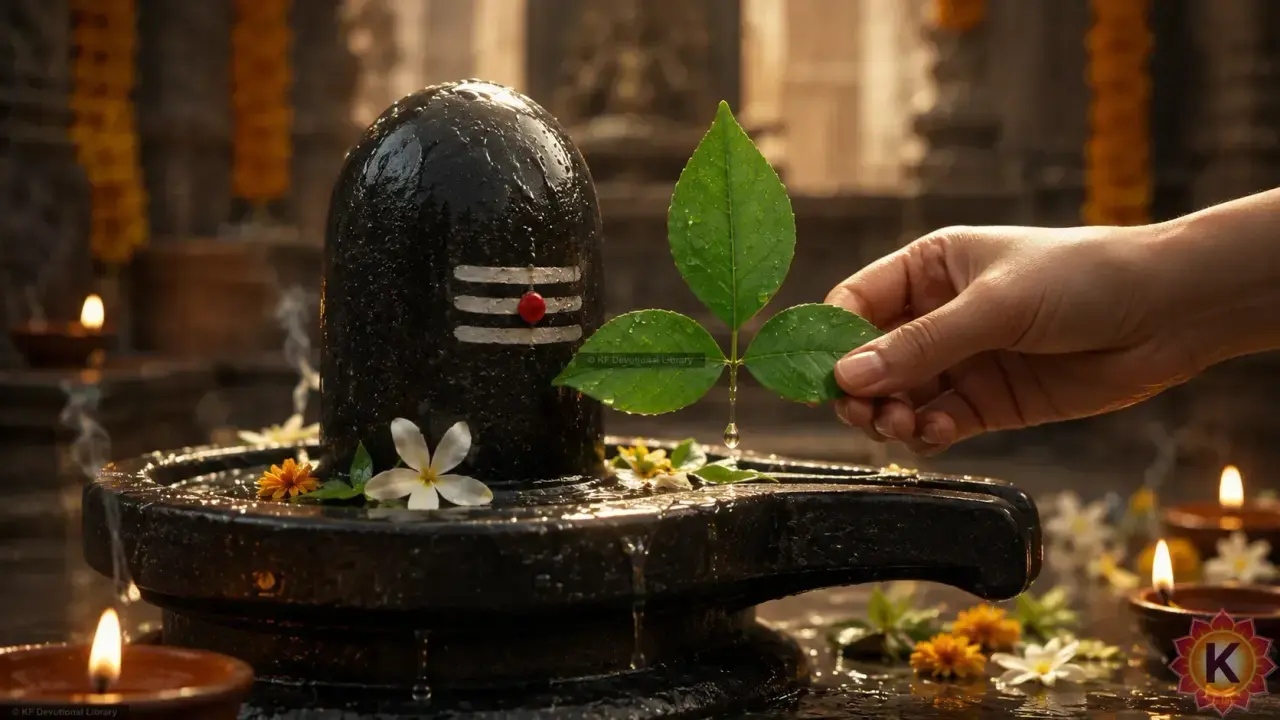
भगवान शिव को बेलपत्र अर्पित करना हिंदू पूजा में सबसे पुण्य कार्यों में से एक माना जाता है। पत्ती का त्रिकोणीय आकार शिव की तीन आँखों, उनके त्रिशूल के तीन फलकों और तीन गुणों (सत्त्व, रजस, तमस) का प्रतिनिधित्व करता है। शिव को इन पत्तियों के अर्पण से शांति मिलती है, जिनमें अद्वितीय औषधीय गुण होते हैं।
Offering Bel Patra (Bilva leaves) to Lord Shiva is considered one of the most meritorious acts in Hindu worship. The trifoliate shape of the leaf represents the three eyes of Shiva, the three prongs of his Trishul, and the three gunas (Sattva, Rajas, Tamas). Shiva, being the 'Lord of Destruction' and the 'Adi Yogi', is said to be pacified and cooled by the offering of these leaves, which possess unique medicinal and vibrational properties.
Overview
किसी भी शिव मंदिर में, विशेष रूप से सोमवार को, आप शिव लिंग को हरे रंग की त्रिकोणीय पत्तियों से ढका हुआ देखेंगे। ये बेलपत्र हैं। शिव और बिल्व वृक्ष के बीच का संबंध प्राचीन है और इसका उल्लेख कई पुराणों में मिलता है।
In any Shiva temple, especially on Mondays or during Maha Shivratri, you will see the Shiva Linga covered in green trifoliate leaves. These are Bel Patra, the leaves of the stone apple tree. The connection between Shiva and the Bilva tree is ancient and is mentioned in several Puranas, including the Shiva Purana and the Skanda Purana. It is believed that even a single Bel Patra offered with true devotion is worth more than expensive jewels. Let's explore the spiritual, legendary, and scientific reasons behind this tradition.
तीन पत्तियों का प्रतीकवाद
The Symbolism of the Three Leaves
A standard Bel Patra is always a cluster of three leaflets. In the 'Bilvashtakam', it is described as 'Tridalam Trigunakaram', which means it has three leaves and represents the three gunas. The symbolism includes:
- त्रिदेव: ब्रह्मा, विष्णु और महेश का प्रतिनिधित्व। — The Trinity: Representing Brahma, Vishnu, and Shiva.
- तीन आँखें: भगवान शिव की दो भौतिक आँखों और ज्ञान की तीसरी आँख का प्रतिनिधित्व। — The Three Eyes: Representing the two physical eyes and the third eye of wisdom of Lord Shiva.
- तीन गुण: सत्त्व, रजस और तमस का संतुलन। — The Three Gunas: Representing the balance of Sattva (purity), Rajas (activity), and Tamas (inertia).
- The Three Prongs of the Trishul: Representing Shiva's mastery over the three worlds.
कथा: शिकारी और शिव लिंग
The Legend: The Hunter and the Shiva Linga
एक प्रसिद्ध कथा एक शिकारी के बारे में है जो रात में जंगल में खो गया था। जंगली जानवरों से बचने के लिए वह बिल्व के पेड़ पर चढ़ गया। जागते रहने के लिए उसने पत्तियां तोड़कर नीचे गिराना शुरू कर दिया। अनजाने में, पेड़ के नीचे एक शिव लिंग था।
A famous legend tells of a hunter who was lost in the forest at night. To protect himself from wild animals, he climbed a Bilva tree. To stay awake, he began plucking the leaves and dropping them. Unknown to him, there was a Shiva Linga at the base of the tree. It was the night of Maha Shivratri. Shiva was so pleased with the accidental offering of the sacred leaves that he granted the hunter liberation. This story emphasizes that Shiva values the offering itself and the presence of the sacred leaf above all else.
वैज्ञानिक और औषधीय गुण
Scientific and Medicinal Properties
शिव को अक्सर गर्मी और अग्नि से जोड़ा जाता है। आयुर्वेद में बेलपत्र अपने असाधारण शीतलन गुणों के लिए जाना जाता है। शिव लिंग को इसे अर्पित करना प्रतीकात्मक रूप से देवता को 'ठंडा' करता है।
Shiva is the lord of 'Tamas' and fire, often associated with heat. Bel Patra is known in Ayurveda for its extraordinary cooling properties. It is a natural antidote to many heat-related ailments. Offering it to the Shiva Linga symbolically 'cools' the deity. The tree also has the ability to absorb and store large amounts of positive cosmic energy, which is then released when the leaf is placed on the consecrated Linga. Medicinally, the leaves are used to treat diabetes, respiratory issues, and digestive problems.
Rules for Offering Bel Patra
| Rule | Reason / Meaning |
|---|---|
| Use three joined leaves | Represents the Trinity and Three Gunas |
| Leaves must be intact | Broken leaves are considered incomplete for worship |
| Place smooth side down | The smooth side is said to carry more energy to the Linga |
| Do not pluck on Mondays | Monday is Shiva's day; plucking causes pain to his beloved tree |
| Offer with water/milk | Enhances the cooling effect and devotion |
Frequently Asked Questions
While fresh leaves are preferred, the scriptures state that Bel Patra never becomes stale in a spiritual sense. They can be washed and reused for worship if fresh ones are not available.
Monday is dedicated to Lord Shiva, and the Bilva tree is his favorite. To show respect and non-violence toward the plant on the Lord's day, devotees are advised to pluck the leaves on other days.
It is believed that keeping a Bilva tree in the northeast corner of the house wards off negative energy and brings the combined blessings of Shiva and Lakshmi.
Cultural Significance
The Bilva tree is considered the 'Sthala Vriksha' or the sacred tree of many Shiva temples. It is said that Goddess Lakshmi resides in the Bilva tree, and thus worshipping it also brings prosperity. The Bilvashtakam stotram is a popular prayer recited while offering these leaves, highlighting the eternal bond between the leaf and the Lord.
Disclaimer
The content provided on this page is for educational and informational purposes only. OneSanatan makes no claims or guarantees regarding spiritual results, historical absolute accuracy, or religious outcomes. We are not responsible or liable for any personal interpretations or actions taken based on this information.
Explore More Panchang Modules
Continue Reading