Lord Shiva Symbols Meaning - शिव प्रतीक क्या हैं?
Unlock the deep spiritual meaning of Lord Shiva's symbols. Learn about the Trishul, Damru, crescent moon, the snake around his neck, and his matted hair.
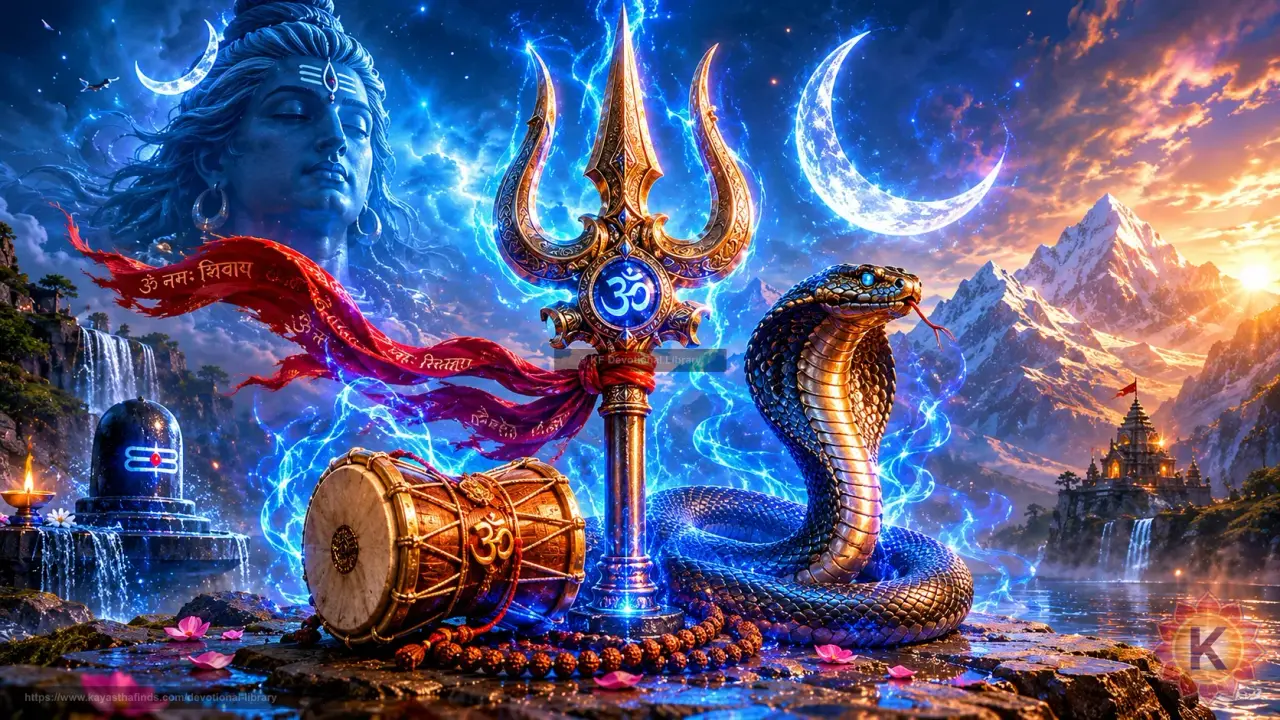
भगवान शिव के प्रतीक ब्रह्मांड के निर्माता, संरक्षक और संहारक के रूप में उनके विभिन्न पहलुओं का प्रतिनिधित्व करते हैं। उनका त्रिशूल तीन लोकों और तीन गुणों पर महारत का प्रतीक है। डमरू ब्रह्मांड की आदि ध्वनि का प्रतिनिधित्व करता है। उनके गले में सांप अहंकार और भय पर उनके नियंत्रण का संकेत देता है।
The symbols of Lord Shiva represent his various aspects as the creator, preserver, and destroyer of the universe. His Trishul (trident) symbolizes the mastery over the three worlds and three gunas. The Damru (drum) represents the primordial sound of the universe. The snake around his neck signifies his control over ego and fear, while the crescent moon on his head represents his lordship over time and the mind.
Overview
भगवान शिव, 'महादेव' या महान देव, विरोधाभासों के देवता हैं। वे गहरे ध्यान में बैठे तपस्वी भी हैं और तांडव करने वाले ब्रह्मांडीय नर्तक भी। उनकी शारीरिक बनावट समृद्ध प्रतीकवाद से भरी है।
Lord Shiva, the 'Mahadeva' or the Great God, is a deity of paradoxes. He is the ascetic sitting in deep meditation and also the cosmic dancer performing the Tandava. His physical appearance is filled with rich symbolism, where every object he holds or wears is a lesson in spiritual science. To understand Shiva is to understand the cycle of life, death, and rebirth. Let's explore the profound meanings behind the most iconic symbols associated with him.
त्रिशूल: तीन आयामों पर अधिकार
The Trishul (Trident): Mastery Over Three Dimensions
The Trishul is the most recognizable symbol of Shiva. The three prongs of the trident represent several triads:
- तीन गुण: सत्त्व (शुद्धता), रजस (गतिविधि) और तमस (जड़ता)। — The Three Gunas: Sattva (purity), Rajas (activity), and Tamas (inertia). Shiva is 'Trigunatita', the one who is beyond these qualities.
- तीन लोक: भूलोक (पृथ्वी), अंतरिक्ष (आकाश) और स्वर्ग। — The Three Worlds: Bhuloka (earth), Antariksha (sky/atmosphere), and Swarga (heaven).
- समय के तीन चरण: भूत, वर्तमान और भविष्य। — The Three States of Time: Past, Present, and Future.
- The Three Nadis: Ida, Pingala, and Sushumna (the central energy channel in the subtle body).
डमरू: ब्रह्मांड की लय
The Damru: The Rhythm of the Universe
डमरू ब्रह्मांड की ध्वनि — 'शब्द ब्रह्म' का प्रतिनिधित्व करता है। जब शिव अपना ब्रह्मांडीय नृत्य करते हैं, तो डमरू की लय वह कंपन पैदा करती है जो ब्रह्मांड को अस्तित्व में लाती है।
The hourglass-shaped drum, the Damru, represents the sound of the universe — the 'Shabda Brahma'. When Shiva performs his cosmic dance, the rhythm of the Damru creates the vibrations that bring the universe into existence and eventually dissolve it. It is believed that the Sanskrit language and the 'Maheshwara Sutras' were born from the 14 sounds produced by Shiva's Damru. It symbolizes the continuous cycle of creation and destruction.
सांप: अहंकार और मृत्यु पर विजय
The Snake: Mastery Over Ego and Death
Shiva is the only deity depicted with a poisonous cobra wrapped three times around his neck. This signifies:
- अहंकार पर नियंत्रण: सांप अहंकार का प्रतिनिधित्व करता है। — Control over Ego: The snake represents the ego, which can be poisonous. Shiva has tamed it and wears it as an ornament.
- निडरता: यह भय और सबसे खतरनाक प्राणियों पर उनकी महारत को दर्शाता है। — Fearlessness: It shows his mastery over fear and the most dangerous of creatures.
- कुंडलिनी शक्ति: तीन कुंडली उस कुंडलिनी शक्ति का प्रतिनिधित्व करती हैं जो चेतना की उच्चतम अवस्था तक पहुँच गई है। — Kundalini Energy: The three coils represent the uncoiled Kundalini energy that has risen to the highest state of consciousness.
- Time: The snake is also a symbol of 'Kala' or time, which Shiva controls.
अर्धचंद्र: काल के स्वामी
The Crescent Moon: The Lord of Time
शिव के सिर पर चंद्रमा उन्हें 'चंद्रशेखर' नाम देता है। चंद्रमा मन और समय के बीतने का प्रतिनिधित्व करता है। चंद्रमा को सिर पर धारण करके, शिव संकेत देते हैं कि वे 'कालातीत' हैं।
The moon on Shiva's head gives him the name 'Chandrashekhara'. The moon represents the mind and the passage of time. By wearing the moon on his head, Shiva signifies that he is 'Kalatita' — beyond the limitations of time and the fluctuations of the mind. It also represents the waxing and waning cycles of life and nature, over which he has complete control.
Shiva's Symbols and Their Essence
| Symbol | Spiritual Essence |
|---|---|
| Trishul | Control over the 3 Gunas and 3 Worlds |
| Damru | Primordial vibration of creation |
| Snake | Overcoming ego, fear, and death |
| Moon | Mastery over time and the mind |
| Third Eye | Spiritual wisdom and destruction of illusion |
| Ash (Vibhuti) | Impermanence of the material body |
| Tiger Skin | Victory over animal instincts/desires |
Frequently Asked Questions
It symbolizes mastery over the ego, fearlessness, and the control of time (Kala). It also represents the awakened Kundalini energy.
The moon represents the mind and time. By wearing it, Shiva shows that he is the master of the mind and exists beyond the limitations of time.
They represent the three gunas (Sattva, Rajas, Tamas), the three states of time (Past, Present, Future), and the three worlds (Earth, Sky, Heaven).
Cultural Significance
These symbols are not just artistic choices; they are visual aids for meditation. A devotee contemplating the Trishul is reminded to balance their own internal gunas. These symbols define the identity of the 'Adi Yogi', the first teacher of yoga, who showed that the divine resides in the master of the self.
Disclaimer
The content provided on this page is for educational and informational purposes only. OneSanatan makes no claims or guarantees regarding spiritual results, historical absolute accuracy, or religious outcomes. We are not responsible or liable for any personal interpretations or actions taken based on this information.
Explore More Panchang Modules
Continue Reading