Life After Death - मृत्यु के बाद क्या?
Discover what happens after death in Hinduism. Explore the Garuda Purana teachings, the crossing of the Vaitarani River, Yama's judgment, and the cycle of reincarnation.
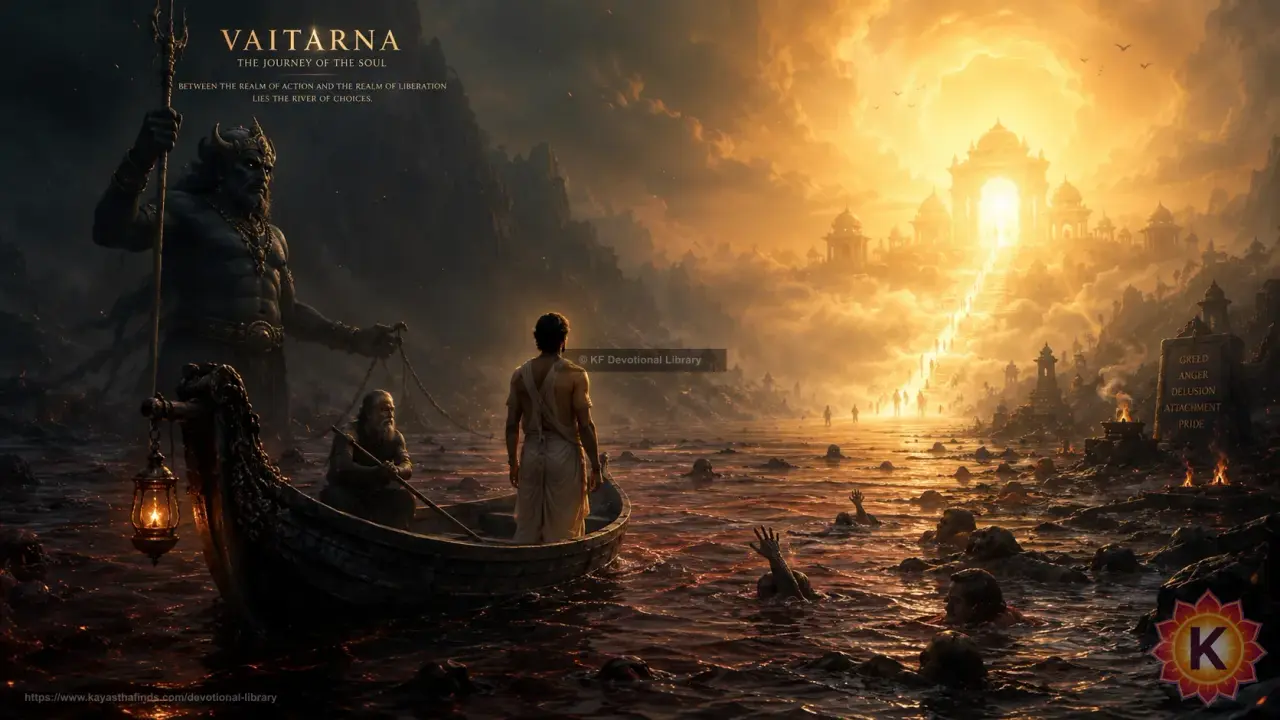
हिंदू धर्म के अनुसार, मृत्यु केवल भौतिक शरीर का अंत है, आत्मा का नहीं। मृत्यु के बाद आत्मा यमदूतों के साथ यमलोक की यात्रा करती है और उसे वैतरणी नदी पार करनी होती है। यमलोक में चित्रगुप्त उसके कर्मों का लेखा-जोखा पढ़ते हैं। अपने कर्मों के अनुसार आत्मा कुछ समय के लिए स्वर्ग या नर्क में रहती है, और फिर पृथ्वी पर नए शरीर में पुनर्जन्म लेती है।
According to Hinduism, death is merely the shedding of the physical body, while the soul (Atman) remains eternal. After death, the soul travels toward Yama Loka, guided by Yamadutas. Along the way, it must cross the formidable Vaitarani River. Upon reaching the afterlife, Chitragupta reads the soul's karmic ledger. Based on these deeds, the soul temporarily experiences Swarga (heaven) or Naraka (hell) before eventually reincarnating into a new physical body on Earth.
Overview
कई लोगों के लिए मृत्यु एक डर और रहस्य का विषय है, लेकिन हिंदू धर्म में इसे एक प्राकृतिक और अपरिहार्य बदलाव माना जाता है—यह जीवन का पूर्ण विराम नहीं, बल्कि एक अल्पविराम (comma) है। भौतिक शरीर प्रकृति के पांच तत्वों में विलीन हो जाता है, जबकि अमर आत्मा अपनी आगे की यात्रा पर निकलती है। भगवान विष्णु और गरुड़ के बीच संवाद पर आधारित 'गरुड़ पुराण' में मृत्यु के बाद आत्मा की इस यात्रा का अत्यंत विस्तार से वर्णन किया गया है।
Death is often viewed with fear and uncertainty, but in Hinduism, it is embraced as a natural, inevitable transition—a comma in the infinite sentence of existence, not a full stop. While the physical body, composed of the five elements (Pancha Bhoota), returns to nature, the eternal soul embarks on a profound onward journey. The 'Garuda Purana,' a revered Hindu scripture formatted as a dialogue between Lord Vishnu and Garuda, serves as a highly detailed, symbolic map of the afterlife, explaining exactly where the soul goes and how karma dictates its path.
मृत्यु का क्षण और यमदूतों का आगमन
The Moment of Death and the Messengers
मृत्यु के ठीक समय, आत्मा अपने सूक्ष्म शरीर (जिसमें मन, बुद्धि और अहंकार शामिल हैं) के साथ भौतिक शरीर को छोड़ देती है। ऐसा माना जाता है कि आत्मा को परलोक ले जाने के लिए यमदूत आते हैं। धर्म का पालन करने वाले और अच्छे कर्म करने वालों के लिए यह यात्रा शांतिपूर्ण होती है और यमदूत सौम्य रूप में आते हैं। वहीं, पापी और बुरे कर्म करने वालों के लिए यह अनुभव अत्यंत भयानक हो सकता है।
At the precise moment of death, the soul (Atman) exits the physical vessel along with the subtle body, which retains the mind, intellect, and ego. It is believed that Yamadutas, the cosmic messengers of Yama, arrive to escort the soul to the afterlife. For righteous individuals who lived a life of Dharma, this transition is tranquil, and the messengers appear gentle. Conversely, for those burdened by intense negative karma, the detachment process and the messengers' appearance can be a terrifying ordeal.
भयानक वैतरणी नदी को पार करना
Crossing the Perilous Vaitarani River
गरुड़ पुराण के अनुसार, आत्मा की यात्रा का एक महत्वपूर्ण पड़ाव 'वैतरणी नदी' को पार करना है, जो मृत्यु लोक और यमलोक के बीच बहती है। इसे रक्त, मवाद और गंदगी से भरी एक भयानक नदी के रूप में दर्शाया गया है। जिन लोगों ने जीवन में अच्छे कर्म और दान-पुण्य (जैसे गोदान) किए हैं, उन्हें इसे पार करने के लिए आसानी से नाव मिल जाती है। इसके विपरीत, पापी आत्माओं को बिना किसी सहारे के इस कष्टकारी नदी से गुजरना पड़ता है।
A crucial phase of the soul's journey outlined in the Garuda Purana is the crossing of the Vaitarani River, which flows between the earthly realm and Yama Loka. The river is depicted as a horrifying torrent of blood, pus, and filth, serving as a powerful purifier. Righteous souls who performed noble deeds and engaged in charity (such as Godaan or donating a cow) are provided a boat to cross peacefully. However, deeply sinful souls must wade through the terrifying river unassisted, enduring great suffering to cleanse their spiritual impurities.
यमराज का दरबार और चित्रगुप्त का बहीखाता
The Court of Yama and Chitragupta's Ledger
जब आत्मा यमलोक पहुँचती है, तो उसे यमराज के दरबार में प्रस्तुत किया जाता है। यहाँ देवताओं के लेखापाल, भगवान चित्रगुप्त, आत्मा के कर्मों की किताब (आकाशिक रिकॉर्ड) खोलते हैं, जिसमें व्यक्ति के हर विचार, शब्द और कार्य का पूरा हिसाब होता है। इसी कर्मों के बहीखाते के आधार पर धर्मराज यमराज आत्मा के अगले गंतव्य के लिए पूर्णतः न्यायपूर्ण फैसला सुनाते हैं।
Once the soul successfully reaches Yama Loka (the realm of the dead), it is presented in the cosmic court. Here, Lord Chitragupta, the divine record-keeper, consults the 'Akashic Records.' This is an absolute, flawless ledger of every single thought, word, and action the individual committed during their earthly life. Based on this precise balance of good and bad karma, Lord Yama, acting as the ultimate judge of Dharma, delivers a perfectly just verdict for the soul's next destination.
स्वर्ग, नर्क की अस्थायी अवस्था और पुनर्जन्म
Swarga (Heaven), Naraka (Hell), and Rebirth
अब्राहमिक धर्मों के विपरीत, हिंदू धर्म में स्वर्ग और नर्क स्थायी नहीं हैं। ये वे अवस्थाएँ हैं जहाँ आत्मा अपने अत्यधिक अच्छे या बुरे कर्मों का फल भोगने के लिए कुछ समय तक रहती है। जब कर्मों का हिसाब शून्य हो जाता है, तो आत्मा का वहां का समय समाप्त हो जाता है। इसके बाद, आत्मा अपनी आध्यात्मिक उन्नति और मोक्ष प्राप्ति के लिए वापस पृथ्वी पर एक नए शरीर में पुनर्जन्म लेती है।
Unlike the concept of eternal heaven or hell found in Abrahamic religions, Swarga and Naraka in Hinduism are strictly temporary realms. They are experiential states where the soul exhausts the fruits of its extreme positive or negative karma. Once the karmic 'bank account' is balanced and neutralized, the soul's time in these realms concludes. It is then sent back to the physical plane (Bhu Loka/Earth), taking on a new body and a new life to continue its spiritual evolution toward ultimate liberation (Moksha).
The Three Bodies in Hindu Philosophy
| Body Type | Sanskrit Term | What Happens at Death? |
|---|---|---|
| Physical Body | Sthula Sharira | Dies, decays, and is cremated. Returns to the 5 natural elements. |
| Subtle Body | Sukshma Sharira | Does not die. Carries the mind, ego, and accumulated karma to the next life. |
| Causal Body | Karana Sharira | The deepest blueprint or seed of karma that veils the pure consciousness. |
| The Soul | Atman | Completely immortal and eternal. It is the observer, untouched by birth or death. |
Frequently Asked Questions
The Vaitarani River is a mythological, terrifying river separating the world of the living from Yama Loka. According to the Garuda Purana, crossing it is a harsh purification process for sinners. Righteous people who lived ethically and performed charity (like donating a cow) are granted a safe, boat-assisted crossing.
Hinduism strongly discourages suicide, viewing human life as a rare opportunity for spiritual growth. Taking one's own life disrupts the natural karmic timeline. Consequently, the soul may wander aimlessly as a restless spirit (Preta) in the earthly realm until its originally allotted lifespan expires, only after which it can proceed to Yama's judgment.
The Garuda Purana is traditionally recited during the 13-day mourning period to provide step-by-step spiritual guidance to the newly departed soul. It explains the journey ahead and the importance of detaching from past lives. Additionally, it deeply comforts the grieving family by reinforcing the eternal truth that the soul is indestructible.
Cultural Significance
The detailed rituals performed after death, such as Antyeshti (cremation rites) and Shraddha (offerings to ancestors), are culturally vital. They are meticulously designed to help the soul detach from its earthly attachments and cross over peacefully to Pitru Loka (the realm of ancestors). The Hindu tradition strongly encourages families not to mourn excessively or hold onto the deceased. Extreme sorrow and weeping are believed to create emotional anchors that bind the soul to the earthly plane, causing it distress and hindering its necessary forward journey.
Disclaimer
The content provided on this page is for educational and informational purposes only. OneSanatan makes no claims or guarantees regarding spiritual results, historical absolute accuracy, or religious outcomes. We are not responsible or liable for any personal interpretations or actions taken based on this information.
Explore More Panchang Modules
Continue Reading