Why Hindus Cremate - दाह संस्कार क्यों?
Why is cremation the primary funeral rite in Hinduism? Understand the spiritual, philosophical & Vedic reasoning behind Antyesti (दाह संस्कार) — explained respectfully.
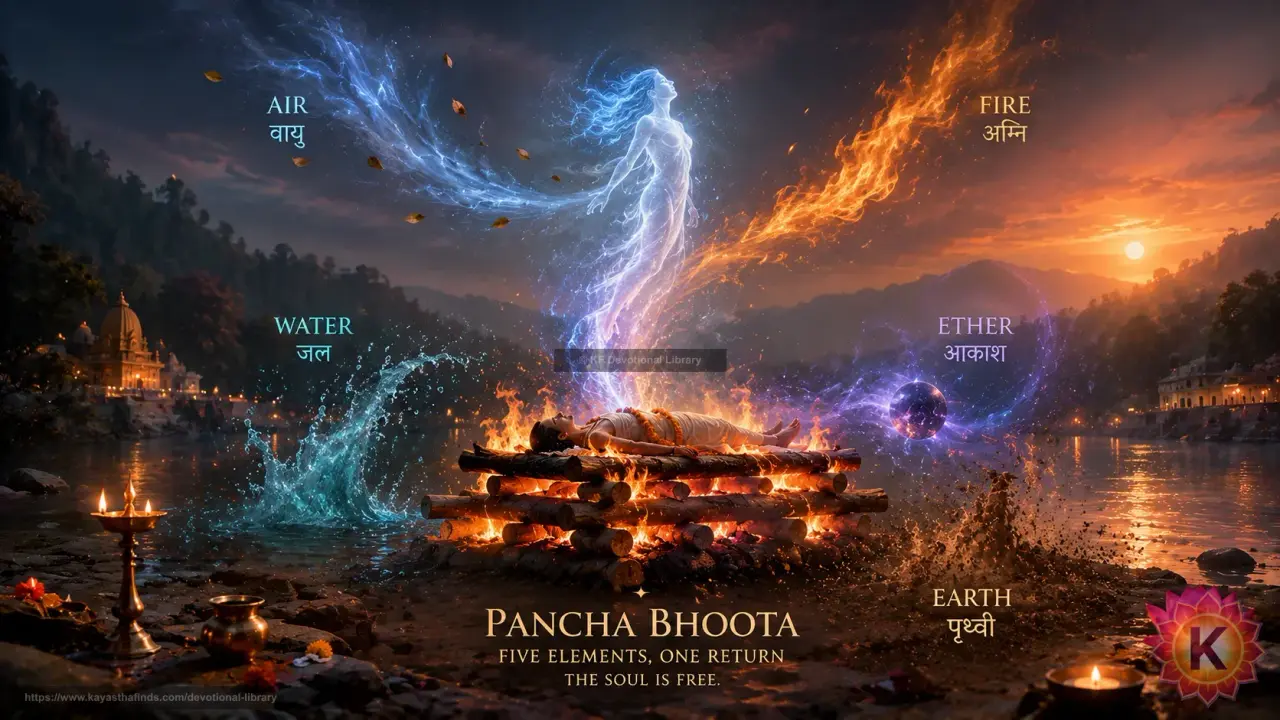
हिंदू दाह संस्कार इसलिए करते हैं क्योंकि यह माना जाता है कि यह आत्मा को भौतिक शरीर से मुक्त कर पुनर्जन्म या मोक्ष की ओर की यात्रा को तेज करता है। अग्नि दिव्य दूत है जो आत्मा को परलोक तक पहुंचाती है।
Hindus cremate the deceased because it is believed to release the soul (Atman) from the physical body, accelerating its journey toward rebirth or Moksha. Fire (Agni) is the divine messenger who carries the soul's essence to the other world. Cremation is prescribed in the Vedas as Antyesti — the last of the 16 Sanskar.
Overview
हिंदू धर्म सिखाता है कि मानव शरीर शाश्वत आत्मा (आत्मन) का एक अस्थायी पात्र है। मृत्यु अंत नहीं है — यह एक संक्रमण है। अंत्येष्टि 16वां और अंतिम संस्कार है। दाह संस्कार इसलिए निर्धारित है क्योंकि यह शरीर के भौतिक तत्वों को प्रकृति में वापस कर देता है।
Hinduism teaches that the human body is a temporary vessel for the eternal soul (Atman). Death is not an ending — it is a transition. Antyesti (अंत्येष्टि), the funeral rite, is the 16th and final Sanskar. Cremation is the prescribed method in most Hindu traditions because it rapidly returns the physical elements of the body to nature — earth, water, fire, air, and space — and symbolically frees the soul from its earthly attachment.
आत्मा और शरीर
The Soul and the Body
भगवद्गीता (2:22) में कहा गया है: 'जैसे मनुष्य पुराने वस्त्र त्यागकर नए वस्त्र धारण करता है, वैसे ही आत्मा पुराने शरीर को त्यागकर नए शरीर धारण करती है।' मृत्यु के समय भौतिक शरीर एक पुराना वस्त्र मात्र है — उसे जलाना आत्मा की मुक्ति को पूर्ण करने का एक जानबूझकर किया गया कार्य है।
The Bhagavad Gita (2:22) says: 'Just as a person puts on new garments, giving up old ones, the soul accepts new material bodies, giving up the old and useless ones.' From this perspective, the physical body at death is merely an old garment — cremating it is not violent or disrespectful; it is a deliberate act of completing the soul's release from its worn-out vehicle.
अग्नि: दिव्य संदेशवाहक
Agni: The Divine Messenger
वैदिक परंपरा में अग्नि केवल एक भौतिक तत्व नहीं है — यह एक देवता और मानव व दिव्य लोकों के बीच दिव्य मध्यस्थ है। ऋग्वेद में अग्नि को पृथ्वी से स्वर्ग तक आहुतियाँ ले जाने वाला बताया गया है।
In Vedic tradition, Agni (fire) is not merely a physical element — it is a deity, a divine mediator between the human and divine worlds. The Rigveda describes Agni as the one who carries offerings from earth to the heavens. When the body is cremated, Agni is believed to carry the essence of the departed soul to Pitriloka (the realm of ancestors) or onward toward its next stage. The eldest son lights the funeral pyre as an act of final service (Pinda Daan) to the departed parent.
पंचतत्वों में विलीन
Return to the Five Elements
हिंदू दर्शन के अनुसार भौतिक शरीर पंच महाभूतों — पृथ्वी, जल, अग्नि, वायु और आकाश — से बना है। दाह संस्कार को इन उधार लिए गए तत्वों को उनके स्रोत में वापस करने का सबसे पूर्ण और त्वरित तरीका माना जाता है।
According to Hindu philosophy, the physical body is composed of Pancha Mahabhuta — the five great elements: earth (Prithvi), water (Jal), fire (Agni), air (Vayu), and space (Akasha). Cremation is seen as the most complete way of returning these borrowed elements back to their source rapidly and completely, rather than allowing gradual, prolonged decomposition.
दाह संस्कार के अपवाद
Exceptions to Cremation
सभी हिंदुओं का दाह संस्कार नहीं होता। शिशुओं और बहुत छोटे बच्चों (2 वर्ष से कम) को आमतौर पर दफनाया जाता है क्योंकि वे दाह संस्कार के लिए बहुत पवित्र माने जाते हैं। संत और संन्यासी को भी दफनाया जा सकता है या जल समाधि दी जा सकती है।
Not all Hindus are cremated. Infants and very young children (under 2 years) are typically buried, as they are believed to be too pure for cremation. Saints and ascetics (Sanyasis) who have already renounced the body may also be buried or given Jal Samadhi (immersion in a river). These exceptions are part of the tradition, not contradictions.
Frequently Asked Questions
Cremation is believed to rapidly release the soul from physical attachment, return the body's elements to nature, and allow Agni (fire) to carry the soul's essence toward its next journey. It is prescribed in the Vedas as Antyesti.
The eldest son lighting the pyre (Mukhagni) is considered the final act of devotion and duty (Dharma) to the parent. It is also his responsibility to perform the subsequent Pinda Daan rituals that help the soul in its transition.
No. Infants (under 2 years), saints, and ascetics are typically buried rather than cremated. These are recognized exceptions within the tradition.
Cultural Significance
The practice of cremation reflects Hinduism's deep acceptance of impermanence and the cyclical nature of existence. By returning the body to fire swiftly, it prevents attachment to the corpse and encourages the living to focus on the soul's onward journey rather than grief-driven preservation. The 13-day mourning ritual that follows (Terahvi) is equally structured to help both the living and the departed transition peacefully.
Disclaimer
The content provided on this page is for educational and informational purposes only. OneSanatan makes no claims or guarantees regarding spiritual results, historical absolute accuracy, or religious outcomes. We are not responsible or liable for any personal interpretations or actions taken based on this information.
Explore More Panchang Modules
Continue Reading