Meaning of Om - ॐ (Om) का अर्थ क्या है?
Explore the deep significance of the Om (AUM) symbol and sound in Hinduism. Learn about the four states of consciousness it represents and its spiritual power.
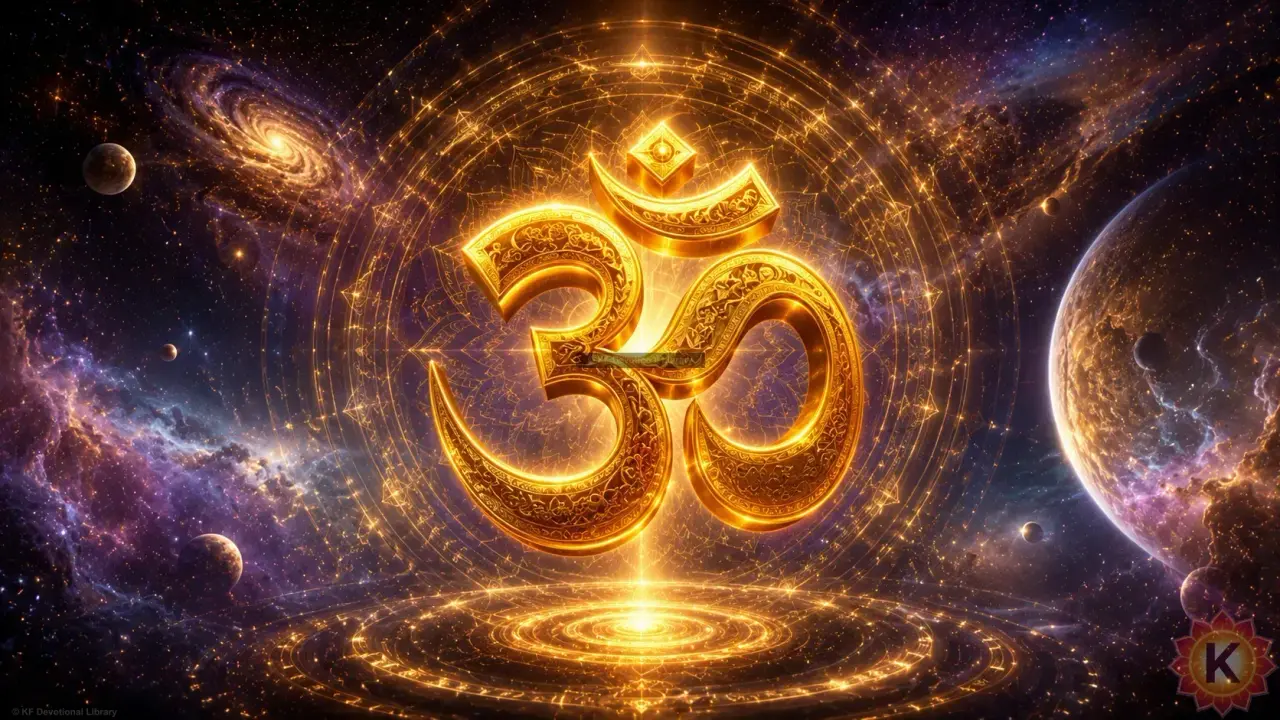
ओम (या एयूएम) हिंदू धर्म में सबसे पवित्र प्रतीक और ध्वनि है, जो 'प्रणव' या उस आदि कंपन का प्रतिनिधित्व करता है जिससे पूरे ब्रह्मांड का जन्म हुआ। यह अस्तित्व का सार और सभी मंत्रों का बीज है। ओम का प्रतीक चार अलग-अलग वक्रों और एक बिंदु से बना है, जो मानव चेतना की चार अवस्थाओं का प्रतिनिधित्व करता है।
Om (or AUM) is the most sacred symbol and sound in Hinduism, representing the 'Pranava' or the primordial vibration from which the entire universe emerged. It is the essence of all existence and the seed of all mantras. The symbol of Om consists of four distinct curves and a dot, representing the four states of human consciousness: Waking (Jagrat), Dreaming (Svapna), Deep Sleep (Susupti), and the Pure state of Bliss (Turiya). Chanting Om is believed to harmonize the mind, body, and spirit with the cosmic rhythm.
Overview
शुरुआत में ध्वनि थी, और वह ध्वनि 'ओम' थी। यह वैदिक परंपरा का मूलभूत विश्वास है। ओम सिर्फ एक शब्द नहीं है; यह ध्वनि के रूप में ईश्वर का प्राकट्य है।
In the beginning was the sound, and the sound was Om. This is the foundational belief of the Vedic tradition. Om is not just a word; it is a manifestation of the divine in the form of sound (Shabda Brahman). Whether it is the start of a prayer, a yoga session, or a meditation practice, Om is the universal bridge that connects the individual to the absolute. It is the most comprehensive symbol of Hindu philosophy, containing within itself the past, present, future, and that which is beyond time.
तीन ध्वनियाँ: ए, यू और एम
The Three Sounds: A, U, and M
The sound of Om is actually a combination of three distinct sounds, each representing a part of the cosmic cycle:
- ए (अ): गले के पिछले हिस्से से उत्पन्न ध्वनि। यह सृजन (ब्रह्मा) और जाग्रत अवस्था का प्रतिनिधित्व करती है। — A (A-kar): The sound produced from the back of the throat. It represents the beginning, the state of creation (Brahma), and the waking state of consciousness.
- यू (उ): जीभ के ऊपर से गुजरने वाली ध्वनि। यह संरक्षण (विष्णु) और स्वप्न अवस्था का प्रतिनिधित्व करती है। — U (U-kar): The sound that rolls over the tongue. It represents preservation (Vishnu), the dreaming state, and the subtle world of thoughts.
- एम (म): होठों को बंद करके उत्पन्न ध्वनि। यह विनाश (शिव) और गहरी नींद का प्रतिनिधित्व करती है। — M (Ma-kar): The sound produced by closing the lips. It represents destruction/dissolution (Shiva), the state of deep sleep, and the end of a cycle.
- The Silence (Amatra): The silence that follows the chant represents the 'Turiya' state — the pure, infinite consciousness that is the source of all sounds.
ओम प्रतीक की शारीरिक रचना
Anatomy of the Om Symbol
The visual symbol of Om is a map of the spiritual journey:
- निचला वक्र: जाग्रत अवस्था का प्रतिनिधित्व करता है। — Lower Curve: Represents the waking state, where we experience the world through our senses.
- मध्य वक्र: स्वप्न अवस्था का प्रतिनिधित्व करता है। — Middle Curve: Represents the dream state, where we are turned inward.
- ऊपरी वक्र: गहरी नींद (सुषुप्ति) का प्रतिनिधित्व करता है। — Upper Curve: Represents the state of deep sleep (unconsciousness).
- अर्धचंद्र (माया): उस भ्रम के परदे का प्रतिनिधित्व करता है जो हमें सत्य से अलग करता है। — The Crescent (Maya): Represents the veil of illusion that separates us from the truth.
- बिंदु: पूर्ण सत्य या आत्मज्ञान का प्रतिनिधित्व करता है। — The Dot (Bindu): Represents the Turiya state — the absolute truth or enlightenment that lies beyond the veil.
मंत्रोच्चार की वैज्ञानिक और आध्यात्मिक शक्ति
The Scientific and Spiritual Power of Chanting
आधुनिक विज्ञान ने दिखाया है कि ओम का जाप एक ऐसा कंपन पैदा करता है जो पृथ्वी के घूर्णन की आवृत्ति से मेल खाता है। यह कंपन केंद्रीय तंत्रिका तंत्र पर सीधा शांत प्रभाव डालता है।
Modern science has shown that chanting Om creates a vibration that matches the frequency of the Earth's rotation (around 7.83 Hz, also known as the Schumann Resonance). This vibration has a direct calming effect on the central nervous system. Spiritually, chanting Om clears the 'Nadis' (energy channels) and helps in aligning the Chakras. It is said that when one chants Om, they are vibrating in harmony with the heartbeat of the universe itself.
The Four States of Consciousness in Om
| Sound / Component | State of Mind | Corresponding Deity | Time Aspect |
|---|---|---|---|
| A (A-kar) | Waking (Jagrat) | Brahma | Past |
| U (U-kar) | Dreaming (Svapna) | Vishnu | Present |
| M (Ma-kar) | Deep Sleep (Susupti) | Shiva | Future |
| Silence (Amatra) | Pure Bliss (Turiya) | Brahman | Beyond Time |
Frequently Asked Questions
Chanting it three times is believed to bring peace to the three levels of existence: the physical body, the mind, and the soul (Adhibhautika, Adhidaivika, and Adhyatmika).
While it can be chanted anytime, the 'Brahma Muhurta' (early morning before sunrise) is considered the most powerful time as the environment is quiet and the mind is naturally calm.
No, Om is a universal sound and vibration. It transcends religions and can be used by anyone seeking mental peace, focus, and a connection to the cosmic energy.
Cultural Significance
Om is universal. It is found at the beginning of almost every Hindu, Buddhist, and Jain scripture. It is used in yoga, meditation, and even as a decorative motif representing peace and divinity. It is the signature of the divine on the canvas of the universe.
Disclaimer
The content provided on this page is for educational and informational purposes only. OneSanatan makes no claims or guarantees regarding spiritual results, historical absolute accuracy, or religious outcomes. We are not responsible or liable for any personal interpretations or actions taken based on this information.
Explore More Panchang Modules
Continue Reading