Yoga (Yog) - योग क्या है?
Explore the true meaning of Yoga beyond physical exercise. Discover the four paths of Yoga in Hinduism—Bhakti, Jnana, Karma, and Raja—and their role in spiritual evolution.
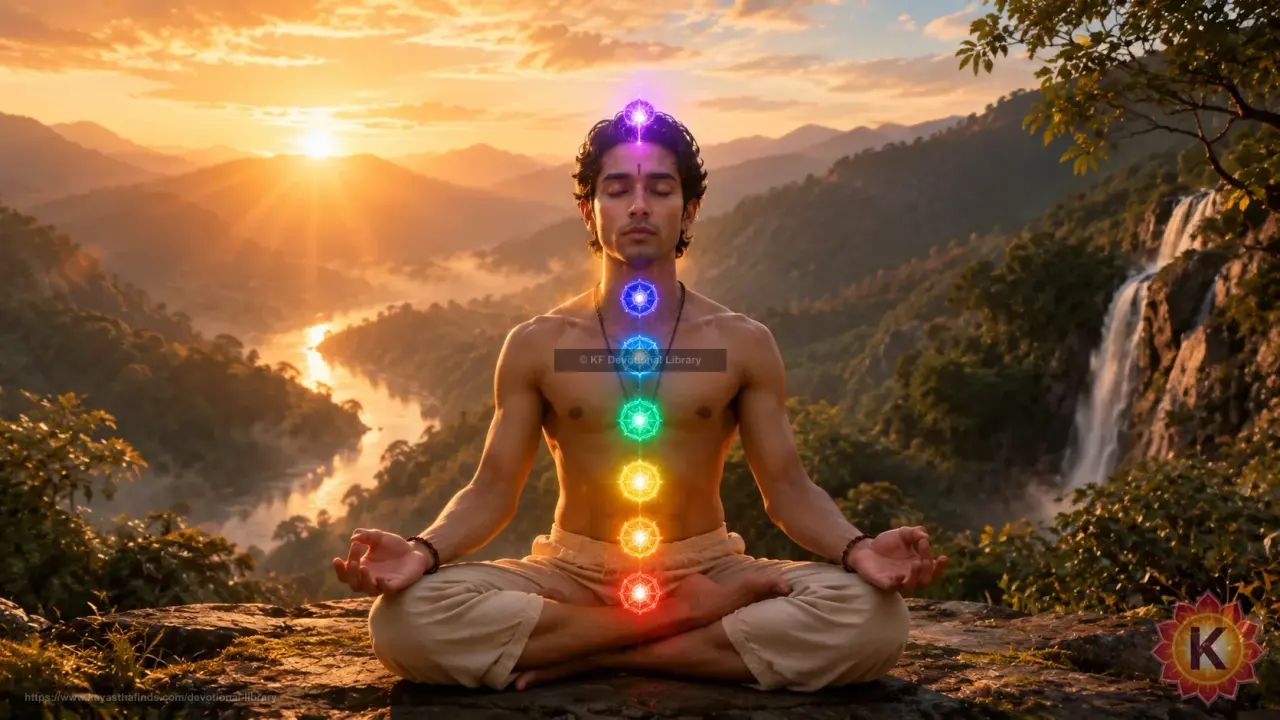
हिंदू धर्म में, योग केवल शारीरिक व्यायाम नहीं है, बल्कि व्यक्तिगत आत्मा (आत्मा) का परम चेतना (ब्रह्म) के साथ मिलन का एक गहरा आध्यात्मिक विज्ञान है। संस्कृत मूल 'युज' (जोड़ना) से बना योग, मोक्ष प्राप्ति का एक मार्ग है।
In Hinduism, Yoga is not just a physical exercise but a profound spiritual science for the union of the individual soul (Atman) with the Supreme Consciousness (Brahman). Derived from the Sanskrit root 'Yuj' (to join), Yoga encompasses various paths like Karma, Bhakti, Jnana, and Raja Yoga, all aimed at achieving liberation (Moksha).
Overview
दुनिया योग को मुख्य रूप से इसके शारीरिक आसनों के माध्यम से जानती है, लेकिन इसकी जड़ें भगवद गीता और पतंजलि के योग सूत्रों जैसे प्राचीन हिंदू ग्रंथों में गहराई से निहित हैं।
While the world knows Yoga primarily through its physical postures (Asanas), its roots lie deep in ancient Hindu scriptures like the Bhagavad Gita and Patanjali's Yoga Sutras. Yoga is a holistic system that transforms the body, mind, and spirit. It is the practice of disciplining the senses and stilling the mind to realize one's true nature.
योग के चार प्रमुख मार्ग
The Four Paths of Yoga
हिंदू धर्म विभिन्न स्वभावों के अनुकूल चार प्राथमिक मार्गों का वर्णन करता है: 1. **भक्ति योग**: ईश्वर के प्रति भक्ति और प्रेम का मार्ग। 2. **ज्ञान योग**: बुद्धि, ज्ञान और आत्म-पूछताछ का मार्ग। 3. **कर्म योग**: नि:स्वार्थ सेवा और फल की इच्छा के बिना कर्म का मार्ग। 4. **राज योग**: ध्यान और मानसिक अनुशासन का मार्ग।
Hinduism describes four primary paths to suit different temperaments: 1. **Bhakti Yoga**: The path of devotion and love for the Divine. 2. **Jnana Yoga**: The path of wisdom, knowledge, and intellectual inquiry. 3. **Karma Yoga**: The path of selfless action and service without attachment to results. 4. **Raja Yoga**: The path of meditation and mental discipline (Ashtanga Yoga).
पतंजलि के अष्टांग योग
Patanjali's Eight Limbs (Ashtanga Yoga)
ऋषि पतंजलि ने योग को आठ प्रगतिशील चरणों में संहिताबद्ध किया: यम, नियम, आसन, प्राणायाम, प्रत्याहार, धारणा, ध्यान और समाधि।
Sage Patanjali codified Yoga into eight progressive stages: 1. **Yama**: Ethical restraints. 2. **Niyama**: Internal observances. 3. **Asana**: Physical postures. 4. **Pranayama**: Breath control. 5. **Pratyahara**: Withdrawal of senses. 6. **Dharana**: Concentration. 7. **Dhyana**: Meditation. 8. **Samadhi**: State of oneness/liberation.
Frequently Asked Questions
Yoga is a spiritual science that originated within Hinduism. While it can be practiced by anyone regardless of their faith, its philosophical foundations are deeply Vedic.
Yoga means 'union'—specifically the union of the individual self with the universal self.
Cultural Significance
Yoga is India's greatest gift to the world. It transcends religion and culture, providing a universal framework for well-being. However, its spiritual core remains rooted in the Hindu vision of life as a journey toward self-realization.
Disclaimer
The content provided on this page is for educational and informational purposes only. OneSanatan makes no claims or guarantees regarding spiritual results, historical absolute accuracy, or religious outcomes. We are not responsible or liable for any personal interpretations or actions taken based on this information.
Explore More Panchang Modules
Continue Reading