Bhagavad Gita: One of the World's Greatest Guides to Life - गीता का सार क्या है?
Read the complete Bhagavad Gita summary. Discover why this ancient Hindu scripture is considered one of the world's greatest guides to life, duty, and peace.
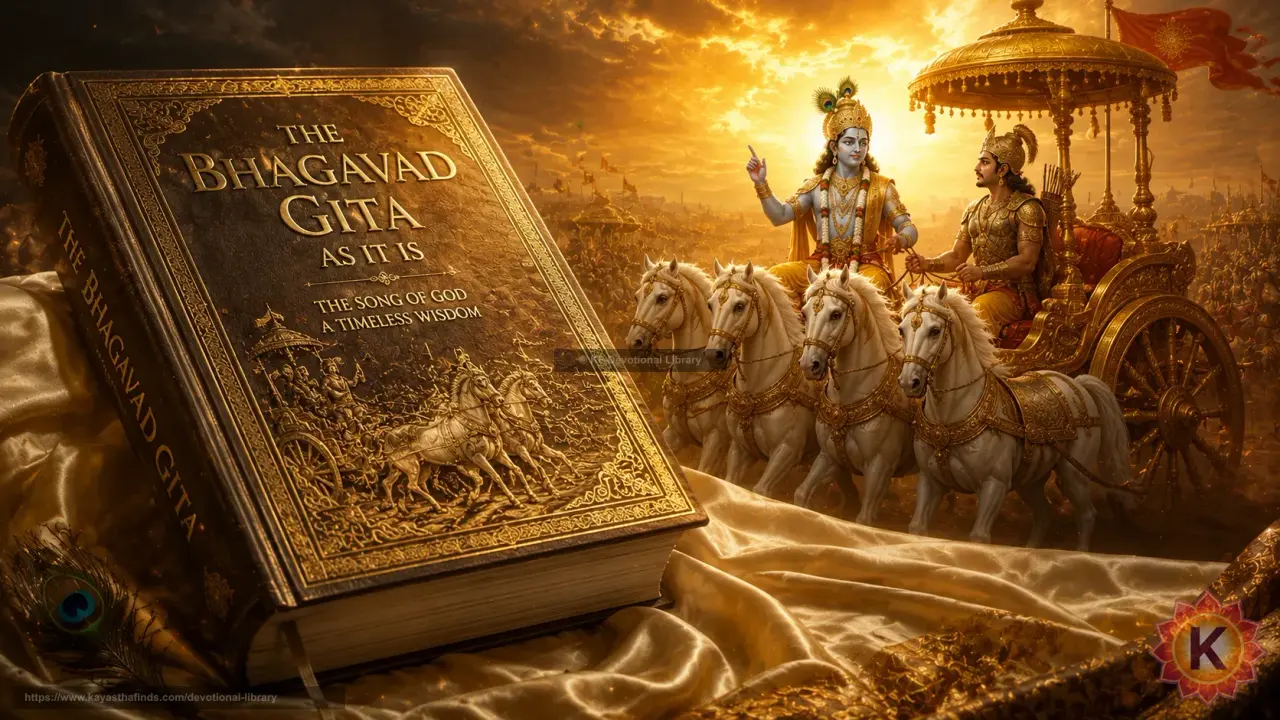
भगवद् गीता महाभारत के भीष्मपर्व में स्थित 700 श्लोकों का एक दिव्य ग्रंथ है। यह कुरुक्षेत्र के युद्धक्षेत्र में भगवान कृष्ण और राजकुमार अर्जुन के बीच का संवाद है। गीता कर्म योग, भक्ति योग और ज्ञान योग के माध्यम से मोक्ष प्राप्त करने का मार्ग सिखाती है।
The Bhagavad Gita is a 700-verse Hindu scripture embedded within the ancient epic, the Mahabharata. It is a profound philosophical dialogue between Lord Krishna and Prince Arjuna on the Kurukshetra battlefield. When Arjuna faces a moral crisis about fighting his own relatives, Krishna teaches him the true nature of duty (Dharma), the immortality of the soul, and three distinct paths to spiritual liberation: Karma Yoga (selfless action), Bhakti Yoga (devotion), and Jnana Yoga (knowledge).
Overview
भगवद् गीता, जिसका अर्थ है 'ईश्वर का गीत', विश्व के सर्वाधिक पढ़े और अनुवादित ग्रंथों में से एक है। यह कुरुक्षेत्र के युद्धक्षेत्र में स्थापित है, जहाँ महान योद्धा अर्जुन अपने ही परिजनों को सामने देखकर नैतिक संकट में पड़ जाते हैं। तब भगवान कृष्ण उन्हें कर्तव्य, आत्मा, मोक्ष और ईश्वर के स्वरूप पर एक गहन दार्शनिक प्रवचन देते हैं जो आज भी उतना ही प्रासंगिक है।
The Bhagavad Gita, literally translating to 'The Song of God', is arguably the most widely read, translated, and revered scripture in Sanatan Dharma (Hinduism). Set precisely in the middle of a battlefield (Kurukshetra) moments before a catastrophic war, it captures the ultimate human crisis. The great warrior Prince Arjuna is suddenly paralyzed by grief, anxiety, and a moral dilemma at the sight of his own cousins, teachers, and grandfathers arrayed against him. In his moment of breakdown, his charioteer—who is revealed to be Lord Krishna, the Supreme Divine—responds not just with battle strategy, but with a profound psychological and philosophical masterclass on duty, the illusion of death, and the ultimate purpose of human life. The Gita's universal message transcends religion, offering practical wisdom for anyone facing a 'battle' in their own daily life.
जीवन के लिए दुनिया के सबसे महान मार्गदर्शकों में से एक
One of the World's Greatest Guides to Life
यद्यपि गहराई से हिंदू धर्मशास्त्र में निहित है, भगवद गीता अपनी धार्मिक उत्पत्ति को पार कर मानव अस्तित्व को नेविगेट करने के लिए एक सार्वभौमिक मैनुअल बन गई है। यह चिंता और नैतिक भ्रम को दूर करने के लिए व्यावहारिक मनोवैज्ञानिक उपकरण प्रदान करता है।
Although deeply rooted in Hindu theology, the Bhagavad Gita has transcended its religious origins to become a universal manual for navigating human existence. At its core, the Gita does not demand blind faith; rather, it offers practical psychological tools to overcome anxiety, grief, and moral confusion. Whether you are a student facing an exam, an entrepreneur facing failure, or anyone facing a personal 'battle', the Gita provides a timeless framework for taking decisive, ethical action without being paralyzed by the fear of the outcome.
मोक्ष के तीन मार्ग
The Three Paths to Liberation (The Yogas)
गीता मानती है कि हर व्यक्ति की प्रकृति अलग होती है, इसलिए कृष्ण ने मोक्ष के तीन मुख्य मार्ग बताए हैं, जिनमें से प्रत्येक अपने आप में पूर्ण है।
Hinduism is highly personalized, recognizing that no two human minds are exactly alike. In the Gita, Krishna outlines three primary, equal paths (Yogas) to reach the Divine, catering to the active, the emotional, and the intellectual temperaments:
- 1. कर्म योग (कर्म का मार्ग): फल की इच्छा किए बिना अपना कर्तव्य पूरी निष्ठा से निभाना। — 1. Karma Yoga (Path of Action): For the active person. Performing your societal and familial duties selflessly, without craving success or fearing failure.
- 2. भक्ति योग (भक्ति का मार्ग): प्रेम और समर्पण से अपने अहंकार और सभी कर्मों को ईश्वर को अर्पित करना। — 2. Bhakti Yoga (Path of Devotion): For the emotional person. Surrendering one's ego and directing all love entirely to the Supreme Lord.
- 3. ज्ञान योग (ज्ञान का मार्ग): नित्य आत्मा और नश्वर शरीर के बीच विवेक से आत्म-साक्षात्कार प्राप्त करना। — 3. Jnana Yoga (Path of Knowledge): For the intellectual person. Using deep philosophical inquiry and meditation to discriminate between the eternal soul (Atman) and the temporary physical body.
निष्काम कर्म: फल की चिंता किए बिना कर्म
Nishkama Karma: The Secret to Stress-Free Success
अध्याय 2, श्लोक 47 में गीता की सबसे प्रसिद्ध शिक्षा है: 'कर्मण्येवाधिकारस्ते मा फलेषु कदाचन' — तुम्हें कर्म करने का अधिकार है, लेकिन उसके फलों पर नहीं। निष्काम कर्म का यह सिद्धांत सिखाता है कि शांति परिणाम की चिंता में नहीं, बल्कि पूरे समर्पण के साथ कर्म करने में है। जब कोई अहंकार और आसक्ति के बिना कार्य करता है, तो प्रत्येक कर्म पूजा का रूप ले लेता है।
Chapter 2, Verse 47 contains what is arguably the Gita's most famous and globally relevant teaching: 'Karmanye vadhikaraste Ma Phaleshu Kadachana' — You have a right to perform your prescribed duty, but you are not entitled to the fruits of your actions. This principle, known as Nishkama Karma, is the ultimate antidote to modern anxiety. It teaches that peace comes from wholehearted effort in the present moment, not from an obsession with the future outcome. When you act without ego and attachment to the reward, your work itself becomes a form of meditation.
आत्मा की अमरता
The Immortality of the Soul (Atman)
गीता की एक मूलभूत शिक्षा आत्मा की अमरता है। कृष्ण अर्जुन से कहते हैं: 'न जायते म्रियते वा कदाचिन्' — आत्मा न कभी जन्म लेती है और न ही मरती है। जिस प्रकार मनुष्य पुराने वस्त्रों को त्याग कर नए वस्त्र धारण करता है, उसी प्रकार आत्मा पुराने शरीर को छोड़कर नया शरीर ग्रहण करती है। यह ज्ञान मृत्यु के भय को समाप्त करता है।
To cure Arjuna's fear of killing his relatives, Krishna delivers a foundational teaching on the immortality of the Atman (soul). Krishna explains: 'The soul is never born nor dies at any time. It is unborn, eternal, ever-existing, and primeval' (Chapter 2, Verse 20). The physical body is temporary and perishable; the soul merely changes bodies upon death, just as a person discards worn-out clothes to put on new ones. This profound understanding removes the ultimate fear of death and transforms how human beings process loss and grief.
विश्वरूप दर्शन
The Universal Form: Vishwarupa Darshan
अध्याय 11 में अर्जुन के अनुरोध पर कृष्ण ने उन्हें अपना विश्वरूप दिखाया — एक भव्य और विस्मयकारी ब्रह्मांडीय स्वरूप जिसमें संपूर्ण ब्रह्मांड, सभी देवता, सभी प्राणी और काल स्वयं समाए हुए थे। इस दर्शन से अर्जुन पूरी तरह नम्र हो गए और उन्हें यह ज्ञान हुआ कि परमात्मा ही समस्त सृष्टि में व्याप्त और उसे धारण करने वाला है।
The climax of the Gita occurs in Chapter 11, when Arjuna requests to see Krishna's true, unlimited form. Krishna grants him divine vision, and Arjuna beholds the 'Vishwarupa'—a spectacular, terrifying, and infinite cosmic form containing the entire universe. All gods, all living beings, all planets, and all of time (past, present, and future) are seen within this single, blazing entity. This overwhelming mystical experience humbles Arjuna completely, proving that the Supreme Being is the ultimate source, sustainer, and destroyer of all existence.
The Structure: 18 Chapters Divided into Three Parts
| Section (Hexad) | Chapters | Primary Focus & Teaching |
|---|---|---|
| First Hexad (The Individual) | 1 – 6 | Karma Yoga: Focuses on the individual soul (Jiva) and the path of unattached action. |
| Second Hexad (The Divine) | 7 – 12 | Bhakti Yoga: Focuses on the nature of God (Brahman) and the path of supreme devotion. |
| Third Hexad (The Union) | 13 – 18 | Jnana Yoga: Focuses on spiritual knowledge, the three Gunas (human psychology), and ultimate liberation. |
Frequently Asked Questions
The core message is to perform your Dharma (your righteous duty) to the absolute best of your ability, but without being emotionally attached to the success or failure of the outcome. By surrendering the results to the divine, you free yourself from stress and karmic debt.
The Bhagavad Gita contains exactly 18 chapters and 700 Sanskrit verses (shlokas). Each chapter deals with a specific aspect of spiritual and psychological life.
The Bhagavad Gita was composed by the ancient sage Vyasa. It is not a standalone book, but rather a 700-verse section embedded inside the massive Indian epic, the Mahabharata (specifically in the Bhishma Parva section).
Absolutely. Its teachings on anxiety management (detaching from future outcomes), leadership (valuing duty over reward), and mental clarity (distinguishing between what is permanent and temporary) are directly applicable to the stress of the 21st-century modern world.
Cultural Significance
The Bhagavad Gita has completely transcended religion to become a universal manual for ethical living and mental resilience. Mahatma Gandhi called it his 'spiritual dictionary' that guided him through India's freedom struggle. J. Robert Oppenheimer famously quoted it after the first nuclear test ('Now I am become Death, the destroyer of worlds'). Today, it continues to be studied in university philosophy departments, corporate boardrooms, and living rooms worldwide—its message proving eternally relevant.
Disclaimer
The content provided on this page is for educational and informational purposes only. OneSanatan makes no claims or guarantees regarding spiritual results, historical absolute accuracy, or religious outcomes. We are not responsible or liable for any personal interpretations or actions taken based on this information.
Explore More Panchang Modules
Continue Reading