Mahabharata Summary: The World's Greatest Story of Moral Conflict - महाभारत क्या है?
Read the complete Mahabharata summary. Discover why the world's longest epic is still the most relevant guide to justice, family conflict, and moral grey areas.
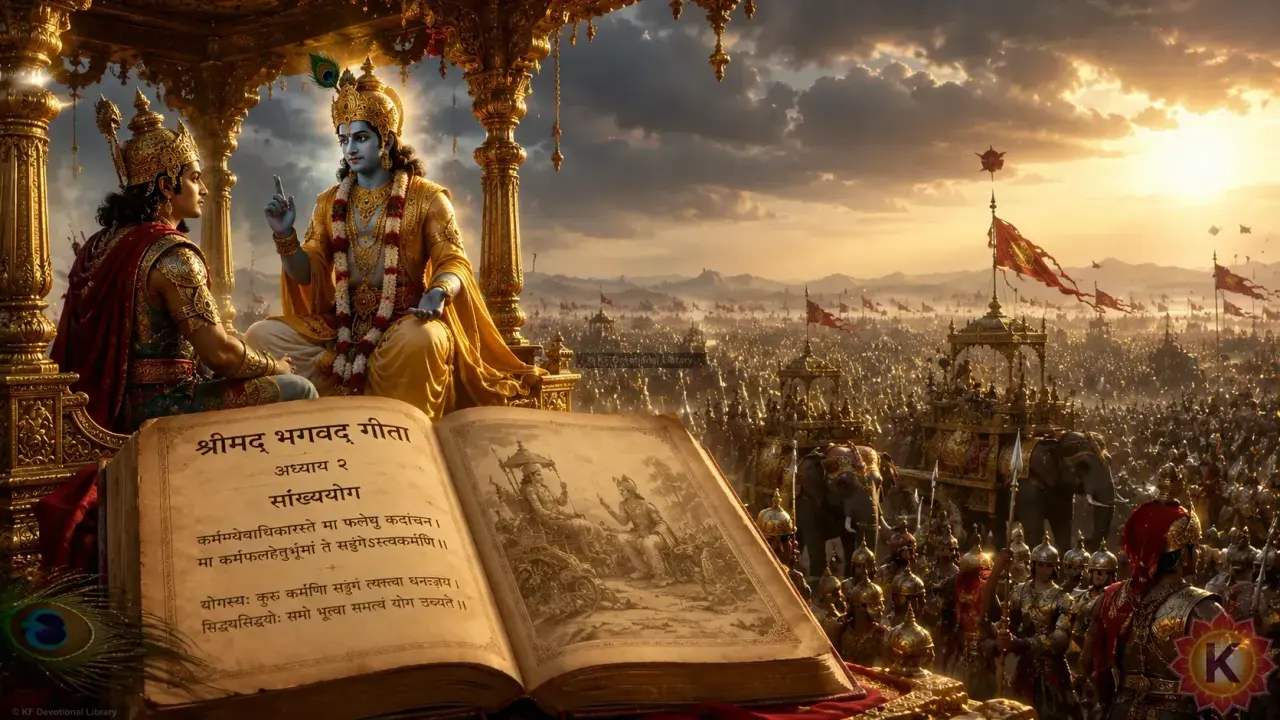
महाभारत विश्व का सबसे लंबा महाकाव्य है, जिसकी रचना महर्षि वेदव्यास ने की थी। यह हस्तिनापुर के सिंहासन के लिए पांडवों और कौरवों के बीच वंशवादी संघर्ष की कहानी है। यह संघर्ष 18 दिवसीय कुरुक्षेत्र युद्ध में परिणत होता है और भगवद् गीता इसी महाकाव्य का हिस्सा है।
The Mahabharata is the world's longest epic poem, composed by the ancient Sage Vyasa. It narrates the bitter dynastic conflict between two groups of cousins—the Pandavas and the Kauravas—for the throne of Hastinapura. The rivalry culminates in the devastating 18-day Kurukshetra War. Deeply philosophical, it contains the Bhagavad Gita and explores the complex, 'grey' nature of Dharma (duty), human ego, and karma.
Overview
रामायण के विपरीत, जो आदर्श पात्रों को स्पष्ट नैतिक शब्दों में चित्रित करती है, महाभारत मानवीय नैतिकता के धूसर क्षेत्रों में गहराई से उतरता है। इसके नायकों में दोष हैं, इसके खलनायकों की शिकायतें उचित हैं, और इसकी दुविधाएं सरल नियमों से हल नहीं होती। इसलिए इसे 'पंचम वेद' कहा जाता है। इसका केंद्रीय संदेश — 'धर्मो रक्षति रक्षितः' — आज भी उतना ही प्रासंगिक है।
Unlike the Ramayana, which portrays idealized characters making clear-cut moral choices, the Mahabharata dives deep into the messy, complicated, and 'grey' areas of human morality. It is famously said about this epic: 'Whatever is here, is found elsewhere. But whatever is not here, is nowhere else.' Its heroes are flawed, its villains have valid grievances, and its dilemmas are often unresolvable by simple rules. Because it encodes the totality of human psychology and Dharmic knowledge through its narrative, it is often called the Pancham Veda (the Fifth Veda). Its central, enduring message is 'Dharmo rakshati rakshitah' — Dharma protects those who protect it.
महाभारत आज भी प्रासंगिक क्यों है?
Why the Mahabharata Still Matters Today
अधिकांश प्राचीन ग्रंथों के विपरीत, महाभारत स्पष्ट नायकों और खलनायकों के लिए नहीं खड़ा है। इसकी नैतिक दुविधाएं आधुनिक अदालतों, व्यापारिक वार्तालापों और पारिवारिक विवादों में दिख्ती हैं।
Unlike most ancient epics that portray clear heroes and villains, the Mahabharata is profoundly modern because it refuses to do so. Its central dilemmas — Should family loyalty override justice? Can a righteous war ever be truly righteous? What do you do when every choice is a terrible one? — are the same questions that appear in every modern courtroom, every business negotiation, and every family dispute worldwide. It is not a story of black and white, but a fearless exploration of the moral grey areas that define real human life.
संघर्ष की जड़: अंधा राजा और एक शाप
The Root of the Conflict: Two Sets of Cousins
महाभारत की त्रासदी अंधे राजा धृतराष्ट्र से शुरू होती है। उनके अंधेपन के कारण हस्तिनापुर का सिंहासन उनके छोटे भाई पांडु को मिला। पांडु की अकाल मृत्यु के बाद धृतराष्ट्र संरक्षक के रूप में शासन करते हैं। उनके सौ पुत्र (कौरव), जिनका नेतृत्व अहंकारी दुर्योधन करता है, और पांडु के पांच पुत्र (पांडव), जिनका नेतृत्व धर्मराज युधिष्ठिर करते हैं, एक ही महल में प्रतिद्वंद्वी के रूप में बड़े होते हैं।
The tragedy of the Mahabharata begins in the ancient kingdom of Hastinapura. The rightful heir, Dhritarashtra, is born blind, so the throne is given to his younger brother, Pandu. When Pandu dies early, the blind Dhritarashtra rules as regent. The kingdom's future is split between two groups of cousins growing up in the same palace: Dhritarashtra's one hundred sons (the Kauravas), led by the envious Duryodhana, and Pandu's five sons (the Pandavas), led by the righteous Yudhishthira. Fueled by jealousy over the Pandavas' superior skills and popularity, Duryodhana vows to destroy them.
चौसर का खेल: वापसी का कोई रास्ता नहीं
The Dice Game: The Point of No Return
महाकाव्य का सबसे महत्वपूर्ण क्षण दुर्योधन और उसके चाचा शकुनि द्वारा षड्यंत्र से रचा गया चौसर का खेल है। युधिष्ठिर, जुए की चुनौती के प्रति अपने धर्मिक दायित्व से बंधे, खेलते रहते हैं और सब कुछ हार जाते हैं — राज्य, धन, भाई और अंततः द्रौपदी। राजसभा में द्रौपदी के चीरहरण का प्रयास किया जाता है, लेकिन भगवान कृष्ण चमत्कारिक रूप से उनकी रक्षा करते हैं। इस घोर अपमान से कुरुक्षेत्र का युद्ध अपरिहार्य हो जाता है।
The pivotal moment of the epic is a rigged game of dice, orchestrated by Duryodhana and his cunning uncle Shakuni. Yudhishthira, bound by his rigid sense of honor to accept a gambling challenge, plays blindly and loses everything—his kingdom, his wealth, his brothers, and finally Draupadi, their shared wife. In a horrifying display of arrogance, the Kauravas attempt to disrobe Draupadi in the royal court. She is miraculously saved by Lord Krishna, who provides an endless stream of cloth to cover her. This act of profound humiliation guarantees that a war of vengeance is inevitable.
18 दिवसीय कुरुक्षेत्र का युद्ध
The 18-Day Battle of Kurukshetra
13 वर्षों के वनवास और असफल शांति वार्ताओं के बाद, कुरुक्षेत्र के मैदान पर युद्ध छिड़ जाता है। 18 दिवसीय इस युद्ध में प्राचीन भारत के लगभग सभी राज्य भाग लेते हैं। प्रमुख घटनाओं में भीष्म का दसवें दिन पतन, द्रोण की मृत्यु, चक्रव्यूह में अभिमन्यु की दुखद मौत और कर्ण-अर्जुन का घातक युद्ध शामिल हैं। युद्ध दुर्योधन की पराजय और मृत्यु पर समाप्त होता है, लेकिन पांडवों की जीत कटु-मीठी है क्योंकि वे अपने अधिकांश प्रियजनों को खो चुके हैं।
After enduring 13 years of harsh exile and the failure of Krishna's peace negotiations, war breaks out on the plains of Kurukshetra. It is a world war of the ancient era, drawing in nearly every kingdom of Bharatavarsha (India). The 18-day bloodbath forces family members and beloved teachers to slaughter one another. Key tragedies include the fall of the patriarch Bhishma, the deceitful death of the teacher Drona, the heartbreaking murder of young Abhimanyu, and the fateful duel between Arjuna and his secret half-brother Karna. The Pandavas ultimately win, but the victory is utterly devastating—they inherit a kingdom of widows and ashes.
कृष्ण की भूमिका: सर्वश्रेष्ठ रणनीतिकार
Krishna's Role: The Master Strategist
भगवान कृष्ण कुरुक्षेत्र युद्ध में स्वयं नहीं लड़ते। वे अर्जुन के सारथी के रूप में कार्य करते हैं — एक भूमिका जो देखने में विनम्र लगती है लेकिन गहरी प्रतीकात्मक है। वे धर्म के सूत्रधार हैं — वह अदृश्य हाथ जो घटनाओं को उनके धर्मिक निष्कर्ष की ओर ले जाता है। कृष्ण के ज्ञान के बिना अधर्म की जीत होती।
Lord Krishna, the supreme divine avatar, refuses to lift a weapon during the war. Instead, he serves as Arjuna's charioteer. This role is profoundly symbolic; he is the 'Dharma-Sutradhar' (the unseen director) steering the chariot of humanity. Right before the war begins, when Arjuna breaks down, Krishna delivers the Bhagavad Gita—the ultimate philosophical discourse on duty, detachment, and the soul. Throughout the war, Krishna forces the Pandavas to make morally questionable choices to defeat the invincible Kaurava generals, proving that preserving the greater Dharma sometimes requires breaking smaller rules.
The Pandavas and Their Defining Traits
| Pandava Brother | Divine Father | Primary Virtue / Trait |
|---|---|---|
| Yudhishthira | Yama (God of Dharma) | Absolute truth, righteousness, and patience. |
| Bhima | Vayu (Wind God) | Colossal physical strength, fierce protectiveness, and a hot temper. |
| Arjuna | Indra (King of Gods) | Unmatched archery, intense focus, and discipline. |
| Nakula | Ashwini Kumaras | Extreme handsomeness and skill with horses and swords. |
| Sahadeva | Ashwini Kumaras | Deep wisdom, astrology, and knowledge of the future. |
Frequently Asked Questions
The Mahabharata was composed by the ancient Sage Vyasa. According to Hindu tradition, Vyasa dictated the massive epic to Lord Ganesha, who agreed to write it down on the condition that Vyasa recited it without a single pause.
The Ramayana is a story of 'ideal' morality—Lord Rama makes perfect, unambiguous choices. The Mahabharata is a story of 'practical' or 'grey' morality, where even the heroes make terrible mistakes (like gambling away their kingdom), and the villains have understandable motivations.
Karna was the greatest warrior of his age and profoundly generous, but he was born out of wedlock to Kunti and abandoned. Denied his rightful status as a Pandava prince, he faced lifelong discrimination. Bound by loyalty to Duryodhana (who gave him respect), he died fighting against his own brothers, always on the wrong side of history despite his noble heart.
The ultimate moral is 'Dharmo rakshati rakshitah' (Dharma protects those who protect it). The epic teaches that arrogance, ego, and compromising on moral duties—even out of blind love for one's family, as Dhritarashtra did—will inevitably lead to total destruction.
Cultural Significance
The Mahabharata is arguably the most influential text in Indian history, containing the very essence of Hindu philosophy. Its moral dilemmas—Should loyalty to family override justice? Is a righteous lie better than a destructive truth?—are as relevant in modern boardrooms and courtrooms as they were 3,000 years ago. Ultimately, the Kurukshetra War is interpreted by many scholars as a metaphor for the internal psychological battle every human being fights daily between their higher self (Dharma) and lower impulses (Adharma).
Disclaimer
The content provided on this page is for educational and informational purposes only. OneSanatan makes no claims or guarantees regarding spiritual results, historical absolute accuracy, or religious outcomes. We are not responsible or liable for any personal interpretations or actions taken based on this information.
Explore More Panchang Modules
Continue Reading