Ramayana Summary: Lessons on Duty, Leadership and Integrity - रामायण क्या है?
Read the complete Ramayana summary. Discover the ancient epic of Lord Rama and uncover timeless lessons on duty, leadership, and moral integrity.
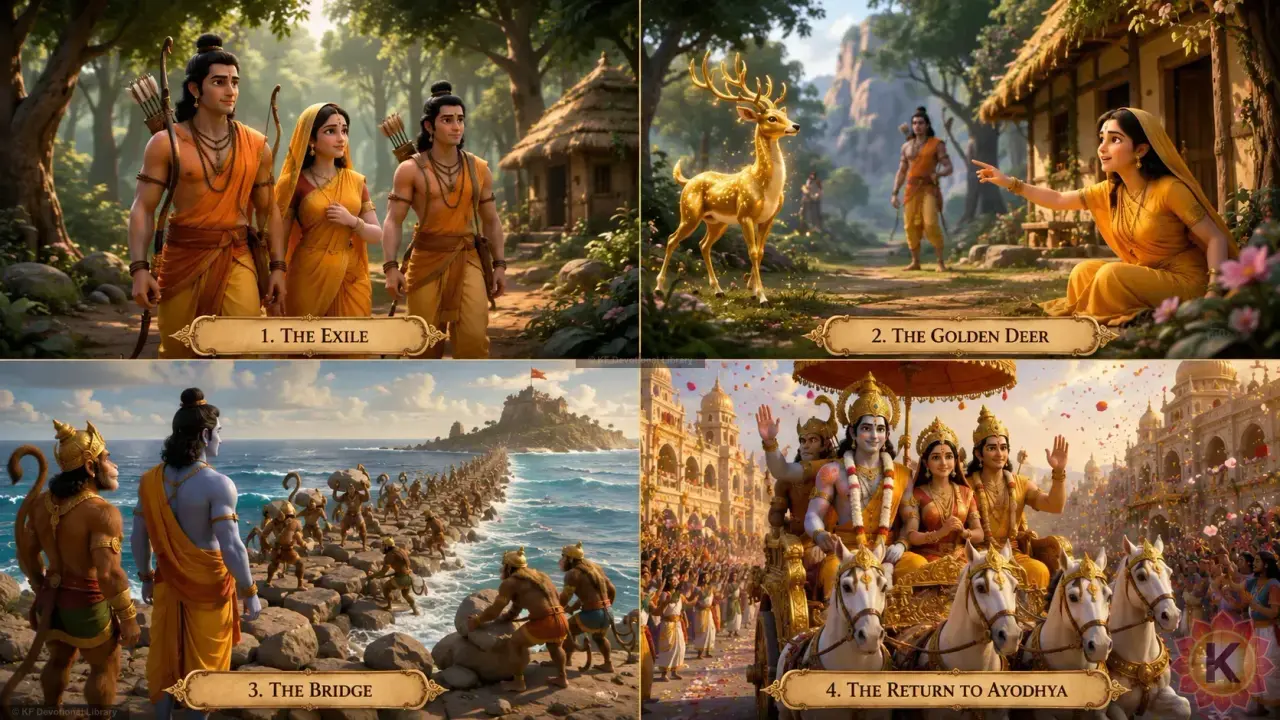
रामायण महर्षि वाल्मीकि द्वारा रचित एक प्राचीन हिंदू महाकाव्य है, जो अयोध्या के राजकुमार भगवान राम के जीवन का वर्णन करता है। इसमें उनके 14 वर्षों के वनवास, लंका के राजा रावण द्वारा सीता का हरण, और हनुमान व वानर सेना की सहायता से युद्ध कर सीता को मुक्त कराने की कहानी है। यह महाकाव्य राम राज्य की अवधारणा के माध्यम से आदर्श धर्म सिखाता है।
The Ramayana is an ancient Hindu epic written by Sage Valmiki that narrates the life of Lord Rama, the exiled prince of Ayodhya. It follows his 14-year forest exile, the abduction of his wife Sita by the demon king Ravana, and the epic war fought with the help of Hanuman to rescue her. More than just a story, the Ramayana teaches the ultimate principles of Dharma (duty) and righteous living.
Overview
रामायण केवल एक कहानी नहीं है — यह हिंदू सभ्यता का नैतिक संविधान है। महर्षि वाल्मीकि द्वारा संस्कृत में रचित, यह सात काण्डों में विभाजित है और इसमें लगभग 24,000 श्लोक हैं। रामायण आदर्श पुरुष का मानक प्रस्तुत करती है — आदर्श पुत्र, समर्पित पत्नी, वफादार भाई, निःस्वार्थ सेवक और आदर्श राजा। यह 2,000 से अधिक वर्षों से भारतीय कला, वास्तुकला और पारिवारिक मूल्यों को आकार देती रही है।
The Ramayana is far more than an ancient story—it is the moral constitution of Hindu civilization and one of the greatest epics in world literature. Written by the poet-sage Valmiki in Sanskrit over two millennia ago, it is divided into seven Kandas (books) and contains approximately 24,000 verses. While other epics wrestle with moral ambiguity, the Ramayana presents idealized archetypes for humanity to follow: the perfect son, the devoted wife, the loyal brother, the selfless servant, and the ideal king. Its timeless narrative of light overcoming darkness has shaped art, architecture, and family values not just in India, but across all of Southeast Asia.
कर्तव्य, नेतृत्व और सत्यनिष्ठा पर सबक
Lessons on Duty, Leadership and Integrity
रामायण मौलिक रूप से मानवीय मूल्यों और रिश्तों पर एक ग्रंथ है। यह सार्वभौमिक आदर्श प्रस्तुत करता है — आदर्श पुत्र, समर्पित साथी, वफादार भाई और नैतिक नेता। आधुनिक पाठकों के लिए, यह नैतिक नेतृत्व का एक खाका प्रदान करता है।
Beyond being a religious text, the Ramayana is fundamentally a treatise on human values and relationships. It presents universal archetypes—the ideal son, the devoted partner, the loyal sibling, and the ethical leader. Lord Rama's journey is not just a physical exile, but a profound demonstration of maintaining absolute moral integrity when faced with unimaginable personal loss. For modern readers, it provides an enduring blueprint for ethical leadership: sacrificing personal comfort for the greater good of society.
बाल काण्ड और अयोध्या काण्ड: राम का वनवास
Bala Kanda & Ayodhya Kanda: The Exile of the Perfect Prince
भगवान राम अयोध्या के राजा दशरथ के पुत्र के रूप में जन्म लेते हैं। वे शिव का धनुष उठाकर सीता से विवाह करते हैं। लेकिन राज्याभिषेक से ठीक पहले, उनकी सौतेली माँ कैकेयी उन्हें 14 वर्षों के लिए वनवास भेज देती है। राम बिना किसी क्रोध के इस आदेश को स्वीकार करते हैं, और सीता तथा लक्ष्मण स्वेच्छा से उनके साथ वन जाते हैं।
Lord Rama is born as the earthly avatar of Lord Vishnu to King Dasharatha of Ayodhya. He grows up to be a warrior of unmatched valor and virtue, eventually winning the hand of Princess Sita by lifting the impossible divine bow of Shiva. However, on the eve of his coronation as King, his stepmother Kaikeyi demands that her own son be crowned and that Rama be exiled to the dangerous forest for 14 years. Demonstrating supreme obedience and Dharma, Rama accepts without a trace of anger. His devoted wife Sita and loyal brother Lakshmana refuse to let him go alone and voluntarily join him in exile.
अरण्य काण्ड: रावण द्वारा सीता हरण
Aranya Kanda: The Abduction of Sita
दण्डकारण्य में, लंका का शक्तिशाली राक्षस राजा रावण सीता पर मोहित हो जाता है। वह एक स्वर्ण मृग के माध्यम से राम और लक्ष्मण को दूर भेज देता है। दोनों भाइयों की अनुपस्थिति में, रावण एक तपस्वी के वेश में आकर सीता का हरण कर उन्हें लंका ले जाता है। वृद्ध पक्षी जटायु बहादुरी से रोकने का प्रयास करता है लेकिन मारा जाता है।
While living peacefully in the Dandaka forest, tragedy strikes. The powerful and arrogant demon king of Lanka, Ravana, becomes obsessed with Sita. Using dark magic, Ravana sends a demon disguised as a mesmerizing golden deer to lure Rama and Lakshmana deep into the forest. With the brothers away, Ravana disguises himself as a helpless, wandering ascetic to trick Sita. He violently abducts her, flying her back to his island kingdom of Lanka. A brave old eagle, Jatayu, attempts to fight Ravana in the sky to save Sita but is mortally wounded.
सुंदर काण्ड: हनुमान की भक्ति
Sundara Kanda: The Devotion of Hanuman
सीता की खोज में राम वानरों से गठबंधन बनाते हैं। शक्तिशाली हनुमान — राम के परम भक्त — समुद्र पर विशाल छलांग लगाकर लंका पहुँचते हैं। वे सीता को बंदी पाते हैं, राम की अंगूठी देकर अपना परिचय देते हैं, और अपनी जलती पूँछ से लंका को जलाकर वापस आते हैं।
Desperate to find his wife, Rama forms an alliance with the Vanaras (a tribe of monkey-warriors). Among them is the mighty Hanuman, who embodies the ultimate perfection of Bhakti Yoga (devotion). Chanting Rama's name, Hanuman takes a miraculous, gigantic leap across the ocean and lands in Lanka. He secretly finds Sita imprisoned in a grove, gives her Rama's ring to prove he is an ally, and promises that Rama will come for her. Before leaving, Hanuman sets the city of Lanka ablaze with his tail to demonstrate Rama's impending wrath.
युद्ध काण्ड: लंका का युद्ध और राम राज्य
Yuddha Kanda: The Epic War and Ram Rajya
राम वानर सेना की सहायता से समुद्र पर एक पुल (राम सेतु) बनाते हैं। एक भीषण युद्ध होता है, जिसमें अंततः राम दस सिर वाले रावण का वध करते हैं। 14 वर्षों बाद राम और सीता अयोध्या लौटते हैं, और उनके स्वागत में दीवाली मनाई जाती है। राम राजा बनते हैं और 'राम राज्य' की स्थापना करते हैं।
To reach the island of Lanka, Rama and the Vanara army build a massive stone bridge across the ocean (the Ram Setu). A catastrophic and fierce war ensues. Key moments include the heroic near-death of Lakshmana, who is saved only when Hanuman flies to the Himalayas to bring an entire mountain of healing herbs (Sanjeevani). In the final, earth-shaking battle, Rama defeats the ten-headed Ravana using a divine weapon. After 14 years, Rama, Sita, and Lakshmana return to Ayodhya. The citizens light millions of oil lamps to welcome them—the origin of the Diwali festival. Rama is crowned King, establishing 'Ram Rajya', an era of perfect justice, peace, and prosperity.
Key Characters of the Ramayana & Their Symbolic Meaning
| Character | Role in the Epic | Spiritual / Symbolic Meaning |
|---|---|---|
| Lord Rama | The Exiled Prince | Absolute Dharma, the perfect human (Maryada Purushottam). |
| Sita | Rama's Wife | Purity, unwavering devotion, and strength in extreme adversity. |
| Lakshmana | Rama's Brother | Selfless loyalty, sacrifice, and protective love. |
| Hanuman | Vanara General | Supreme Bhakti (devotion) and the power of a surrendered ego. |
| Ravana | Demon King of Lanka | The human ego, unchecked lust, and the catastrophic misuse of power. |
Frequently Asked Questions
The central moral of the Ramayana is the triumph of Dharma (righteousness) over Adharma (evil). It teaches the importance of honoring one's promises, remaining devoted to family and duty, and proving that truth ultimately defeats arrogance and power.
The original Valmiki Ramayana is divided into 7 Kandas (Books): Bala Kanda, Ayodhya Kanda, Aranya Kanda, Kishkindha Kanda, Sundara Kanda, Yuddha Kanda (or Lanka Kanda), and Uttara Kanda.
The original Valmiki Ramayana was composed in ancient Sanskrit by Sage Valmiki around 500 BCE. The Ramcharitmanas was written thousands of years later in the 16th century by Goswami Tulsidas in Awadhi (a regional dialect), making the epic easily accessible to the common people.
Diwali, the Festival of Lights, commemorates the exact day Lord Rama, Sita, and Lakshmana returned to their kingdom of Ayodhya after defeating Ravana and completing their 14-year exile. Citizens lit millions of clay lamps (diyas) to guide them home in the dark.
Cultural Significance
The Ramayana is not restricted to religious texts; it is a living cultural phenomenon. For over 2,500 years, it has been performed annually as 'Ram Lila'. Its key events are globally celebrated through Dussehra (marking Ravana's defeat) and Diwali (marking Rama's victorious return). Furthermore, the epic's influence stretches far beyond India; it remains a central cultural pillar in Southeast Asian countries like Thailand (Ramakien) and Indonesia, proving its universal appeal.
Disclaimer
The content provided on this page is for educational and informational purposes only. OneSanatan makes no claims or guarantees regarding spiritual results, historical absolute accuracy, or religious outcomes. We are not responsible or liable for any personal interpretations or actions taken based on this information.
Explore More Panchang Modules
Continue Reading