Who is Lord Rama? - भगवान राम कौन हैं?
Discover the life and teachings of Lord Rama, the seventh avatar of Lord Vishnu. Learn why he is called the ideal man and his importance in Hinduism.
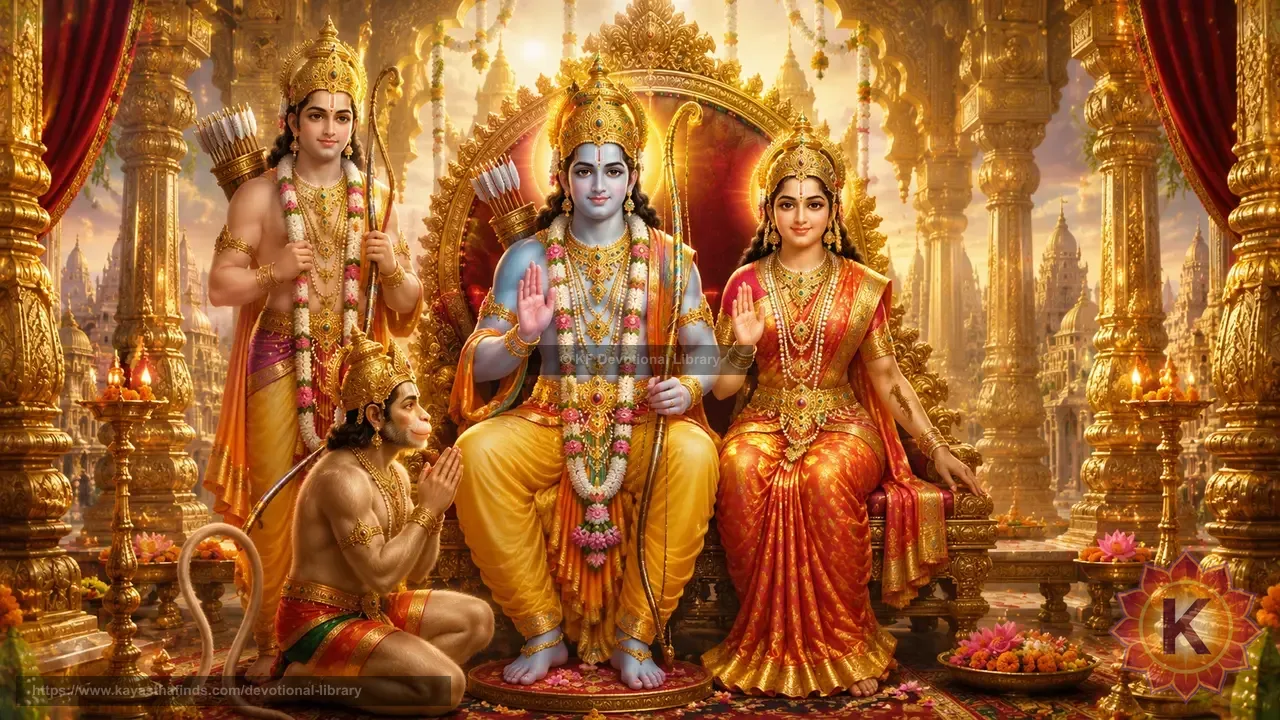
भगवान राम भगवान विष्णु के सातवें अवतार और महाकाव्य रामायण के केंद्रीय पात्र हैं। उन्हें 'मर्यादा पुरुषोत्तम' के रूप में पूजा जाता है, वे सर्वोच्च पुरुष जिन्होंने नैतिक और अनैतिक नियमों (धर्म) का पूर्ण पालन करते हुए जीवन व्यतीत किया। उनका जीवन इस बात का प्रदर्शन है कि एक मनुष्य को अपने कर्तव्यों का पालन कैसे करना चाहिए।
Lord Rama is the seventh avatar of Lord Vishnu and the central figure of the epic Ramayana. He is revered as 'Maryada Purushottam', the supreme man who lived a life of absolute adherence to moral and ethical laws (Dharma). His life is a demonstration of how a human being should fulfill their duties toward family, society, and the divine, even in the most challenging circumstances. He is the symbol of righteousness, courage, and compassion.
Overview
प्रत्येक हिंदू के हृदय में, भगवान राम का एक विशेष स्थान है। उनकी कहानी, रामायण, हजारों वर्षों से सुनाई जा रही है। राम केवल एक महाकाव्य के पात्र नहीं हैं; वे एक जीवित आदर्श हैं।
In the heart of every Hindu, Lord Rama occupies a special place as the ideal king, the ideal son, and the ideal husband. His story, the Ramayana, has been told and retold for thousands of years across Asia. But Rama is more than just a character in an epic; he is a living ideal. To say 'Ram' is to invoke the power of truth and the victory of light over darkness. Whether it's through the Ramcharitmanas or the Valmiki Ramayana, his legacy continues to guide the moral fabric of Indian society.
मर्यादा पुरुषोत्तम: आदर्श पुरुष
Maryada Purushottam: The Ideal Man
'मर्यादा पुरुषोत्तम' का अर्थ है 'मर्यादाओं में रहने वाला पुरुषों में श्रेष्ठ'। राम ने जीवन के संघर्षों का सामना एक इंसान के रूप में करना चुना। उन्होंने वनवास का दर्द सहा, पत्नी को खोने का दुख सहा, लेकिन कभी धर्म से समझौता नहीं किया।
The title 'Maryada Purushottam' literally means 'The Best among men who stays within limits (Maryada)'. Unlike other avatars who used supernatural powers to solve problems, Rama chose to face life's struggles as a human being. He experienced the pain of exile, the grief of losing his wife, and the burden of difficult decisions. Through it all, he never broke a promise and never compromised on Dharma. This human-centric approach makes him relatable and his teachings practically applicable to daily life.
राम का जीवन: त्याग की एक यात्रा
The Life of Rama: A Journey of Sacrifice
Rama's life can be divided into several key phases, each teaching a specific virtue:
- बाल कांड: उनका बचपन और राक्षसों का वध। — Bala Kanda: His childhood and the killing of demons with Sage Vishwamitra, representing the protection of the innocent.
- अयोध्या कांड: पिता के वचन को निभाने के लिए 14 साल का वनवास स्वीकार करना। — Ayodhya Kanda: His willing acceptance of 14 years of exile to keep his father's word, representing the highest form of filial duty.
- अरण्य कांड: जंगल में जीवन और सीता का अपहरण। — Aranya Kanda: His life in the forest and the abduction of Sita by Ravana, representing the testing of character.
- युद्ध कांड: रावण की हार और अच्छाई की जीत। — Yuddha Kanda: The great war in Lanka and the defeat of Ravana, representing the victory of good over evil.
- उत्तर कांड: अयोध्या के राजा के रूप में शासन (राम राज्य)। — Uttara Kanda: His reign as the King of Ayodhya (Ram Rajya), representing ideal governance.
राम नाम का महत्व
The Importance of Rama Nama
हिंदू परंपरा में, 'राम' नाम अपने आप में एक शक्तिशाली मंत्र माना जाता है। इसे 'तारक मंत्र' कहा जाता है — वह ध्वनि जो संसार (पुनर्जन्म) के सागर को पार करने में मदद करती है।
In the Hindu tradition, the name 'Ram' itself is considered a powerful mantra. It is called the 'Taraka Mantra' — the sound that helps one cross the ocean of Samsara (rebirth). Even the great Lord Shiva is said to constantly meditate on the name of Rama. Chanting 'Ram-Ram' or 'Sri Rama Jai Rama Jai Jai Rama' is believed to purify the heart, remove fear, and bring mental peace. It is the name that was even written on stones to make them float in the ocean during the building of the Rama Setu.
The Four Brothers and Their Virtues
| Name | Incarnation of | Key Quality |
|---|---|---|
| Rama | Lord Vishnu | Righteousness (Dharma) |
| Lakshmana | Shesha Naag | Selfless Service / Loyalty |
| Bharata | Sudarshana Chakra | Sacrifice / Selfless Love |
| Shatrughna | Panchajanya Conch | Quiet Duty / Support |
Frequently Asked Questions
The blue color represents the vastness of the sky and the ocean. It signifies that Rama's consciousness is infinite and all-encompassing, like the divine space.
The bow (Kodanda) represents the power to maintain order and justice. The arrow represents focused action and the destruction of evil thoughts and forces.
For millions of Hindus, Rama is a historical king who lived in the Treta Yuga. Astronomical data based on planetary positions mentioned in the Ramayana suggests his birth date was around 7,000 years ago.
Cultural Significance
Lord Rama is not just a deity in India; he is a national hero. The 'Ram Leela' plays performed during Navratri and the grand celebration of Diwali are all centered around him. His birth is celebrated as Ram Navami. For centuries, 'Ram Rajya' has been the ultimate benchmark for a peaceful and prosperous society.
Disclaimer
The content provided on this page is for educational and informational purposes only. OneSanatan makes no claims or guarantees regarding spiritual results, historical absolute accuracy, or religious outcomes. We are not responsible or liable for any personal interpretations or actions taken based on this information.
Explore More Panchang Modules
Continue Reading