Ramayana Characters List - रामायण के पात्र
Meet the key characters of the Ramayana. Learn about Lord Rama, Sita, Lakshmana, Hanuman, Ravana, and others, and the roles they played in this great epic.
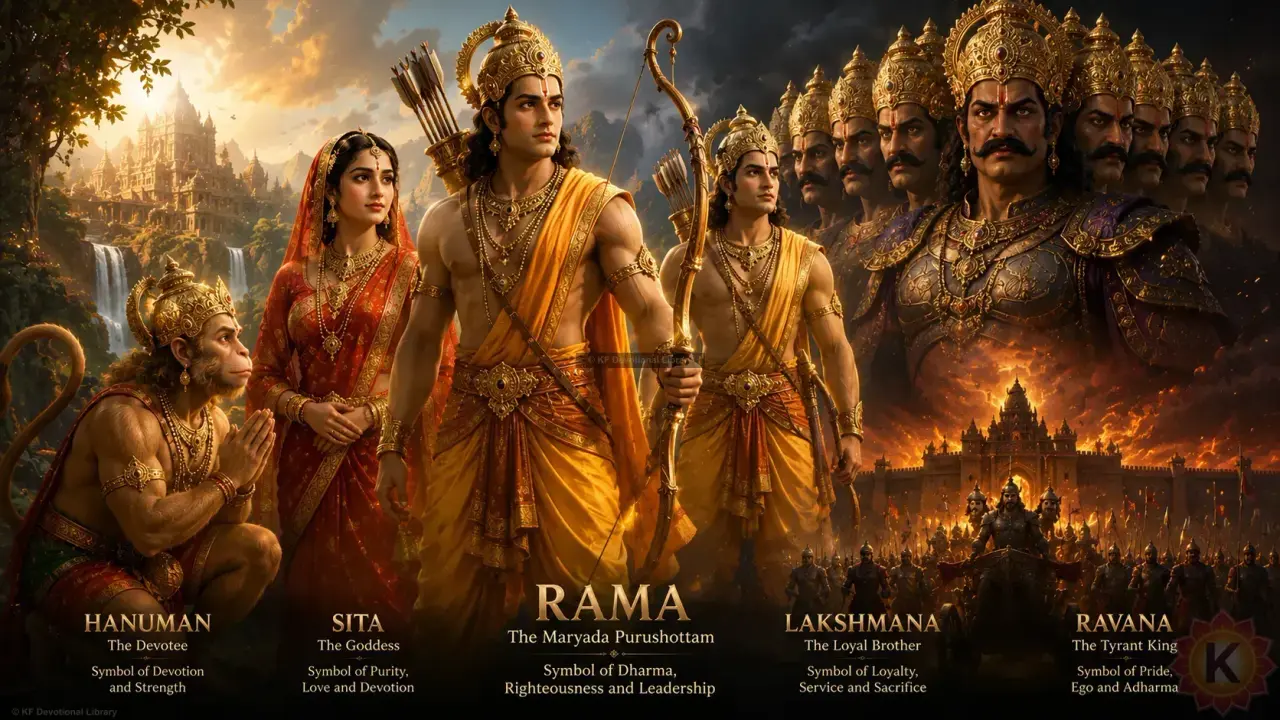
रामायण के पात्र मानव स्वभाव के विभिन्न पहलुओं और अच्छाई और बुराई के बीच संघर्ष का प्रतिनिधित्व करते हैं। आदर्श पुरुष राम और समर्पित पत्नी सीता से लेकर वफादार भाई लक्ष्मण और परम भक्त हनुमान तक, प्रत्येक पात्र नैतिकता और कर्तव्य (धर्म) का पाठ पढ़ाता है।
The characters of the Ramayana represent the various facets of human nature and the struggle between good and evil. From the ideal man Rama and the devoted wife Sita to the loyal brother Lakshmana and the ultimate devotee Hanuman, each character provides a lesson in ethics and duty (Dharma). On the other hand, characters like Ravana represent the pitfalls of ego and pride despite having great knowledge and power.
Overview
रामायण दुनिया के महानतम महाकाव्यों में से एक है, और इसकी दीर्घायु इसके अविस्मरणीय पात्रों के कारण है। ये पात्र केवल ऐतिहासिक या पौराणिक आकृतियाँ नहीं हैं; वे प्रोटोटाइप हैं जो हमारे अपने आंतरिक संघर्षों को दर्शाते हैं।
The Ramayana is one of the world's greatest epics, and its longevity is due to its unforgettable characters. These characters are not just historical or mythological figures; they are archetypes that reflect our own internal battles. Whether it's the sacrifice of Bharata, the loyalty of Sugriva, or the redemption of Vibhishana, the Ramayana offers a character for every situation in life. Let's explore the key players who shaped the events of this timeless story.
दिव्य परिवार: राम, सीता और लक्ष्मण
The Divine Family: Rama, Sita, and Lakshmana
महाकाव्य के केंद्र में भगवान विष्णु के सातवें अवतार भगवान राम की यात्रा है। वे 'मर्यादा पुरुषोत्तम' हैं। सीता उनकी पत्नी हैं जो अनुग्रह और शक्ति का अवतार हैं। लक्ष्मण निस्वार्थ सेवा और वफादारी का प्रतिनिधित्व करते हैं।
At the core of the epic is the journey of Lord Rama, the seventh avatar of Vishnu. He is the 'Maryada Purushottam', the ideal man who never strayed from Dharma even in the face of extreme hardship. Sita, his wife, is the embodiment of grace, strength, and resilience. Lakshmana, Rama's younger brother, represents selfless service and loyalty, choosing to follow his brother into exile for 14 years.
शक्ति के स्तंभ: हनुमान और सुग्रीव
The Pillars of Strength: Hanuman and Sugriva
सीता के अपहरण के बाद जब राम अपने सबसे कठिन दौर में थे, उन्हें वानर साम्राज्य में सहयोगी मिले। पवन पुत्र हनुमान परम भक्त बने। सुग्रीव गठबंधन की शक्ति का प्रतिनिधित्व करते हैं।
When Rama was at his lowest point after Sita's abduction, he found allies in the Vanara kingdom. Hanuman, the son of the wind god, became the ultimate devotee and a key strategist. His leap across the ocean to find Sita is a symbol of faith. Sugriva, the monkey king, represents the power of alliance and the importance of keeping one's word. Together with their army, they made the impossible possible.
अधर्म की शक्तियाँ: रावण और उसके परिजन
The Forces of Adharma: Ravana and his Kin
लंका के दस सिरों वाले राजा रावण एक महान विद्वान थे, लेकिन उनका अहंकार उनके पतन का कारण बना। उनका भाई कुंभकर्ण जड़ता का प्रतिनिधित्व करता है, जबकि विभीषण धर्म चुनने के साहस का प्रतिनिधित्व करते हैं।
Ravana, the ten-headed king of Lanka, was a great scholar and a devotee of Shiva, but his ego was his downfall. He represents how knowledge without character can lead to destruction. His brother Kumbhakarna represents inertia and wasted potential, while his son Meghnad represents arrogance. In contrast, Ravana's other brother, Vibhishana, represents the courage to choose Dharma over family loyalty.
Key Characters of Ramayana and Their Roles
| Character | Relationship to Rama | Quality Represented |
|---|---|---|
| Rama | Protagonist | Righteousness (Dharma) |
| Sita | Wife | Resilience and Purity |
| Lakshmana | Brother | Loyalty and Service |
| Hanuman | Devotee / Ally | Faith and Selfless Devotion |
| Ravana | Antagonist | Ego and Pride |
| Dasharatha | Father | Duty and Commitment |
| Bharata | Brother | Selfless Love and Sacrifice |
| Vibhishana | Ally (Ravana's Brother) | Conscience and Moral Courage |
Frequently Asked Questions
The original Ramayana (the Valmiki Ramayana) was written by Sage Valmiki. Later, Tulsidas wrote the Ramcharitmanas, which is very popular in North India.
Lakshmana went to exile because of his immense love and loyalty to his brother. He believed his primary duty was to serve and protect Rama and Sita during their difficult times.
Kumbhakarna remained loyal to Ravana despite knowing he was wrong. Vibhishana, on the other hand, left Ravana to join Rama in the cause of Dharma.
Cultural Significance
The characters of the Ramayana are deeply embedded in the cultural identity of India and many South Asian countries. They are celebrated through festivals like Dussehra and Diwali. Even today, being called a 'Rama' or a 'Sita' is considered the highest compliment for one's character.
Disclaimer
The content provided on this page is for educational and informational purposes only. OneSanatan makes no claims or guarantees regarding spiritual results, historical absolute accuracy, or religious outcomes. We are not responsible or liable for any personal interpretations or actions taken based on this information.
Explore More Panchang Modules
Continue Reading