Hanuman Symbolism - हनुमान प्रतीक क्या हैं?
Explore the deep symbolism of Lord Hanuman. Learn about his monkey form, the mace (Gada), his open chest, and the spiritual lessons of strength and devotion.
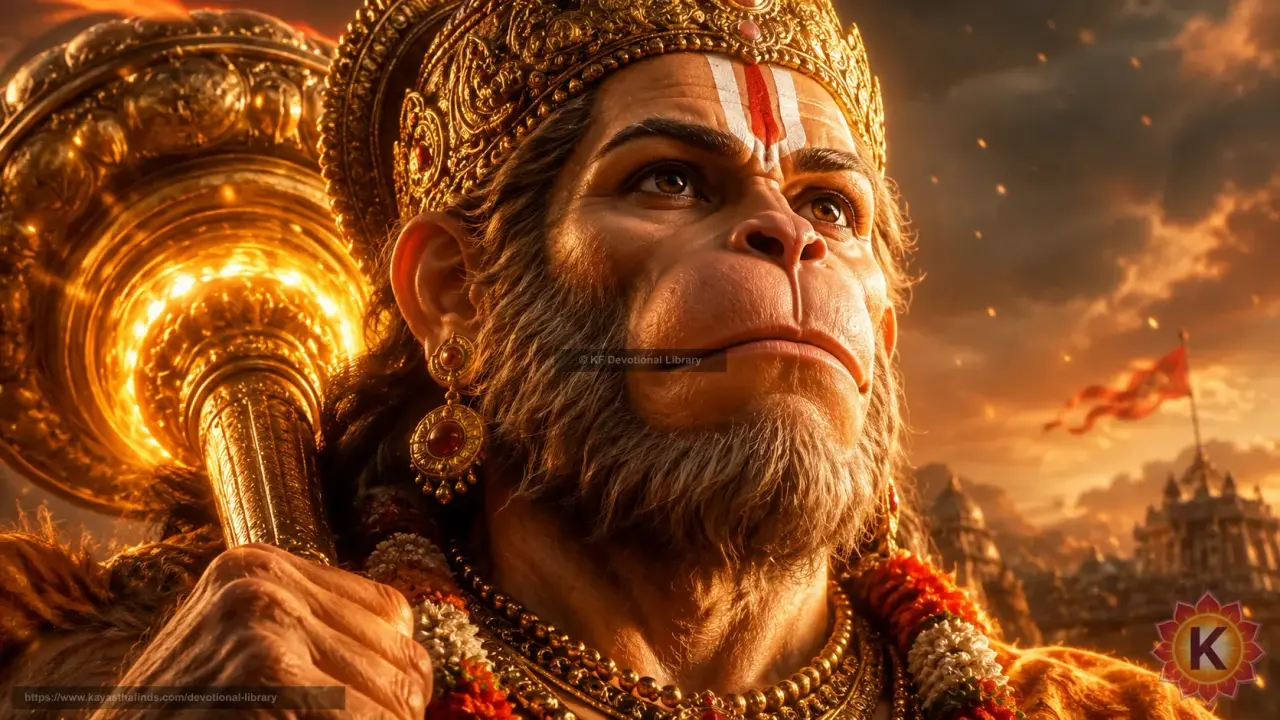
भगवान हनुमान शक्ति, साहस और निस्वार्थ भक्ति के पूर्ण संयोजन के प्रतीक हैं। उनका वानर रूप अशांत मानव मन का प्रतिनिधित्व करता है, जो ईश्वरीय भक्ति के माध्यम से अनंत शक्ति का स्रोत बन जाता है। उनकी गदा आत्म-नियंत्रण का प्रतीक है और उनका खुला सीना यह दर्शाता है कि उनके हृदय में राम और सीता का वास है।
Lord Hanuman is a symbol of the perfect combination of strength, courage, and selfless devotion. His monkey form (Vanara) represents the restless human mind, which, when channeled through devotion to the divine (Rama), becomes a source of infinite power. His weapon, the Gada, symbolizes self-control and the destruction of the ego, while his open chest reveals that Rama and Sita reside in his very heart.
Overview
भगवान हनुमान हिंदू धर्म के सबसे प्रिय और व्यापक रूप से पूजे जाने वाले देवताओं में से एक हैं। उन्हें बजरंगबली, महावीर या मारुति के नाम से भी जाना जाता है। हनुमान केवल एक पौराणिक नायक नहीं हैं; वे एक आध्यात्मिक साधक के लिए मार्गदर्शक हैं।
Lord Hanuman is one of the most beloved and widely worshipped deities in Hinduism. Often called Bajrangbali, Mahavira, or Maruti, he is the central figure of the Ramayana. But Hanuman is more than just a mythological hero; he is a map for the spiritual seeker. Every aspect of his appearance and every story of his life carries a symbolic message about how a human being can transcend their limitations and achieve greatness through surrender and discipline.
वानर रूप: चंचल मन
The Vanara Form: The Restless Mind
संस्कृत में 'कपि' या 'वानर' बंदर को संदर्भित करता है। बंदर अपनी चंचलता के लिए जाने जाते हैं। यह मानव मन के लिए एक आदर्श रूपक है। हनुमान का रूप हमें बताता है कि मन को 'राम नाम' के माध्यम से वश में किया जा सकता है।
In Sanskrit, 'Kapi' or 'Vanara' refers to a monkey. Monkeys are known for their restlessness, jumping from one branch to another without pause. This is a perfect metaphor for the human mind, which constantly jumps from one thought to another. Hanuman's form tells us that the mind can be tamed and made steady through 'Rama Nama' (the name of God). Once the 'monkey mind' is disciplined, it gains the power to leap across oceans and carry mountains.
गदा का प्रतीकवाद
Symbolism of the Gada (Mace)
हनुमान जी को लगभग हमेशा दाहिने हाथ में गदा लिए चित्रित किया जाता है। गदा आत्म-नियंत्रण और 'प्राण' की शक्ति का प्रतिनिधित्व करती है। यह अहंकार के नाश का प्रतीक है।
Hanuman is almost always depicted carrying a Gada (mace) in his right hand. The Gada represents self-control and the power of 'Prana' (life force). Unlike a sword that cuts, a mace crushes the ego. It signifies that one should have the strength to destroy their own negative tendencies. The Gada is also a symbol of sovereignty and authority over one's own senses.
अंजनेय का अर्थ: वायु के पुत्र
The Meaning of Anjaneya: The Son of Vayu
हनुमान जी वायु देवता के पुत्र हैं। हवा अदृश्य और शक्तिशाली है। 'वायु पुत्र' के रूप में हनुमान प्राणायाम या श्वास नियंत्रण पर महारत का प्रतिनिधित्व करते हैं।
Hanuman is the son of Vayu, the god of wind. Wind is invisible, powerful, and ever-present. Similarly, the spiritual energy or the 'Self' is invisible but is the source of all movement and life. Hanuman as the 'son of wind' represents the mastery over 'Pranayama' or breath control. It is through the control of breath that Hanuman achieved his 'Siddhis' (supernatural powers) like becoming smaller than an atom or larger than a universe.
भक्ति: खुला सीना
Bhakti: The Open Chest
हनुमान जी का सबसे प्रतिष्ठित चित्र वह है जिसमें वे अपना सीना फाड़कर भगवान राम और सीता को दिखाते हैं। यह 'भक्ति' का परम प्रतीक है।
The most iconic image of Hanuman is him tearing open his chest to show Lord Rama and Goddess Sita residing within. This is the ultimate symbol of 'Bhakti' (devotion). It tells us that for a true devotee, the divine is not something external to be sought in temples alone, but a living presence within the very core of one's being. It represents the state where the individual identity has completely merged with the divine will.
Hanuman's Attributes and Meanings
| Attribute | Symbolism |
|---|---|
| Monkey Form | The restless mind channeled through devotion |
| Gada (Mace) | Self-control and destruction of ego |
| Sindoor (Orange color) | Energy, passion, and total surrender |
| Tail | The power of restraint and fiery destruction of evil |
| Vayu-Putra | Mastery over breath and life-force (Prana) |
Frequently Asked Questions
The name comes from 'Vajra-Anga-Bali', meaning 'one who has a body as strong as a diamond (Vajra) and possesses great strength (Bali)'.
Legend says that when Hanuman saw Sita applying sindoor for Rama's long life, he covered his entire body with it to ensure Rama's immortality. It symbolizes his extreme and innocent devotion.
We learn that true power comes from humility and service. Despite being immensely powerful, Hanuman never used his strength for himself, but only for the service of his Lord.
Cultural Significance
Hanuman is the bridge between the human and the divine. He is the only deity in the Ramayana who is believed to be 'Chiranjivi' or immortal, still present on earth wherever the name of Rama is chanted. His popularity across India, especially on Tuesdays and Saturdays, shows the universal human desire for strength, protection, and the ability to serve a higher purpose.
Disclaimer
The content provided on this page is for educational and informational purposes only. OneSanatan makes no claims or guarantees regarding spiritual results, historical absolute accuracy, or religious outcomes. We are not responsible or liable for any personal interpretations or actions taken based on this information.
Explore More Panchang Modules
Continue Reading