16 Sanskars - 16 संस्कार क्या हैं?
Explore the 16 Hindu Sanskars, from before birth to after death. Learn the spiritual meaning and significance of these life-cycle rituals in the Vedic tradition.
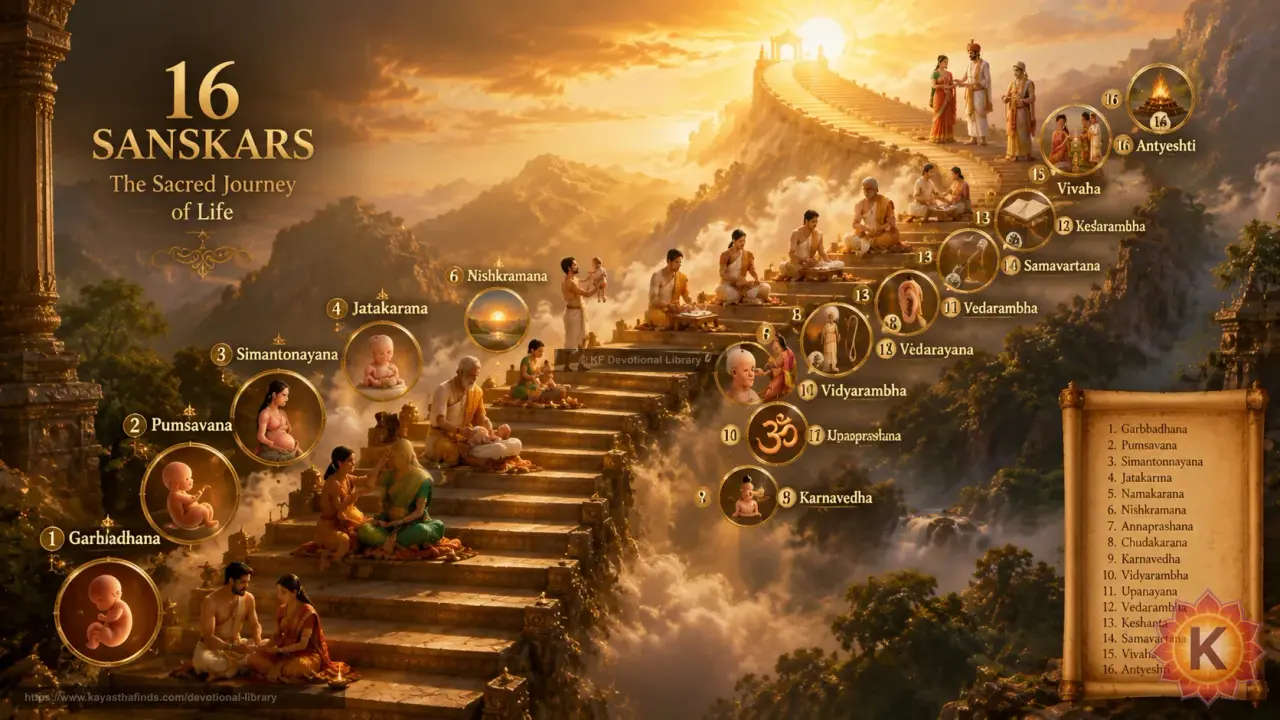
16 संस्कार, या षोडश संस्कार, हिंदू धर्म में पवित्र जीवन-चक्र अनुष्ठानों की एक श्रृंखला है जिसे गर्भाधान के क्षण से लेकर अंतिम सांस तक एक व्यक्ति को परिष्कृत और पवित्र करने के लिए डिज़ाइन किया गया है। ये संस्कार मील के पत्थर के रूप में कार्य करते हैं जो व्यक्ति के शारीरिक, मानसिक और आध्यात्मिक विकास का मार्गदर्शन करते हैं। इनमें 'उपनयन', 'विवाह' और 'अंत्येष्टि' जैसे प्रसिद्ध अनुष्ठान शामिल हैं।
The 16 Sanskars, or Shodasha Samskaras, are a series of sacred life-cycle rituals in Hinduism designed to refine and sanctify an individual from the moment of conception to the final breath. These sacraments act as milestones that guide a person's physical, mental, and spiritual development. They include well-known rituals like 'Upanayana' (Initiation), 'Vivaha' (Marriage), and 'Antyeshti' (Last Rites), as well as pre-natal rituals like 'Garbhadhana'. Each Sanskar is intended to help the individual live a life of Dharma and achieve the ultimate goal of Moksha.
Overview
वैदिक परंपरा में, एक इंसान की तुलना एक कच्चे रत्न से की जाती है जिसे अपनी आंतरिक चमक प्रकट करने के लिए अलग-अलग चरणों में पॉलिश करने की आवश्यकता होती है। 16 संस्कार आत्मा को चमकाने के उपकरण हैं।
In the Vedic tradition, a human being is compared to a rough gemstone that needs to be polished at different stages to reveal its inner brilliance. The 16 Sanskars are the polishing tools of the soul. The word 'Sanskar' literally means 'refinement' or 'purification'. These rituals are not just social gatherings; they are spiritual technologies that align the individual's consciousness with the cosmic laws. By performing these Sanskars, a person acknowledges their debt to the divine, the ancestors, and society. Let's look at the complete list of these sixteen life-changing rituals.
16 संस्कार: एक पूरी सूची
The 16 Sanskars: A Complete List
The Sanskars are traditionally divided into prenatal, childhood, educational, and householder stages:
- 1. गर्भाधान: संतान प्राप्ति के लिए किया जाने वाला पहला संस्कार। — 1. Garbhadhana: Conception ritual, praying for a healthy and virtuous child.
- 4. जातकर्म: शिशु के जन्म पर किया जाने वाला संस्कार। — 2. Pumsavana: Performed during the 3rd month of pregnancy for the child's healthy development.
- 5. नामकरण: शिशु को नाम देने का समारोह। — 3. Simantonnayana: Baby shower/parting of hair, to keep the mother happy and the womb protected.
- 8. चूड़ाकर्म (मुंडन): पहली बार बाल कटवाना। — 4. Jatakarma: Birth ritual, welcoming the newborn into the world.
- 11. उपनयन: जनेऊ धारण करना और आध्यात्मिक जीवन में प्रवेश। — 5. Namakarana: The naming ceremony, giving the child a meaningful identity.
- 15. विवाह: गृहस्थ जीवन में प्रवेश का संस्कार। — 6. Nishkramana: The child's first outing to see the sun and the moon.
- 16. अंत्येष्टि: जीवन का अंतिम संस्कार। — 7. Annaprashana: The first feeding of solid food (usually rice).
- 8. Chudakarana (Mundan): The first haircut, signifying the removal of past life traits.
- 9. Karnavedha: Ear-piercing, to activate specific energy centers in the child.
- 10. Vidyarambha: Beginning of formal learning (reading and writing).
- 11. Upanayana: The sacred thread ceremony, the second birth into spiritual life.
- 12. Vedarambha: Commencement of the study of Vedas and ancient sciences.
- 13. Keshanta (Godana): The first shaving of the beard (for young men).
- 14. Samavartana: Graduation ceremony, returning home after finishing studies.
- 15. Vivaha: The sacred union of marriage, entering the householder (Grihastha) life.
- 16. Antyeshti: The last rites, the final sacrifice and return to the five elements.
उपनयन और विवाह का महत्व
The Significance of Upanayana and Vivaha
इन सोलह संस्कारों में उपनयन और विवाह को सबसे अधिक परिवर्तनकारी माना जाता है। उपनयन को 'दूसरा जन्म' कहा जाता है। विवाह समाज की नींव है और यह दो व्यक्तियों के बीच एक 'धार्मिक' साझेदारी है।
Among the sixteen, Upanayana and Vivaha are considered the most transformative. Upanayana (the 11th Sanskar) is known as the 'second birth' because it opens the 'inner eye' of the student and initiates them into the Gayatri Mantra. Vivaha (the 15th Sanskar) is the foundation of society. It is not just a contract between two individuals but a 'Dharmic' partnership to sustain the family, support society, and pursue spiritual goals together. Both these rituals involve the 'Yagna' (fire sacrifice), signifying that the union is witnessed by the divine.
आज संस्कार क्यों महत्वपूर्ण हैं?
Why are Sanskars Important Today?
तेजी से बदलती दुनिया में, संस्कार निरंतरता और अर्थ की भावना प्रदान करते हैं। वे हमें याद दिलाते हैं कि जीवन के प्रत्येक चरण के अपने कर्तव्य और सुंदरता है।
In a fast-paced world, the Sanskars provide a sense of continuity and meaning. They remind us that every stage of life—from being a child to a student, a parent, and finally an elder—has its own duties and beauty. Performing these rituals helps in building a strong character, fostering family bonds, and maintaining a connection with our cultural roots. They provide a psychological 'anchor', ensuring that even as we progress materially, we remain grounded in our spiritual values.
Summary of Major Sanskars and Their Timing
| Sanskar | Typical Age / Stage | Key Symbolism |
|---|---|---|
| Namakarana | 10-12 days after birth | Identity and Destiny |
| Annaprashana | 6 months | Nourishment and Health |
| Chudakarana | 1-3 years | Cleanliness and New Beginning |
| Upanayana | 8-12 years | Spiritual Birth / Education |
| Vivaha | Adulthood | Union of Souls / Responsibility |
| Antyeshti | After Death | Final Liberation / Return to Nature |
Frequently Asked Questions
While many families focus on 5-6 major ones like Namakarana, Mundan, Upanayana, Vivaha, and Antyeshti, the traditional Vedic path encourages performing as many as possible to ensure the holistic refinement of the person.
In ancient Vedic times, girls (known as Brahmavadinis) were also initiated into Vedic studies. Today, many communities have revived this tradition, allowing girls to undergo Upanayana and wear the Janeu.
Mundan is the removal of birth-hair. Spiritually, it symbolizes letting go of the ego and the traits carried over from the previous life, allowing the child to start their new journey with a clean slate.
Cultural Significance
The 16 Sanskars are the thread that binds the Hindu community across the globe. Whether in a village in India or a city in America, these rituals remain the defining moments of life. They emphasize that life is not an accident but a sacred journey carefully guided by the wisdom of the sages.
Disclaimer
The content provided on this page is for educational and informational purposes only. OneSanatan makes no claims or guarantees regarding spiritual results, historical absolute accuracy, or religious outcomes. We are not responsible or liable for any personal interpretations or actions taken based on this information.
Explore More Panchang Modules
Continue Reading