Antyeshti Rituals - अंत्येष्टि संस्कार क्या है?
Understand the significance of Antyeshti, the Hindu funeral rites. Learn about the 'final sacrifice', the journey of the soul, and why cremation is preferred.
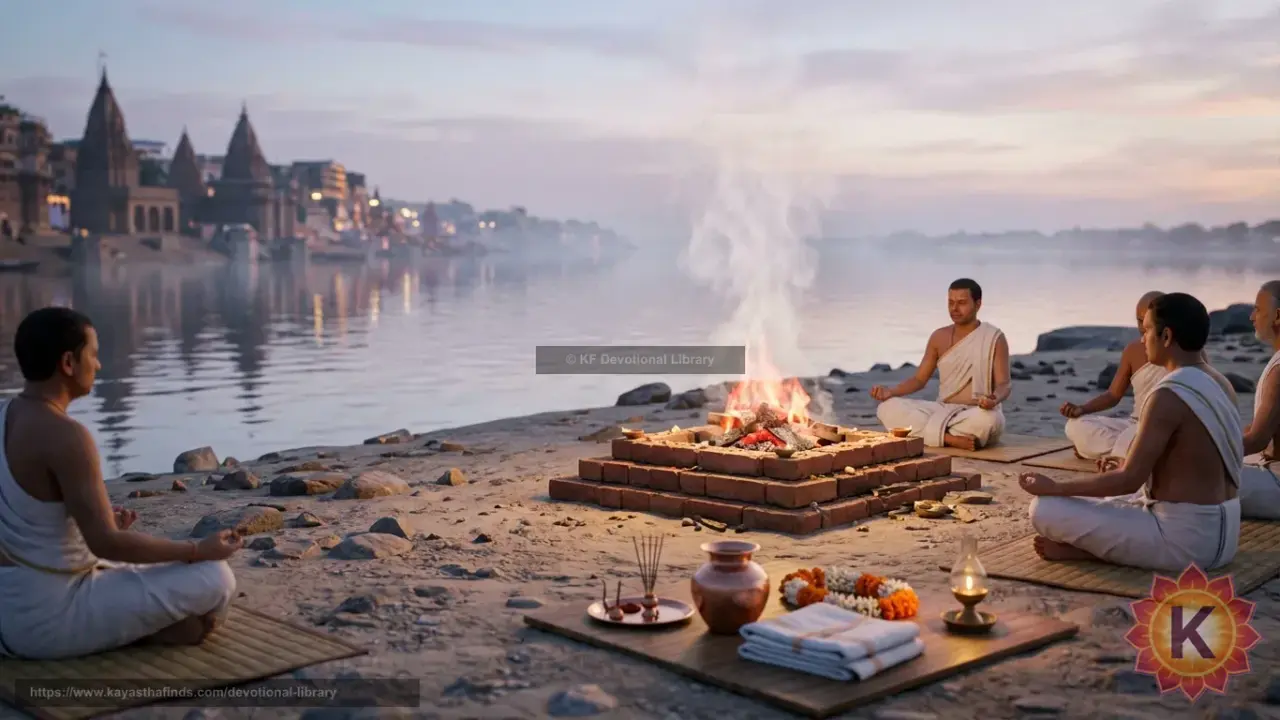
अंत्येष्टि हिंदू जीवन का अंतिम संस्कार है, जो 'अंतिम यज्ञ' का प्रतिनिधित्व करता है जहाँ शरीर को अग्नि को अर्पित किया जाता है। हिंदू धर्म शरीर को सुरक्षित रखने के बजाय शाश्वत आत्मा (आत्मा) की मुक्ति पर जोर देता है। शवदाह के माध्यम से, पांच तत्व (पंच महाभूत) जो भौतिक शरीर का निर्माण करते हैं, अपने ब्रह्मांडीय मूल में लौट जाते हैं।
Antyeshti is the final sacrament (Sanskar) in a Hindu's life, representing the 'final sacrifice' where the body is offered to the fire. Unlike many other traditions that focus on preserving the body, Hinduism emphasizes the release of the eternal soul (Atman). Through cremation, the five elements (Pancha Mahabhutas) that formed the physical body are returned to their cosmic origins—Earth to Earth, Water to Water, Fire to Fire, Air to Air, and Space to Space. This ritual is essential for the soul's peaceful transition to its next journey.
Overview
हिंदू दृष्टि में मृत्यु अस्तित्व का अंत नहीं है बल्कि आत्मा के लिए 'कपड़े बदलना' है। अंत्येष्टि संस्कार वह औपचारिक समारोह है जो इस संक्रमण को सुगम बनाता है।
Death, in the Hindu view, is not the end of existence but a 'changing of clothes' for the soul. The Antyeshti Sanskar is the formal ceremony that facilitates this transition. It is considered a sacrifice (Yagna) where the individual makes their final offering — their own physical form — to the primordial fire. This ritual is performed with deep solemnity and specific Vedic chants designed to guide the 'Prana' (life force) away from the earthly shell. Let's explore the spiritual logic and the stages of this profound final journey.
दाह संस्कार का दर्शन
The Philosophy of Cremation (Daha Sanskar)
Why do Hindus burn the body? There are three main reasons:
- वैराग्य: शरीर का त्वरित विनाश आत्मा को यह महसूस करने में मदद करता है कि भौतिक यात्रा समाप्त हो गई है। — Detachment: The quick destruction of the body helps the soul (which might be attached to its old home) realize that the physical journey is over.
- शुद्धिकरण: अग्नि अंतिम शोधक है। — Purification: Fire is the ultimate purifier. It cleanses any remaining karmic impurities associated with the physical form.
- प्रकृति में वापसी: शवदाह शरीर के उधार लिए गए तत्वों को वापस ब्रह्मांड में लौटाने का सबसे तेज़ तरीका है। — Returning to Nature: Cremation is the fastest way to return the borrowed elements of the body back to the universe, fulfilling the debt to nature.
आत्मा की यात्रा: 13 दिन
The Journey of the Soul: The 13 Days
मृत्यु के बाद 13 दिनों की अवधि (तेरहवीं) को महत्वपूर्ण माना जाता है। माना जाता है कि इस दौरान आत्मा 'प्रेत' अवस्था में रहती है। परिवार द्वारा किए गए अनुष्ठान, विशेष रूप से 'पिंड दान', आत्मा को पितृ-लोक तक पहुँचने के लिए आवश्यक ऊर्जा प्रदान करते हैं।
The period of 13 days following the death (Terahvin) is considered crucial. It is believed that the soul remains in a 'Preta' (disembodied) state during this time. The rituals performed by the family, especially the 'Pinda Daan' (offering of rice balls), provide the soul with the necessary energy to cross the 'Vaitarani' (symbolic river) and reach the realm of the ancestors (Pitri-loka). On the 13th day, a feast is held to signify the end of the mourning period and the soul's formal departure.
कर्ता: मुख्य शोककर्ता की भूमिका
Karta: The Role of the Chief Mourner
'कर्ता' (आमतौर पर सबसे बड़ा बेटा) अंतिम संस्कार करने की मुख्य जिम्मेदारी निभाता है। अंत्येष्टि करके, कर्ता 'पितृ ऋण' को पूरा करता है।
The 'Karta' (usually the eldest son) carries the primary responsibility of performing the last rites. This role is a mixture of duty and spiritual service. By performing the Antyeshti, the Karta fulfills the 'Pitra Rin' (debt to ancestors). The act of 'Mukhagni' (lighting the funeral pyre) is the final act of love and duty towards the parent or relative, ensuring that they are sent off with the highest respect and proper Vedic procedures.
The Stages of the Final Journey
| Stage | Ritual Name | Significance |
|---|---|---|
| Immediate | Ganga Jal / Tulsi | Purification of the last breath |
| Funeral | Mukhagni | Offering the body to Agni (Fire) |
| Post-Funeral | Asthi Sanchay | Collecting ashes for immersion (Visarjan) |
| Daily (1-10 days) | Pinda Daan | Nourishing the soul in the Preta state |
| 13th Day | Terahvin / Sapindikarana | Transition of the soul to Pitri-loka |
| Annual | Shraddha | Yearly remembrance and offerings |
Frequently Asked Questions
North is considered the direction of the gods and spiritual liberation. Pointing the head North is a symbolic gesture to guide the soul toward the higher realms.
Infants and enlightened Saints (Sanyasis) are often buried (Samadhi). It is believed that they do not need the purifying fire because they are already pure or have already detached themselves from the body through Yoga.
Pindas (rice balls) are symbolic offerings that provide the 'subtle body' of the deceased with the energy required to complete its journey from this world to the next.
Cultural Significance
Antyeshti is a reminder to the living about the temporary nature of life (Maya). It is performed with a sense of 'Vairagya' (detachment) but also with deep compassion. The immersion of ashes in sacred rivers like the Ganges (Asthi Visarjan) symbolizes the merging of the individual drop back into the ocean of divinity.
Disclaimer
The content provided on this page is for educational and informational purposes only. OneSanatan makes no claims or guarantees regarding spiritual results, historical absolute accuracy, or religious outcomes. We are not responsible or liable for any personal interpretations or actions taken based on this information.
Explore More Panchang Modules
Continue Reading