4 Ashram Stages - 4 आश्रम क्या हैं?
Explore the 4 Ashramas (stages of life) in Hinduism: Brahmacharya, Grihastha, Vanaprastha, and Sannyasa. Learn how they guide human evolution.
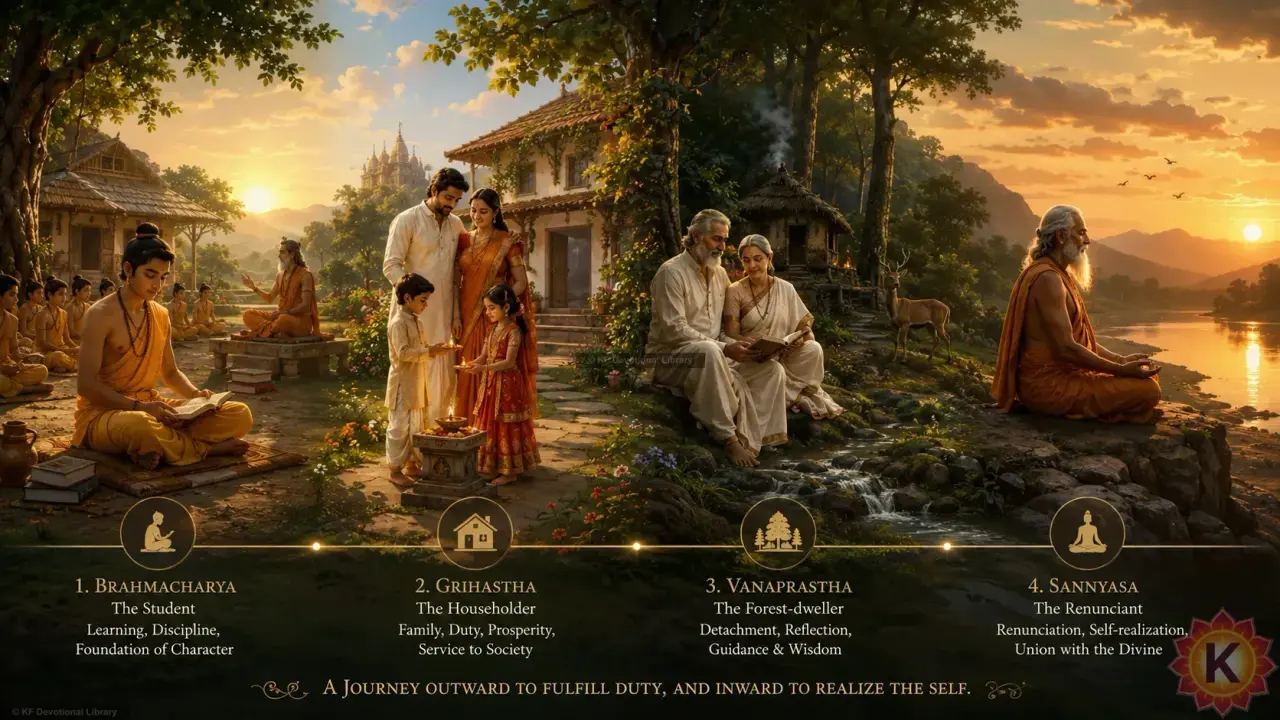
4 आश्रम हिंदू परंपरा में मानव जीवन के चार चरण हैं: ब्रह्मचर्य (विद्यार्थी), गृहस्थ (पारिवारिक जीवन), वानप्रस्थ (निवृत्ति), और संन्यास (त्याग)। यह प्रणाली एक व्यक्ति के लिए अपने शारीरिक, सामाजिक और आध्यात्मिक कर्तव्यों को संतुलित तरीके से पूरा करने के लिए एक रोडमैप प्रदान करती है।
The 4 Ashramas are the four stages of a human life in the Hindu tradition: Brahmacharya (Student), Grihastha (Householder), Vanaprastha (Retirement), and Sannyasa (Renunciation). This system provides a roadmap for an individual to fulfill their physical, social, and spiritual duties in a balanced manner. It ensures that one experiences the joys and responsibilities of the world before eventually letting go to focus on the ultimate goal of liberation (Moksha).
Overview
जीवन की वैदिक दृष्टि में, कुछ भी यादृच्छिक नहीं है। 'आश्रम' की अवधारणा मनुष्यों को जीवन की यात्रा को अनुग्रह और बुद्धिमानी के साथ नेविगेट करने में मदद करने के लिए विकसित की गई थी।
In the Vedic vision of life, nothing is random. Every year and every decade has a purpose. The concept of the 'Ashramas' was developed to help humans navigate the journey of life with grace and wisdom. An 'Ashram' literally means a 'place of exertion' or a 'stage of effort'. By dividing life into four distinct phases, Hinduism ensures that neither the world nor the spirit is neglected. It is a scientific approach to aging and spiritual evolution that is as relevant today as it was thousands of years ago.
1. ब्रह्मचर्य: सीखने का चरण
1. Brahmacharya: The Stage of Learning
यह जीवन का पहला चरण है। ध्यान शिक्षा, अनुशासन और चरित्र निर्माण पर है। एक विद्यार्थी (ब्रह्मचारी) से सादा जीवन जीने और ज्ञान प्राप्त करने पर ध्यान केंद्रित करने की अपेक्षा की जाती है।
This is the first stage of life, traditionally lasting from birth to age 25. The focus is on education, discipline, and building character. A student (Brahmachari) is expected to live a simple life, focused on acquiring knowledge (both secular and spiritual) and mastering the senses. The primary virtue of this stage is 'Shaucha' (purity) and dedication to the Guru. It is the foundation upon which the rest of life is built.
2. गृहस्थ: जिम्मेदारी का चरण
2. Grihastha: The Stage of Responsibility
25 वर्ष की आयु के आसपास, व्यक्ति शादी करने, परिवार बढ़ाने और करियर बनाने के लिए दुनिया में प्रवेश करता है। इसे सबसे महत्वपूर्ण आश्रम माना जाता है क्योंकि यह अन्य तीनों का समर्थन करता है।
Starting around age 25, the individual enters the world to marry, raise a family, and pursue a career. This is considered the most important Ashrama because it supports all the other three. The Householder (Grihastha) fulfills their duties toward society, ancestors, and the divine. Here, the pursuit of Artha (wealth) and Kama (pleasure) is encouraged, provided it is guided by Dharma. It is a stage of selfless action and supporting the community.
3. वानप्रस्थ: वैराग्य का चरण
3. Vanaprastha: The Stage of Detachment
50 वर्ष की आयु के आसपास, वानप्रस्थ की ओर संक्रमण शुरू होता है। इसका अर्थ है सांसारिक कर्तव्यों और धन की खोज से धीरे-धीरे पीछे हटना।
Around age 50, when one's children are grown and settled, the transition to Vanaprastha begins. Literally meaning 'forest-dweller', it signifies a gradual withdrawal from worldly duties and the pursuit of power and wealth. One hands over the responsibilities to the next generation and spends more time in prayer, pilgrimage, and meditation. It is a period of transition from 'doing' to 'being', preparing the mind for the final stage.
4. संन्यास: त्याग का चरण
4. Sannyasa: The Stage of Renunciation
अंतिम चरण संन्यास है, जहाँ व्यक्ति पूरी तरह से भगवान और मोक्ष पर ध्यान केंद्रित करने के लिए सांसारिक मोह-माया का त्याग कर देता है।
The final stage is Sannyasa, where the individual completely renounces worldly attachments to focus solely on God and Moksha. A Sannyasi lives a life of complete simplicity, often traveling and sharing wisdom without staying in one place for long. They no longer identify with their family name or social status. This stage represents the ultimate freedom from the ego and the complete surrender to the supreme reality.
Comparison of the 4 Ashramas
| Ashrama | Approx. Age | Primary Role | Focus |
|---|---|---|---|
| Brahmacharya | 0 - 25 | Student | Knowledge and Discipline |
| Grihastha | 25 - 50 | Householder | Family and Social Duty |
| Vanaprastha | 50 - 75 | Retiree | Spiritual Practice and Reflection |
| Sannyasa | 75 + | Renunciant | Meditation and Liberation |
Frequently Asked Questions
While the gradual progression is recommended for most, great souls like Adi Shankara or Swami Vivekananda chose to enter Sannyasa directly from Brahmacharya due to their intense spiritual calling.
Yes, it provides a psychological framework for life. It helps people understand that it's okay to let go of careers and material pursuits in later life to find inner peace.
Traditionally, a woman moved through these stages alongside her husband. However, many scriptures also recognize women who pursued independent paths of learning and renunciation (like Gargi or Akka Mahadevi).
Cultural Significance
The Ashrama system addresses the mid-life crisis and the fear of aging by giving every stage of life a positive and powerful meaning. It prevents the stagnation of the soul and ensures that human energy is utilized correctly for both social good and personal salvation.
Disclaimer
The content provided on this page is for educational and informational purposes only. OneSanatan makes no claims or guarantees regarding spiritual results, historical absolute accuracy, or religious outcomes. We are not responsible or liable for any personal interpretations or actions taken based on this information.
Explore More Panchang Modules
Continue Reading