4 Purusharthas
Understand the 4 Purusharthas in Hinduism: Dharma, Artha, Kama, and Moksha. Learn how these goals provide a balanced framework for a fulfilling life.
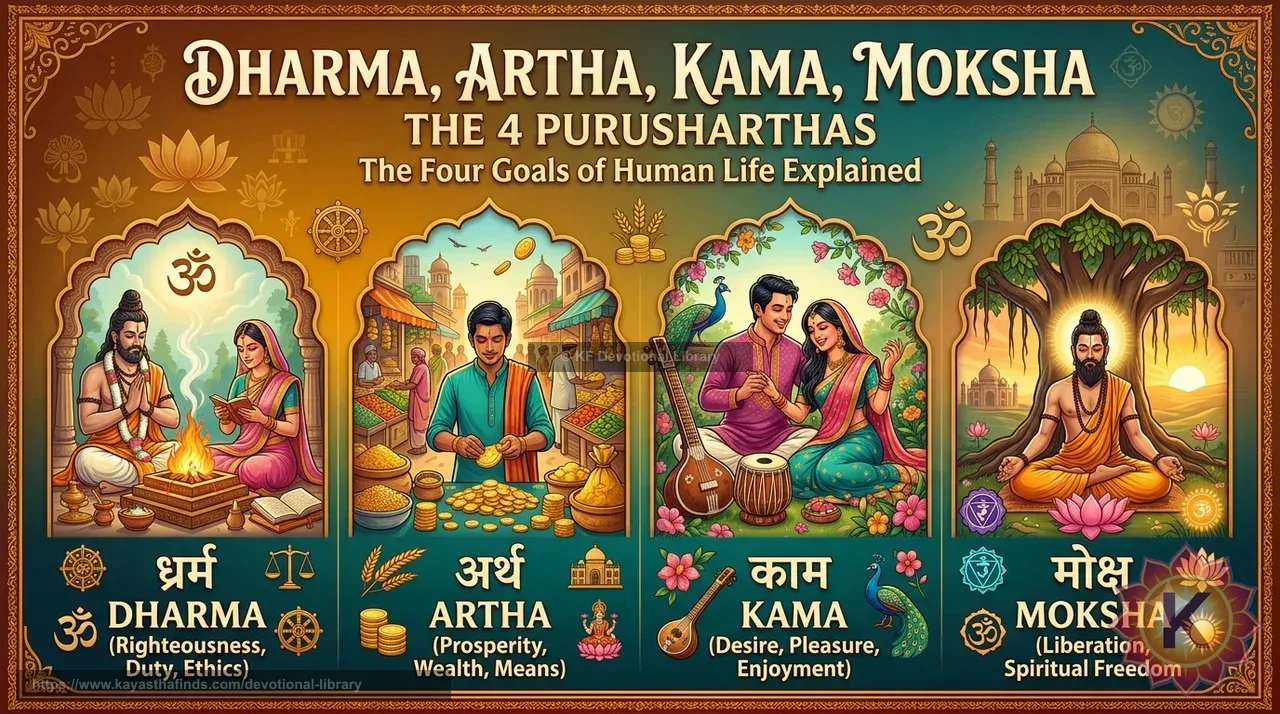
4 पुरुषार्थ हिंदू धर्म में मानव जीवन के चार मौलिक लक्ष्य हैं: धर्म (सदाचार), अर्थ (समृद्धि), काम (आनंद), और मोक्ष (मुक्ति)। यह ढांचा बताता है कि एक संतोषजनक जीवन के लिए भौतिक सफलता, भावनात्मक संतुष्टि और आध्यात्मिक विकास के बीच संतुलन की आवश्यकता होती है।
The 4 Purusharthas are the four fundamental goals of human life in Hinduism: Dharma (Righteousness), Artha (Prosperity), Kama (Pleasure), and Moksha (Liberation). This framework suggests that a fulfilling life requires a balance between material success, emotional satisfaction, and spiritual growth, all grounded in a strong moral foundation. While Artha and Kama satisfy our worldly needs, Dharma ensures they are pursued ethically, and Moksha represents the ultimate transcendence from the cycle of birth and death.
Overview
जीवन का उद्देश्य क्या है? वैदिक परंपरा में, इसका उत्तर पुरुषार्थ की अवधारणा के माध्यम से दिया गया है। 'पुरुषार्थ' शब्द का शाब्दिक अर्थ है 'मानव प्रयास का उद्देश्य'। यह स्वीकार करता है कि मनुष्यों की जटिल ज़रूरतें होती हैं।
What is the purpose of life? This is a question that has occupied human thought for millennia. In the Vedic tradition, the answer is provided through the concept of the Purusharthas. The word 'Purushartha' literally means 'the object of human pursuit'. It acknowledges that humans have complex needs — we need resources to live, we need joy and love, we need a moral compass, and ultimately, we need freedom. By pursuing these four goals in the right order and balance, one can achieve a life of harmony and deep satisfaction.
1. धर्म: जीवन का आधार
1. Dharma: The Foundation of Life
धर्म पहला और सबसे महत्वपूर्ण पुरुषार्थ है। यह सदाचार, कर्तव्य और नैतिक नियम को संदर्भित करता है। धर्म के बिना, अर्थ (धन) की खोज लालच बन जाती है और काम (आनंद) की खोज वासना बन जाती है।
Dharma is the first and most important Purushartha. It refers to righteousness, duty, and moral law. It is the framework that guides how we should act in the world. Without Dharma, the pursuit of Artha (wealth) becomes greed, and the pursuit of Kama (pleasure) becomes lust. Dharma ensures that our actions contribute to the well-being of society and ourselves. It is the glue that holds the other three goals together.
2. अर्थ: भौतिक समृद्धि की खोज
2. Artha: The Pursuit of Material Prosperity
हिंदू धर्म गरीबी को सबके लिए पुण्य के रूप में नहीं देखता है। अर्थ जीवन के साधनों — धन, करियर और वित्तीय सुरक्षा को संदर्भित करता है। हालांकि, अर्थ की खोज हमेशा 'धार्मिक' साधनों के माध्यम से की जानी चाहिए।
Hinduism does not view poverty as a virtue for everyone. Artha refers to the means of life — wealth, career, and financial security. It acknowledges that to fulfill our duties and support a family, we need material resources. However, Artha must always be pursued through 'Dharmic' means. It is not an end in itself but a tool to help one live a dignified life and contribute to the world. It provides the stability needed for spiritual pursuits.
3. काम: इच्छा और आनंद की खोज
3. Kama: The Pursuit of Desire and Joy
काम जीवन के सौंदर्य और भावनात्मक सुखों — प्रेम, परिवार, कला और संगीत को संदर्भित करता है। यह स्वीकार करता है कि मानव हृदय सुंदरता और जुड़ाव के लिए तरसता है।
Kama refers to the aesthetic and emotional pleasures of life — love, family, art, music, and the enjoyment of the senses. It recognizes that the human heart yearns for beauty and connection. Pursuing Kama helps in refining the human personality and experiencing the richness of the world. Like Artha, Kama must be within the bounds of Dharma to ensure it leads to genuine happiness rather than addiction or suffering.
4. मोक्ष: परम मुक्ति
4. Moksha: The Ultimate Liberation
मोक्ष अंतिम लक्ष्य है, जन्म और मृत्यु के चक्र (संसार) से मुक्ति। यह अनंत शांति, ज्ञान और आनंद की अवस्था है। अन्य सभी प्रयास अंततः इसी स्वतंत्रता के लिए आत्मा को तैयार करने के लिए हैं।
Moksha is the final goal, the liberation from the cycle of birth and death (Samsara). It is the state of infinite peace, knowledge, and bliss. While the first three goals are related to living well in the world, Moksha is about transcending the world. It is the realization of one's true nature as the eternal 'Atman'. Every other pursuit in life is ultimately meant to prepare the soul for this final stage of freedom.
Summary of the 4 Purusharthas
| Goal | Meaning | Focus Area |
|---|---|---|
| Dharma | Righteousness / Duty | Ethics and Moral Law |
| Artha | Prosperity / Wealth | Material Needs and Security |
| Kama | Desire / Pleasure | Emotional and Sensory Joy |
| Moksha | Liberation / Freedom | Spiritual Enlightenment |
Frequently Asked Questions
Dharma is considered the most important because it is the foundation. Without Dharma, the other pursuits lead to chaos and suffering.
No, Hinduism encourages the pursuit of wealth to sustain life and help others, as long as it is earned through honest and righteous means.
They are complementary. For example, during 'Grihastha' (Householder stage), the focus is on Dharma, Artha, and Kama, while 'Sannyasa' (Renunciation) focuses entirely on Moksha.
Cultural Significance
The Purusharthas provide a holistic approach to life that avoids the extremes of total materialism or total renunciation. It suggests that one can be successful and happy in the world while still progressing toward spiritual enlightenment. This balanced view is the secret to the resilience and depth of Hindu culture.
Disclaimer
The content provided on this page is for educational and informational purposes only. OneSanatan makes no claims or guarantees regarding spiritual results, historical absolute accuracy, or religious outcomes. We are not responsible or liable for any personal interpretations or actions taken based on this information.
Explore More Panchang Modules
Continue Reading