Navdurga: 9 Forms of Durga - नवदुर्गा कौन हैं?
Discover the 9 forms of Goddess Durga worshipped during Navratri. Learn about Shailputri, Brahmacharini, Chandraghanta, and others, their symbolism, and their stories.
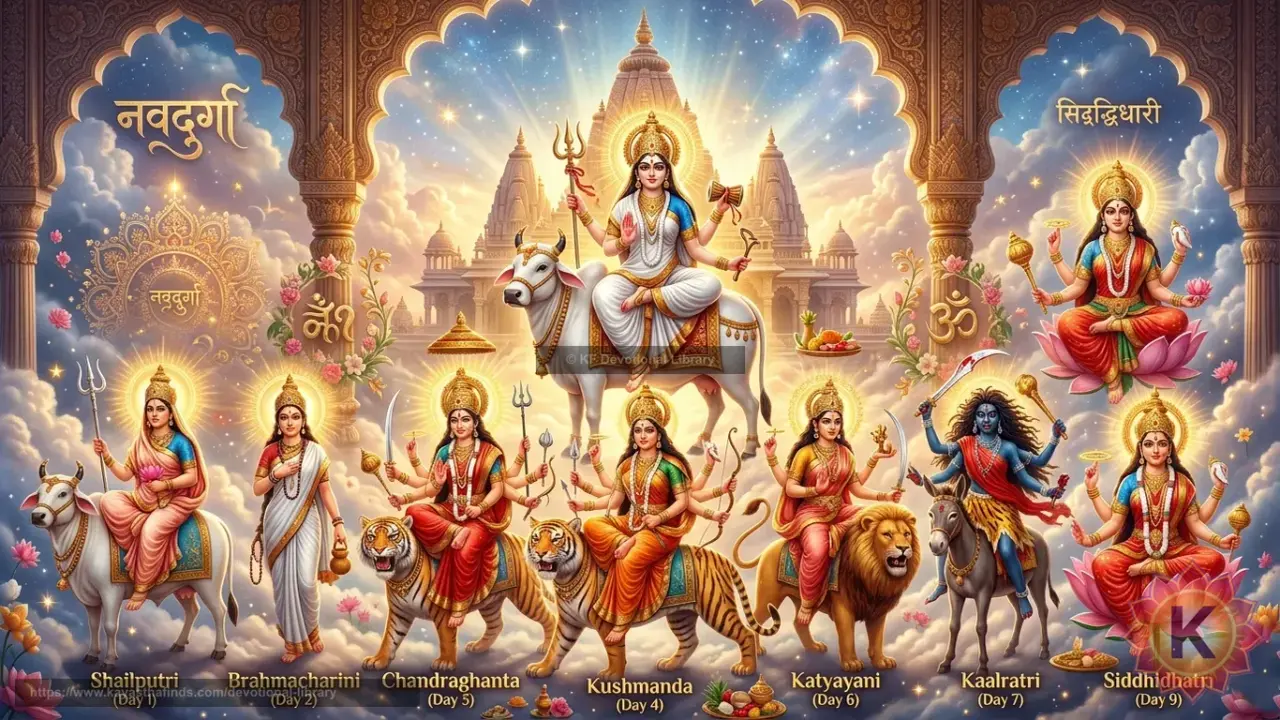
नवदुर्गा देवी दुर्गा के नौ रूप हैं, जिनमें से प्रत्येक की नवरात्रि की नौ रातों के दौरान एक अलग दिन पूजा की जाती है। ये नौ रूप — शैलपुत्री, ब्रह्मचारिणी, चंद्रघंटा, कुष्मांडा, स्कंदमाता, कात्यायनी, कालरात्रि, महागौरी और सिद्धिदात्री — आत्मा की विकासवादी यात्रा और दिव्य स्त्री ऊर्जा के विभिन्न आयामों का प्रतिनिधित्व करते हैं।
The Navdurga are the nine manifestations of Goddess Durga, each worshipped on a different day during the nine nights of Navratri. These nine forms — Shailputri, Brahmacharini, Chandraghanta, Kushmanda, Skandamata, Katyayani, Kaalratri, Mahagauri, and Siddhidatri — represent the evolutionary journey of the soul and the different dimensions of the divine feminine energy. Each form has its own unique symbolism, weapon, and blessing.
Overview
नवरात्रि हिंदू धर्म के सबसे जीवंत त्योहारों में से एक है, और इसके केंद्र में नवदुर्गा की पूजा है। देवी का प्रत्येक रूप आध्यात्मिक विकास का एक पाठ है।
Navratri is one of the most vibrant festivals in Hinduism, and at its heart is the worship of Navdurga. Each form of the goddess is a lesson in spiritual growth. From the daughter of the mountains (Shailputri) to the granter of all perfections (Siddhidatri), the Navdurga represent the complete spectrum of human and divine life. Understanding these forms helps us understand the multifaceted nature of reality and the power of Shakti that resides within each of us.
9 रूप और उनका आध्यात्मिक अर्थ
The 9 Forms and Their Spiritual Meaning
The nine forms follow a specific sequence, representing the awakening of the consciousness:
- 1. शैलपुत्री: हिमालय की पुत्री, जो हमारे पृथ्वी से जुड़ाव का प्रतिनिधित्व करती हैं। — 1. Shailputri: The daughter of the Himalayas, representing the root chakra and our connection to the earth.
- 2. ब्रह्मचारिणी: तपस्या करने वाली, जो ज्ञान और अनुशासन का प्रतिनिधित्व करती हैं। — 2. Brahmacharini: The one who practices penance, representing the pursuit of knowledge and self-discipline.
- 3. चंद्रघंटा: भय को दूर करने और मन की एकाग्रता का प्रतीक। — 3. Chandraghanta: The one with a crescent moon bell, representing the focus of the mind and the removal of fear.
- 4. कुष्मांडा: ब्रह्मांड की निर्माता। — 4. Kushmanda: The creator of the universe with a smile, representing the source of all energy.
- 5. सिद्धिदात्री: सभी सिद्धियों को प्रदान करने वाली। — 5. Skandamata: The mother of Lord Skanda (Kartikeya), representing the power of maternal love and protection.
- 6. Katyayani: The warrior goddess, representing the courage to destroy internal and external demons.
- 7. Kaalratri: The fierce form that destroys darkness, representing the destruction of ego and time.
- 8. Mahagauri: The fair and serene form, representing the purity and peace that follow spiritual effort.
- 9. Siddhidatri: The bestower of perfections (Siddhis), representing the ultimate fulfillment of the spiritual journey.
हम हर दिन एक अलग रूप की पूजा क्यों करते हैं?
Why We Worship a Different Form Each Day
9-दिवसीय पूजा शुद्धिकरण की एक प्रक्रिया है। हम शैलपुत्री (शक्ति और स्थिरता) से शुरू करते हैं और सिद्धिदात्री (आध्यात्मिक पूर्णता) के साथ समाप्त करते हैं।
The 9-day worship is a process of purification. We start with Shailputri (strength and stability) and end with Siddhidatri (spiritual perfection). Each day, we focus on a specific quality of the Divine Mother and try to invoke that quality within ourselves. This systematic approach allows for a deep transformation of the mind and character over the course of Navratri.
The Nine Forms of Durga and Their Colors
| Day | Goddess Name | Associated Color | Represents |
|---|---|---|---|
| Day 1 | Shailputri | Yellow | Action and Vigor |
| Day 2 | Brahmacharini | Green | Growth and Tranquility |
| Day 3 | Chandraghanta | Grey | Strength and Determination |
| Day 4 | Kushmanda | Orange | Energy and Happiness |
| Day 5 | Skandamata | White | Purity and Peace |
| Day 6 | Katyayani | Red | Anger against Evil |
| Day 7 | Kaalratri | Royal Blue | Immense Power |
| Day 8 | Mahagauri | Pink | Compassion |
| Day 9 | Siddhidatri | Purple | Ambition and Goal-achievement |
Frequently Asked Questions
All forms are equally powerful as they are different manifestations of the same Supreme Shakti. However, Kaalratri is considered the most fierce, while Siddhidatri is the most complete.
There are actually four Navratris, but Chaitra (spring) and Sharada (autumn) are the most popular. They mark the transition of seasons, which is a potent time for spiritual and physical detoxification.
Navratri literally means 'Nine Nights'. It is a time for deep rest, prayer, and rejuvenation of the spirit through the worship of the Divine Mother.
Cultural Significance
The worship of Navdurga is a celebration of the feminine principle in the universe. It reminds us that God is not just a father but also a mother. The 'Kanya Puja' (worshipping young girls) on the 8th or 9th day is a beautiful tradition that honors the presence of the goddess in every female child.
Disclaimer
The content provided on this page is for educational and informational purposes only. OneSanatan makes no claims or guarantees regarding spiritual results, historical absolute accuracy, or religious outcomes. We are not responsible or liable for any personal interpretations or actions taken based on this information.
Explore More Panchang Modules
Continue Reading