Navratri Significance - नवरात्रि क्यों?
Understand the deep spiritual and seasonal significance of Navratri. Learn about the worship of the 9 forms of Durga, the power of Shakti, and the inner meaning of the festival.
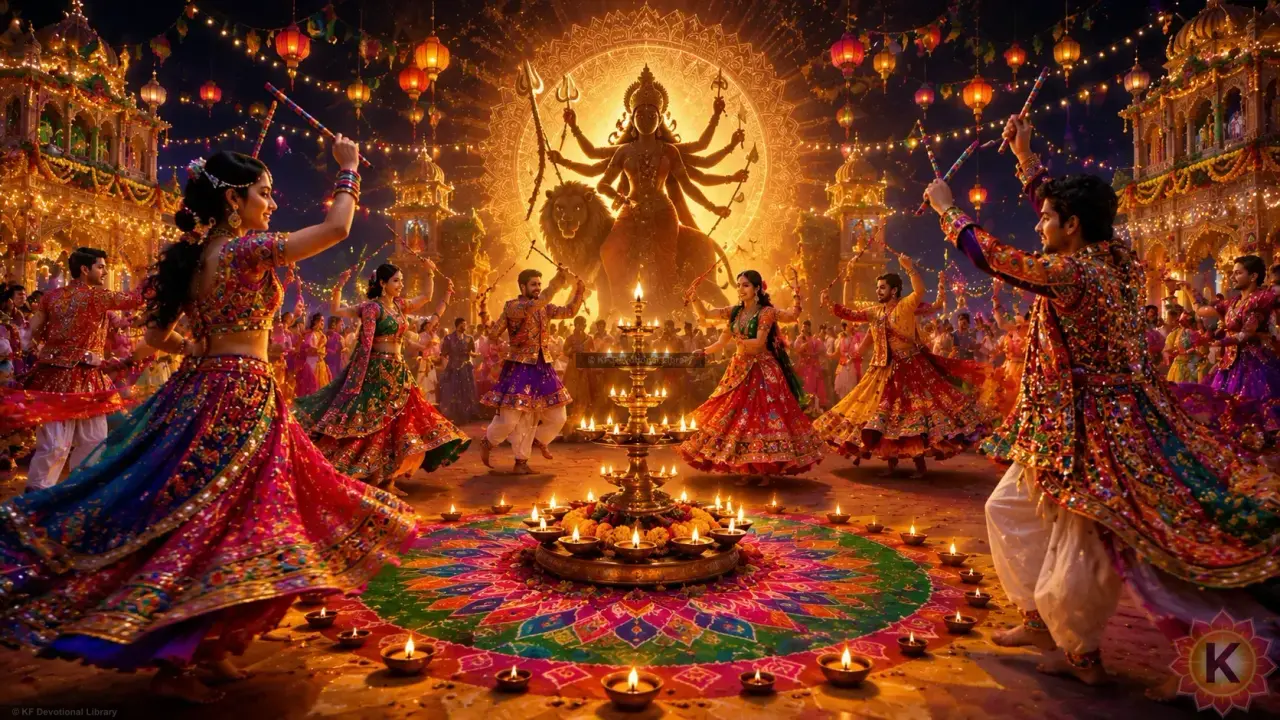
नवरात्रि नौ रातों और दस दिनों तक चलने वाला एक प्रमुख हिंदू त्योहार है, जो देवी दुर्गा और उनके नौ विभिन्न रूपों (नवदुर्गा) की पूजा को समर्पित है। यह वसंत और शरद ऋतु के मौसमी संक्रमणों के दौरान वर्ष में दो बार होता है। यह त्योहार अहंकार की राक्षसी शक्तियों पर 'शक्ति' (दिव्य स्त्री ऊर्जा) की जीत का प्रतिनिधित्व करता है।
Navratri is a major Hindu festival spanning nine nights and ten days, dedicated to the worship of Goddess Durga and her nine distinct forms (Navdurga). It occurs twice a year during the seasonal transitions of spring and autumn. The festival represents the victory of 'Shakti' (divine feminine energy) over the demonic forces of the ego. For many, it is a period of intense spiritual purification through fasting, prayer, and meditation, culminating in the celebration of Vijayadashami.
Overview
नवरात्रि केवल एक त्योहार नहीं है; यह एक आध्यात्मिक यात्रा है। हिंदू परंपरा में, आंतरिक कार्य के लिए 'रात' को 'दिन' से अधिक शक्तिशाली माना जाता है। इन नौ रातों के दौरान, ब्रह्मांडीय ऊर्जा को स्त्री शक्ति की ओर झुका हुआ माना जाता है।
Navratri is not just a festival; it is a spiritual journey. In the Hindu tradition, the 'nights' are considered more powerful than the 'days' for internal work. During these nine nights, the cosmic energy is believed to be tilted toward the feminine principle. It is a time when the universe invites us to go inward, cleanse our minds, and awaken the dormant strength within. Whether it is the grand celebrations in Gujarat and West Bengal or the quiet fasts in households, Navratri is the time to honor the Mother of the Universe.
तिगुनी शक्ति: दुर्गा, लक्ष्मी और सरस्वती
The Triple Power: Durga, Lakshmi, and Saraswati
The nine nights are traditionally divided into three sets of three days, each dedicated to a specific aspect of the Divine Mother:
- पहले 3 दिन (दुर्गा): मन की नकारात्मक प्रवृत्तियों और अशुद्धियों के विनाश पर ध्यान केंद्रित। — First 3 Days (Durga): Focused on the destruction of negative tendencies and impurities of the mind (Tamas).
- मध्य 3 दिन (लक्ष्मी): सकारात्मक गुणों और आंतरिक धन की खेती पर ध्यान केंद्रित। — Middle 3 Days (Lakshmi): Focused on cultivating positive virtues, abundance, and inner wealth (Rajas).
- अंतिम 3 दिन (सरस्वती): आत्म-ज्ञान और सर्वोच्च ज्ञान की प्राप्ति पर ध्यान केंद्रित। — Final 3 Days (Saraswati): Focused on the attainment of self-knowledge and supreme wisdom (Sattva).
नवदुर्गा: 9 क्रमिक रूप
Navdurga: The 9 Progressive Forms
नवरात्रि की प्रत्येक रात देवी दुर्गा के नौ रूपों में से एक को समर्पित है, जो मानव आत्मा के विकास का प्रतिनिधित्व करती है। शैलपुत्री आध्यात्मिक यात्रा की शुरुआत का प्रतिनिधित्व करती हैं, जबकि सिद्धिदात्री पूर्णता की प्राप्ति का।
Each night of Navratri is dedicated to one of the nine forms of Goddess Durga, representing the evolution of the human soul. Shailaputri represents the beginning of the spiritual journey, while Siddhidhatri represents the attainment of perfection. Worshipping these forms helps the devotee overcome various hurdles in life, from fear and illness to ignorance and ego. It is a psychological map of how a human can reach the divine state through perseverance and faith.
मौसमी महत्व: संधि काल
Seasonal Significance: The Sandhi Kaal
नवरात्रि दो ऋतुओं के मिलन या 'संधि' पर होती है। संक्रमण की ये अवधियाँ वह समय होती हैं जब शरीर की रोग प्रतिरोधक क्षमता सबसे कम होती है। नवरात्रि के दौरान उपवास करना पाचन तंत्र को डिटॉक्स करने का एक वैज्ञानिक तरीका है।
Navratri occurs at the 'Sandhi' or the junction of two seasons. These periods of transition are when the body's immunity is at its lowest. Fasting during Navratri is a scientific way to detoxify the digestive system and prepare the body for the coming season. By eating light, 'Sattvic' food and avoiding heavy grains, the body is rejuvenated. Spiritually, this transition period is considered the most auspicious time to connect with the cosmic energy (Shakti) that drives the changing seasons.
Summary of the 9 Nights of Navratri
| Day | Form of Durga | Significance |
|---|---|---|
| Day 1 | Shailaputri | Inspiration and New Beginnings |
| Day 2 | Brahmacharini | Penance, Purity, and Self-control |
| Day 3 | Chandraghanta | Peace, Serenity, and Bravery |
| Day 4 | Kushmanda | Creativity and Cosmic Energy |
| Day 5 | Skandamata | Motherly Love and Protection |
| Day 6 | Katyayani | Valour and Victory over obstacles |
| Day 7 | Kalaratri | Destruction of ignorance and fear |
| Day 8 | Mahagauri | Purification and Compassion |
| Day 9 | Siddhidhatri | Perfection and Supreme Knowledge |
Frequently Asked Questions
Fasting is a way to discipline the body and mind. It helps in detoxifying the system and keeping the mind alert for meditation and prayer during the energetically powerful nights of Navratri.
Each day of Navratri is associated with a specific color that corresponds to the qualities of the goddess being worshipped that day. Wearing those colors is a way for devotees to align themselves with that particular vibration.
Kanya Puja, usually performed on the 8th or 9th day, involves worshipping nine young girls who have not reached puberty. They are treated as manifestations of the nine forms of Goddess Durga.
Cultural Significance
Navratri is celebrated differently across India, from the energetic Garba dance in Gujarat to the artistic Durga Puja pandals in Bengal. The common thread is the celebration of 'Stree-Shakti' (female power). Rituals like 'Kanya Puja' (worshipping young girls) emphasize the belief that the divine mother resides in every female form.
Disclaimer
The content provided on this page is for educational and informational purposes only. OneSanatan makes no claims or guarantees regarding spiritual results, historical absolute accuracy, or religious outcomes. We are not responsible or liable for any personal interpretations or actions taken based on this information.
Explore More Panchang Modules
Continue Reading