Dussehra Significance - दशहरा का महत्व
Learn about the deep spiritual meaning of Dussehra (Vijayadashami). Explore the victory of Lord Rama over Ravana and Goddess Durga over Mahishasura.
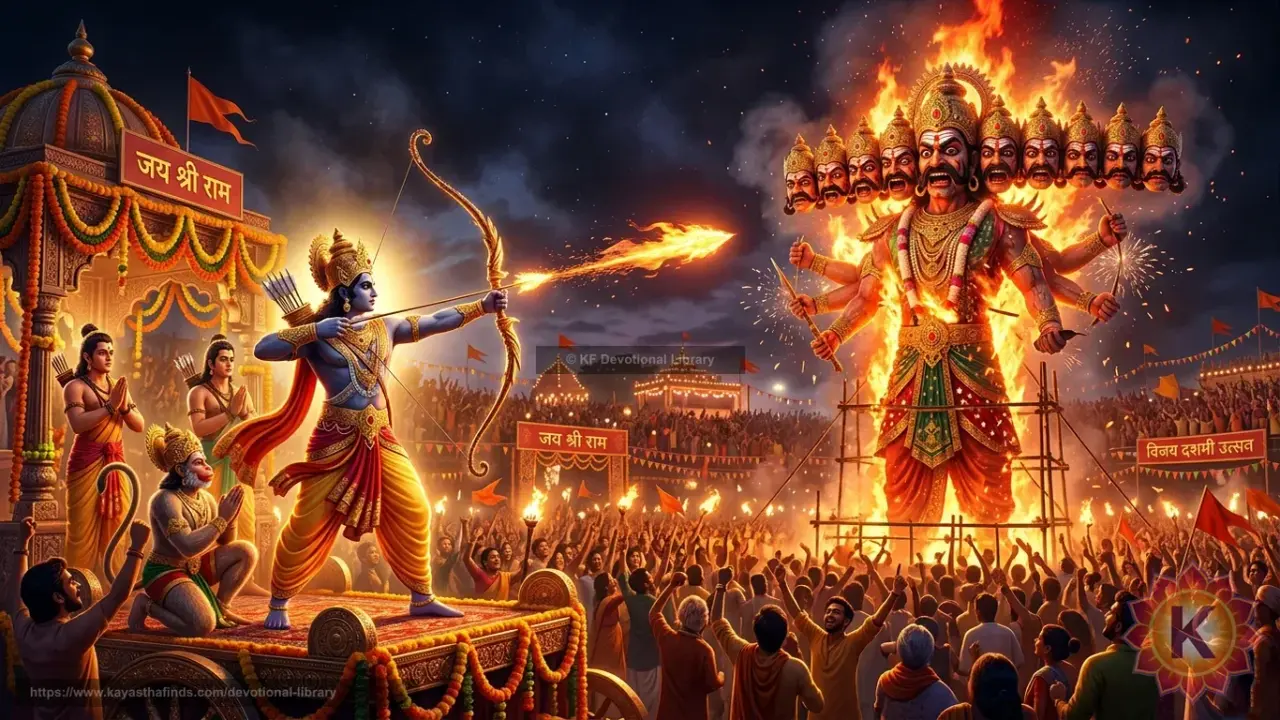
दशहरा, जिसे विजयादशमी के रूप में भी जाना जाता है, बुराई पर अच्छाई की जीत का जश्न मनाने वाले सबसे महत्वपूर्ण हिंदू त्योहारों में से एक है। यह दो प्रमुख दिव्य जीत की याद दिलाता है: भगवान राम द्वारा दस सिर वाले रावण की हार, और देवी दुर्गा की महिषासुर पर जीत। यह त्योहार अधर्म पर धर्म की जीत का प्रतीक है।
Dussehra, also known as Vijayadashami, is one of the most important Hindu festivals celebrating the victory of good over evil. It commemorates two major divine victories: Lord Rama's defeat of the ten-headed demon king Ravana, and Goddess Durga's victory over the buffalo demon Mahishasura. The festival marks the end of Navratri and symbolizes the triumph of righteousness (Dharma) over ego, arrogance, and injustice (Adharma). It is a day to remind ourselves that truth always prevails in the end.
Overview
जैसे ही हवा ठंडी होती है और नवरात्रि की नौ रातें समाप्त होती हैं, दशहरे का भव्य समापन आता है। पूरे भारत में रावण के विशाल पुतले जलाए जाते हैं। लेकिन दशहरा केवल आग और नाटक का प्रदर्शन नहीं है। यह गहरे आध्यात्मिक महत्व का दिन है।
As the air turns cool and the nine nights of Navratri come to a close, the grand finale of Dussehra arrives. Across the length and breadth of India, huge effigies of Ravana are set ablaze, illuminating the night sky. But Dussehra is more than just a spectacular show of fire and drama. It is a day of deep spiritual significance, marking the point where the struggle of the soul against the lower instincts of the ego reaches a successful conclusion. Whether it's through the Ram Leela in the North or the Golu in the South, Dussehra unites the nation in a common celebration of virtue.
राम की विजय: दस सिरों की हार
The Victory of Rama: Defeating the Ten Heads
दशहरे से जुड़ी सबसे प्रसिद्ध कहानी रावण पर भगवान राम की जीत है। रावण के दस सिर दस नकारात्मक गुणों का प्रतिनिधित्व करते थे: काम, क्रोध, लोभ, मोह, अहंकार, ईर्ष्या, मन, बुद्धि, इच्छा और गर्व। रावण के पुतले को जलाना हमारे अपने आंतरिक 'रावण' को जलाने का एक प्रतीकात्मक कार्य है।
The most famous story associated with Dussehra is the victory of Lord Rama over Ravana. Ravana was a great scholar and a powerful king, but his ten heads represented ten negative traits: Lust, Anger, Greed, Attachment, Ego, Jealousy, Mind, Intellect, Will, and Pride. By killing Ravana, Rama didn't just win a war; he showed that even the greatest worldly power cannot save you if you lack character and Dharma. The burning of Ravana's effigy is a symbolic act of burning our own internal 'Ravana' — the negative qualities that block our spiritual progress.
विजयादशमी: माँ दुर्गा की जीत
Vijayadashami: The Victory of Maa Durga
पूर्वी भारत में, यह दिन विजयादशमी के रूप में मनाया जाता है, जो महिषासुर पर देवी दुर्गा की जीत का प्रतीक है। नौ रातों तक लड़ने के बाद, देवी ने अंततः दसवें दिन राक्षस का वध किया। यह ब्रह्मांड की रक्षक के रूप में स्त्री शक्ति का उत्सव है।
In East India and many other parts, the day is celebrated as Vijayadashami, marking the victory of Goddess Durga over the demon Mahishasura. After fighting for nine nights, the Goddess finally slew the demon on the tenth day. This represents the power of Shakti to overcome even the most stubborn and deceptive forms of evil. It is a celebration of the feminine principle as the protector of the universe. In many traditions, this is also the day when the Pandavas retrieved their weapons from the Shami tree after their exile, symbolizing the time to reclaim one's strength and purpose.
शस्त्र पूजा और शमी वृक्ष
Shastra Puja and Shami Vruksha
दशहरा किसी भी नई शिक्षा शुरू करने या अपने पेशे के उपकरणों की पूजा करने के लिए सबसे शुभ दिन माना जाता है। इसे 'शस्त्र पूजा' के रूप में जाना जाता है। इस दिन 'शमी' वृक्ष की भी पूजा की जाती है।
Dussehra is considered the most auspicious day to start any new learning or to worship the tools of one's trade. This tradition is known as 'Shastra Puja'. Soldiers worship their weapons, artisans worship their tools, and students worship their books. The 'Shami' tree is also worshipped on this day, as it is believed to be the tree where the Pandavas hid their divine weapons. Distributing Shami leaves is a tradition that symbolizes sharing 'gold' or good fortune with friends and family.
The Symbolism of Ravana's 10 Heads
| Head No. | Negative Quality | Opposite Virtue (Rama) |
|---|---|---|
| 1 | Kama (Lust) | Chastity |
| 2 | Krodha (Anger) | Patience / Peace |
| 3 | Lobha (Greed) | Generosity |
| 4 | Moha (Attachment) | Detachment |
| 5 | Mada (Pride) | Humility |
| 6 | Matsarya (Jealousy) | Compassion |
| 7 | Manas (Selfish Mind) | Selflessness |
| 8 | Buddhi (Intellectual Arrogance) | Wisdom |
| 9 | Chitta (Distorted Memory) | Clarity of Purpose |
| 10 | Ahankara (Ego) | Surrender to the Divine |
Frequently Asked Questions
Essentially, they are the same day. 'Dussehra' is more commonly used in the context of Lord Rama's victory, while 'Vijayadashami' is often used in the context of Goddess Durga's victory and the end of Navratri.
It is a symbolic act of destroying the evil within ourselves and society. It reminds us that arrogance and ego eventually lead to destruction, even for someone as knowledgeable as Ravana.
The Shami tree is associated with victory and protection. Worshipping it on Dussehra is believed to bring success in one's ventures and the strength to overcome enemies.
Cultural Significance
Dussehra is a celebration of 'Sima-Langhan' — crossing the boundaries of the limited self to achieve great things. It is the day of victory (Vijaya). Across India, it is celebrated with fairs (Melas), Ram Leela plays, and community gatherings. It reinforces the cultural belief that no matter how long the night of struggle is, the dawn of victory is certain.
Disclaimer
The content provided on this page is for educational and informational purposes only. OneSanatan makes no claims or guarantees regarding spiritual results, historical absolute accuracy, or religious outcomes. We are not responsible or liable for any personal interpretations or actions taken based on this information.
Explore More Panchang Modules
Continue Reading