108 Names of Maa Durga - दुर्गा के 108 नाम
Explore the 108 names of Maa Durga with their meanings. Learn about the power of the Divine Mother, the symbolism of her names, and the benefits of chanting her names.
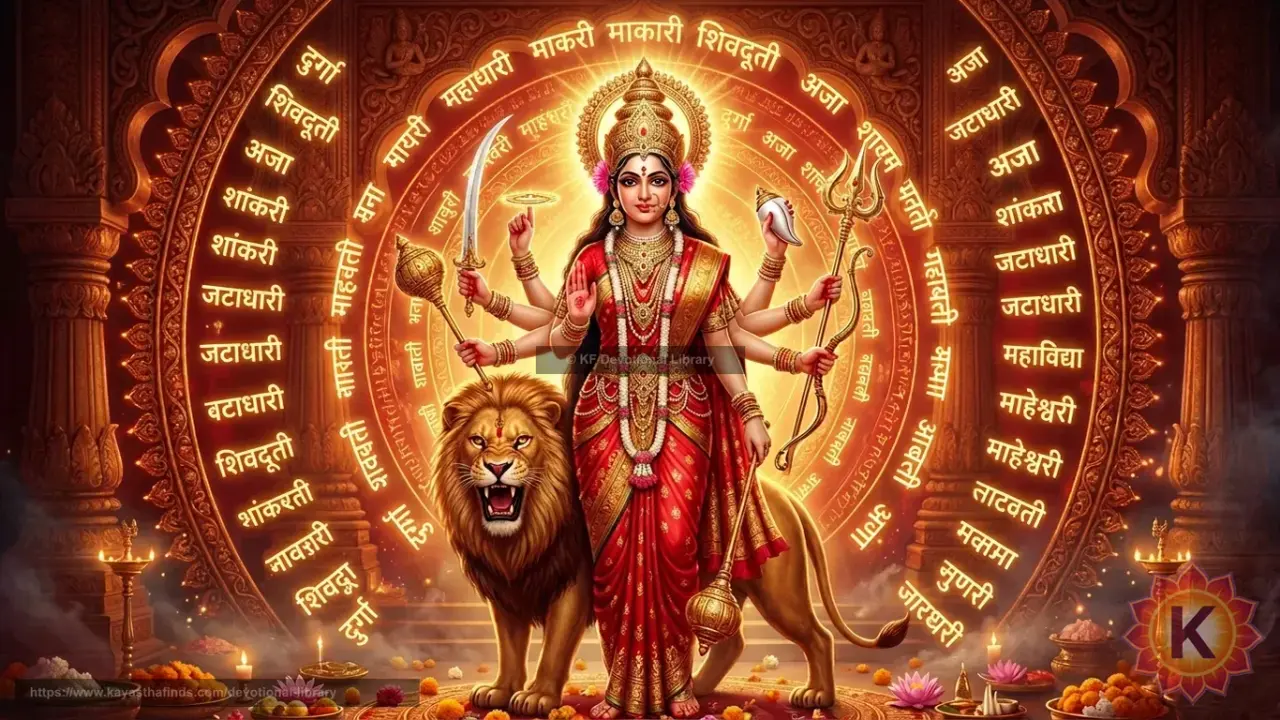
माँ दुर्गा के 108 नाम, जिन्हें 'दुर्गा अष्टोत्तर शतनामावली' के रूप में जाना जाता है, दिव्य माँ के विभिन्न पहलुओं का प्रतिनिधित्व करते हैं — दयालु माता से लेकर राक्षसों की भयंकर संहारक 'दुर्गा' तक। प्रत्येक नाम शक्ति का एक अनूठा कंपन वहन करता है।
The 108 names of Maa Durga, known as the Durga Ashtottara Shatanamavali, represent the various aspects of the Divine Mother — from the compassionate mother 'Mata' to the fierce destroyer of demons 'Durga'. Each name carries a unique vibration of power (Shakti). Chanting these names is believed to provide protection from negative forces, mental peace, and the strength to overcome life's obstacles.
Overview
माँ दुर्गा सर्वोच्च स्त्री ऊर्जा (शक्ति) का अवतार हैं। वे 'अजेय' हैं जो अपने बच्चों की सभी खतरों से रक्षा करती हैं। हिंदू परंपरा में, विशेष रूप से नवरात्रि के दौरान, दुर्गा के 108 नामों का जाप करना एक पवित्र अभ्यास है।
Maa Durga is the personification of the supreme feminine energy (Shakti). She is the 'Inaccessible One' who protects her children from all dangers. In the Hindu tradition, especially during Navratri, chanting the 108 names of Durga is a sacred practice to invoke her grace. These names describe her as the source of wisdom, beauty, and invincible power. Let's delve into the meanings of these names and the significance of this ancient prayer.
दिव्य माता (शक्ति) की शक्ति
The Power of the Divine Mother (Shakti)
हिंदू धर्म में, ब्रह्मांड का निर्माण और संरक्षण शक्ति नामक गतिशील ऊर्जा के माध्यम से होता है। दुर्गा के 108 नाम इसी बहुआयामी प्रकृति को दर्शाते हैं — वे कोमल 'गौरी' भी हैं और भयंकर 'चंडिका' भी।
In Hinduism, the universe is created, preserved, and transformed through the dynamic energy called Shakti. Durga is the unified form of the energies of Brahma, Vishnu, and Shiva, created to destroy the buffalo demon Mahishasura. Her 108 names reflect this multifaceted nature — she is both the soft 'Gauri' and the fierce 'Chandika'. Chanting these names helps the devotee connect with their own internal strength and overcome fear.
दुर्गा अष्टोत्तर जाप के लाभ
Benefits of Chanting Durga Ashtottara
Chanting the names of Maa Durga is more than a ritual; it is a spiritual tool for empowerment:
- भय का निवारण: यह आत्मविश्वास जगाने और भय को दूर करने में मदद करता है। — Removal of Fear: It helps in building self-confidence and removing internal and external fears.
- मानसिक स्पष्टता: इन नामों का कंपन मन को शुद्ध करता है। — Mental Clarity: The vibration of these names purifies the mind and helps in decision-making.
- बाधाओं पर विजय: प्रत्येक नाम छिपी हुई क्षमता को अनलॉक करने की कुंजी है। — Protection: It is believed to create a shield of divine energy around the practitioner.
- Overcoming Obstacles: Each name is a key to unlocking hidden potential and overcoming challenges (Sankat-mochan).
Select Names from Durga Ashtottara Shatanamavali
| Name | Transliteration | Meaning |
|---|---|---|
| दुर्गा | Durga | The Inaccessible One |
| शिवा | Shiva | The Auspicious One |
| भवानी | Bhavani | The Goddess of the Universe |
| जगदंबा | Jagadamba | Mother of the Universe |
| अम्बिका | Ambika | The Mother |
| कालिका | Kalika | The Dark Goddess / Destroyer of Time |
| चण्डिका | Chandika | The Fierce One |
| गौरी | Gauri | The Fair and Radiance One |
| नारायणी | Narayani | The Consort/Energy of Narayana |
| सर्वमंगला | Sarvamangala | The Bestower of all Auspiciousness |
Frequently Asked Questions
The word 'Durga' means 'Inaccessible' or 'Invincible'. It refers to her power to protect from all difficulties (Durgati).
The nine nights of Navratri are considered the most powerful time. Fridays and the evening hours (Sandhya) are also excellent for this practice.
Yes, absolutely. The energy of the Divine Mother is universal and is available to all her children, regardless of gender.
Cultural Significance
The Durga Ashtottara is an integral part of 'Durga Saptashati' recitations and Navratri celebrations. It is a tradition that emphasizes the respect for the feminine divine and the victory of truth (Sattva) over ego and ignorance (Tamas).
Disclaimer
The content provided on this page is for educational and informational purposes only. OneSanatan makes no claims or guarantees regarding spiritual results, historical absolute accuracy, or religious outcomes. We are not responsible or liable for any personal interpretations or actions taken based on this information.
Explore More Panchang Modules
Continue Reading