Saptashrungi Devi - सप्तशृंगी देवी
Learn about Saptashrungi Devi, one of the three and a half Shakti Peethas in Maharashtra. Discover the legends, temple architecture, and spiritual significance of the Mother of Seven Peaks.
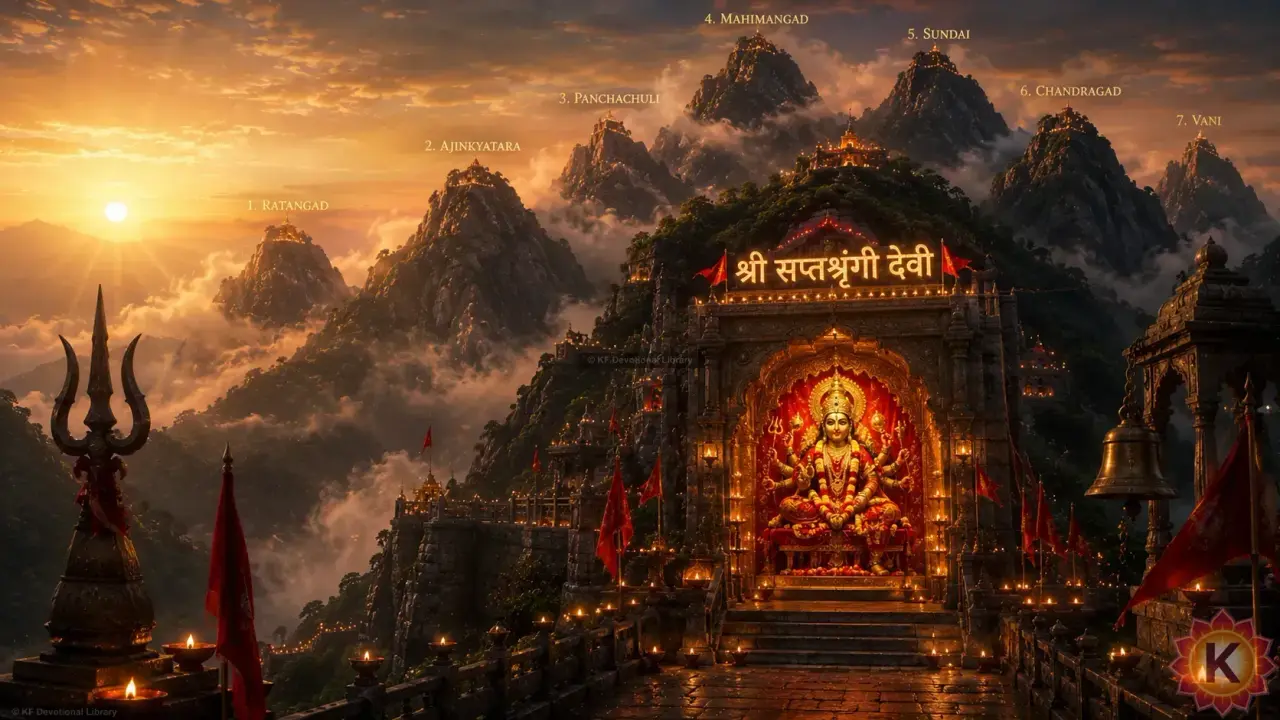
सप्तशृंगी देवी मंदिर महाराष्ट्र के नासिक के पास वाणी में स्थित एक पवित्र हिंदू मंदिर है। इसे राज्य के 'साढ़े तीन' शक्तिपीठों में से एक माना जाता है। सात पर्वत चोटियों (सप्तश्रृंग) से घिरे होने के कारण देवी को 'सप्तशृंगी' कहा जाता है।
Saptashrungi Devi is a sacred Hindu temple located in Vani, near Nashik, Maharashtra. It is considered one of the 'three and a half' Shakti Peethas of the state. The goddess is called 'Saptashrungi' because the temple is surrounded by seven mountain peaks (Saptashringa). The idol is self-manifested (Swayambhu) and stands 8 feet tall with 18 arms.
Overview
सह्याद्री पर्वत श्रृंखला में स्थित, सप्तशृंगी देवी मंदिर अत्यधिक आध्यात्मिक शक्ति का स्थल है। भक्तों का मानना है कि देवी महालक्ष्मी, महासरस्वती और महाकाली का संयुक्त रूप हैं।
Nestled in the Sahyadri mountain range, the Saptashrungi Devi temple is a site of immense spiritual power. Devotees believe that the goddess is a combined form of Mahalakshmi, Mahasaraswati, and Mahakali. The temple's unique location on a cliffside makes it both a spiritual and natural marvel.
सप्तशृंगी देवी की पौराणिक कथा
The Legend of Saptashrungi
पौराणिक कथाओं के अनुसार, देवी सती का दाहिना हाथ इसी स्थान पर गिरा था। एक अन्य मान्यता यह है कि देवी दुर्गा ने महिषासुर का वध करने के लिए यह रूप धारण किया था। कहा जाता है कि ऋषि मार्कंडेय ने यहीं तपस्या की थी।
According to legends, after the death of Sati, her right arm is believed to have fallen at this spot. Another popular belief is that the Goddess Durga took this form to slay the demon Mahishasura. It is also said that Sage Markandeya performed penance here and composed the Devi Mahatmya (Durga Saptashati) in these mountains.
मंदिर की वास्तुकला और पहुंच
Temple Architecture and Access
यह मंदिर पहाड़ को काटकर बनाया गया है। मंदिर तक पहुँचने के लिए भक्तों को 500 से अधिक सीढ़ियाँ चढ़नी पड़ती थीं, लेकिन अब रोपवे की सुविधा भी उपलब्ध है।
The temple is carved into the side of a mountain. To reach the shrine, devotees traditionally climbed over 500 steps. However, a modern ropeway (funicular trolley) is now available for easier access. The 18-armed idol is always covered with saffron-colored Sindoor, and her eyes are incredibly striking and lifelike.
शास्त्रीय संदर्भ
Scriptural References
सप्तशृंगी देवी पौराणिक परंपरा, विशेषकर शाक्त धर्म में गहराई से निहित हैं। उनकी कथा का प्राथमिक शास्त्रीय स्रोत *देवी महात्म्य* है, जो *मार्कण्डेय पुराण* का एक भाग है। विशेष रूप से, देवी के महिषासुरमर्दिनी, भैंस राक्षस महिषासुर के संहारक, स्वरूप का वर्णन करने वाला अध्याय केंद्रीय है। हालांकि *देवी महात्म्य* में सप्तशृंगी को एक विशिष्ट भौगोलिक स्थान के रूप में स्पष्ट रूप से नामित नहीं किया गया है, ब्रह्मांड की रक्षा के लिए देवी के प्रकट होने की कथा को पूरे भारत में शक्तिशाली देवी रूपों पर सार्वभौमिक रूप से लागू किया जाता है। स्थानीय परंपराएँ और क्षेत्रीय पुराण, जिन्हें अक्सर *स्थल पुराण* या *माहात्म्य* कहा जाता है, सप्तशृंगी के अद्वितीय प्रकटीकरण और पर्वत की पवित्रता पर विस्तार से प्रकाश डालते हैं। ये ग्रंथ वर्णन करते हैं कि देवी ने अपनी विजय के बाद सात चोटियों पर शरण ली, जिससे उन्हें "सप्तशृंगी वाहिनी" (सात चोटियों पर निवास करने वाली) की उपाधि मिली। 51 (या 108) शक्तिपीठों में से एक के साथ उनका जुड़ाव, हालांकि इसके सटीक मूल पर बहस होती है, सती के शरीर का एक हिस्सा गिरने के विश्वास के कारण शक्ति पूजा के केंद्र बिंदु के रूप में उनकी स्थिति को और मजबूत करता है। ये शास्त्रीय आधार सप्तशृंगी में अर्पित भक्ति के लिए धार्मिक ढांचा प्रदान करते हैं, आदि शक्ति के रूप में उनकी दिव्य शक्ति और लौकिक महत्व की पुष्टि करते हैं।
Saptashrungi Devi is deeply rooted in the Puranic tradition, especially within Shaktism. The primary scriptural source for her legend is the *Devi Mahatmya*, a part of the *Markandeya Purana*. Specifically, the chapter detailing Devi's form as Mahishasuramardini, the slayer of the buffalo demon Mahishasura, is central. While Saptashrungi is not explicitly named in the *Devi Mahatmya* as a specific geographical location, the narrative of the Goddess manifesting to protect the cosmos is universally applied to powerful Devi forms across India. Local traditions and regional Puranas, often referred to as *Sthala Puranas* or *Mahatmyas*, elaborate further on Saptashrungi's unique manifestation and the sanctity of the mountain. These texts narrate how Devi took refuge on the seven peaks after her victory, hence earning the epithet "Saptashrungi Vahini" (one who resides on seven peaks). The association with one of the 51 (or 108) Shakti Peeths, though debated for its exact origin, further solidifies her position as a focal point of Shakti worship, where a part of Sati's body is believed to have fallen. These scriptural anchors provide the theological framework for the devotion offered at Saptashrungi, affirming her divine prowess and cosmic significance as the Adi Shakti.
तीर्थयात्रा प्रथाएँ और अनुष्ठान
Pilgrimage Practices and Rituals
सप्तशृंगी देवी की तीर्थयात्रा अनगिनत भक्तों के लिए एक गहन आध्यात्मिक यात्रा है, जो गहरी आस्था और दिव्य आशीर्वाद की तलाश को दर्शाती है। पहाड़ी के आधार पर पहुँचने पर, तीर्थयात्री पारंपरिक रूप से मुख्य मंदिर तक पहुँचने के लिए हजारों सीढ़ियाँ चढ़ते हैं (या रोपवे का उपयोग करते हैं)। कई लोग तपस्या या भक्ति के कार्य के रूप में कठिन चढ़ाई नंगे पैर करते हैं। मंदिर में, प्राथमिक अनुष्ठान देवी के विस्मयकारी रूप के *दर्शन* (पवित्र दर्शन) को शामिल करता है। माता देवी के प्रति श्रद्धा के भाव के रूप में नारियल, फूल, अगरबत्ती, *कुमकुम* और *साड़ी* जैसे चढ़ावे आमतौर पर अर्पित किए जाते हैं। *आरती* (प्रकाश का अनुष्ठान) दिन में कई बार, भक्तिपूर्ण मंत्रों और संगीत के साथ की जाती है, जिससे एक अलौकिक वातावरण बनता है। भक्त अक्सर *भजन* और *कीर्तन* में भाग लेते हैं। विशिष्ट इच्छाओं या धन्यवाद के लिए भक्तों की ओर से विशेष *पूजा* और *होम* भी आयोजित किए जाते हैं। कई भक्त अपनी तीर्थयात्रा से पहले या उसके दौरान उपवास रखते हैं, और कुछ *मुंडन* (सिर मुंडवाना) एक भेंट के रूप में करते हैं। मंदिर की परिक्रमा (परिक्रमा) की प्रथा आम है, जो सम्मान और आध्यात्मिक संबंध का प्रतीक है। तीर्थयात्री अक्सर आशीर्वाद के रूप में *प्रसाद* (पवित्र भोजन) और *उद्दी* (पवित्र राख) का एक टुकड़ा ले जाते हैं। पूरी यात्रा को पापों को शुद्ध करने, मन्नतें पूरी करने और आध्यात्मिक पुण्य प्राप्त करने के साधन के रूप में देखा जाता है, जो शक्ति पूजा की जीवंत परंपरा को मजबूत करता है।
The pilgrimage to Saptashrungi Devi is a profound spiritual journey for countless devotees, embodying deep faith and seeking divine blessings. Upon reaching the base of the hill, pilgrims traditionally ascend the thousands of steps (or use the ropeway) to reach the main temple. Many undertake the arduous climb barefoot as an act of penance or devotion. At the temple, the primary ritual involves *Darshan* (sacred sight) of the Devi's awe-inspiring form. Offerings typically include coconuts, flowers, incense, *kumkum*, and *sari* as a gesture of reverence to the Mother Goddess. *Aarti* (ritual of light) is performed multiple times a day, accompanied by devotional chants and music, creating an ethereal atmosphere. Devotees often participate in *bhajans* and *kirtans*. Special *pujas* and *homas* are also conducted on behalf of pilgrims for specific wishes or thanksgiving. Many devotees observe fasts before or during their pilgrimage, and some perform *mundan* (head tonsuring) as an offering. The practice of circumambulating the temple (Parikrama) is common, symbolizing respect and spiritual connection. Pilgrims often take away *prasad* (sanctified food) and a piece of *uddi* (sacred ash) as blessings. The entire journey is seen as a means to cleanse sins, fulfill vows, and attain spiritual merit, reinforcing the living tradition of Shakti worship.
Frequently Asked Questions
Maharashtra has 'three and a half' (Sade Teen) Shakti Peethas: Tuljapur, Kolhapur, Mahur, and the half peeth is Saptashrungi (Vani).
The 18 arms hold various weapons gifted by the gods to fight evil, representing the supreme power of the Goddess to protect her devotees from all directions.
Cultural Significance
Saptashrungi is a major pilgrimage site for people across Maharashtra and India. The Chaitra Navratri festival is celebrated here with great fervor, attracting lakhs of devotees. It is a symbol of the feminine divine power (Shakti) that protects and nurtures the universe.
Disclaimer
The content provided on this page is for educational and informational purposes only. OneSanatan makes no claims or guarantees regarding spiritual results, historical absolute accuracy, or religious outcomes. We are not responsible or liable for any personal interpretations or actions taken based on this information.
Explore More Panchang Modules
Continue Reading