Holi Significance - होली क्यों मनाई जाती है?
Discover the deep significance of Holi in Hinduism. Learn about the arrival of spring, the victory of devotion, and the psychology behind playing with colors.
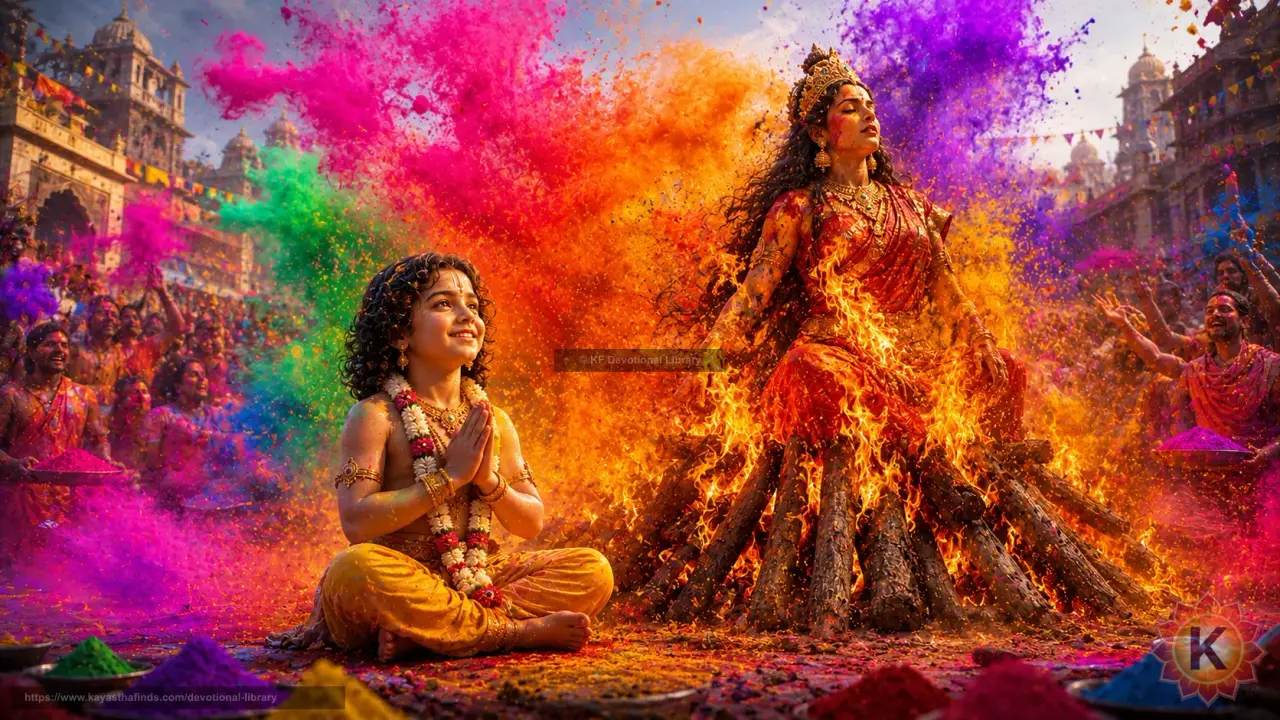
होली रंगों का जीवंत हिंदू त्योहार है जो वसंत के आगमन और सर्दियों के अंत का प्रतीक है। यह राधा और कृष्ण के शाश्वत और दिव्य प्रेम के साथ-साथ प्रह्लाद की कहानी के माध्यम से बुराई पर भगवान विष्णु की जीत का जश्न मनाता है। मनोरंजन के अलावा, होली क्षमा और नई शुरुआत का दिन है।
Holi is the vibrant Hindu festival of colors that marks the arrival of spring and the end of winter. It celebrates the eternal and divine love of Radha and Krishna, as well as the victory of Lord Vishnu over the demon Hiranyakashipu through the story of Prahlad. Beyond the fun and play, Holi is a day of forgiveness and new beginnings, where people break the barriers of social status and ego to embrace one another in a spirit of equality and joy.
Overview
होली शायद हिंदू कैलेंडर का सबसे आनंदमय त्योहार है। यह वह समय है जब भारत का पूरा परिदृश्य गुलाबी, हरे, पीले और नीले रंग के कैनवास में बदल जाता है। लेकिन होली सिर्फ एक पार्टी नहीं है। यह जीवन का उत्सव है।
Holi is perhaps the most joyous festival on the Hindu calendar. It is a time when the entire landscape of India changes into a canvas of pink, green, yellow, and blue. But Holi is more than just a street party. It is a profound cultural celebration that addresses the changing seasons, the psychology of human relationships, and the eternal battle between faith and arrogance. Known as 'Basant Utsav' in many regions, it is the celebration of life itself in its most colorful form.
भक्ति की जीत: प्रह्लाद और नरसिंह
The Victory of Bhakti: Prahlad and Narasimha
होली की आध्यात्मिक जड़ युवा भक्त प्रह्लाद की कहानी में निहित है। प्रह्लाद का आग में जीवित बचना (होलिका दहन) और अंततः भगवान विष्णु का नरसिंह अवतार के रूप में प्रकट होकर राजा का वध करना, यह दर्शाता है कि ईश्वर हमेशा सच्ची भक्ति की रक्षा करेंगे।
The spiritual root of Holi lies in the story of the young devotee Prahlad. His father, the demon king Hiranyakashipu, tried to kill him because Prahlad refused to worship anyone other than Lord Vishnu. The survival of Prahlad in the fire (Holika Dahan) and the eventual appearance of Lord Vishnu as Narasimha (the half-man, half-lion avatar) to destroy the king, signify that the divine will always protect true devotion. Holi celebrates this triumph of faith over fear and ego.
राधा और कृष्ण: दिव्य रंगों का खेल
Radha and Krishna: The Play of Divine Colors
ब्रज क्षेत्र में, राधा और कृष्ण के बीच के प्रेम के सम्मान में होली मनाई जाती है। रंगों के साथ यह 'लीला' एक परंपरा बन गई जो दिव्य प्रेम में व्यक्तिगत आत्माओं के विलय का प्रतीक है।
In the Braj region (Mathura and Vrindavan), Holi is celebrated to honor the love between Radha and Krishna. Legend says that as a child, Krishna was worried about his dark skin and wondered if the fair-skinned Radha would like him. His mother Yashoda playfully suggested that he could smear color on Radha's face and change it to whatever color he wanted. This 'play' with colors (Lila) became a tradition that symbolizes the merging of individual souls into the divine love that sees no difference in appearance.
वैज्ञानिक महत्व: स्वच्छता और स्वास्थ्य
Scientific Significance: Hygiene and Health
होली सर्दियों से वसंत ऋतु के संक्रमण के दौरान आती है। प्राकृतिक रंगों (जैसे नीम, हल्दी) से खेलने का औषधीय प्रभाव होता है। इसके अतिरिक्त, घरों की सफाई और कचरे को जलाना पर्यावरण की स्वच्छता बनाए रखने में मदद करता है।
Holi occurs at the transition from winter to spring. This is a time when people often feel lazy and prone to viral infections. The ritual of playing with colors, especially natural ones made from Neem, Turmeric, and Bilva, has a medicinal effect. In ancient times, the colors were meant to be therapeutic. Additionally, the cleaning of homes and the burning of agricultural waste during Holika Dahan help in maintaining environmental hygiene at a critical time of seasonal change.
The Meaning of Holi Colors
| Color | Symbolic Meaning |
|---|---|
| Red | Love, Energy, and Auspiciousness |
| Yellow | Knowledge, Learning, and Happiness |
| Green | New beginnings, Nature, and Harvest |
| Blue | Infinity and the divine (like Krishna) |
| Saffron | Sacrifice and Spiritual Wisdom |
Frequently Asked Questions
It is a physical expression of the inner joy and the celebration of life's diversity. It also represents the breaking of barriers between people, as everyone becomes indistinguishable under the colors.
Thandai is a cooling drink made with nuts and spices. It helps in balancing the heat created by the spring sun and the physical activity of playing Holi. In many traditions, it is also offered as prasad to Lord Shiva.
It is a unique tradition in the villages of Barsana and Nandgaon where women playfully hit men with sticks (lathis) as they try to smear color on them. It reenacts the playful interaction between Krishna and the Gopis.
Cultural Significance
Holi is a 'Social Leveler'. On this day, rich and poor, young and old, men and women all look the same under the layers of color. It is a day to mend broken relationships, pay off old debts, and welcome everyone with an open heart. The phrase 'Bura Na Mano, Holi Hai' (Don't be offended, it's Holi) captures the spirit of the day — letting go of the ego and embracing the joy of the moment.
Disclaimer
The content provided on this page is for educational and informational purposes only. OneSanatan makes no claims or guarantees regarding spiritual results, historical absolute accuracy, or religious outcomes. We are not responsible or liable for any personal interpretations or actions taken based on this information.
Explore More Panchang Modules
Continue Reading