Who is Lord Krishna? - श्री कृष्ण कौन हैं?
Explore the life of Lord Krishna, the eighth avatar of Lord Vishnu. Learn about his childhood in Gokul, his role in the Mahabharata, and the wisdom of the Bhagavad Gita.
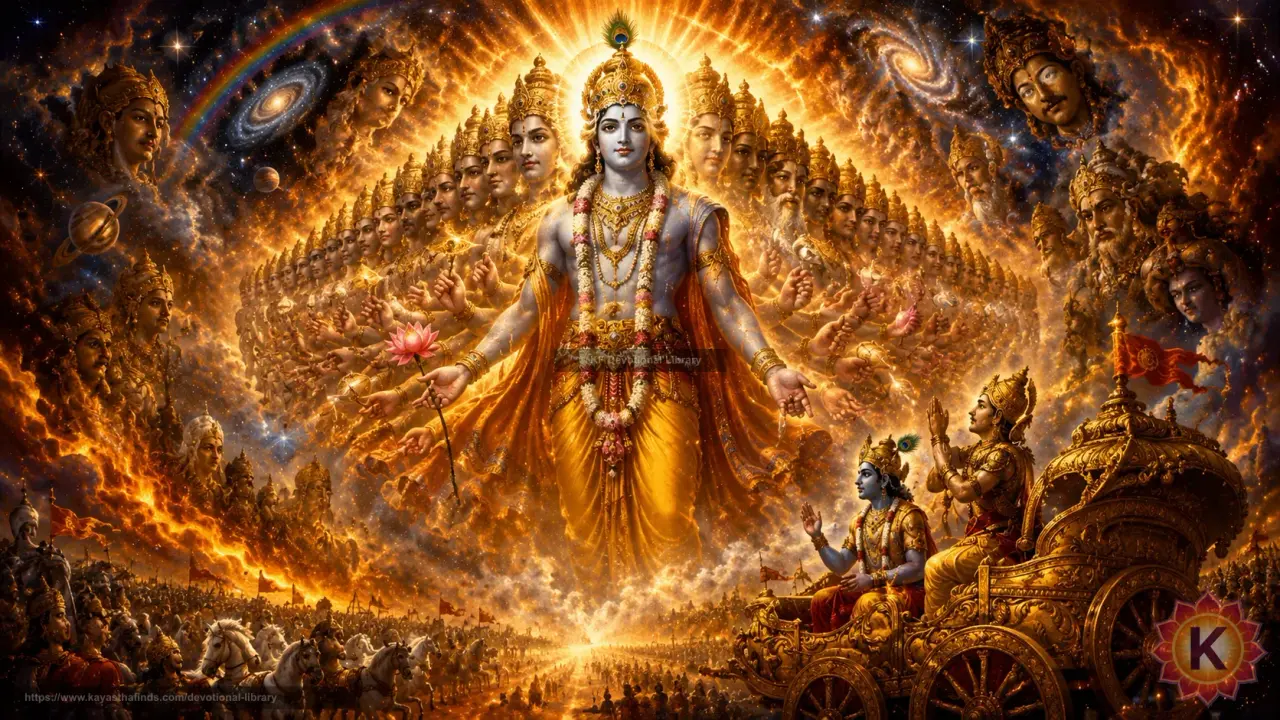
भगवान कृष्ण भगवान विष्णु के आठवें अवतार और हिंदू धर्म के सबसे प्रिय देवताओं में से एक हैं। वे अंतिम 'दिव्य गुरु' हैं जिन्होंने कुरुक्षेत्र के युद्ध के मैदान में अर्जुन को भगवद गीता का संदेश दिया। कृष्ण का जीवन चंचलता (लीला), गहन ज्ञान और निर्णायक कार्रवाई का एक आदर्श मिश्रण है।
Lord Krishna is the eighth avatar of Lord Vishnu and one of the most beloved deities in Hinduism. He is the ultimate 'Divine Teacher' who delivered the Bhagavad Gita to Arjuna on the battlefield of Kurukshetra. Krishna's life represents the perfect blend of playfulness (Lila), deep wisdom, and decisive action. From the mischievous butter-thief of Vrindavan to the master strategist of the Mahabharata, he shows that the divine can be experienced in every facet of human life.
Overview
कृष्ण एक ऐसे देवता हैं जो किसी एक परिभाषा में नहीं बंधते। वे मक्खन चुराने वाले प्यारे बच्चे भी हैं और बांसुरी बजाने वाले मनमोहक युवा भी। 'कृष्ण' शब्द का अर्थ है 'वह जो सबको आकर्षित करता है'।
Krishna is a deity who defies a single definition. He is the adorable baby stealing butter, the enchanting flute player, the loyal friend, the brave warrior, and the supreme philosopher. The word 'Krishna' means 'the dark one' or 'the one who attracts all'. His life is a 'Lila' — a divine play that mirrors the complexities of human existence. Whether it's the devotion of Radha or the duty of Arjuna, Krishna is at the center of it all, guiding every soul toward the ultimate truth.
कृष्ण का जीवन: गोकुल से द्वारका तक
The Life of Krishna: From Gokul to Dwarka
कृष्ण का जीवन जेल में जन्म के समय से ही चमत्कारों और चुनौतियों से भरा था। कंस के अत्याचार से बचने के लिए उन्हें गोकुल ले जाया गया। वृंदावन में उनका युवावस्था 'रासलीला' के लिए प्रसिद्ध है।
Krishna's life was marked by miracles and challenges from the moment of his birth in a prison cell. He was moved to Gokul to escape his uncle Kansa's tyranny. His youth in Vrindavan is celebrated for the 'Rasa Lila' and his deep connection with the Gopis and Radha. Later, he moved to Mathura to fulfill his destiny by killing Kansa, and eventually established the golden kingdom of Dwarka. This journey represents the soul's transition from innocent joy to the heavy responsibilities of leadership and Dharma.
भगवद गीता: भगवान का गीत
The Bhagavad Gita: The Song of the Divine
कृष्ण के प्राकट्य का शिखर कुरुक्षेत्र का युद्धक्षेत्र था। जब अर्जुन शोक और संदेह से घिर गए, तब कृष्ण ने भगवद गीता के 700 श्लोक सुनाए।
The peak of Krishna's manifestation was on the battlefield of Kurukshetra. When Arjuna was overwhelmed by grief and doubt, Krishna delivered the 700 verses of the Bhagavad Gita. He taught the world about the eternity of the soul, the importance of 'Nishkama Karma' (acting without attachment to results), and the various paths to reach the divine. The Gita is considered a manual for living a balanced and purposeful life in a chaotic world.
बांसुरी और मोर पंख का प्रतीकवाद
The Symbolism of the Flute and the Peacock Feather
Every attribute of Krishna carries a message:
- बांसुरी: मानव हृदय का प्रतिनिधित्व करती है। संगीत पैदा करने के लिए बांसुरी का खोखला होना जरूरी है, वैसे ही हृदय का अहंकार मुक्त होना। — The Flute (Bansuri): Represents the human heart. Just as a flute must be hollow to produce music, a human heart must be empty of ego for the divine to play through it.
- मोर पंख: ब्रह्मांड के रंगों के पूर्ण स्पेक्ट्रम का प्रतिनिधित्व करता है। — The Peacock Feather: Represents the entire spectrum of colors in the universe. It symbolizes that Krishna, while being the source of everything, wears the world as a light ornament.
- नीला रंग: दिव्य की अनंत और सर्वव्यापी प्रकृति का प्रतिनिधित्व करता है। — Blue Color: Represents the infinite and all-pervasive nature of the divine, like the vast sky or the deep ocean.
- Sudarsana Chakra: Represents his power to maintain order and destroy evil thoughts and tendencies.
The Multifaceted Aspects of Krishna
| Aspect | Role / Quality | Key Teaching / Symbol |
|---|---|---|
| Makhan Chor | Childhood / Playfulness | God values simple love and devotion |
| Gopala | Protector of Cows / Nature | Compassion for all living beings |
| Parthasarathi | Arjuna's Charioteer | The divine as our inner guide |
| Yogeshwara | Supreme Master of Yoga | The goal of life is self-realization |
| Radha-Krishna | Divine Love | The union of the soul and the supreme |
Frequently Asked Questions
The main message is to perform one's duty (Dharma) with total focus but without any attachment to the results (Nishkama Karma), while keeping the mind fixed on the divine.
The word Krishna literally means 'black' or 'dark'. It represents the mystery of the divine, which is beyond the reach of the limited human mind, just like the dark night contains the entire universe.
While he had many friends like Sudama and the Gopis, his relationship with Arjuna is the most famous, representing the bond between the human seeker and the divine guide.
Cultural Significance
Krishna's influence on Indian culture is immeasurable. From classical music and dance (Kathak, Odissi) to the grand Janmashtami celebrations, he is everywhere. His life teaches us to live fully — to love, to play, to fight for justice, and to stay detached from it all through spiritual wisdom.
Disclaimer
The content provided on this page is for educational and informational purposes only. OneSanatan makes no claims or guarantees regarding spiritual results, historical absolute accuracy, or religious outcomes. We are not responsible or liable for any personal interpretations or actions taken based on this information.
Explore More Panchang Modules
Continue Reading