Why Tulsi is Sacred? - तुलसी का महत्व
Discover the spiritual and medicinal significance of Tulsi (Holy Basil) in Hinduism. Learn why it is worshipped, its relation to Lord Vishnu, and its health benefits.
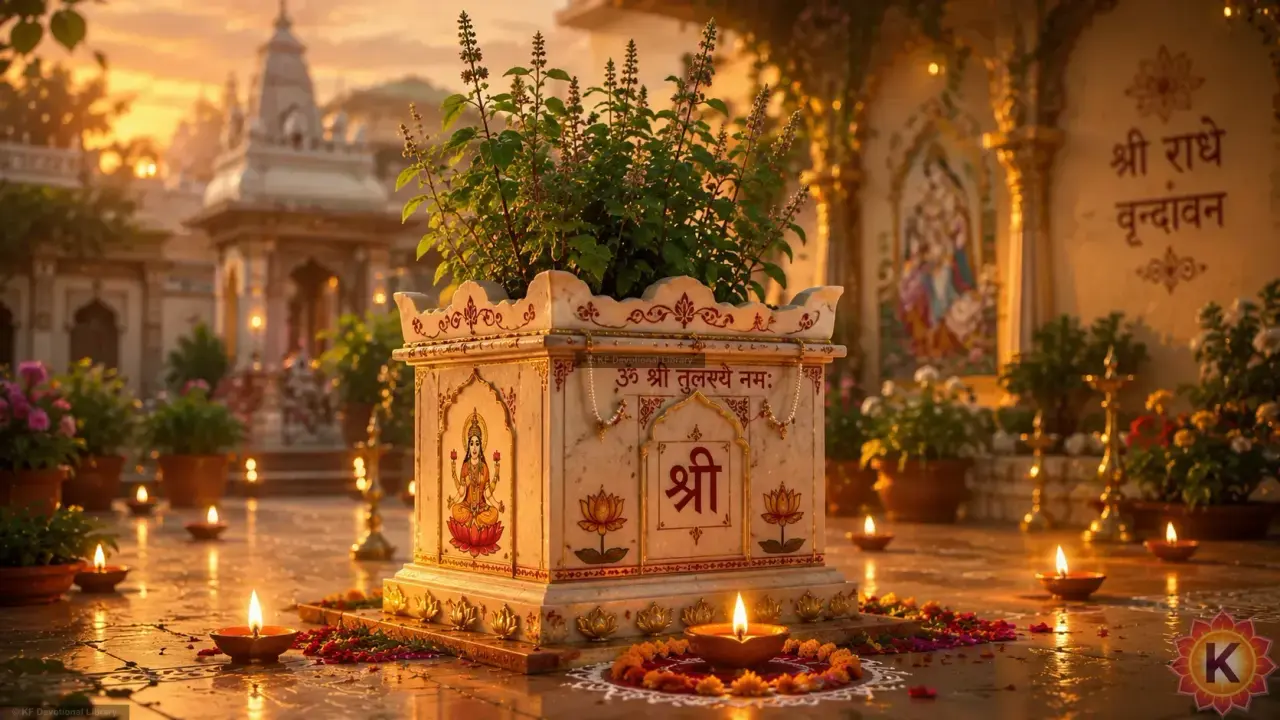
तुलसी (पवित्र तुलसी) को हिंदू धर्म में सबसे पवित्र पौधा माना जाता है, जिसे देवी वृंदा के सांसारिक रूप में पूजा जाता है, जो भगवान विष्णु की एक परम भक्त थीं। माना जाता है कि भगवान विष्णु की कोई भी पूजा तुलसी के पत्ते के बिना अधूरी है।
Tulsi (Holy Basil) is considered the most sacred plant in Hinduism, worshipped as an earthly manifestation of the Goddess Vrinda, a great devotee of Lord Vishnu. It is believed that no prayer to Lord Vishnu is complete without a Tulsi leaf. Beyond its spiritual importance, Tulsi is revered for its incredible medicinal properties, acting as a natural purifier of both the air and the human body.
Overview
लगभग हर पारंपरिक हिंदू घर में, आपको 'तुलसी वृंदावन' नामक एक विशेष संरचना में तुलसी का पौधा मिलेगा। प्रतिदिन तुलसी की पूजा करना एक ऐसी प्रथा है जो हजारों साल पुरानी है।
In almost every traditional Hindu household, you will find a Tulsi plant growing in a central courtyard or on a balcony in a special structure called the 'Tulsi Vrindavan'. Worshipping Tulsi daily is a practice that dates back thousands of years. It is not just a plant; it is a member of the family, a protector of the home, and a bridge to the divine. The word Tulsi literally means 'the incomparable one', reflecting its unique status in both spirituality and science.
तुलसी और भगवान विष्णु की कथा
The Legend of Tulsi and Lord Vishnu
तुलसी की पवित्रता पौराणिक कथाओं में गहराई से निहित है। एक कहानी के अनुसार, तुलसी मूल रूप से वृंदा नाम की एक महिला थी जो विष्णु की परम भक्त थी। भगवान विष्णु ने उसे आशीर्वाद दिया कि वह तुलसी के पौधे के रूप में जन्म लेगी।
The sacredness of Tulsi is deeply rooted in Puranic legends. According to one story, Tulsi was originally a woman named Vrinda who was a devoted wife and a great devotee of Vishnu. Due to a series of divine events and her unwavering devotion, she was blessed by Lord Vishnu to be born as the Tulsi plant. Vishnu declared that he would always cherish her and that she would be essential for his worship. This is celebrated annually during 'Tulsi Vivah', the ceremonial wedding of Tulsi to Lord Vishnu (often represented by a Shaligram stone).
दैनिक अनुष्ठान और पूजा में तुलसी
Tulsi in Daily Rituals and Worship
घर में तुलसी का पौधा नकारात्मक ऊर्जा को दूर भगाने और समृद्धि लाने वाला माना जाता है। भक्त हर शाम पौधे के पास एक दीपक जलाते हैं और सुबह जल चढ़ाते हैं।
A Tulsi plant in the house is believed to ward off negative energy and bring prosperity. Devotees light a lamp (Diya) near the plant every evening and offer water in the morning. Tulsi leaves are never offered to Lord Shiva or Lord Ganesha (according to specific traditions), but they are mandatory for any offering to Lord Vishnu or his avatars like Rama and Krishna. The beads made from the wood of a dead Tulsi plant are used to make 'Tulsi Malas', which are worn by devotees to stay connected to divine vibrations.
तुलसी के विज्ञान और स्वास्थ्य लाभ
The Science and Health Benefits of Tulsi
Ayurveda calls Tulsi the 'Queen of Herbs' and 'The Elixir of Life'. Modern science has confirmed many of its traditional uses:
- वायु शोधन: यह दिन में 20 घंटे ऑक्सीजन छोड़ती है और हानिकारक गैसों को अवशोषित करती है। — Air Purification: It releases oxygen for 20 hours a day and absorbs harmful gases like carbon monoxide and sulfur dioxide.
- रोग प्रतिरोधक क्षमता: तुलसी के पत्ते एंटीऑक्सीडेंट से भरपूर होते हैं। — Immunity Booster: Tulsi leaves are rich in antioxidants and help the body fight infections and stress.
- तनाव से राहत: यह मन को शारीरिक और मानसिक तनाव से निपटने में मदद करती है। — Stress Relief: It acts as an adaptogen, helping the mind cope with physical and mental stress.
- Anti-bacterial: It has strong anti-fungal and anti-bacterial properties, making it great for skin and respiratory health.
Spiritual vs. Medicinal Significance
| Aspect | Significance |
|---|---|
| Spiritual | Earthly form of Goddess Vrinda / Beloved of Vishnu |
| Ritual | Essential for Vishnu Puja / Tulsi Vivah |
| Environmental | Natural air purifier and mosquito repellent |
| Medicinal | Cures cough, cold, and boosts immunity |
| Ethical | Symbol of selfless devotion and purity |
Frequently Asked Questions
Traditionally, one should avoid plucking Tulsi leaves on Sundays, Dwadashi (12th day of the lunar month), and during eclipse periods as a mark of respect for the plant's rest and sacredness.
According to a legend in the Brahma Vaivarta Purana, Tulsi and Ganesha had a disagreement, and as a result, Ganesha cursed Tulsi that she would not be used in his worship (with a few exceptions like Ganesha Chaturthi).
It purifies the air, keeps insects away, provides a source of medicinal tea, and creates a peaceful, sattvic atmosphere in the household.
Cultural Significance
Tulsi is a symbol of the Hindu connection to nature. It teaches us that the divine is present in the plant kingdom and that taking care of the environment is a form of worship. The 'Tulsi-Manas' tradition remains a vital part of the cultural fabric of rural and urban India alike.
Disclaimer
The content provided on this page is for educational and informational purposes only. OneSanatan makes no claims or guarantees regarding spiritual results, historical absolute accuracy, or religious outcomes. We are not responsible or liable for any personal interpretations or actions taken based on this information.
Explore More Panchang Modules
Continue Reading