Lotus Symbolism - कमल का महत्व क्या है?
Discover why the lotus flower is sacred in Hinduism. Learn about its symbolism of purity amidst impurity, its relation to deities like Brahma and Lakshmi, and its spiritual lessons.
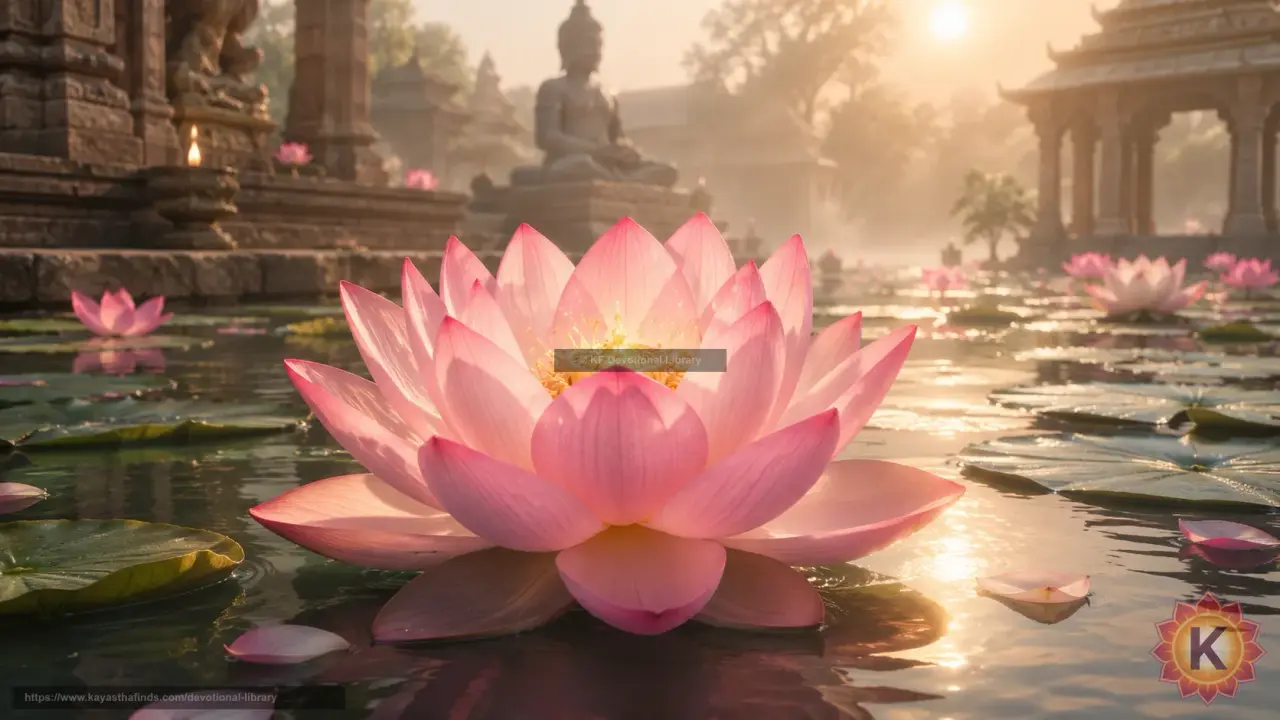
कमल (पद्म) हिंदू धर्म का सबसे प्रतिष्ठित फूल है, जो शुद्धता, दिव्य सौंदर्य और आध्यात्मिक वैराग्य का प्रतीक है। कीचड़ भरे पानी में उगने के बावजूद, कमल कीचड़ से अछूता रहता है, जो दर्शाता है कि एक मानवीय आत्मा को भौतिक दुनिया में उसकी अशुद्धियों से प्रभावित हुए बिना कैसे रहना चाहिए।
The lotus (Padma) is the most iconic flower in Hinduism, symbolizing purity, divine beauty, and spiritual detachment. Despite growing in muddy waters, the lotus remains untouched by the mud, representing how a human soul should live in the material world without being affected by its impurities. It is the seat of major deities like Lord Brahma and Goddess Lakshmi and serves as a metaphor for the unfolding of the human consciousness.
Overview
कमल का फूल हिंदू कला, वास्तुकला और साहित्य में सर्वव्यापी है। प्राचीन मंदिरों में जटिल नक्काशी से लेकर शांति के आधुनिक प्रतीकों तक, कमल का भारतीय मानस में एक विशेष स्थान है।
The lotus flower is ubiquitous in Hindu art, architecture, and literature. From the intricate carvings in ancient temples to the modern-day symbols of peace, the lotus holds a special place in the Indian psyche. It is not just a flower but a philosophical teacher. The way it grows from the dark mud toward the light of the sun is seen as a parallel to the human journey from ignorance to enlightenment. Let's delve into the deep layers of meaning associated with this sacred bloom.
अशुद्धि के बीच शुद्धता: मुख्य पाठ
Purity Amidst Impurity: The Core Lesson
कमल का सबसे गहरा पाठ उसका जन्म है। यह तालाब के कीचड़ में अपनी जड़ें जमाता है, फिर भी यह उत्कृष्ट सुंदरता के फूल में खिलता है। इसकी पत्तियों पर पानी की बूंदें कभी उन्हें गीला नहीं करतीं। यह संसार में अनासक्त भाव से रहने का आदर्श है।
The most profound lesson of the lotus is its birth. It roots itself in the murky, stagnant mud of a pond, yet it blossoms into a flower of exquisite beauty and fragrance. Its leaves and petals have a unique property — water droplets simply roll off them without ever making the surface wet. In Hinduism, this is the ideal way to live: to be in the world (the mud), to perform one's duties, but to remain untouched and unattached to the negative influences and desires of the material world.
कमल और देवता
The Lotus and the Deities
Several major Hindu deities are intimately connected with the lotus:
- भगवान ब्रह्मा: अक्सर भगवान विष्णु की नाभि से निकले कमल पर बैठे दिखाए जाते हैं। — Lord Brahma: Is often depicted sitting on a lotus that emerged from the navel of Lord Vishnu. Here, the lotus represents the manifestation of the universe and creative power.
- देवी लक्ष्मी: पूर्ण खिले हुए कमल पर बैठती हैं, जो समृद्धि और शुद्धता का प्रतीक है। — Goddess Lakshmi: Sits on a fully bloomed lotus and holds lotuses in her hands. It symbolizes wealth, prosperity, and the purity of intent behind material success.
- भगवान विष्णु: उन्हें 'पद्मनाभ' और 'कमलनयन' कहा जाता है। — Lord Vishnu: Is called 'Padmanabha' (the one with a lotus navel) and 'Kamalanayana' (lotus-eyed). He represents the preservation of order and beauty in the cosmos.
- Goddess Saraswati: Also sits on a white lotus, representing the purity of knowledge and art.
कमल और आध्यात्मिक शरीर (चक्र)
The Lotus and the Spiritual Body (Chakras)
योग और तंत्र में, सूक्ष्म शरीर के ऊर्जा केंद्रों, जिन्हें 'चक्र' कहा जाता है, को पंखुड़ियों की अलग-अलग संख्या वाले कमल के रूप में देखा जाता है। सहस्रार चक्र को 'हजार पंखुड़ियों वाला कमल' कहा जाता है।
In Yoga and Tantra, the energy centers of the subtle body, known as 'Chakras', are visualized as lotuses with different numbers of petals. The root chakra (Muladhara) is a 4-petalled lotus, while the crown chakra (Sahasrara) at the top of the head is the 'Thousand-Petalled Lotus'. The opening of these petals symbolizes the gradual awakening of spiritual consciousness. The 'Heart Lotus' (Hridaya Kamala) is said to be the seat of the individual soul.
Symbolism of Lotus Colors
| Color | Meaning | Associated Deity |
|---|---|---|
| Pink | The Supreme Lotus / Divinity | Lord Vishnu, Goddess Lakshmi |
| White | Purity of mind and knowledge | Goddess Saraswati |
| Red | Love, compassion, and the heart | Lord Ganesha (sometimes) |
| Blue | Wisdom and victory over the senses | Sometimes associated with Lord Vishnu |
Frequently Asked Questions
The lotus represents purity and spiritual power even in the midst of worldly wealth. It signifies that Lakshmi (wealth) should be approached with a pure and detached mind.
It refers to the Sahasrara Chakra at the crown of the head. Its opening represents the highest state of consciousness and union with the divine.
Spiritually, this is a lesson in detachment (Vairagya). It teaches us to perform our worldly duties while remaining unaffected by the 'water' of emotions and attachments.
Cultural Significance
The lotus is the national flower of India and a symbol of the 'Panchamrita' or the five sacred elements. It appears in the 'Purnakumbha' (the overflowing pot) used in inaugurations and is a common motif in Rangoli. It reminds us that no matter where we start in life, we have the potential to bloom into something divine.
Disclaimer
The content provided on this page is for educational and informational purposes only. OneSanatan makes no claims or guarantees regarding spiritual results, historical absolute accuracy, or religious outcomes. We are not responsible or liable for any personal interpretations or actions taken based on this information.
Explore More Panchang Modules
Continue Reading