What are the Upanishads? - उपनिषद क्या हैं?
Discover the profound wisdom of the Upanishads, the concluding philosophical texts of the Vedas that explore the nature of Brahman, Atman, and Moksha.
उपनिषद प्राचीन संस्कृत ग्रंथ हैं जो हिंदू धर्म की दार्शनिक नींव बनाते हैं। 'वेदांत' (वेदों का अंत या परिणति) के रूप में जाने जाने वाले, वे बाहरी अनुष्ठानों और बलिदानों से ध्यान हटाकर आंतरिक ध्यान, आत्म-साक्षात्कार और अंतिम सत्य (ब्रह्म) की खोज पर केंद्रित हैं।
The Upanishads are ancient Sanskrit texts that form the philosophical foundation of Hinduism. Known as 'Vedanta' (the end or culmination of the Vedas), they shift the focus away from external rituals and sacrifices toward inward meditation, self-realization, and the profound exploration of the ultimate reality (Brahman) and the individual soul (Atman).
Overview
'उपनिषद' शब्द का शाब्दिक अर्थ 'पास बैठना' है। यह एक गुरु के चरणों में बैठकर गुप्त, गहरे आध्यात्मिक उपदेश प्राप्त करने वाले छात्र की प्राचीन परंपरा को संदर्भित करता है। उपनिषद गहरे सवाल पूछते हैं: मैं कौन हूँ? मृत्यु के बाद क्या होता है?
The word 'Upanishad' literally translates to 'sitting down near'. It refers to the ancient tradition of a student sitting at the feet of a Guru to receive secret, profound spiritual teachings. Unlike the earlier parts of the Vedas, which focus on hymns to deities, the Upanishads ask deep, existential questions: Who am I? Where did the universe come from? What happens after death?
प्रमुख उपनिषद
The Principal Upanishads
हालांकि 100 से अधिक उपनिषद हैं, दार्शनिक आदि शंकराचार्य ने 10 प्रमुख (मुख्य) उपनिषदों पर भाष्य लिखे, जिससे हिंदू विचार में उनका पूर्ण अधिकार स्थापित हो गया। इनमें ईश, केन, कठ, मुंडक और छान्दोग्य उपनिषद शामिल हैं।
While there are over 100 Upanishads, the philosopher Adi Shankaracharya wrote commentaries on the 10 principal (Mukhya) ones, cementing their absolute authority in Hindu thought. These include the Isha, Kena, Katha, Prashna, Mundaka, Mandukya, Taittiriya, Aitareya, Chandogya, and Brihadaranyaka Upanishads.
ओम और महावाक्यों की उत्पत्ति
The Origin of Om and Mahavakyas
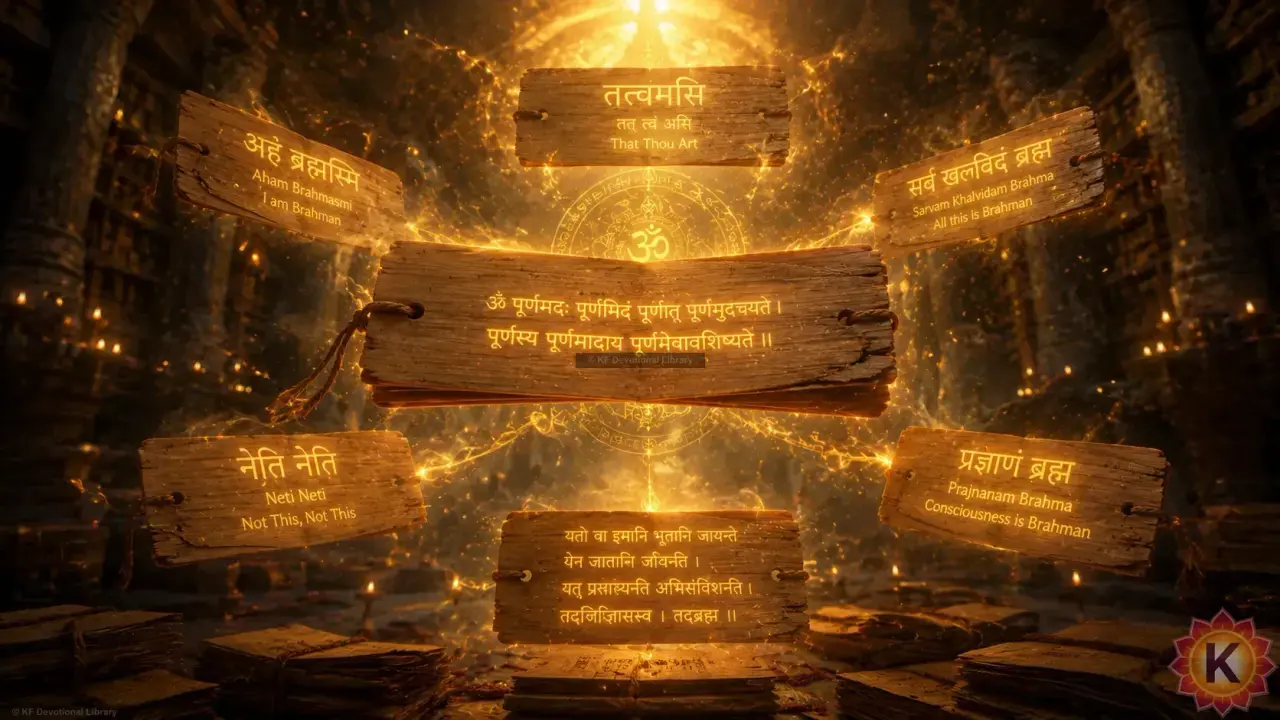
उपनिषद हिंदू धर्म के सबसे पवित्र शब्दांश 'ओम' (मांडूक्य उपनिषद में विस्तृत) का स्रोत हैं। इनमें 'महावाक्य' भी शामिल हैं, जैसे 'अहं ब्रह्मास्मि' (मैं ब्रह्म हूँ) और 'तत् त्वम असि' (तुम वह हो)।
The Upanishads are the source of Hinduism's most sacred syllable, 'Om' (detailed extensively in the Mandukya Upanishad). They also contain the 'Mahavakyas' or Great Sayings, such as 'Aham Brahmasmi' (I am Brahman) and 'Tat Tvam Asi' (Thou art That), which distill the entire philosophy of Vedanta into single, powerful sentences.
Frequently Asked Questions
The Upanishads are the final, philosophical chapters of the Vedas. The earlier parts of the Vedas focus on rituals (Karma Kanda), while the Upanishads focus strictly on spiritual knowledge (Jnana Kanda).
It comes directly from the Mundaka Upanishad. It translates to 'Truth alone triumphs'.
Cultural Significance
The Upanishads influenced not just Hinduism, but also Buddhism, Jainism, and Sikhism. In modern times, they deeply moved Western philosophers like Arthur Schopenhauer and scientists like Erwin Schrödinger and Niels Bohr.
Disclaimer
The content provided on this page is for educational and informational purposes only. OneSanatan makes no claims or guarantees regarding spiritual results, historical absolute accuracy, or religious outcomes. We are not responsible or liable for any personal interpretations or actions taken based on this information.
Explore More Panchang Modules
Continue Reading