Meaning of Swastik - स्वस्तिक का अर्थ
Explore the true meaning and significance of the Swastik symbol in Hinduism. Learn about its spiritual importance, benefits, and how to draw it correctly.
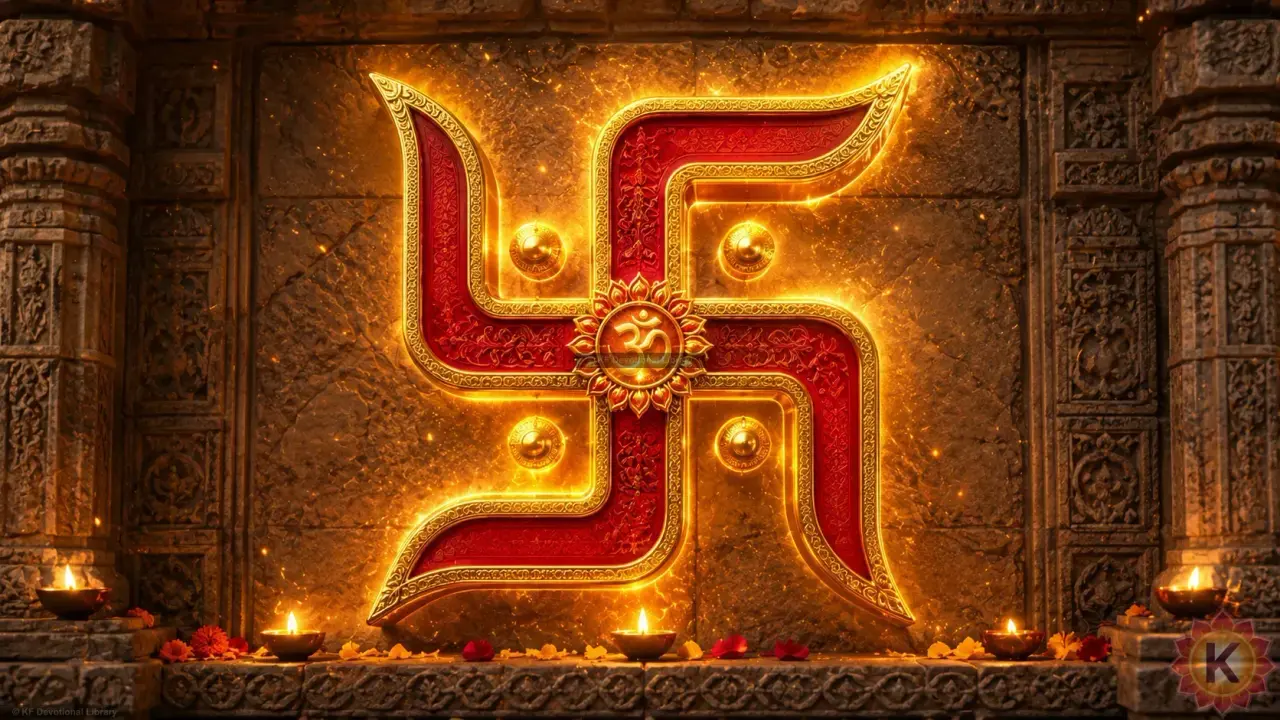
स्वस्तिक हिंदू धर्म का एक प्राचीन प्रतीक है जो कल्याण, समृद्धि और शुभता का प्रतिनिधित्व करता है। संस्कृत के शब्दों 'सु' (अच्छा) और 'अस्ति' (होना) से बना है, इसका शाब्दिक अर्थ है 'वह जो कल्याण की ओर ले जाता है'।
The Swastik is an ancient Hindu symbol representing well-being, prosperity, and auspiciousness. Derived from the Sanskrit words 'Su' (good) and 'Asti' (to be), it literally means 'that which leads to well-being'. It is a sacred mark made at the beginning of any auspicious work to invite positive energy and remove obstacles.
Overview
हिंदू धर्म में, स्वस्तिक को सूर्य, समृद्धि और बाधाओं को दूर करने का प्रतीक माना जाता है। इसका उपयोग मुख्य रूप से दरवाजों पर, पूजा के दौरान और बही-खातों पर किया जाता है। यह शांति और सार्वभौमिक सद्भाव का प्रतीक है।
In Hinduism, the Swastik is considered the mark of the sun, prosperity, and the removal of hurdles. It is prominently used on doorways, during pujas, and on accounts books. Unlike the distorted versions seen in modern history, the Dharmic Swastik is a symbol of peace and universal harmony. It is often associated with Lord Ganesha, the lord of new beginnings, and Lord Vishnu, the preserver of the universe.
स्वस्तिक की व्युत्पत्ति और अर्थ
The Etymology and Meaning of Swastik
The word Swastik comes from the Sanskrit root 'Svastika'. 'Su' means good, 'Asti' means to be, and 'Ka' is a suffix. Thus, it signifies 'that which is good' or 'conducive to well-being'. The four arms of the Swastik have several deep meanings:
- चार दिशाएं: पूर्व, पश्चिम, उत्तर, दक्षिण (सार्वभौमिक उपस्थिति)। — The four directions: East, West, North, South (Universal presence).
- चार वेद: ऋग्वेद, सामवेद, यजुर्वेद, अथर्ववेद। — The four Vedas: Rigveda, Samaveda, Yajurveda, Atharvaveda.
- जीवन के चार लक्ष्य (पुरुषार्थ): धर्म, अर्थ, काम, मोक्ष। — The four goals of life (Purusharthas): Dharma, Artha, Kama, Moksha.
- जीवन के चार चरण (आश्रम): ब्रह्मचर्य, गृहस्थ, वानप्रस्थ, संन्यास। — The four stages of life (Ashramas): Brahmacharya, Grihastha, Vanaprastha, Sanyasa.
स्वस्तिक बनाने का सही तरीका
The Right Way to Draw a Swastik
स्वस्तिक हमेशा इस तरह बनाया जाना चाहिए कि रेखाएं केंद्र में एक-दूसरे को न काटें, क्योंकि केंद्र हृदय या ब्रह्म-बिंदु का प्रतिनिधित्व करता है। एक सही स्वस्तिक दाहिनी ओर मुख वाला (卐) होता है।
A Swastik should always be drawn such that the lines do not cross each other at the center, as the center represents the heart or the Brahma-bindu. It is usually drawn with Kumkum (red) or Turmeric (yellow). A correct Swastik is right-facing (卐), moving in a clockwise direction, representing the path of the sun and life-giving energy. The four dots placed in the quadrants represent the constant presence of divinity in every part of the universe.
स्वस्तिक के आध्यात्मिक लाभ
Spiritual Benefits of the Swastik
घर के प्रवेश द्वार पर स्वस्तिक लगाने से नकारात्मक ऊर्जा दूर होती है और देवी लक्ष्मी का आशीर्वाद प्राप्त होता है। यह मानसिक शांति लाता है और एकाग्रता बढ़ाता है।
Placing a Swastik at the entrance of a home is believed to ward off negative energy and invite the blessings of Goddess Lakshmi. It brings mental peace, increases concentration, and creates a positive aura around the place. In many rituals, the Swastik is paired with the words 'Shubh' (Auspicious) and 'Laabh' (Profit), signifying that material success should always be accompanied by spiritual well-being.
The Four Arms of the Swastik
| Aspect | Symbolism |
|---|---|
| Directions | East, West, North, South |
| Vedas | Rig, Sama, Yajur, Atharva |
| Purusharthas | Dharma, Artha, Kama, Moksha |
| Stages of Life | Student, Householder, Retiree, Ascetic |
Frequently Asked Questions
The four dots represent the four Vedas and signify that the divine power is present in all directions and aspects of life.
Red (Kumkum) is the color of energy, power, and Goddess Lakshmi. It symbolizes vitality and the presence of auspiciousness.
Yes, the Hindu Swastik is an ancient symbol of peace and well-being, usually drawn with dots and arms ending in a specific way. The Nazi Hakenkreuz is a tilted, black version used for a completely different ideology.
Cultural Significance
The Swastik is inseparable from Hindu culture. From the birth of a child to the start of a business, it is the first mark made to ensure success. It is a symbol that has survived for thousands of years, carrying the eternal message of 'Sarve Bhavantu Sukhinah' (May all be happy).
Disclaimer
The content provided on this page is for educational and informational purposes only. OneSanatan makes no claims or guarantees regarding spiritual results, historical absolute accuracy, or religious outcomes. We are not responsible or liable for any personal interpretations or actions taken based on this information.
Explore More Panchang Modules
Continue Reading