Tilak Symbolism - तिलक क्यों लगाते हैं?
Understand the significance of Tilak in Hinduism. Learn about the different types like Urdhva Pundra and Tripundra, and the spiritual energy behind this practice.
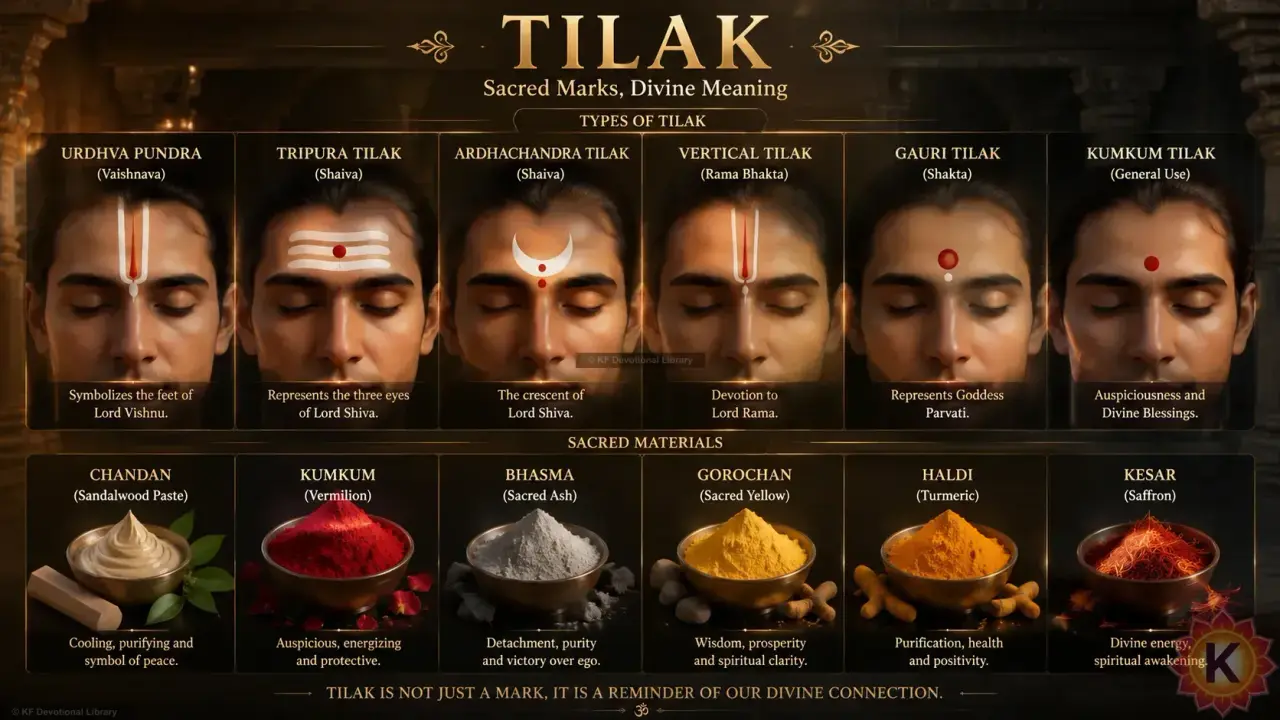
तिलक हिंदुओं द्वारा माथे पर लगाया जाने वाला एक पवित्र चिन्ह है, जो आध्यात्मिक जागृति और 'आज्ञा चक्र' या तीसरी आँख के सक्रिय होने का प्रतीक है। यह किसी के आध्यात्मिक लक्ष्यों और भीतर ईश्वर की उपस्थिति की याद दिलाता है। तिलक का आकार और पदार्थ अक्सर उस विशिष्ट देवता या परंपरा को दर्शाता है जिसका कोई व्यक्ति अनुसरण करता है।
The Tilak is a sacred mark worn on the forehead by Hindus, symbolizing spiritual awakening and the activation of the 'Ajna Chakra' or the third eye. It serves as a reminder of one's spiritual goals and the presence of the divine within. The shape and the substance of the Tilak often signify the specific deity or tradition (Sampradaya) a person follows. For example, a vertical U-shape represents Lord Vishnu, while three horizontal lines represent Lord Shiva.
Overview
जब आप किसी मंदिर जाते हैं या किसी हिंदू समारोह में शामिल होते हैं, तो सबसे पहले आपको माथे पर तिलक लगाया जाता है। चंदन या कुमकुम का यह साधारण चिन्ह एक सौंदर्य परंपरा से कहीं अधिक है। यह आपकी ऊर्जा को केंद्रित करने के लिए डिज़ाइन किया गया एक आध्यात्मिक 'एंटीना' है।
When you visit a temple or attend a Hindu ceremony, one of the first things you receive is a Tilak on your forehead. This simple mark of sandalwood paste or vermilion is far more than an aesthetic tradition. It is a spiritual 'antenna' designed to focus your energy and remind you of the sacred space you are entering. In the Vedic tradition, the spot between the eyebrows is the seat of memory and thinking. By applying a Tilak, we consecrate our thoughts and intellect to a higher purpose.
आज्ञा चक्र से संबंध
The Connection to the Ajna Chakra
भौं के बीच का क्षेत्र वैज्ञानिक रूप से पीनियल ग्रंथि से जुड़ा है और आध्यात्मिक रूप से 'आज्ञा चक्र' के रूप में जाना जाता है। चंदन जैसे पदार्थों का शीतलन प्रभाव मन को शांत करने, चिंता कम करने और एकाग्रता में सुधार करने में मदद करता है।
The area between the eyebrows is scientifically associated with the pineal gland and spiritually known as the 'Ajna Chakra'. It is the command center of the body's energy system. Constant pressure and the cooling effect of substances like Chandan (sandalwood) at this spot help in calming the mind, reducing anxiety, and improving concentration. It is believed that the energy lost during a day's work can be conserved and redirected toward spiritual insight through this point.
तिलक के प्रकार: परंपरा की पहचान
Types of Tilak: Identifying the Tradition
The shape of the Tilak tells the story of the devotee's spiritual path:
- ऊर्ध्व पुंड्र: 'U' या 'V' आकार की दो ऊर्ध्वाधर रेखाएं। यह भगवान विष्णु के अनुयायियों (वैष्णव) द्वारा पहना जाता है। — Urdhva Pundra: Two vertical lines joining at the bottom to form a 'U' or 'V' shape. This is worn by followers of Lord Vishnu (Vaishnavas). The lines represent the lotus feet of Vishnu.
- त्रिपुंड: पवित्र राख (विभूति) से बनी तीन क्षैतिज रेखाएं। यह भगवान शिव के अनुयायियों (शैव) द्वारा पहना जाता है। — Tripundra: Three horizontal lines made with sacred ash (Vibhuti). This is worn by followers of Lord Shiva (Shaivites). The lines represent the destruction of the three bonds: ego, karma, and maya.
- बिंदी/पोट्टू: एक छोटा गोलाकार निशान, जो ऊर्जा की एकाग्रता और शुभता का प्रतिनिधित्व करता है। — Bindi/Pottu: A small circular mark, often worn by women, representing the concentration of energy and the auspiciousness of the household.
- Combined Marks: Some traditions combine symbols, representing the union of different divine aspects.
प्रयुक्त पदार्थ और उनके लाभ
Substances Used and Their Benefits
Different materials are used for Tilak based on the occasion and the desired effect:
- चंदन: अपने शीतलन गुणों के लिए जाना जाता है; ध्यान केंद्रित करने के लिए उत्कृष्ट। — Sandalwood (Chandan): Known for its cooling properties; excellent for focus and calming the nervous system.
- कुमकुम: ऊर्जा, समृद्धि और जीवन-शक्ति का प्रतीक। — Kumkum (Vermilion): Made from turmeric and lime; symbolizes energy, prosperity, and the life-force.
- विभूति: भौतिक शरीर की नश्वरता और आत्मा की अमरता की याद दिलाती है। — Vibhuti (Sacred Ash): Reminds the devotee of the impermanence of the physical body and the eternity of the soul.
- Turmeric (Haldi): Represents purity, auspiciousness, and health.
Summary of Tilak Types
| Type | Deity / Tradition | Symbolism |
|---|---|---|
| Urdhva Pundra | Lord Vishnu / Vaishnava | Divine protection and lotus feet |
| Tripundra | Lord Shiva / Shaiva | Destruction of ego and illusion |
| Circular (Bindi) | Goddess / Universal | Point of creation and focus |
| Sandalwood Paste | General / Peace | Cooling the mind and intellect |
| Red Kumkum | Power / Shakti | Prosperity and divine energy |
Frequently Asked Questions
Traditionally, the ring finger is associated with the Sun and creative energy. Applying Tilak with this finger is believed to bring peace and mental strength.
Yes, many Hindus apply a simple Chandan or Kumkum tilak every morning after their bath as part of their daily spiritual discipline.
It represents the 'third eye' and the concentration of spiritual energy. It is also a symbol of a woman's protective role in the family and the presence of Goddess Lakshmi in the home.
Cultural Significance
The Tilak is a badge of spiritual identity. It is a way of declaring that one's body is a temple and their mind is dedicated to the divine. In modern times, wearing a Tilak is a powerful way for Hindus to stay connected to their roots and remind themselves of their spiritual values in a busy world.
Disclaimer
The content provided on this page is for educational and informational purposes only. OneSanatan makes no claims or guarantees regarding spiritual results, historical absolute accuracy, or religious outcomes. We are not responsible or liable for any personal interpretations or actions taken based on this information.
Explore More Panchang Modules
Continue Reading