Why Ring Bells? - मंदिर की घंटी
Learn the profound spiritual and scientific reasons for ringing bells (Ghanta) in Hindu temples. Discover how it awakens the mind and coordinates the brain.
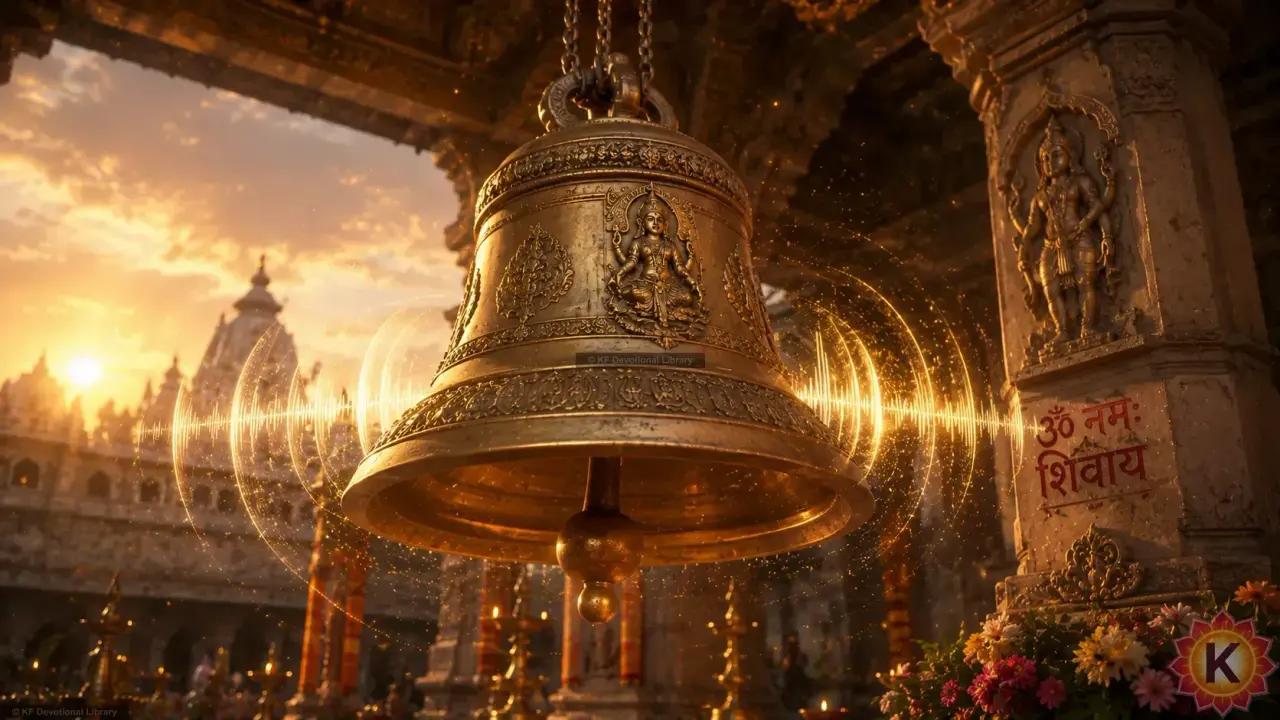
हिंदू मंदिर में घंटी बजाना न केवल देवता को पुकारना है, बल्कि भक्त की अपनी चेतना को जगाने का एक उपकरण है। घंटी (घंटा) द्वारा निर्मित तीक्ष्ण ध्वनि मन के लिए 'झटके' के रूप में कार्य करती है, जो इसे अराजक विचारों से मुक्त करती है और गहरे ध्यान के लिए तैयार करती है।
Ringing a bell in a Hindu temple is not just a call to the deity but a tool to awaken the devotee's own consciousness. The sharp sound produced by the bell (Ghanta) acts as a 'shock' to the mind, clearing it of chaotic thoughts and preparing it for deep concentration. Scientifically, the sound of a well-crafted bell creates a resonance that unifies the left and right hemispheres of the brain, creating a state of calm and focus.
Overview
घंटी की आवाज हिंदू धर्म से जुड़ी सबसे प्रतिष्ठित ध्वनियों में से एक है। चाहे वह घर की आरती के दौरान छोटी घंटी हो या मंदिर के प्रवेश द्वार पर विशाल कांस्य की घंटी।
The sound of a bell is one of the most iconic sounds associated with Hinduism. Whether it's the small hand-bell during a home Aarti or the massive bronze bells at the entrance of a temple, the sound is believed to be auspicious. It marks the beginning of the divine interaction. While many believe it is to 'wake up' the god, the true purpose is to wake up the 'god' within the devotee.
आध्यात्मिक जागरण
The Spiritual Awakening
हिंदू शास्त्रों में कहा गया है कि घंटी 'अनाहत' ध्वनि उत्पन्न करती है, जो ओम की ध्वनि के समान है। घंटी बजाना देवता को आपके आगमन की सूचना देने का एक तरीका है।
In Hindu scriptures, the bell is said to produce the 'Anahata' sound, which is similar to the sound of Om. Ringing the bell is a way of informing the deity of your arrival. More importantly, the sound is designed to dispel negative thoughts and evil vibrations (Asuric Shaktis). It creates an aura of purity and sanctity, ensuring that the devotee's prayer is one-pointed and undisturbed.
वैज्ञानिक कारण: मस्तिष्क समन्वय
Scientific Reason: Brain Coordination
एक असली मंदिर की घंटी साधारण धातु से नहीं बनी होती है। यह कैडमियम, सीसा, तांबा, जस्ता, निकल, क्रोमियम और मैंगनीज सहित धातुओं का एक वैज्ञानिक मिश्रण है।
A true temple bell is not made of ordinary metal. It is a scientific mix of metals including cadmium, lead, copper, zinc, nickel, chromium, and manganese. These are mixed in a specific proportion to create a sound that can unite the left and right brain. The moment you ring the bell, it produces a sharp and enduring sound which lasts for a minimum of 7 seconds in echo mode. This echo touches your 7 healing centers (chakras) in the body, instantly clearing your mind of all thoughts.
घंटे की प्रतीकात्मकता
The Symbolism of the Ghanta
The different parts of the bell have symbolic meanings in the Agamas:
- घंटी का शरीर अनंत (समय) का प्रतिनिधित्व करता है। — The body of the bell represents Ananta (time).
- जीभ (लोलक) देवी सरस्वती (ज्ञान) का प्रतिनिधित्व करती है। — The tongue (clapper) represents Goddess Saraswati (knowledge).
- हैंडल प्राण (सांस/जीवन-शक्ति) का प्रतिनिधित्व करता है। — The handle represents the vital prana (breath/life-force) and is often adorned with figures of Hanuman, Garuda, or Nandi.
- The sound of the bell represents the primordial vibration of creation.
Benefits of Ringing Temple Bells
| Aspect | Benefit |
|---|---|
| Mental | Clears chaotic thoughts and anxiety |
| Neurological | Balances the left and right brain hemispheres |
| Spiritual | Aligns the body's chakras with sound resonance |
| Atmospheric | Purifies the environment through vibration |
Frequently Asked Questions
The 7-second echo is believed to correspond to the 7 chakras or energy centers in the human body, helping to heal and align them through resonance.
Traditionally, the bell is rung upon entering to announce your arrival and focus the mind. Some people ring it while leaving as a sign of gratitude, but the primary purpose is for the start of the visit.
Yes, anyone who is a devotee can ring the temple bell. The sound is universal and its benefits of focus and purification apply to everyone equally.
Cultural Significance
The bell is an essential instrument in 'Shodashopachara Puja' (the 16-step worship). No puja is considered complete without the sound of the bell, especially during the 'Deepa Aradhana' or lighting of the lamp. It symbolizes the victory of knowledge over ignorance.
Disclaimer
The content provided on this page is for educational and informational purposes only. OneSanatan makes no claims or guarantees regarding spiritual results, historical absolute accuracy, or religious outcomes. We are not responsible or liable for any personal interpretations or actions taken based on this information.
Explore More Panchang Modules
Continue Reading