Why Remove Shoes? - मंदिर में जूते क्यों?
Explore the reasons for removing shoes before entering a Hindu temple. Learn about purity, humility, and the scientific energy behind this tradition.
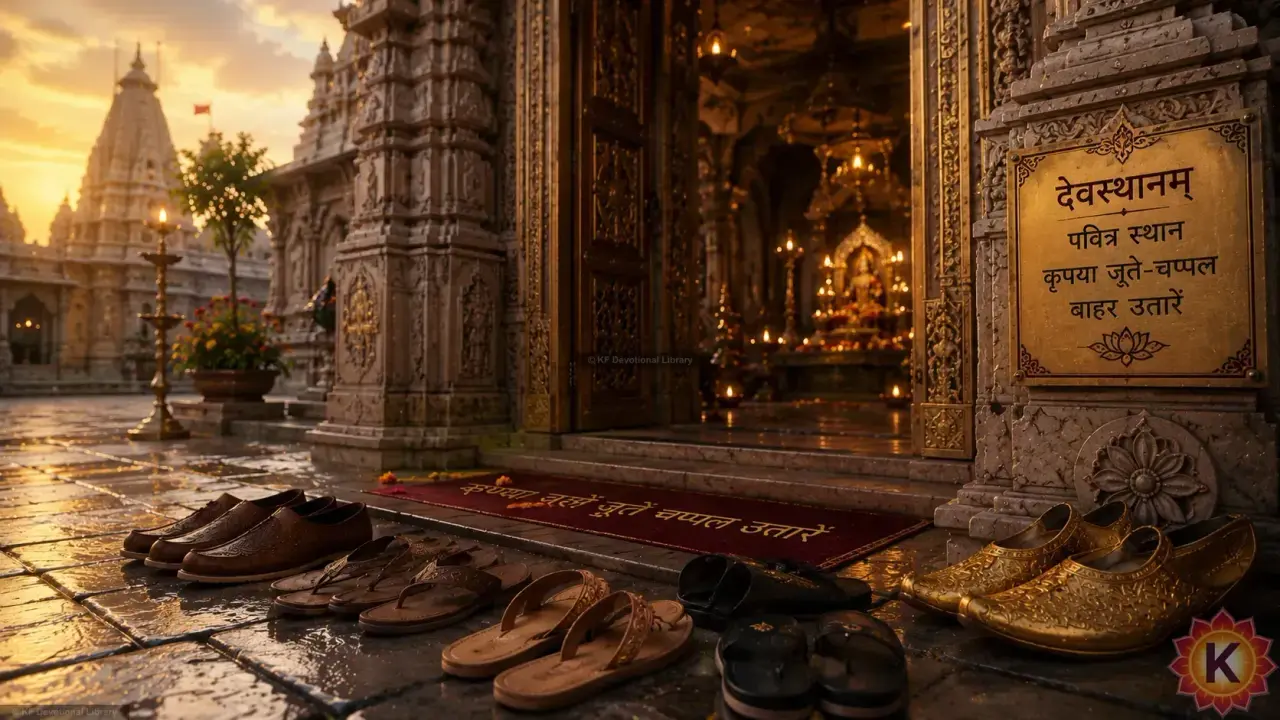
हिंदू मंदिर में प्रवेश करने से पहले जूते उतारना सम्मान का प्रतीक है और पवित्र स्थान की पवित्रता बनाए रखने का एक तरीका है। जूते बाहरी दुनिया की गंदगी ढोते हैं, भौतिक और प्रतीकात्मक दोनों रूप से। उन्हें बाहर छोड़कर, भक्त ईश्वरीय उपस्थिति में प्रवेश करने से पहले अपने सांसारिक अहंकार और आसक्तियों को पीछे छोड़ने की इच्छा का संकेत देते हैं।
Removing shoes before entering a Hindu temple is a mark of respect and a way to maintain the purity of the sacred space. Shoes carry dirt from the outside world, both physically and symbolically. By leaving them outside, devotees signify their willingness to leave behind their worldly ego and attachments before entering the presence of the divine. It also allows for a direct connection with the positive energy of the temple floor.
Overview
हिंदू मंदिर में प्रवेश करना बाहरी अराजक दुनिया से शांत आंतरिक दुनिया में संक्रमण है। जूते उतारने का सरल कार्य इस परिवर्तन के लिए मन और शरीर को तैयार करने के लिए डिज़ाइन किया गया है।
Entering a Hindu temple is a transition from the chaotic outer world to a serene inner world. Every ritual and rule, including the simple act of taking off your footwear, is designed to prepare the mind and body for this transition. While it may seem like a minor custom, it holds deep psychological, spiritual, and even scientific significance in the Vedic tradition.
भौतिक और आध्यात्मिक शुद्धता
Physical and Spiritual Purity
मंदिर तीव्र सकारात्मक ऊर्जा और स्वच्छता के स्थान हैं। जूते हर तरह की जगहों पर चलने के लिए उपयोग किए जाते हैं, जिससे वे गंदगी और नकारात्मक कंपन बटोर लेते हैं। मंदिर परिसर को शुद्ध रखने के लिए जूतों को बाहर रखा जाता है।
Temples are spaces of intense positive energy and cleanliness. Shoes are used to walk in all kinds of places, picking up physical dirt, bacteria, and negative vibrations. To keep the 'Garbhagriha' (sanctum sanctorum) and the temple premises pure, shoes are kept outside. Symbolically, this act represents shedding the 'dust' of the material world and entering the divine space with a clean heart and mind.
ईश्वर के सामने विनम्रता और समानता
Humility and Equality before God
प्राचीन काल में और आज भी, जूते एक स्टेटस सिंबल हो सकते हैं। सभी को — चाहे अमीर हो या गरीब — अपने जूते उतारने की आवश्यकता देकर, मंदिर पूर्ण समानता की भावना लागू करता है।
In ancient times, and even today, footwear can be a status symbol. By requiring everyone — whether rich or poor, king or commoner — to remove their shoes, the temple enforces a sense of absolute equality. Before God, everyone is simply a devotee. Walking barefoot also fosters a sense of humility, reminding us of our connection to the earth and our humble position in the vast cosmos.
वैज्ञानिक पहलू: ऊर्जा अवशोषण
The Scientific Aspect: Energy Absorption
मंदिर अक्सर उन स्थानों पर बनाए जाते हैं जहाँ चुंबकीय और विद्युत तरंगें अधिकतम होती हैं। नंगे पैर चलने से ये कंपन पैरों के दबाव बिंदुओं (एक्यूप्रेशर) के माध्यम से शरीर में प्रवेश कर सकते हैं।
Temples are often built on spots where the magnetic and electric waves from the north-south pole thrust are maximum. The temple floor, often made of stone or marble, is a conductor of these positive energies. Walking barefoot allows these vibrations to enter the body through the pressure points in the feet (Acupressure). This helps in balancing the body's energy and improving mental focus during prayer.
Why We Leave Shoes Outside
| Reason | Benefit |
|---|---|
| Cleanliness | Keeps the sacred space free from physical dirt |
| Humility | Removes social status and ego |
| Energy | Allows direct contact with temple floor vibrations |
| Focus | Acts as a mental switch to enter sacred mode |
Frequently Asked Questions
While socks are generally allowed if they are clean and have not been worn with shoes outside, walking completely barefoot is preferred to gain the full benefit of the temple's energy.
Touching the steps and then the forehead is a gesture of deep respect (Pranam). It signifies that even the dust of the temple is sacred and capable of blessing the devotee.
Yes, many Eastern traditions, including Buddhism, Jainism, and Islam (in mosques), require removing footwear to maintain the sanctity of their places of worship.
Cultural Significance
This tradition is not limited to temples; most Hindus do not wear shoes inside their homes either. The home is considered a temple (Griha-Mandir), and keeping it free from outside footwear is a way to respect the living space and the family deity. It is a hallmark of Hindu culture that emphasizes 'Shaucha' or internal and external cleanliness.
Disclaimer
The content provided on this page is for educational and informational purposes only. OneSanatan makes no claims or guarantees regarding spiritual results, historical absolute accuracy, or religious outcomes. We are not responsible or liable for any personal interpretations or actions taken based on this information.
Explore More Panchang Modules
Continue Reading