Meaning of Prasad - प्रसाद क्या है?
Discover the deep spiritual meaning of Prasad in Hinduism. Learn why it is considered a divine blessing, the types of Prasad, and its importance in rituals.
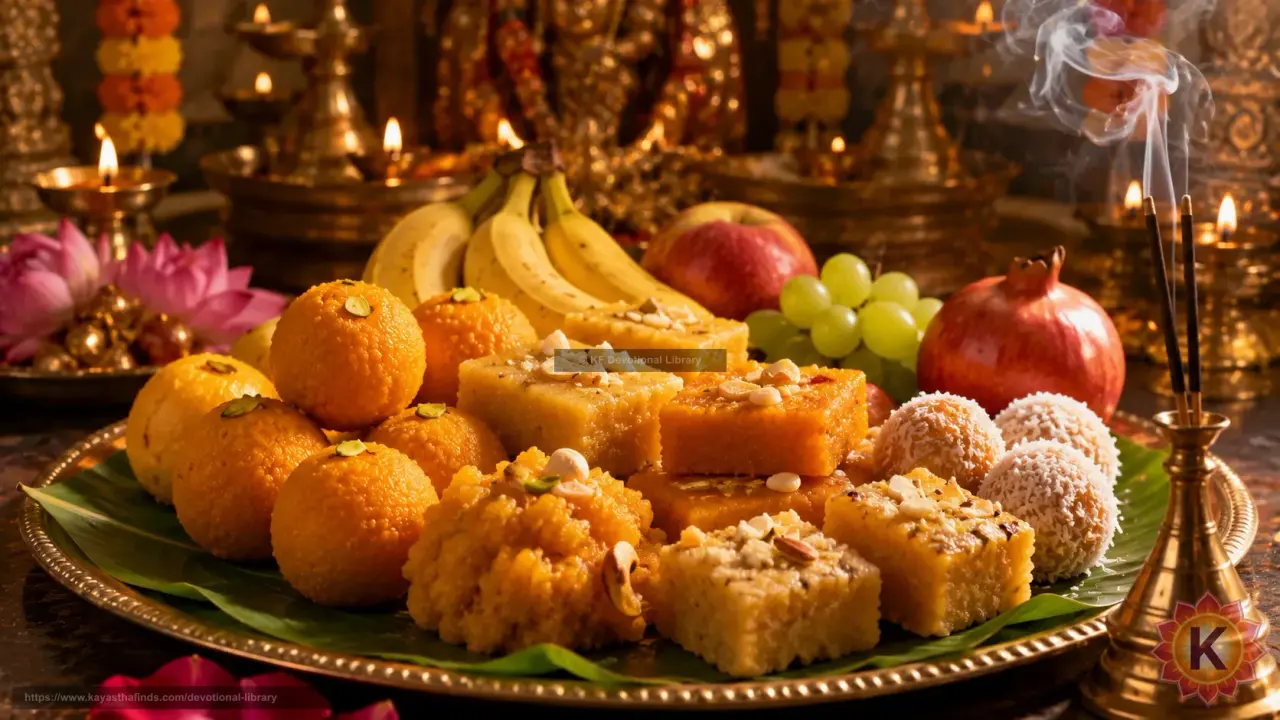
प्रसाद एक भौतिक पदार्थ है, आमतौर पर भोजन, जिसे पहले देवता को अर्पित किया जाता है और फिर भक्तों द्वारा दिव्य आशीर्वाद के रूप में ग्रहण किया जाता है। इसका शाब्दिक अर्थ 'अनुग्रह' या 'कृपा' है।
Prasad is a material substance, typically food, that is first offered to a deity (as Naivedya) and then consumed by devotees as a divine blessing. It literally means 'grace' or 'favour'. In Hinduism, receiving Prasad is seen as receiving the energy and grace of the divine, helping to purify the mind and strengthen the bond between the devotee and God.
Overview
हर हिंदू मंदिर या घर की पूजा में, प्रसाद का वितरण एक महत्वपूर्ण क्षण होता है। यह सिर्फ भोजन से कहीं अधिक है; यह एक पवित्र उपहार है जिसे ईश्वर द्वारा 'चखा' या 'स्पर्श' किया गया है।
In every Hindu temple or household puja, the distribution of Prasad is a pivotal moment. It is more than just food; it is a sacred gift that has been 'tasted' or 'touched' by the divine. The act of offering food to God and then sharing it among the community fosters a sense of humility and gratitude. It reminds us that everything we have is a gift from the creator and should be shared with love.
परिवर्तन: नैवेद्य से प्रसाद तक
The Transition: From Naivedya to Prasad
नैवेद्य और प्रसाद के बीच एक सूक्ष्म लेकिन महत्वपूर्ण अंतर है। नैवेद्य वह भोजन है जो अनुष्ठान के दौरान देवता को अर्पित किया जाता है। एक बार जब देवता भेंट को 'स्वीकार' कर लेते हैं, तो वह भोजन प्रसाद बन जाता है।
There is a subtle but important distinction between Naivedya and Prasad. Naivedya is the food offered to the deity during the ritual. Once the deity 'accepts' the offering through the priest's mantras and the devotee's devotion, the leftover food becomes Prasad. It is believed that the divine energy infuses the food, transforming it into a carrier of spiritual grace. This transition signifies the acceptance of the devotee's love by the Supreme.
प्रसाद के प्रकार और रूप
Types and Forms of Prasad
Prasad can take many forms depending on the deity, the region, and the occasion:
- फल और मेवे: भेंट का सबसे सरल और प्राकृतिक रूप। — Fruits and Nuts: The simplest and most natural form of offering.
- मिठाई: लड्डू, मोदक और हलवा आमतौर पर गणेश जी और हनुमान जी को अर्पित किए जाते हैं। — Sweets (Mithai): Ladoo, Modak, and Halwa are commonly offered to deities like Ganesha and Hanuman.
- पका हुआ भोजन (भोग): चावल, दाल और सब्जियों से बना विस्तृत भोजन। — Cooked Meals (Bhog): Elaborate meals consisting of rice, dal, and vegetables, often served in large temples like Jagannath Puri.
- चरणामृत: दूध, दही, घी, शहद और चीनी का मिश्रण। — Charanamrit: A mixture of milk, curd, ghee, honey, and sugar, often used to bathe the deity.
- पुष्पम (फूल): कभी-कभी फूल या पवित्र पत्ते भी प्रसाद के रूप में वितरित किए जाते हैं। — Pushpam (Flowers): Sometimes even flowers or sacred leaves (like Tulsi or Bel Patra) are distributed as Prasad.
प्रसाद ग्रहण करने का आध्यात्मिक महत्व
The Spiritual Significance of Consuming Prasad
प्रसाद ग्रहण करना आध्यात्मिक संवाद का एक कार्य है। यह इंद्रियों को शुद्ध करने और मन को शांत करने वाला कहा जाता है। भक्त आमतौर पर दाहिने हाथ से प्रसाद ग्रहण करते हैं।
Consuming Prasad is an act of spiritual communion. It is said to purify the sense organs and calm the mind. Devotees usually receive Prasad with their right hand and keep it on their forehead as a mark of respect before eating. The equality in Prasad distribution — where everyone from a king to a beggar receives the same portion — reinforces the idea that all are equal in the eyes of the divine.
Common Deities and Their Favorite Prasad
| Deity | Favorite Offering |
|---|---|
| Lord Ganesha | Modak, Ladoo |
| Lord Hanuman | Boondi Ladoo, Roat |
| Lord Shiva | Milk, Bel Patra, Fruits |
| Lord Krishna | Makhan (Butter), Mishri, Chhappan Bhog |
| Goddess Lakshmi | Kheer, Coconut |
Frequently Asked Questions
The word Prasad is derived from 'Prasada', which means grace, kindness, or favour from the divine.
In Hindu culture, the right hand is considered the hand of giving and receiving sacred things, representing purity and positive action.
Yes, items like sacred ash (Vibhuti), kumkum, flowers, and even clothes or ornaments touched by the deity are considered Prasad.
Cultural Significance
Prasad is a symbol of hospitality and community. In large temples, the 'Maha Prasad' feeds thousands of people every day, acting as a great equalizer. It is a tradition that emphasizes sharing and the recognition of divinity in food (Annam Brahma).
Disclaimer
The content provided on this page is for educational and informational purposes only. OneSanatan makes no claims or guarantees regarding spiritual results, historical absolute accuracy, or religious outcomes. We are not responsible or liable for any personal interpretations or actions taken based on this information.
Explore More Panchang Modules
Continue Reading