Pandavas Names & Story - पांडव कौन थे?
Discover the 5 Pandava brothers of the Mahabharata. Learn about Yudhisthira, Bhima, Arjuna, Nakula, and Sahadeva, their divine origins, and their roles in Dharma.
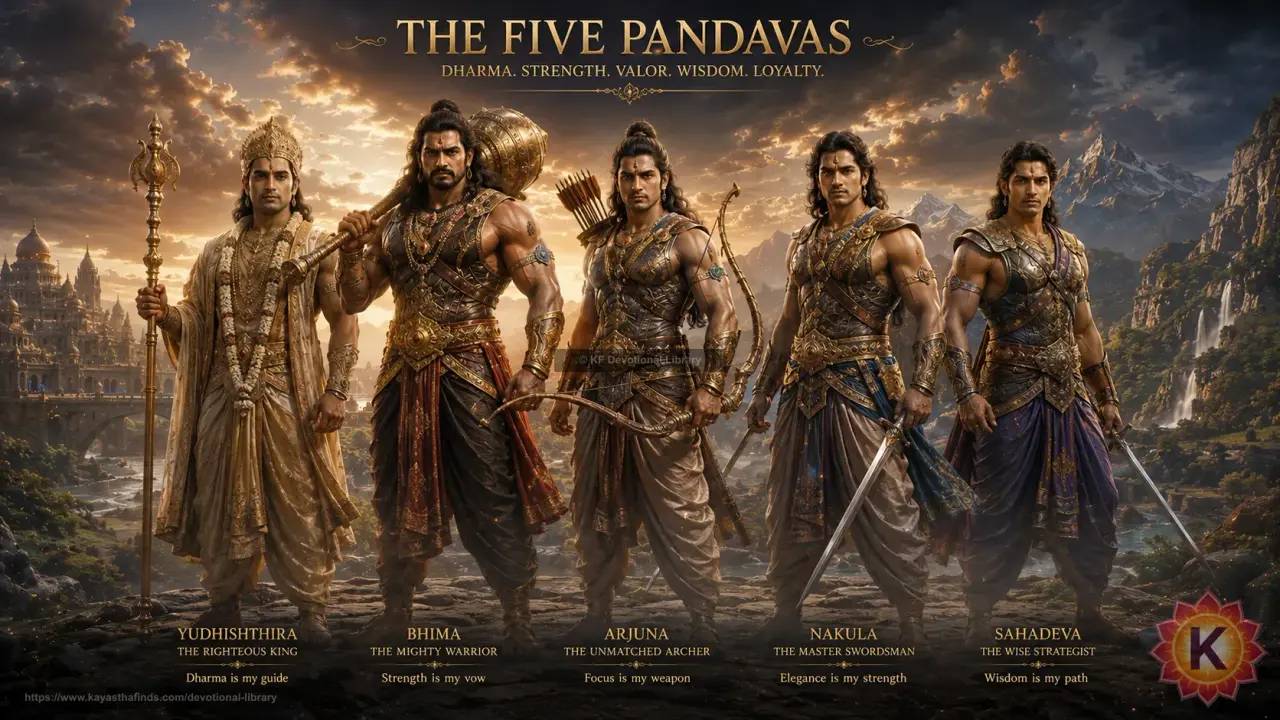
पांडव पांच वीर भाई थे — युधिष्ठिर, भीम, अर्जुन, नकुल और सहदेव — जो हिंदू महाकाव्य महाभारत के केंद्रीय पात्र हैं। रानी कुंती और माद्री के यहाँ विभिन्न देवताओं के आह्वान से जन्मे, वे पांच मौलिक मानवीय गुणों का प्रतिनिधित्व करते हैं। उनकी जीवन यात्रा धर्म की शक्ति और भगवान कृष्ण के मार्गदर्शन का प्रमाण है।
The Pandavas were the five heroic brothers — Yudhisthira, Bhima, Arjuna, Nakula, and Sahadeva — who are the central protagonists of the Hindu epic Mahabharata. Born to Queens Kunti and Madri through the invocation of various deities, they represent the five fundamental human virtues. Their life's journey, culminating in the Kurukshetra War, is the ultimate testament to the power of righteousness (Dharma) and the guidance of Lord Krishna.
Overview
पांडवों की कहानी हर व्यक्ति के सत्य को बनाए रखने के संघर्ष की कहानी है। हालांकि वे राजकुमार थे, लेकिन उनका जीवन निर्वासन, कठिनाई और अपने राज्य के नुकसान से भरा था।
The story of the Pandavas is the story of every individual's struggle to uphold truth in a world full of deceit. Though they were princes, their lives were marked by exile, hardship, and the loss of their kingdom. However, their unwavering devotion to Dharma and their surrender to Lord Krishna ensured their ultimate victory. Each of the five brothers possessed a unique divine quality, making them a complete unit of strength and wisdom. Let's explore the individual stories and symbolic meanings of the five Pandavas.
पांचों भाइयों की दिव्य उत्पत्ति
The Divine Origins of the Five Brothers
Due to a curse on King Pandu, he could not father children. Queen Kunti used a secret mantra to invoke the gods to grant her sons. Later, she shared the mantra with Madri. Thus, the five Pandavas were born from the essence of the gods:
- 1. युधिष्ठिर: यम (धर्म) के पुत्र। वे सत्य और नैतिक नियम का प्रतिनिधित्व करते हैं। — 1. Yudhisthira: Son of Yama (Dharma), the God of Death and Justice. He represents truth and moral law.
- 2. भीम: वायु देव के पुत्र। वे अपार शारीरिक शक्ति का प्रतिनिधित्व करते हैं। — 2. Bhima: Son of Vayu, the God of Wind. He represents immense physical strength and vitality.
- 3. अर्जुन: इंद्र देव के पुत्र। वे एकाग्रता और कौशल का प्रतिनिधित्व करते हैं। — 3. Arjuna: Son of Indra, the King of Gods. He represents focus, skill, and the quest for excellence.
- 4. नकुल और सहदेव: अश्विनी कुमारों के पुत्र। — 4. Nakula: Son of the Ashwini Kumars (Divine Physicians). He represents beauty and grace.
- 5. Sahadeva: Son of the Ashwini Kumars. He represents wisdom, foresight, and intelligence.
द्रौपदी और भगवान कृष्ण की भूमिका
The Role of Draupadi and Lord Krishna
पांडवों की शक्ति दो प्रमुख पात्रों द्वारा कई गुना बढ़ गई थी। द्रौपदी उनकी संयुक्त पत्नी थीं, और भगवान कृष्ण उनके मार्गदर्शक और गुरु थे।
The Pandavas' strength was multiplied by two central figures. Draupadi, their common wife, was the fire (born from a Yajna) that kept their resolve for justice alive. Lord Krishna, their cousin and mentor, was the guiding light who directed their actions. Without Krishna's divine strategy and the Pandavas' willingness to follow his advice, the victory over the massive Kaurava army would have been impossible. This teaches us that human effort needs divine grace to succeed.
प्रतीकात्मक अर्थ: पांच तत्व
Symbolic Meaning: The Five Elements
कई आध्यात्मिक व्याख्याओं में, पांच पांडव पांच तत्वों (पंचभूत) का प्रतिनिधित्व करते हैं जिन्हें आत्मा द्वारा वश में किया जाना चाहिए।
In many spiritual commentaries, the five Pandavas represent the five elements (Pancha Bhoota) and the five senses that must be mastered by the soul (represented by Krishna). Yudhisthira is Earth (stability), Bhima is Air (power), Arjuna is Fire (transformation), Nakula is Water (flow), and Sahadeva is Ether (space/wisdom). Together, they represent a balanced human personality that is aligned with the divine will.
The Five Pandavas and Their Attributes
| Name | Divine Father | Primary Virtue | Key Weapon |
|---|---|---|---|
| Yudhisthira | Dharma / Yama | Truthfulness | Spear |
| Bhima | Vayu | Strength | Mace (Gada) |
| Arjuna | Indra | Focus / Skill | Bow (Gandiva) |
| Nakula | Ashwini Kumars | Grace / Beauty | Sword |
| Sahadeva | Ashwini Kumars | Wisdom / Foresight | Axe / Sword |
Frequently Asked Questions
Yudhisthira was the eldest among the five brothers. However, Karna was the first-born son of Kunti, making him the eldest brother, though this was unknown to them for most of their lives.
Due to a misunderstanding of their mother Kunti's words, who accidentally asked them to 'share whatever they had brought' (referring to Draupadi whom they won in a Swayamvara), they all married Draupadi to keep their mother's word true.
They ruled Hastinapur for 36 years. After Krishna's departure from the world, they retired and embarked on their final journey to the Himalayas to reach heaven in their physical forms.
Cultural Significance
The Pandavas are worshipped as symbols of ideal brotherhood and righteousness. Their story is a reminder that even when the whole world is against you, if you stand with Dharma, the Divine (Krishna) will stand with you. Their final journey to the Himalayas (Mahaprasthana) is one of the most moving parts of the epic.
Disclaimer
The content provided on this page is for educational and informational purposes only. OneSanatan makes no claims or guarantees regarding spiritual results, historical absolute accuracy, or religious outcomes. We are not responsible or liable for any personal interpretations or actions taken based on this information.
Explore More Panchang Modules
Continue Reading