Kauravas Explained - कौरव कौन थे?
Learn about the 100 Kauravas of the Mahabharata. Explore the story of their birth, their key leaders like Duryodhana and Dussasana, and the spiritual meaning of Adharma.
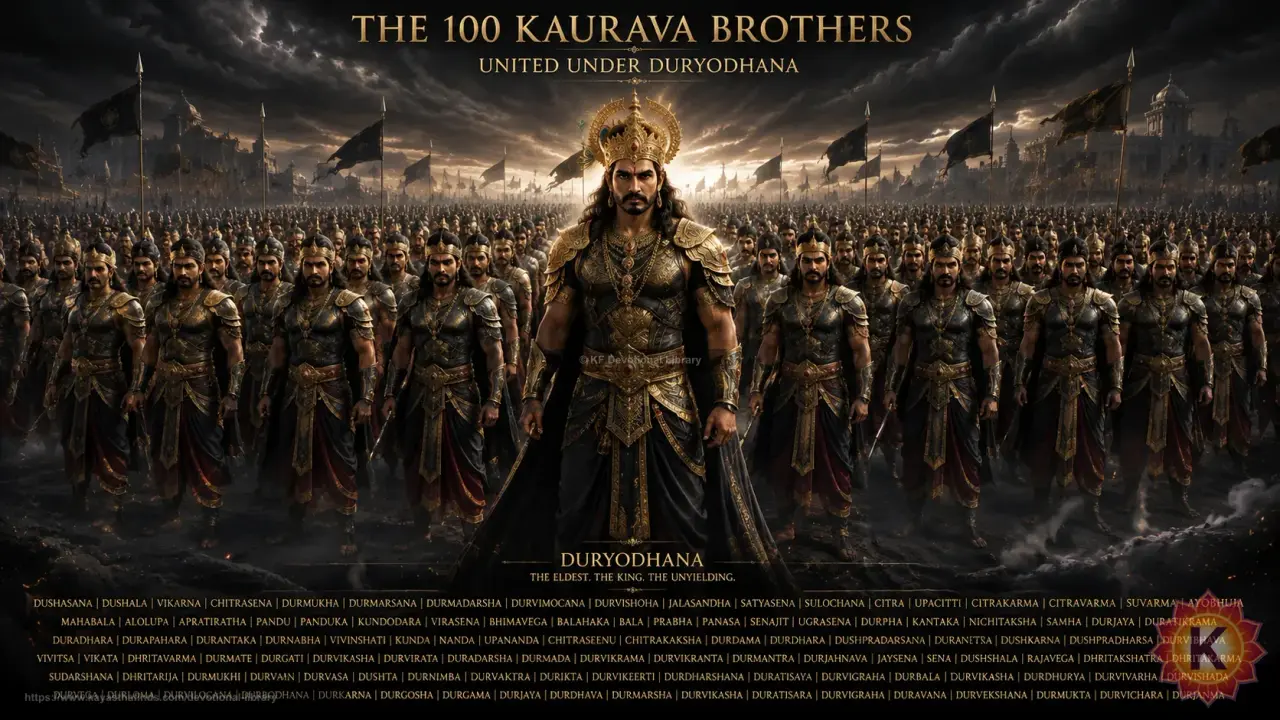
कौरव हिंदू महाकाव्य महाभारत में राजा धृतराष्ट्र और रानी गांधारी के 100 पुत्र थे। सबसे बड़े भाई दुर्योधन के नेतृत्व में, वे अपने चचेरे भाई पांडवों के खिलाफ महान कुरुक्षेत्र युद्ध में अधर्म की शक्तियों का प्रतिनिधित्व करते थे। संख्या और शक्ति के बावजूद, वे अंततः हार गए क्योंकि वे नैतिक नियम और धर्म के मार्ग से भटक गए थे।
The Kauravas were the 100 sons of King Dhritarashtra and Queen Gandhari in the Hindu epic Mahabharata. Led by the eldest brother Duryodhana, they represented the forces of Adharma (unrighteousness) in the great Kurukshetra War against their cousins, the Pandavas. Despite their numbers and power, they were ultimately defeated because they strayed from the path of moral law and righteousness.
Overview
महाभारत के विशाल ताने-बाने में, कौरव मानवता के लिए एक चेतावनी के रूप में कार्य करते हैं। जहाँ पांडव उन गुणों का प्रतिनिधित्व करते हैं जिन्हें हमें अपनाना चाहिए, वहीं कौरव उन नकारात्मक प्रवृत्तियों का प्रतिनिधित्व करते हैं जो हर मानवीय हृदय में निवास करती हैं।
In the vast tapestry of the Mahabharata, the Kauravas serve as a cautionary tale for all of humanity. While the Pandavas represent the qualities we should aspire to, the Kauravas represent the negative tendencies that reside within every human heart — greed, jealousy, ego, and the refusal to see the truth. The story of their birth, their rivalry with the Pandavas, and their eventual downfall is a profound exploration of human psychology and the inevitable victory of Dharma.
100 कौरवों का चमत्कारिक जन्म
The Miraculous Birth of the 100 Kauravas
कौरवों का जन्म महाभारत की सबसे असामान्य कहानियों में से एक है। महर्षि व्यास के आशीर्वाद से गांधारी ने एक मांस के पिंड को जन्म दिया, जिसे व्यास ने 101 टुकड़ों में विभाजित किया और घी से भरे बर्तनों में रखा।
The birth of the Kauravas is one of the most unusual stories in the Mahabharata. After Gandhari was blessed by Sage Vyasa to have 100 sons, she remained pregnant for two years. Distressed, she struck her womb, and a mass of flesh emerged. Vyasa then divided this flesh into 101 pieces and placed them in jars filled with clarified butter (ghee). After another year, the jars opened, and the 100 brothers and one sister (Dushala) were born. This story is often cited by modern enthusiasts as an ancient parallel to stem cell technology or test-tube birth.
कौरवों के बीच प्रमुख पात्र
Key Figures Among the Kauravas
While there were 100 brothers, a few played central roles in the narrative:
- दुर्योधन: सबसे बड़ा भाई और नेता। उसका नाम 'जिसे जीतना कठिन हो' है। — Duryodhana: The eldest and the leader. His name means 'the one who is difficult to conquer', but his internal weakness was his extreme envy of the Pandavas.
- दुःशासन: दूसरा भाई, जो अपनी क्रूरता के लिए जाना जाता था। — Dussasana: The second brother, known for his cruelty and for the attempt to disrobe Draupadi in the royal court.
- विकर्ण: उन कुछ कौरवों में से एक जिन्होंने द्रौपदी के साथ हुए अन्याय के खिलाफ आवाज उठाई थी। — Vikarna: One of the few Kauravas who spoke out against the injustice done to Draupadi, representing the voice of conscience within a group of sinners.
- Yuyutsu: The only son of Dhritarashtra (born to a maid) who chose to fight on the side of the Pandavas, choosing Dharma over family ties.
- Dushala: The only sister, who was married to Jayadratha.
प्रतीकात्मक अर्थ: 100 दुर्गुण
The Symbolic Meaning: The 100 Vices
महाभारत की आध्यात्मिक व्याख्याओं में, 100 कौरव इंसान की 100 नकारात्मक इंद्रिय प्रवृत्तियों और मनोवैज्ञानिक दुर्बलताओं का प्रतिनिधित्व करते हैं।
In spiritual interpretations of the Mahabharata (like those of Paramahansa Yogananda), the 100 Kauravas represent the 100 negative sensory tendencies and psychological blind spots of a human being. Dhritarashtra, the blind king, represents the blind mind that is attached to its own creations despite knowing they are wrong. The war between the Kauravas and Pandavas is not just a historical event but the daily battle within our own consciousness between our lower and higher natures.
Comparison: Kauravas vs. Pandavas
| Aspect | Kauravas | Pandavas |
|---|---|---|
| Leadership | Duryodhana (Ego-driven) | Yudhisthira (Dharma-driven) |
| Guiding Force | Shakuni (Deceit) | Lord Krishna (Wisdom) |
| Strength | Physical numbers and military power | Moral righteousness and divine grace |
| Outcome | Total destruction | Victory and establishment of Dharma |
Frequently Asked Questions
While all 100 are named in the Mahabharata text, the most prominent ones are Duryodhana, Dussasana, Vikarna, and Chitrasena. A full list is usually found in the 'Adi Parva' of the epic.
According to the main narrative, all 100 sons of Dhritarashtra were killed by Bhima. Only Yuyutsu (who fought for the Pandavas) and Dhritarashtra himself survived from the family side.
Her name was Dushala. She was the 101st child placed in the jars by Vyasa. She was married to Jayadratha, the King of Sindhu.
Cultural Significance
The Kauravas teach us that power without character is a path to destruction. Their story is used to explain the concept of 'Vinashe Viparita Buddhi' — when one's destruction is near, one's intelligence works against them. It remains the ultimate epic study of the human ego.
Disclaimer
The content provided on this page is for educational and informational purposes only. OneSanatan makes no claims or guarantees regarding spiritual results, historical absolute accuracy, or religious outcomes. We are not responsible or liable for any personal interpretations or actions taken based on this information.
Explore More Panchang Modules
Continue Reading