Dharma vs Adharma - धर्म और अधर्म क्या है?
Explore the profound difference between Dharma (righteousness and cosmic order) and Adharma (chaos and immorality) in Hindu philosophy and epics like the Mahabharata.
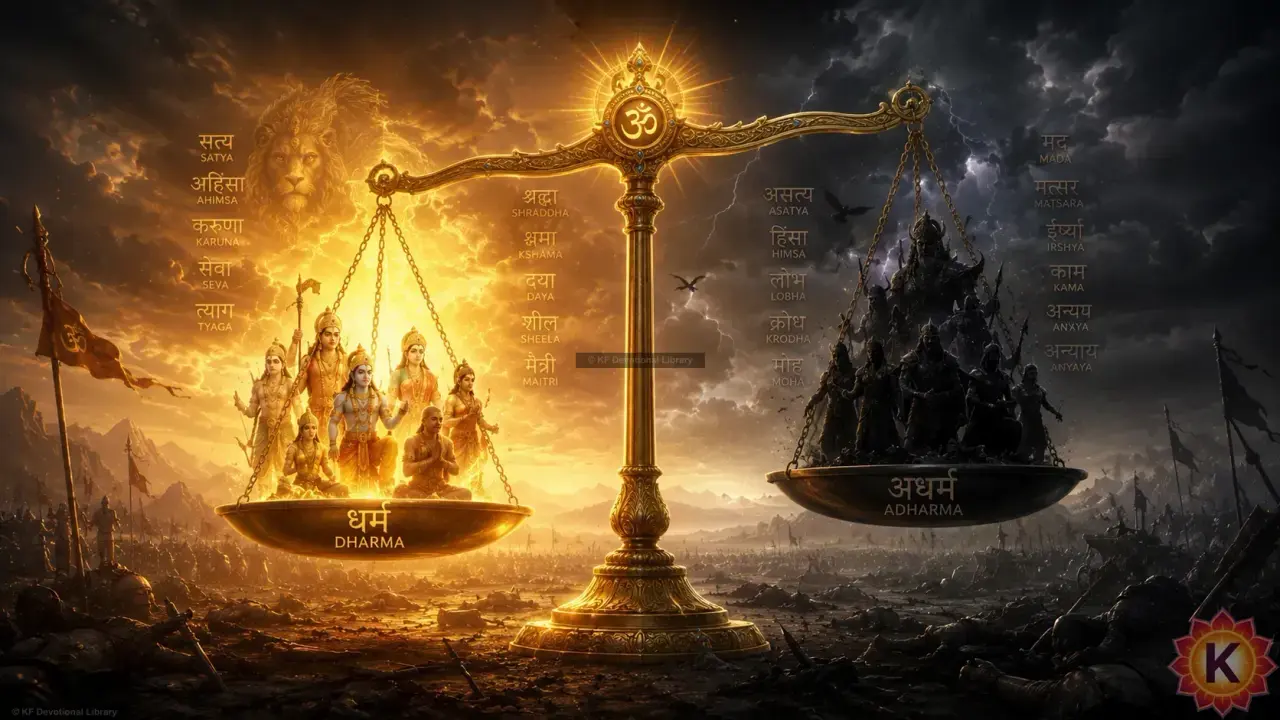
हिंदू धर्म में, 'धर्म' कानून, व्यवस्था, सद्भाव और सत्य का सार्वभौमिक सिद्धांत है जो ब्रह्मांड को बनाए रखता है। इसका अनुवाद 'जीने का सही तरीका' या 'धार्मिक कर्तव्य' है। 'अधर्म' इसका ठीक विपरीत है—अराजकता, स्वार्थ, और वे कार्य जो प्राकृतिक व्यवस्था को बाधित करते हैं।
In Hinduism, 'Dharma' is the universal principle of law, order, harmony, and truth that sustains the universe. It translates to 'right way of living' or 'righteous duty'. 'Adharma' is its exact opposite—chaos, selfishness, vice, and actions that disrupt the natural order. The central theme of Hindu epics like the Ramayana and Mahabharata is the eternal battle between Dharma and Adharma.
Overview
धर्म पश्चिमी अर्थों में 'मज़हब' नहीं है; यह जीवन जीने का एक तरीका है। अग्नि का धर्म जलाना है; जल का धर्म प्यास बुझाना है। मनुष्यों के लिए, धर्म का अर्थ है ईमानदारी के साथ परिवार, समाज और परमात्मा के प्रति अपने कर्तव्यों का पालन करना।
Dharma is not 'religion' in the Western sense; it is a way of life. The root of the word means 'that which upholds'. Fire's dharma is to burn; water's dharma is to quench thirst. For humans, Dharma means performing one's duties toward family, society, and the divine with honesty and integrity. When individuals abandon their duties out of greed or ego, it creates Adharma.
धर्म की जटिलता
The Complexity of Dharma
धर्म शायद ही कभी सीधा होता है। एक सैनिक के लिए जो सही है (हिंसा के माध्यम से राष्ट्र की रक्षा करना) वह एक पुजारी के लिए अधर्म हो सकता है। इसे स्व-धर्म (व्यक्तिगत कर्तव्य) कहा जाता है। महाभारत इन गहन नैतिक दुविधाओं की पड़ताल करता है।
Dharma is rarely black and white. What is right for a soldier (protecting the nation through violence) might be adharma for a priest (who must practice total non-violence). This is called Sva-Dharma (personal duty). The Mahabharata explores these profound moral dilemmas. Lord Krishna teaches Arjuna that upholding his duty as a warrior to fight against injustice (even against his own family) is his supreme Dharma.
परमात्मा का वचन
The Promise of the Divine
हिंदू मान्यता की आधारशिला भगवद गीता में पाई जाती है: 'यदा यदा हि धर्मस्य...' भगवान कृष्ण वादा करते हैं कि जब भी अधर्म बढ़ता है और धर्म का पतन होता है, तो परमात्मा पृथ्वी पर अवतार लेते हैं ताकि अच्छाई की रक्षा की जा सके और बुराई को नष्ट किया जा सके।
A cornerstone of Hindu belief is found in the Bhagavad Gita (Chapter 4, Verses 7-8): 'Yada yada hi dharmasya...' Lord Krishna promises that whenever Adharma (evil and chaos) rises and Dharma declines, the Divine will manifest on Earth to protect the good, destroy the wicked, and re-establish the cosmic order.
Frequently Asked Questions
It is similar, but broader. Adharma isn't just breaking a rule of God; it is acting out of harmony with nature and society. It is an action that causes disharmony, suffering, and imbalance.
Your Dharma depends on your age, profession, and responsibilities. The universal Dharma (Sanatana Dharma) applies to everyone: truthfulness, compassion, non-violence, and self-restraint.
Cultural Significance
The pursuit of Dharma is the first of the four Purusharthas (aims of human life), forming the ethical foundation for earning wealth (Artha) and fulfilling desires (Kama), ultimately leading to liberation (Moksha).
Disclaimer
The content provided on this page is for educational and informational purposes only. OneSanatan makes no claims or guarantees regarding spiritual results, historical absolute accuracy, or religious outcomes. We are not responsible or liable for any personal interpretations or actions taken based on this information.
Explore More Panchang Modules
Continue Reading