Makar Sankranti - मकर संक्रांति क्यों?
Learn the spiritual and scientific importance of Makar Sankranti. Discover why it marks the movement of the sun, the significance of kite flying, and til-gul traditions.
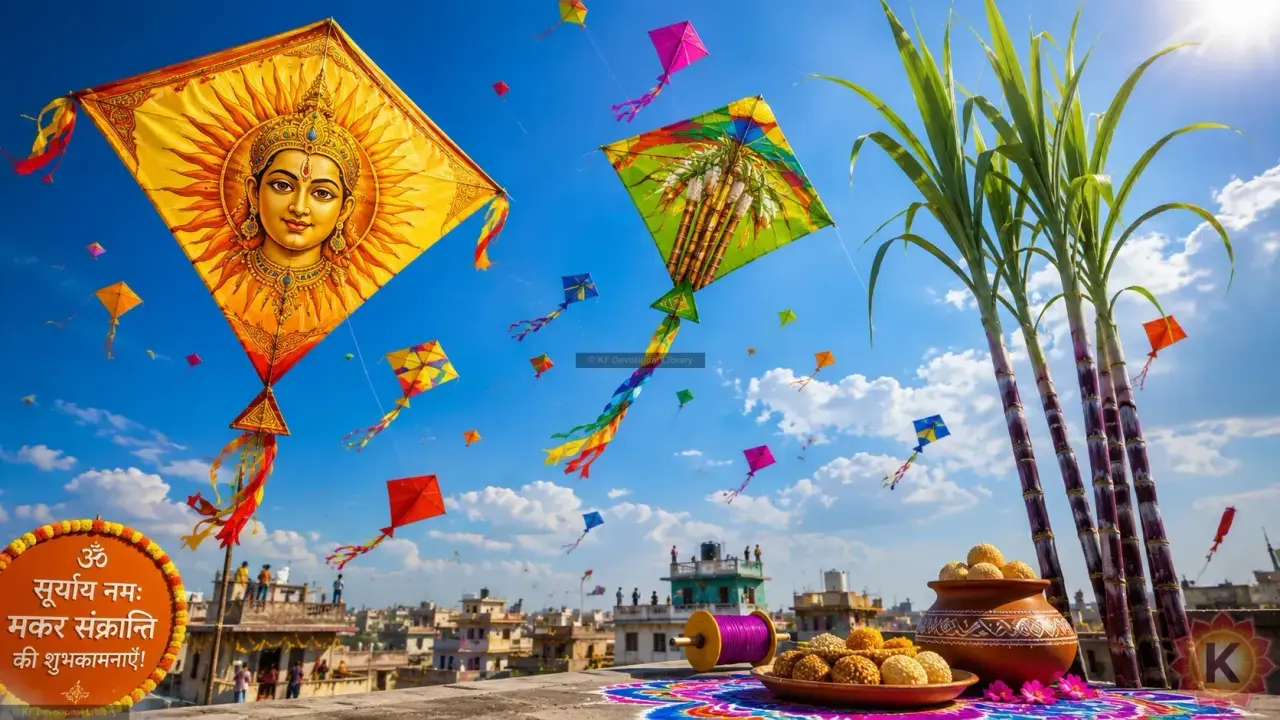
मकर संक्रांति एक प्रमुख हिंदू त्योहार है जो मकर राशि में सूर्य के प्रवेश का जश्न मनाता है। यह उत्तरायण नामक छह महीने की शुभ अवधि की शुरुआत का प्रतीक है। अधिकांश हिंदू त्योहारों के विपरीत जो चंद्र कैलेंडर का पालन करते हैं, मकर संक्रांति सौर चक्र का पालन करती है, जो सर्दियों के अंत और फसल के मौसम के आगमन का संकेत देती है।
Makar Sankranti is a major Hindu festival celebrating the Sun's transition into the zodiac sign of Capricorn (Makar). It marks the beginning of the six-month auspicious period called Uttarayan, or the sun's northward journey. Unlike most Hindu festivals that follow the lunar calendar, Makar Sankranti follows the solar cycle, signifying the end of winter and the arrival of warmer days, longer daylight, and the harvest season.
Overview
मकर संक्रांति उन कुछ प्राचीन हिंदू त्योहारों में से एक है जिसका गहरा आध्यात्मिक अर्थ और ठोस खगोलीय आधार दोनों है। यह जीवनदायी ऊर्जा के लिए सूर्य देव को समर्पित कृतज्ञता का त्योहार है।
Makar Sankranti is one of the few ancient Hindu festivals that has both a deep spiritual meaning and a solid astronomical basis. It is a festival of gratitude dedicated to the Sun God (Surya) for his life-giving energy. Across India, it is celebrated with different names and customs — from the kite-flying festivals of Gujarat to the grand Pongal celebrations of Tamil Nadu. It is a time for renewal, letting go of the past, and spreading sweetness in our speech and actions.
उत्तरायण का महत्व
The Significance of Uttarayan
उत्तरायण वह अवधि है जब सूर्य उत्तरी गोलार्ध की ओर बढ़ता है। भगवद्गीता में, इस अवधि को आध्यात्मिक साधकों के लिए विशेष रूप से शुभ बताया गया है। यह अज्ञान के अंधकार से ज्ञान के प्रकाश की ओर संक्रमण का प्रतीक है।
Uttarayan is the period when the sun moves toward the northern hemisphere. In the Bhagavad Gita, this period is described as especially auspicious for spiritual seekers. It is believed that those who leave their physical bodies during Uttarayan achieve a higher state of liberation. This is why Bhishma Pitamaha, in the Mahabharata, waited on his bed of arrows for the arrival of Uttarayan before departing. It symbolizes the shift from the darkness of ignorance toward the light of knowledge.
तिल-गुड़ और खिचड़ी की परंपरा
The Tradition of Til-Gul and Khichdi
इस दिन का मानक अभिवादन है 'तिल-गुड़ लें, और मीठा बोलें'। तिल और गुड़ दोनों ही गर्म भोजन हैं, जो सर्दियों के अंत के लिए उपयुक्त हैं। आध्यात्मिक रूप से, तिल विनम्रता का प्रतीक है, जबकि गुड़ मिठास का।
The standard greeting on this day is 'Til-gul ghya, god god bola' (Eat sesame and jaggery, and speak sweet words). Sesame (Til) and jaggery (Gul) are both warming foods, perfect for the tail end of winter. Spiritually, Til symbolizes smallness and humility, while Gul represents sweetness. Together, they remind us to live in harmony and speak kindly to everyone. In North India, it is also called 'Khichdi', where the dish made of rice and lentils is offered and shared, symbolizing unity and nourishment.
हम पतंग क्यों उड़ाते हैं?
Why Do We Fly Kites?
पतंग उड़ाना मकर संक्रांति का एक प्रमुख हिस्सा है। इसके स्वास्थ्य लाभ भी हैं: यह लोगों को सुबह की धूप में समय बिताने के लिए प्रोत्साहित करता है। प्रतीकात्मक रूप से, पतंग मानव आत्मा की उच्च सत्य तक पहुँचने की इच्छा का प्रतिनिधित्व करती है।
Kite flying is a major part of Makar Sankranti, especially in Gujarat and Rajasthan. While it is a fun sport, it has a health benefit: it encourages people to spend long hours in the early morning sun. The winter sun is rich in Vitamin D and helps clear skin infections and other winter-related ailments. Symbolically, the kite reaching for the sky represents the human soul's desire to reach for higher truths and divine heights while staying grounded by the thread of Dharma.
Makar Sankranti Across India
| Region | Name of Festival | Key Tradition |
|---|---|---|
| Punjab / Haryana | Lohri | Bonfires and dancing |
| Tamil Nadu | Pongal | Cooking the new harvest of rice |
| Gujarat / Rajasthan | Uttarayan | Grand kite-flying festivals |
| Assam | Magh Bihu | Community feasts and huts (Meji) |
| Uttar Pradesh / Bihar | Makar Sankranti / Khichdi | Holy dip in rivers and donation |
Frequently Asked Questions
Because it follows the solar calendar (solar cycle) rather than the lunar calendar. It marks the sun entering the Capricorn zodiac, which occurs on a fixed solar date.
Donation (Daan) of food, clothes, and blankets is considered extremely auspicious on Makar Sankranti. It is a way of sharing the harvest bounty with those in need.
Uttarayan is the six-month period between Makar Sankranti and Karka Sankranti when the sun travels toward the northern hemisphere. It is considered the 'daytime' of the gods.
Cultural Significance
Makar Sankranti is a harvest festival that celebrates the earth's fertility. It is a time for families to gather and for communities to forgive past grievances. The holy dip (Snan) in rivers like the Ganga or Yamuna on this day is believed to wash away sins and start the year on a pure note.
Disclaimer
The content provided on this page is for educational and informational purposes only. OneSanatan makes no claims or guarantees regarding spiritual results, historical absolute accuracy, or religious outcomes. We are not responsible or liable for any personal interpretations or actions taken based on this information.
Explore More Panchang Modules
Continue Reading