Who was Sri Ramakrishna Paramahamsa? - श्री रामकृष्ण परमहंस कौन थे?
Learn about Sri Ramakrishna Paramahamsa, the 19th-century Bengali saint of Dakshineswar, his spiritual journey, devotion to Kali, experiences with different religious paths, teachings on God realization and his influence on Swami Vivekananda.
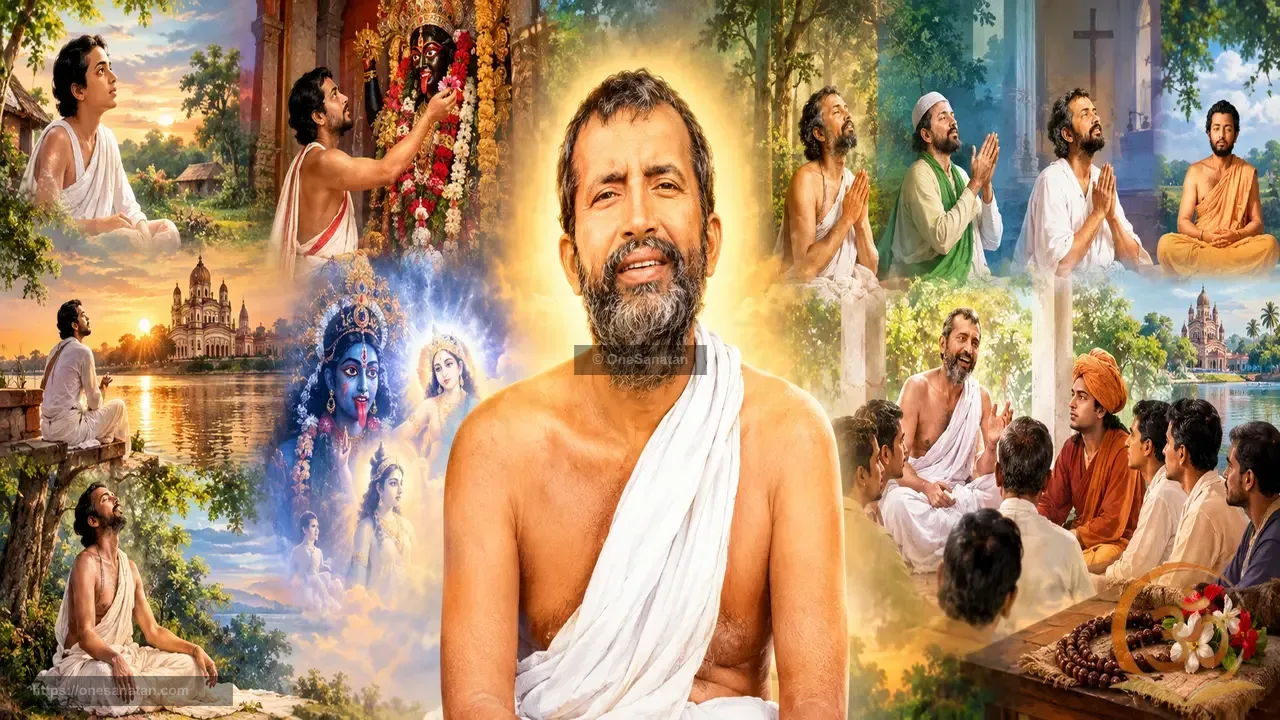
श्री रामकृष्ण परमहंस 1836 से 1886 तक जीवित रहने वाले 19वीं शताब्दी के बंगाल के महान संत और आध्यात्मिक साधक थे। उन्होंने अपने जीवन का बड़ा भाग कोलकाता के निकट दक्षिणेश्वर काली मंदिर में पुजारी और साधक के रूप में बिताया। उन्होंने हिंदू धर्म की विभिन्न आध्यात्मिक साधनाओं का अभ्यास किया और इस्लाम तथा ईसाई परंपरा से जुड़े आध्यात्मिक मार्गों का भी अनुभव करने का प्रयास किया। उनकी शिक्षाओं में ईश्वर की प्रत्यक्ष अनुभूति, सच्ची भक्ति और विभिन्न धार्मिक मार्गों के माध्यम से एक ही परम सत्य तक पहुंचने की संभावना पर विशेष जोर मिलता है।
Sri Ramakrishna Paramahamsa was a 19th-century Bengali Hindu saint and mystic who lived from 1836 to 1886. He spent much of his life as a priest and spiritual seeker at the Dakshineswar Kali Temple near Kolkata. He practiced different Hindu spiritual paths and also explored traditions associated with Islam and Christianity. His teachings emphasized direct realization of God, sincere devotion, and the idea that different religious paths can lead toward the same ultimate reality.
Overview
श्री रामकृष्ण परमहंस आधुनिक भारत के आध्यात्मिक इतिहास में एक विशिष्ट स्थान रखते हैं। 1836 में बंगाल के एक ग्रामीण परिवार में गदाधर चट्टोपाध्याय के रूप में जन्मे रामकृष्ण बाद में कोलकाता के निकट दक्षिणेश्वर काली मंदिर के पुजारी बने। उनका जीवन गहन भक्ति और ईश्वर के प्रत्यक्ष अनुभव की निरंतर खोज से जुड़ा रहा। वे केवल धार्मिक विचारों को जानकर संतुष्ट नहीं होते थे, बल्कि आध्यात्मिक सत्य को स्वयं अनुभव करना चाहते थे। दक्षिणेश्वर में उन्होंने हिंदू धर्म की कई साधना पद्धतियों का अभ्यास किया और इस्लाम तथा ईसाई परंपरा से जुड़े आध्यात्मिक मार्गों का भी अनुभव करने का प्रयास किया। रामकृष्ण परंपरा में संरक्षित उनके निष्कर्ष के अनुसार, अलग-अलग धार्मिक रूप और उपासना पद्धतियां होने के बावजूद सच्ची आध्यात्मिक साधना साधक को एक ही परम सत्य की ओर ले जा सकती है। धीरे-धीरे अनेक भक्त और युवा शिष्य उनके आसपास आने लगे। इनमें नरेंद्रनाथ दत्त भी थे, जो आगे चलकर स्वामी विवेकानंद के नाम से प्रसिद्ध हुए। विवेकानंद और रामकृष्ण परंपरा के माध्यम से रामकृष्ण की आध्यात्मिक शिक्षाओं का प्रभाव भारत और दुनिया के अनेक हिस्सों तक पहुंचा।
Sri Ramakrishna Paramahamsa occupies a unique place in the spiritual history of modern India. Born Gadadhar Chattopadhyay in rural Bengal in 1836, he later became the priest of the Kali temple at Dakshineswar near Kolkata. His life was marked by an extraordinary intensity of devotion and a persistent search for direct experience of the Divine. Rather than being satisfied with religious ideas alone, he wanted to experience spiritual truth for himself. During his years at Dakshineswar, he followed several Hindu disciplines and also practiced spiritual paths associated with Islam and Christianity. His conclusion, as preserved in the Ramakrishna tradition, was that sincere spiritual practice can lead seekers toward the same ultimate reality even when their forms of worship and religious language differ. Ramakrishna became a teacher to a growing circle of devotees and young disciples. Among them was Narendranath Datta, who later became Swami Vivekananda. Through Vivekananda and the Ramakrishna Order, Ramakrishna's spiritual ideals eventually reached audiences across India and the world.
गदाधर चट्टोपाध्याय का प्रारंभिक जीवन
The Early Life of Gadadhar Chattopadhyay
श्री रामकृष्ण का जन्म 18 फरवरी 1836 को वर्तमान पश्चिम बंगाल के कामारपुकुर गांव में गदाधर चट्टोपाध्याय के रूप में हुआ था। उनके माता-पिता खुदीराम चट्टोपाध्याय और चंद्रमणि देवी थे। उनका पालन-पोषण पारंपरिक बंगाली हिंदू वातावरण में हुआ, जहां धार्मिक कथाएं, भजन, गांव के उत्सव और पूजा दैनिक जीवन का हिस्सा थे। बचपन से ही गदाधर का मन भक्ति और आध्यात्मिक विषयों की ओर आकर्षित था। औपचारिक पढ़ाई में उनकी विशेष रुचि नहीं थी, लेकिन धार्मिक कथाओं, संगीत और उपासना के प्रति उनकी गहरी संवेदनशीलता थी। उनके बचपन से जुड़े विवरणों में ऐसे कई प्रसंग मिलते हैं जब वे धार्मिक या सौंदर्यपूर्ण अनुभवों में बहुत गहराई से डूब जाते थे। आगे चलकर दक्षिणेश्वर मंदिर से जुड़ने के बाद यही प्रवृत्तियां और अधिक गहरी हो गईं।
Sri Ramakrishna was born as Gadadhar Chattopadhyay on 18 February 1836 in Kamarpukur, a village in present-day West Bengal. His parents were Khudiram Chattopadhyay and Chandramani Devi. He grew up in a traditional Bengali Hindu environment where religious stories, devotional songs, village festivals and worship were part of everyday life. From an early age, Gadadhar showed a strong attraction toward devotional and spiritual subjects. He was not especially interested in formal academic learning, but he had a deep sensitivity to religious stories, music and worship. Accounts of his childhood describe several occasions when he became deeply absorbed in religious or aesthetic experiences. These early tendencies later became much more intense when he moved to Kolkata and became associated with the Dakshineswar temple.
गदाधर दक्षिणेश्वर कैसे पहुंचे?
How Gadadhar Came to Dakshineswar
गदाधर के बड़े भाई रामकुमार कोलकाता में कार्य करते थे और रानी रासमणि द्वारा स्थापित दक्षिणेश्वर काली मंदिर से जुड़े हुए थे। बाद में गदाधर भी उनके साथ वहां पहुंचे। रामकुमार के निधन के बाद गदाधर ने मंदिर के भवतारिणी काली मंदिर में पुजारी के रूप में सेवा की। यही स्थान उनके आध्यात्मिक जीवन के सबसे महत्वपूर्ण चरण का केंद्र बना। मां काली के प्रति उनके भीतर अत्यंत गहरी भक्ति विकसित हुई और वे लंबे समय तक प्रार्थना, ध्यान तथा साधना में लगे रहते थे। उनका उद्देश्य केवल पूजा की विधि को सही ढंग से पूरा करना नहीं था। वे यह जानना चाहते थे कि क्या ईश्वर या दिव्य माता का वास्तव में प्रत्यक्ष अनुभव किया जा सकता है। ईश्वर की प्रत्यक्ष अनुभूति की यही तीव्र लालसा उनके आध्यात्मिक जीवन की सबसे प्रमुख विशेषताओं में से एक बन गई।
Gadadhar's elder brother Ramkumar worked in Kolkata and became associated with the Dakshineswar Kali Temple established by Rani Rashmoni. Gadadhar eventually joined him there. After Ramkumar's death, Gadadhar took on the responsibility of serving as a priest of the temple's Bhavatarini Kali shrine. This position became the setting for the most important phase of his spiritual life. He developed an intense devotional relationship with the Divine Mother and spent long periods in prayer, meditation and spiritual practice. His longing was not merely to perform ritual worship correctly. He wanted to know whether the Divine Mother could actually be experienced. This intense longing for direct realization became one of the defining features of his spiritual life.
मां काली के प्रति रामकृष्ण की भक्ति
Ramakrishna's Devotion to Mother Kali
रामकृष्ण और मां काली के बीच का संबंध उनके आध्यात्मिक जीवन का केंद्र बन गया। दक्षिणेश्वर में वे भवतारिणी काली की अत्यंत गहरी भक्ति से पूजा करते थे। उनके भक्तिपरक अनुयायियों की समझ में मां काली केवल मंदिर की मूर्ति नहीं थीं, बल्कि एक जीवंत आध्यात्मिक सत्य थीं। दिव्य माता के प्रत्यक्ष दर्शन की उनकी तीव्र लालसा दक्षिणेश्वर के वर्षों से जुड़ी कथाओं का महत्वपूर्ण हिस्सा बन गई। यहां यह अंतर समझना आवश्यक है कि इन अनुभवों की आध्यात्मिक व्याख्या और सामान्य ऐतिहासिक प्रमाण एक ही बात नहीं हैं। ऐतिहासिक स्रोत उनके पूजा जीवन, दक्षिणेश्वर में निवास और शिष्यों की गवाही को दर्ज कर सकते हैं, जबकि उनके रहस्यमय आध्यात्मिक अनुभवों की प्रकृति व्यक्तिगत अनुभूति और धार्मिक आस्था के क्षेत्र में आती है।
The relationship between Ramakrishna and Goddess Kali became central to his spiritual life. At Dakshineswar, he worshipped Bhavatarini Kali with extraordinary devotion. In the devotional understanding of his followers, he regarded the Divine Mother not merely as an image in a temple but as a living spiritual reality. His intense longing for direct vision of the Divine Mother became a defining part of the stories of his Dakshineswar years. It is important to distinguish the spiritual interpretation of these experiences from ordinary historical verification. Historians can document his worship, his life at Dakshineswar and the testimonies of disciples, while the nature of his mystical experiences belongs to the sphere of personal spiritual experience and religious faith.
विभिन्न हिंदू आध्यात्मिक मार्गों का अभ्यास
Learning Different Hindu Spiritual Paths
रामकृष्ण की आध्यात्मिक यात्रा केवल हिंदू धर्म की किसी एक उपासना पद्धति तक सीमित नहीं रही। अलग-अलग गुरुओं और साधनाओं के माध्यम से उन्होंने हिंदू धर्म की कई आध्यात्मिक परंपराओं का अभ्यास किया। इनमें राम और कृष्ण से जुड़ी भक्तिपरक साधनाएं, शक्ति उपासना और अद्वैत वेदांत से संबंधित साधना शामिल थीं। भैरवी ब्राह्मणी और तोतापुरी जैसे आध्यात्मिक गुरुओं ने उनके जीवन के अलग-अलग चरणों में महत्वपूर्ण भूमिका निभाई। इन साधनाओं का महत्व इस बात में था कि रामकृष्ण उन्हें केवल चर्चा या सिद्धांत के रूप में नहीं देखते थे, बल्कि स्वयं अनुभव करने योग्य आध्यात्मिक मार्ग मानते थे। इस कारण रामकृष्ण परंपरा में उनका जीवन आध्यात्मिक शिक्षाओं को अनुशासित साधना के माध्यम से अनुभव करने के प्रयास के उदाहरण के रूप में देखा जाता है।
Ramakrishna's spiritual journey did not remain limited to one form of Hindu practice. Under different teachers and through different disciplines, he explored several paths within Hinduism. These included devotional practices connected with Rama and Krishna, forms of Shakti worship and disciplines associated with Advaita Vedanta. He was guided by spiritual teachers such as Bhairavi Brahmani and Totapuri, who played important roles in different phases of his spiritual development. The significance of these practices lies in the fact that Ramakrishna approached them as paths to be experienced rather than merely theories to be debated. His life consequently became an example, within the Ramakrishna tradition, of an attempt to test spiritual teachings through disciplined practice.
रामकृष्ण और अद्वैत वेदांत
Ramakrishna and Advaita Vedanta
रामकृष्ण की आध्यात्मिक यात्रा में अद्वैत वेदांत का अनुभव एक महत्वपूर्ण चरण था। परंपरा में संन्यासी तोतापुरी को वह गुरु माना जाता है जिन्होंने उन्हें अद्वैत और निर्गुण ब्रह्म की साधना की दिशा में मार्गदर्शन दिया। अद्वैत वेदांत के अनुसार परम सत्य ब्रह्म है और गहरे स्तर पर आत्मा उससे अलग नहीं है। मां काली के प्रति रामकृष्ण की गहरी भक्ति पहली दृष्टि में इस निर्गुण दृष्टिकोण से अलग दिखाई दे सकती है, लेकिन उनके जीवन में भक्ति और अद्वैत ज्ञान का एक विशेष मेल दिखाई देता है। उन्होंने भक्ति और ज्ञान को एक-दूसरे का विरोधी नहीं माना। इसके बजाय वे अलग-अलग आध्यात्मिक मार्गों को एक ही परम सत्य की अनुभूति तक पहुंचने में सक्षम मानते थे।
Ramakrishna's encounter with Advaita Vedanta was an important stage in his spiritual journey. The monk Totapuri is traditionally remembered as the teacher who initiated him into the discipline of non-dual awareness. Advaita Vedanta teaches that the ultimate reality, Brahman, is not separate from the deepest Self. Ramakrishna's devotional orientation toward the Divine Mother might appear different from this non-dual approach, but his life came to represent a synthesis of devotion and non-dual spiritual insight. He did not treat devotion and knowledge as mutually exclusive. Instead, he saw different spiritual approaches as capable of leading toward the realization of the same ultimate reality.
क्या रामकृष्ण ने इस्लाम और ईसाई धर्म की साधना भी की थी?
Did Ramakrishna Practice Islam and Christianity?
रामकृष्ण के आध्यात्मिक जीवन की सबसे विशिष्ट विशेषताओं में से एक इस्लाम और ईसाई धर्म से जुड़ी साधनाओं का उनका अनुभव है। रामकृष्ण परंपरा के अनुसार उन्होंने कुछ समय के लिए इस्लामी आध्यात्मिक दृष्टिकोण और साधना का अनुसरण किया और बाद में ईसाई भक्ति से जुड़े विचारों का भी गहरा अनुभव किया। इन अनुभवों ने उनके उस संदेश को आधार दिया कि अलग-अलग धर्मों के मार्गों पर सच्चाई और निष्ठा से चलने पर साधक एक ही दिव्य सत्य की ओर पहुंच सकता है। इस शिक्षा को रामकृष्ण के अपने आध्यात्मिक प्रयोगों और उनके शिष्यों द्वारा सुरक्षित किए गए विवरणों के संदर्भ में समझना चाहिए। इसका अर्थ यह नहीं है कि सभी धर्मों के सिद्धांत, ग्रंथ या पूजा-पद्धतियां बिल्कुल समान हैं। उनका संदेश अधिक विशेष रूप से इस संभावना पर केंद्रित था कि विभिन्न धार्मिक मार्गों के माध्यम से वास्तविक आध्यात्मिक अनुभूति संभव है।
One of the most distinctive aspects of Ramakrishna's spiritual life is his reported practice of disciplines associated with Islam and Christianity. In the Ramakrishna tradition, he temporarily adopted the devotional outlook and practices associated with Islam and later engaged deeply with Christian devotional ideas. These experiences became the foundation for his teaching that different religions can lead toward the same Divine reality when practiced sincerely. This teaching should be understood in the context of Ramakrishna's own spiritual experiments and the testimony preserved by his disciples. It does not mean that all religions are identical in their doctrines, scriptures or practices. Rather, his message emphasized the possibility of genuine spiritual realization through different religious paths.
शिक्षा: जितने मत, उतने मार्ग
The Teaching: As Many Faiths, So Many Paths
रामकृष्ण की सबसे प्रसिद्ध शिक्षाओं में से एक यह विचार है कि अलग-अलग धार्मिक मार्ग एक ही परम सत्य की ओर ले जा सकते हैं। उनकी शिक्षा को अक्सर बंगाली वाक्य 'जतो मत, ततो पथ' के रूप में व्यक्त किया जाता है, जिसका सामान्य अर्थ है — 'जितने मत, उतने मार्ग।' इसका गहरा अर्थ यह नहीं है कि सभी धर्मों के सिद्धांत बिल्कुल एक जैसे हैं। रामकृष्ण ने साधना की सच्चाई और अलग-अलग उपासना पद्धतियों के माध्यम से दिव्य अनुभूति की संभावना पर जोर दिया। यही विचार आगे चलकर स्वामी विवेकानंद और रामकृष्ण आंदोलन की प्रमुख शिक्षाओं में शामिल हुआ। इस दृष्टिकोण ने धार्मिक समन्वय पर जोर दिया, लेकिन इसके लिए अलग-अलग धर्मों को अपनी विशिष्ट पहचान छोड़ने की आवश्यकता नहीं मानी।
Ramakrishna became especially associated with the idea that different religious paths can lead toward the same ultimate reality. His famous teaching is often expressed in Bengali as “Joto mat, toto path,” meaning approximately “As many faiths, so many paths.” The deeper point was not that all religions have exactly the same beliefs. Instead, Ramakrishna emphasized sincerity of practice and the possibility of experiencing the Divine through different forms of worship. This teaching became one of the most influential ideas carried forward by Swami Vivekananda and the Ramakrishna movement. It also gave the tradition a strong emphasis on religious harmony without requiring every religion to abandon its own identity.
श्री सारदा देवी और रामकृष्ण
Sri Sarada Devi and Ramakrishna
श्री सारदा देवी, जिन्हें आगे चलकर 'पवित्र माता' के रूप में श्रद्धा से याद किया गया, रामकृष्ण की पत्नी थीं और उनके जीवन तथा आध्यात्मिक विरासत से जुड़ी सबसे महत्वपूर्ण हस्तियों में से एक बनीं। उनका विवाह कम आयु में हुआ था और बाद में उनका संबंध एक गहरे आध्यात्मिक स्वरूप में विकसित हुआ। रामकृष्ण ने सारदा देवी के प्रति अत्यंत सम्मान का भाव रखा और उनके संबंध की प्रकृति रामकृष्ण परंपरा का महत्वपूर्ण हिस्सा बन गई। रामकृष्ण के देहावसान के बाद सारदा देवी अनेक भक्तों की आध्यात्मिक मार्गदर्शक बनीं और उनकी विरासत को आगे बढ़ाने में महत्वपूर्ण भूमिका निभाई। रामकृष्ण परंपरा में श्री रामकृष्ण, श्री सारदा देवी और स्वामी विवेकानंद को आगे चलकर 'पवित्र त्रयी' के रूप में सम्मानित किया गया।
Sri Sarada Devi, later revered as the Holy Mother, was Ramakrishna's wife and became one of the most important spiritual figures connected with his life and legacy. They were married when Sarada Devi was very young, and their relationship later developed in a deeply spiritual direction. Ramakrishna regarded her with great reverence and treated their relationship in a way that became an important part of the Ramakrishna tradition. After Ramakrishna's passing, Sarada Devi became a spiritual guide to many devotees and played a major role in preserving and extending his spiritual legacy. Together, Sri Ramakrishna, Sri Sarada Devi and Swami Vivekananda came to be regarded within the Ramakrishna tradition as the Holy Trio.
रामकृष्ण और नरेंद्रनाथ दत्त
Ramakrishna and Narendranath Datta
रामकृष्ण और नरेंद्रनाथ दत्त की मुलाकात आधुनिक हिंदू आध्यात्मिक इतिहास की सबसे महत्वपूर्ण गुरु-शिष्य संबंधों में से एक बनी। नरेंद्रनाथ एक ऐसे युवा थे जो आध्यात्मिक सत्य की खोज में गहरी रुचि रखते थे, लेकिन पारंपरिक धार्मिक मान्यताओं पर प्रश्न भी उठाते थे। दक्षिणेश्वर में रामकृष्ण से मिलने पर उनके बारे में प्रसिद्ध है कि उन्होंने यह जानना चाहा कि क्या रामकृष्ण ने वास्तव में ईश्वर को देखा है। रामकृष्ण का उत्तर और उसके बाद विकसित हुआ उनका संबंध युवा साधक के जीवन पर गहरा प्रभाव डालने वाला बना। नरेंद्रनाथ आगे चलकर स्वामी विवेकानंद बने और उन्होंने रामकृष्ण के विचारों को भारत तथा दुनिया के व्यापक समाज तक पहुंचाया। इस प्रकार रामकृष्ण का प्रभाव केवल उनकी अपनी शिक्षाओं से नहीं, बल्कि उनके शिष्यों के जीवन और कार्यों के माध्यम से भी आधुनिक हिंदू जगत तक पहुंचा।
The meeting between Ramakrishna and Narendranath Datta became one of the most important teacher-disciple relationships in modern Hindu history. Narendranath was a young man who was deeply interested in spiritual truth but was also questioning traditional religious beliefs. When he met Ramakrishna at Dakshineswar, he is remembered as asking whether Ramakrishna had actually seen God. Ramakrishna's response and their subsequent relationship had a profound influence on the young seeker. Narendranath eventually became Swami Vivekananda and later carried Ramakrishna's ideals to a much wider audience. Ramakrishna therefore influenced the modern Hindu world not only through his own teachings but also through the life and work of his disciples.
श्री रामकृष्ण कथामृत
The Gospel of Sri Ramakrishna
रामकृष्ण के संवादों को समझने का एक प्रमुख स्रोत 'श्री श्री रामकृष्ण कथामृत' है, जिसे महेंद्रनाथ गुप्त ने 'एम' नाम से लिखा था। इसमें रामकृष्ण और उनके भक्तों के बीच हुए अनेक संवाद तथा घटनाएं दर्ज हैं। बाद में इसका प्रसिद्ध अंग्रेजी नाम 'The Gospel of Sri Ramakrishna' हुआ। यह ग्रंथ इसलिए महत्वपूर्ण है क्योंकि इसमें रामकृष्ण की बातचीत, उदाहरणों और आध्यात्मिक निर्देशों को काफी विस्तार से सुरक्षित किया गया है। साथ ही यह समझना भी आवश्यक है कि यह एक निकटस्थ पर्यवेक्षक द्वारा तैयार किया गया भक्तिपरक विवरण है, न कि आधुनिक अर्थ में पूरी तरह तटस्थ जीवनी। रामकृष्ण मठ और मिशन स्वयं उनके जीवन और शिक्षाओं के अध्ययन के लिए स्वामी सारदानंद द्वारा लिखित 'श्री श्री रामकृष्ण लीलाप्रसंग' तथा 'The Gospel of Sri Ramakrishna' जैसे प्रमुख ग्रंथों का उल्लेख करता है।
A major source for understanding Ramakrishna's conversations is Sri Sri Ramakrishna Kathamrita, written by Mahendranath Gupta, known as “M.” The work records conversations and events involving Ramakrishna and his devotees. It later became widely known in English as The Gospel of Sri Ramakrishna. The book is particularly valuable because it preserves many of Ramakrishna's conversations, illustrations and spiritual instructions in a detailed form. At the same time, readers should remember that it is a devotional record created by a close observer, not a modern detached biography. The Ramakrishna Order itself recommends important biographical works including Sri Ramakrishna Lilaprasanga by Swami Saradananda and The Gospel of Sri Ramakrishna for studying his life and teachings.
भक्ति और ईश्वर-साक्षात्कार पर रामकृष्ण की शिक्षाएं
Ramakrishna's Teachings on Devotion and God Realization
रामकृष्ण बार-बार इस बात पर जोर देते थे कि आध्यात्मिक जीवन केवल बौद्धिक चर्चा तक सीमित नहीं रहना चाहिए, बल्कि उससे वास्तविक आंतरिक परिवर्तन और ईश्वर की अनुभूति की दिशा में बढ़ना चाहिए। वे भक्तों को ईश्वर के प्रति सच्चा प्रेम विकसित करने, उनका स्मरण करने और अपनी प्रकृति के अनुसार आध्यात्मिक साधना करने के लिए प्रेरित करते थे। कठिन आध्यात्मिक विचारों को समझाने के लिए वे दैनिक जीवन के सरल उदाहरणों का उपयोग करते थे। वे यह भी मानते थे कि गृहस्थ व्यक्ति अपने सांसारिक कर्तव्यों का पालन करते हुए आध्यात्मिक जीवन जी सकता है, यदि वह अत्यधिक आसक्ति से बचते हुए अपने कर्तव्यों को निभाए। इसलिए उनकी शिक्षा हर व्यक्ति को संसार छोड़ने के लिए नहीं कहती थी, बल्कि अपने कर्तव्यों को ईमानदारी से निभाते हुए भीतर से ईश्वर की ओर जुड़े रहने पर जोर देती थी।
Ramakrishna repeatedly emphasized that spiritual life should lead to genuine transformation and realization rather than remain at the level of intellectual discussion. He encouraged devotees to develop sincere love for God, remember the Divine and practice spiritual disciplines suited to their temperament. He used simple examples from everyday life to explain difficult spiritual ideas. He also taught that people living family lives could pursue spiritual life while performing their duties with detachment. His teaching therefore did not simply ask everyone to abandon worldly responsibilities. Instead, he emphasized inner attachment to God while carrying out one's responsibilities honestly and sincerely.
श्री रामकृष्ण के अंतिम वर्ष
The Final Years of Sri Ramakrishna
अपने जीवन के अंतिम वर्षों में रामकृष्ण का स्वास्थ्य गले से जुड़ी गंभीर बीमारी के कारण कमजोर होने लगा। चिकित्सा और देखभाल के लिए उन्हें दक्षिणेश्वर से बाहर ले जाया गया और उन्होंने अपने अंतिम महीने निकटतम शिष्यों और भक्तों के बीच बिताए। शारीरिक रूप से कमजोर होने के बावजूद वे अपने आसपास एकत्र होने वाले युवा शिष्यों का मार्गदर्शन करते रहे। यही शिष्य आगे चलकर रामकृष्ण से जुड़ी संन्यासी परंपरा के केंद्र बने। 16 अगस्त 1886 को कोलकाता के निकट काशीपुर स्थित उद्यान भवन में रामकृष्ण का देहावसान हुआ। उनके देहावसान के बाद उनके शिष्यों के जीवन में एक नया चरण शुरू हुआ और विशेष रूप से नरेंद्रनाथ ने उन्हें एक संन्यासी बंधुत्व के रूप में संगठित करने में महत्वपूर्ण भूमिका निभाई।
In the final years of his life, Ramakrishna's health declined because of a serious disease affecting his throat. He moved away from Dakshineswar for medical care and spent his final months in the company of close disciples and devotees. Even while physically weak, he continued to guide the young disciples who gathered around him. These disciples later formed the core of the monastic movement associated with Ramakrishna. Ramakrishna passed away on 16 August 1886 at the Cossipore garden house near Kolkata. His death became a turning point for his disciples, especially Narendranath, who would later organize them into a monastic brotherhood.
रामकृष्ण के शिष्यों से रामकृष्ण आंदोलन तक
From Ramakrishna's Disciples to the Ramakrishna Movement
रामकृष्ण ने स्वयं बाद में विकसित हुए संस्थागत रूप में रामकृष्ण मिशन की स्थापना नहीं की थी। उनके देहावसान के बाद उनके संन्यासी शिष्यों ने एक आध्यात्मिक बंधुत्व का निर्माण किया और नरेंद्रनाथ दत्त आगे चलकर स्वामी विवेकानंद बने। विवेकानंद ने 1897 में रामकृष्ण मिशन की स्थापना की, जबकि रामकृष्ण मठ इस आंदोलन से जुड़ी संन्यासी संस्था के रूप में विकसित हुआ। इस आंदोलन ने रामकृष्ण की ईश्वर-साक्षात्कार, धार्मिक समन्वय और सेवा की शिक्षाओं को आगे बढ़ाया। आगे चलकर रामकृष्ण मिशन ने शिक्षा, चिकित्सा, राहत कार्य और सामाजिक सेवा के अनेक क्षेत्रों में कार्य किया। यह संस्थागत इतिहास इसलिए महत्वपूर्ण है क्योंकि इससे समझ आता है कि रामकृष्ण का व्यक्तिगत आध्यात्मिक जीवन किस प्रकार एक बड़े आधुनिक धार्मिक और सेवा आंदोलन की प्रेरणा बना।
Ramakrishna himself did not establish the Ramakrishna Mission in its later institutional form. After his passing, his monastic disciples formed a brotherhood, and Narendranath Datta eventually became Swami Vivekananda. Vivekananda later established the Ramakrishna Mission in 1897, while the Ramakrishna Math developed as the monastic organization associated with the movement. The movement carried forward Ramakrishna's ideals of spiritual realization, religious harmony and service. The Ramakrishna Mission eventually developed a wide range of educational, medical, relief and social-service activities. This institutional history is important because it shows how Ramakrishna's personal spiritual life became the inspiration for a large modern religious and service movement.
आज भी श्री रामकृष्ण का महत्व क्यों है?
Why Sri Ramakrishna Remains Important Today
श्री रामकृष्ण आज भी इसलिए प्रासंगिक हैं क्योंकि उनकी आध्यात्मिक शिक्षा गहरी भक्ति के साथ विभिन्न धार्मिक परंपराओं के प्रति खुले दृष्टिकोण को जोड़ती है। उनका जीवन केवल धार्मिक अवधारणाओं पर बहस करने के बजाय आध्यात्मिक अनुभव पर जोर देता है। भक्ति, साधना, धार्मिक समन्वय और अपने कर्तव्यों को आसक्ति रहित ढंग से निभाने से जुड़ी उनकी शिक्षाएं आज भी भक्तों और साधकों द्वारा पढ़ी जाती हैं। स्वामी विवेकानंद के माध्यम से उनका प्रभाव व्यावहारिक वेदांत और मानव सेवा की अवधारणाओं से भी जुड़ा। उनके जीवन से प्रेरित संस्थाएं आज भी उनकी रचनाओं और शिक्षाओं को सुरक्षित रखती हैं तथा शिक्षा, चिकित्सा और मानवीय सेवा के क्षेत्रों में कार्य करती हैं। आधुनिक पाठक के लिए उनकी एक स्थायी शिक्षा यह है कि आध्यात्मिक जीवन केवल मान्यताओं को इकट्ठा करने का नाम नहीं है; अपने चुने हुए मार्ग पर ईमानदारी से साधना करना और उस साधना से जीवन में वास्तविक परिवर्तन लाना अधिक महत्वपूर्ण है।
Sri Ramakrishna remains relevant because his spiritual message combines intense devotion with openness toward different religious traditions. His life shows a strong emphasis on experience rather than merely arguing about religious concepts. His teachings on devotion, spiritual practice, religious harmony and detached performance of duties continue to be studied by devotees and spiritual seekers. Through Swami Vivekananda, his influence also became closely connected with ideas of practical Vedanta and service to humanity. The institutions inspired by his life continue to preserve his writings, publish his teachings and conduct educational, medical and humanitarian activities. For modern readers, one of his most enduring messages is that spiritual life is not simply about collecting beliefs; it is about sincerely practicing one's chosen path and allowing that practice to transform one's life.
Frequently Asked Questions
Sri Ramakrishna Paramahamsa was a revered 19th-century Bengali saint and spiritual teacher who lived from 1836 to 1886. He spent much of his life at the Dakshineswar Kali Temple and became known for his intense devotion, spiritual practices and teaching on the harmony of religious paths.
His teachings emphasized direct realization of God, sincere devotion and the possibility that different religious paths can lead toward the same ultimate reality. He also emphasized performing worldly duties with spiritual awareness and detachment.
The Bengali phrase is commonly translated as 'As many faiths, so many paths.' It expresses Ramakrishna's teaching that sincere practice through different religious traditions can lead toward the same ultimate Divine reality.
Yes. Worship of Goddess Kali at the Dakshineswar temple was central to Ramakrishna's spiritual life. He regarded the Divine Mother as the focus of his intense devotion and spiritual longing.
According to the Ramakrishna tradition and accounts of his disciples, he practiced several Hindu spiritual paths and also undertook spiritual disciplines associated with Islam and Christianity. These experiences became central to his teaching on religious harmony.
Swami Vivekananda, born Narendranath Datta, was one of Ramakrishna's most prominent disciples. Ramakrishna's guidance had a major influence on his spiritual development, and Vivekananda later carried his teacher's ideals to a global audience.
Sri Sarada Devi was Ramakrishna's wife and later became revered as the Holy Mother. After Ramakrishna's passing, she became an important spiritual guide and played a major role in preserving his spiritual legacy.
Sri Ramakrishna Paramahamsa passed away on 16 August 1886 at the Cossipore garden house near Kolkata after suffering from a serious throat illness.
Cultural Significance
Sri Ramakrishna occupies a major place in the religious and cultural history of modern Bengal and India. His life at Dakshineswar became a meeting point for devotional Hinduism, Vedanta and a wider conversation about religious harmony. His relationship with Sri Sarada Devi and Swami Vivekananda also shaped the later development of the Ramakrishna tradition. Through Swami Vivekananda, Ramakrishna's ideals became connected with the global presentation of Vedanta and with organized service to society. The Ramakrishna Math and Ramakrishna Mission continue to preserve this legacy through spiritual activities, publications, education, healthcare and humanitarian service. The movement describes its guiding ideals in terms of Vedanta, spiritual realization and service to humanity, reflecting the interpretation of Ramakrishna's life and teachings by his disciples.
Disclaimer
The content provided on this page is for educational and informational purposes only. OneSanatan makes no claims or guarantees regarding spiritual results, historical absolute accuracy, or religious outcomes. We are not responsible or liable for any personal interpretations or actions taken based on this information.
Explore More Panchang Modules
Continue Reading