Who was Swami Samarth of Akkalkot? - अक्कलकोट के स्वामी समर्थ कौन थे?
Learn about Swami Samarth of Akkalkot, the revered 19th-century saint associated with the Dattatreya tradition, his mysterious life, teachings, devotion, service and the sacred Vatavruksha of Akkalkot.
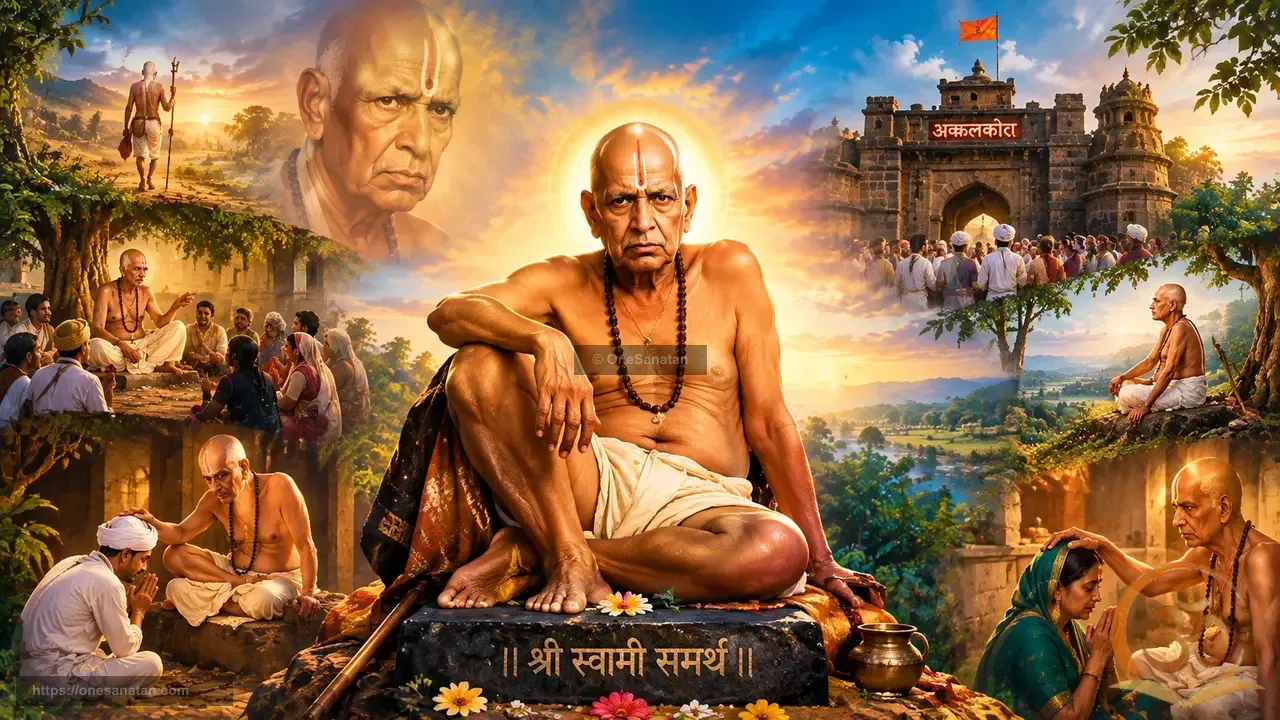
अक्कलकोट के स्वामी समर्थ 19वीं शताब्दी के एक पूजनीय संत थे, जिन्हें दत्तात्रेय परंपरा से जोड़ा जाता है। उन्होंने महाराष्ट्र के अक्कलकोट में दो दशकों से अधिक समय बिताया और अपनी आध्यात्मिक उपस्थिति, अनोखी जीवनशैली, भक्तों को मार्गदर्शन तथा निर्भयता, भक्ति और समर्पण के संदेश के लिए प्रसिद्ध हुए। उन्होंने 30 अप्रैल 1878 को महासमाधि ली।
Swami Samarth of Akkalkot was a revered 19th-century Indian saint associated with the Dattatreya tradition. He lived in Akkalkot, Maharashtra, for more than two decades and became known for his spiritual presence, unconventional ways, guidance to devotees and message of fearlessness, devotion and surrender. He attained Mahasamadhi on 30 April 1878.
Overview
अक्कलकोट के स्वामी समर्थ महाराष्ट्र की आध्यात्मिक परंपरा के सबसे पूजनीय संतों में गिने जाते हैं। भक्त उन्हें एक महान संत, अवधूत और भगवान दत्तात्रेय से जुड़ी आध्यात्मिक परंपरा के गुरु के रूप में मानते हैं। उनके जीवन में रहस्य का भी विशेष स्थान है। उनके जन्म, परिवार और प्रारंभिक जीवन के बारे में विश्वसनीय ऐतिहासिक जानकारी बहुत सीमित है, जबकि उनके जीवन से जुड़ी अनेक बातें भक्तिपरक परंपराओं और अनुयायियों की स्मृतियों से प्राप्त होती हैं। इसलिए उनका जीवन किसी सामान्य ऐतिहासिक व्यक्ति की जीवनी से अलग है। इतना स्पष्ट है कि उन्होंने अक्कलकोट में दो दशकों से अधिक समय बिताया और वहां भक्तों का मार्गदर्शन किया। जिस पवित्र वटवृक्ष के नीचे उनके बैठने और उपदेश देने की परंपरा है, वह आज भी उनकी आध्यात्मिक विरासत का प्रमुख प्रतीक है। उनका प्रसिद्ध आश्वासन “भिऊ नकोस, मी तुझ्या पाठीशी आहे” — “डरो मत, मैं तुम्हारे साथ हूं” — आज भी उनके भक्तों को साहस और विश्वास देता है।
Swami Samarth of Akkalkot is one of the most revered saints in the spiritual tradition of Maharashtra. Devotees remember him as a powerful saint, an Avadhuta and a spiritual master connected with the tradition of Lord Dattatreya. His life is also surrounded by mystery. Reliable historical information about his birth, family and early life is limited, while many details about his life come from devotional accounts and the memories preserved by his followers. This makes his story different from the biography of an ordinary historical personality. What is much clearer is his long association with Akkalkot, where he spent more than twenty years guiding devotees. The sacred Vatavruksha under which he is traditionally believed to have sat and taught has become one of the central symbols of his spiritual legacy. His famous assurance, commonly remembered as “Bhiu Nakos, Mi Tujhya Pathishi Aahe” — “Do not be afraid, I am with you” — continues to give comfort to his devotees.
स्वामी समर्थ के प्रारंभिक जीवन का रहस्य
The Mystery of Swami Samarth's Early Life
स्वामी समर्थ के जीवन का एक रोचक पक्ष यह है कि उनकी प्रारंभिक जीवन-यात्रा के बारे में निश्चित जानकारी बहुत कम मिलती है। अनेक ऐतिहासिक धार्मिक व्यक्तित्वों के विपरीत, उनके जन्म की सही तिथि, माता-पिता या बचपन को प्रमाणित करने वाला सर्वमान्य ऐतिहासिक रिकॉर्ड उपलब्ध नहीं है। उनकी उत्पत्ति और आध्यात्मिक पहचान के बारे में अलग-अलग भक्तिपरक परंपराएं मिलती हैं। कुछ परंपराएं उन्हें भगवान दत्तात्रेय और नरसिंह सरस्वती जैसे पूर्ववर्ती दत्त परंपरा के संतों से जोड़ती हैं। ये मान्यताएं भक्तों की आस्था का महत्वपूर्ण हिस्सा हैं, लेकिन इन्हें स्वतंत्र रूप से सिद्ध ऐतिहासिक तथ्य के रूप में नहीं देखना चाहिए। अक्कलकोट में उनके वर्षों के प्रवास के दौरान “स्वामी समर्थ” नाम ही उनकी पहचान बन गया। उनके जीवन में यही रहस्य भी उनकी आध्यात्मिक छवि का हिस्सा बन गया। भक्तों ने उनकी सांसारिक पहचान से अधिक उनके व्यक्तित्व, व्यवहार, मार्गदर्शन और आध्यात्मिक प्रभाव को महत्व दिया।
One of the most interesting aspects of Swami Samarth's life is how little is firmly known about his origins. Unlike many historical religious teachers, there is no widely accepted historical record establishing his exact date of birth, parents or childhood. Devotional traditions give different accounts about his origins and spiritual identity. Some traditions connect him with the lineage of Lord Dattatreya and with earlier Dattatreya figures such as Narasimha Saraswati. These beliefs are an important part of the devotional tradition, but they should be understood as matters of faith rather than as independently established historical facts. Even the name Swami Samarth became closely associated with him during his years in Akkalkot. This mystery became part of his spiritual image. Instead of emphasizing his family background or worldly identity, devotees came to remember him through his presence, actions, guidance and spiritual influence.
स्वामी समर्थ का अक्कलकोट आगमन
Swami Samarth Comes to Akkalkot
परंपरा के अनुसार स्वामी समर्थ लगभग 1856 के आसपास अक्कलकोट पहुंचे। महाराष्ट्र सरकार के पर्यटन संबंधी विवरण में भी उनके अक्कलकोट आगमन को इसी समय के आसपास बताया गया है। प्रारंभ में उनका संबंध खंडोबा मंदिर क्षेत्र से रहा और धीरे-धीरे नगर के लोगों से उनका गहरा संबंध बन गया। उन्होंने अक्कलकोट में दो दशकों से अधिक समय बिताया और यही स्थान उनके जीवन के अंतिम और सबसे महत्वपूर्ण चरण का केंद्र बना। इस दौरान अलग-अलग पृष्ठभूमि के लोग उनसे मिलने, मार्गदर्शन लेने और आशीर्वाद प्राप्त करने आते थे। अक्कलकोट से उनका इतना गहरा संबंध बन गया कि वे “अक्कलकोट के स्वामी समर्थ” के नाम से प्रसिद्ध हो गए।
Swami Samarth is traditionally said to have arrived in Akkalkot around 1856. Maharashtra government tourism information also places his arrival in Akkalkot around this period. He first became associated with the Khandoba temple area and gradually developed a close connection with the people of the town. He remained in Akkalkot for more than twenty years, making the town the central place of his later life. During this period, people from different backgrounds came to meet him, seek guidance and receive his blessings. His long association with Akkalkot is the main reason the saint is now remembered by the name “Swami Samarth of Akkalkot.”
स्वामी समर्थ का भगवान दत्तात्रेय से संबंध
Why Swami Samarth Is Associated with Lord Dattatreya
स्वामी समर्थ का संबंध दत्तात्रेय परंपरा से बहुत गहरा माना जाता है। दत्त परंपरा के भक्त उन्हें भगवान दत्तात्रेय का अवतार या स्वरूप मानते हैं। भगवान दत्तात्रेय को गुरु परंपरा, आध्यात्मिक ज्ञान और ब्रह्मा, विष्णु तथा शिव के संयुक्त आध्यात्मिक सिद्धांतों से जोड़ा जाता है। दत्त संप्रदाय के अनुयायियों में स्वामी समर्थ को दत्तात्रेय का स्वरूप मानने की श्रद्धा विशेष रूप से प्रचलित है। अलग-अलग परंपराओं में इस संबंध की व्याख्या कुछ अलग हो सकती है, इसलिए इसे ऐतिहासिक तथ्य के बजाय धार्मिक आस्था के रूप में समझना अधिक उचित है। दत्त परंपरा से उनका संबंध गुरु, समर्पण, भक्ति और आत्मिक अनुभूति पर केंद्रित उनकी विरासत को समझने में भी मदद करता है।
Swami Samarth is widely revered within the Dattatreya tradition. Devotees regard him as an incarnation or manifestation of Lord Dattatreya, the Hindu deity associated with the combined spiritual principles of Brahma, Vishnu and Shiva and with the Guru tradition. This belief is especially strong among followers of the Datta Sampradaya. The exact theological position differs between traditions and lineages, so it is more accurate to say that Swami Samarth is revered as a form or incarnation of Dattatreya rather than presenting this religious belief as a historical fact. His association with the Dattatreya tradition also explains the strong emphasis on the Guru, spiritual surrender, devotion and inner realization found in his legacy.
अक्कलकोट का पवित्र वटवृक्ष
The Sacred Vatavruksha of Akkalkot
वटवृक्ष, अर्थात पवित्र बरगद का पेड़, स्वामी समर्थ से जुड़े सबसे महत्वपूर्ण प्रतीकों में से एक है। अक्कलकोट का वर्तमान मंदिर परिसर उस वटवृक्ष के आसपास स्थित है जिसे परंपरा में स्वामी समर्थ के ध्यान, भक्तों से मिलने और मार्गदर्शन देने के स्थान के रूप में याद किया जाता है। इसलिए यह वृक्ष केवल एक ऐतिहासिक स्थल नहीं रहा, बल्कि भक्तों के लिए स्वामी समर्थ की जीवंत स्मृति और उनके आध्यात्मिक वातावरण का प्रतीक बन गया। वटवृक्ष स्वामी मंदिर आज भी एक महत्वपूर्ण तीर्थस्थल है, जहां भक्त दर्शन, प्रार्थना और सेवा के लिए आते हैं। हिंदू आध्यात्मिक परंपरा में बरगद का वृक्ष दीर्घायु, आश्रय, निरंतरता और ज्ञान के विस्तार जैसे भावों का भी प्रतीक माना जाता है।
The Vatavruksha, or sacred banyan tree, is one of the most important symbols associated with Swami Samarth. The present temple complex at Akkalkot is built around the banyan tree traditionally associated with his meditation, meetings with devotees and spiritual guidance. The tree has therefore become more than a historical landmark. For devotees, it represents the living memory of the saint and the atmosphere of the spiritual gatherings associated with him. The Vatavruksha Swami Mandir remains an important pilgrimage centre where devotees come for darshan, prayer and seva. The tree also carries a deeper symbolic meaning in Hindu spirituality, where the banyan is often associated with longevity, shelter, continuity and the expansive nature of spiritual knowledge.
संदेश: भिऊ नकोस, मी तुझ्या पाठीशी आहे
The Message: Bhiu Nakos, Mi Tujhya Pathishi Aahe
स्वामी समर्थ से जुड़ा सबसे प्रसिद्ध वाक्य है — “भिऊ नकोस, मी तुझ्या पाठीशी आहे”, अर्थात “डरो मत, मैं तुम्हारे साथ हूं।” यह वाक्य उनके भक्तों के बीच विश्वास और साहस की सबसे प्रमुख अभिव्यक्तियों में से एक बन गया है। इसका अर्थ केवल यह नहीं है कि भक्त की हर कठिनाई तुरंत समाप्त हो जाएगी। गहरे अर्थ में इसे कठिन परिस्थितियों का सामना साहस, विश्वास और आंतरिक स्थिरता के साथ करने का संदेश माना जा सकता है। सोलापुर जिला प्रशासन की वेबसाइट भी इस वाक्य को स्वामी समर्थ से जुड़े आध्यात्मिक आश्वासन के रूप में दर्ज करती है। भक्तों के लिए यह संदेश गुरु की भौतिक देह के बाद भी उनकी आध्यात्मिक उपस्थिति में विश्वास को व्यक्त करता है।
One of the most remembered sayings associated with Swami Samarth is “Bhiu Nakos, Mi Tujhya Pathishi Aahe,” meaning “Do not be afraid, I am with you.” The phrase has become one of the strongest expressions of faith among his devotees. Its importance is not simply that a devotee expects every difficulty to disappear. At a deeper level, the message can be understood as an invitation to face difficult situations with courage, faith and inner steadiness. The Solapur district government also records this saying as the spiritual assurance associated with Swami Samarth. For devotees, the words express the continuing presence of the Guru even after the physical body has passed away.
स्वामी समर्थ की शिक्षा देने की अनोखी शैली
Swami Samarth's Way of Teaching
स्वामी समर्थ किसी एक दार्शनिक ग्रंथ या व्यवस्थित लिखित दर्शन के कारण प्रसिद्ध नहीं हुए। उनकी शिक्षाओं की परंपरा मुख्य रूप से उनके संवादों, व्यवहार, भक्तों के प्रति प्रतिक्रियाओं और अनुयायियों द्वारा सुरक्षित कथाओं के माध्यम से आगे बढ़ी। उनका व्यवहार कई बार सामान्य सामाजिक अपेक्षाओं से अलग और रहस्यमय दिखाई देता था। वे कभी बहुत कम शब्दों में उत्तर देते, कभी ऐसे शब्दों का प्रयोग करते जिन्हें समझना आसान नहीं होता और कभी ऐसे व्यवहार करते जो सामान्य धारणाओं को चुनौती देता था। भक्तिपरक परंपराएं इन व्यवहारों को ऐसे अवधूत संत की शैली मानती हैं जो सामान्य सामाजिक बंधनों से परे था। व्यावहारिक आध्यात्मिक दृष्टि से उनकी विरासत में श्रद्धा, समर्पण, ईश्वर-स्मरण, करुणा, सेवा और अत्यधिक सांसारिक आसक्ति से मुक्ति जैसे भाव बार-बार दिखाई देते हैं। इसी कारण उनके भक्त उनके जीवन को ही एक प्रकार की शिक्षा मानते हैं।
Swami Samarth did not become known through a single philosophical book or a systematic written school of thought. His teaching tradition is primarily remembered through his conversations, actions, responses to devotees and the stories preserved by followers. His behaviour could appear unpredictable or unconventional. At times he spoke very briefly, used unusual words or behaved in ways that challenged ordinary expectations. Devotional accounts interpret these actions as the behaviour of an Avadhuta who was not bound by ordinary social conventions. From a practical spiritual perspective, his legacy repeatedly points toward faith, surrender, remembrance of God, compassion, service and freedom from excessive attachment to worldly concerns. This is why his devotees often look at his life itself as a form of teaching.
स्वामी समर्थ और उनके भक्त
Swami Samarth and His Devotees
अक्कलकोट में अपने वर्षों के दौरान स्वामी समर्थ से कई भक्तों का गहरा संबंध बना। इनमें चोलप्पा का नाम सबसे अधिक प्रसिद्ध है, जिन्हें परंपरा में उनके प्रमुख भक्त और सेवक के रूप में याद किया जाता है। स्वामी समर्थ ने अक्कलकोट में अपने जीवन का एक महत्वपूर्ण समय चोलप्पा के निवास पर बिताया। बाद में यही स्थान उनकी समाधि से जुड़े प्रमुख तीर्थस्थलों में शामिल हुआ। उनके अन्य शिष्यों और भक्तों ने भी उनकी आध्यात्मिक परंपरा को अलग-अलग क्षेत्रों तक पहुंचाया। ये संबंध इसलिए महत्वपूर्ण हैं क्योंकि इनके माध्यम से स्वामी समर्थ की परंपरा उनके भौतिक जीवन के बाद भी आगे बढ़ी। उनके उपदेश और भक्ति परंपरा शिष्यों, परिवारों, मंदिरों, मठों और बाद में बनी सेवा संस्थाओं के माध्यम से जीवित रही।
Several devotees became closely associated with Swami Samarth during his years in Akkalkot. Among the best-known names is Cholappa, who is traditionally remembered as one of his closest devotees and attendants. Swami Samarth spent a significant part of his Akkalkot years at Cholappa's residence. The place later became associated with the Samadhi shrine. Other disciples and devotees also carried his spiritual influence to different regions. These relationships are important because they show how the Swami Samarth tradition survived beyond his physical lifetime. His teachings and devotional practices continued through disciples, families, temples, mathas and later service organizations.
चमत्कार और भक्तिपरक लीलाएं
Miracles and Leelas in the Devotional Tradition
स्वामी समर्थ से जुड़ी अनेक कथाओं में असाधारण घटनाओं, आशीर्वाद और चमत्कारों का वर्णन मिलता है। एक प्रसिद्ध भक्तिपरक कथा में बिना तंबाकू वाली चिलम से धुआं निकलने की बात कही जाती है। अन्य कथाओं में रोगों से मुक्ति, कठिनाइयों से रक्षा, सामान्य समझ से परे घटनाओं का ज्ञान और भक्तों की अप्रत्याशित सहायता जैसे प्रसंग मिलते हैं। ये कथाएं स्वामी समर्थ के प्रति जीवित आस्था का महत्वपूर्ण हिस्सा हैं, लेकिन इन्हें स्वतंत्र रूप से प्रमाणित वैज्ञानिक घटनाओं के बजाय भक्तिपरक परंपराओं के रूप में प्रस्तुत करना उचित है। भक्तों के लिए इन कथाओं का गहरा अर्थ अक्सर चमत्कार को सिद्ध करने में नहीं, बल्कि श्रद्धा, समर्पण और करुणा के संदेश में होता है। साथ ही, किसी भी चमत्कारिक कथा को वास्तविक बीमारी के उपचार या आवश्यक व्यावहारिक सहायता का विकल्प नहीं समझना चाहिए।
Many stories about Swami Samarth describe extraordinary events, blessings and miracles. One well-known traditional account tells of a smoking pipe, or chilum, being offered to him without tobacco and describes smoke appearing from it. Other devotional stories describe healings, protection from difficulties, knowledge of events beyond ordinary perception and unexpected help to devotees. These stories are an important part of the living faith surrounding Swami Samarth, but they should be presented as devotional accounts rather than independently verified scientific events. Their deeper importance for devotees often lies in the lesson of faith, surrender and compassion rather than in proving the supernatural event itself. People should also never treat miracle stories as substitutes for medical treatment or practical help when facing real-world problems.
स्वामी समर्थ की महासमाधि
The Mahasamadhi of Swami Samarth
अक्कलकोट में दो दशकों से अधिक समय बिताने के बाद स्वामी समर्थ ने 30 अप्रैल 1878 को महासमाधि ली। उनके अंतिम भौतिक प्रस्थान से जुड़ा स्थान उनके भक्त चोलप्पा के निवास से संबंधित समाधि मठ है। उनके देहावसान के साथ उनकी परंपरा समाप्त नहीं हुई। इसके बाद अक्कलकोट उनके भक्तों के लिए एक प्रमुख तीर्थस्थल के रूप में विकसित हुआ। आज भी भक्त उनकी समाधि, वटवृक्ष और उनके जीवन से जुड़े अन्य पवित्र स्थलों के दर्शन के लिए आते हैं। उनकी महासमाधि की वार्षिक स्मृति उनके अनुयायियों के धार्मिक और आध्यात्मिक जीवन में महत्वपूर्ण स्थान रखती है।
Swami Samarth attained Mahasamadhi on 30 April 1878, after spending more than two decades in Akkalkot. The site associated with his final physical departure is the Samadhi Math connected with the residence of his devotee Cholappa. His passing did not end the tradition surrounding him. Instead, Akkalkot developed into a major pilgrimage centre for his followers. Devotees continue to visit the Samadhi, the Vatavruksha and other sacred places connected with his life. The annual observance of his Mahasamadhi is an important occasion in the devotional calendar of his followers.
आज भी स्वामी समर्थ का महत्व क्यों है?
Why Swami Samarth Is Still Important Today
स्वामी समर्थ की आज की लोकप्रियता केवल चमत्कारों की कथाओं पर आधारित नहीं है। अनेक भक्तों के लिए उनका महत्व उनके नाम से जुड़े भावनात्मक और आध्यात्मिक आश्वासन में है। “भिऊ नकोस, मी तुझ्या पाठीशी आहे” जीवन की अनिश्चित परिस्थितियों में साहस का सरल संदेश देता है। गुरु परंपरा से उनका संबंध भक्ति, विनम्रता और आध्यात्मिक अनुशासन की ओर प्रेरित करता है। अक्कलकोट की निरंतर तीर्थयात्रा भी उनकी स्मृति को प्रार्थना, दर्शन, भजन, अन्नदान और सेवा जैसी जीवित धार्मिक परंपराओं से जोड़ती है। इस प्रकार स्वामी समर्थ की विरासत केवल 19वीं शताब्दी के एक संत की कथाओं तक सीमित नहीं है, बल्कि उन लोगों के दैनिक आध्यात्मिक जीवन में भी दिखाई देती है जो आज भी उन्हें श्रद्धा से याद करते हैं।
The continuing popularity of Swami Samarth is not based only on stories of miracles. For many devotees, his importance comes from the emotional and spiritual reassurance associated with his name. “Bhiu Nakos, Mi Tujhya Pathishi Aahe” gives a simple message of courage at times when life feels uncertain. His association with the Guru tradition encourages devotion, humility and spiritual discipline. The continuing pilgrimage to Akkalkot also keeps his memory connected with living practices such as prayer, darshan, bhajan, annadan and seva. In this way, Swami Samarth's legacy exists not only in stories about a 19th-century saint but also in the daily religious life of people who continue to remember him.
Frequently Asked Questions
Swami Samarth was a revered 19th-century saint who spent more than twenty years in Akkalkot, Maharashtra. He is widely worshipped within the Dattatreya tradition and is remembered for his spiritual guidance, unconventional way of teaching and message of fearlessness and devotion.
Swami Samarth is traditionally believed to have arrived in Akkalkot around 1856. He remained associated with the town for more than twenty years until his Mahasamadhi in 1878.
Swami Samarth is widely revered by devotees as an incarnation or manifestation of Lord Dattatreya. This is a religious belief within the Dattatreya tradition rather than a claim that can be established through ordinary historical evidence.
The Marathi phrase means “Do not be afraid, I am with you.” It is the famous assurance associated with Swami Samarth and is understood by devotees as a message of courage, faith and spiritual protection.
The Vatavruksha is the sacred banyan tree in Akkalkot traditionally associated with Swami Samarth. The temple complex built around it is one of the principal pilgrimage places connected with his life and memory.
Swami Samarth attained Mahasamadhi on 30 April 1878 in Akkalkot. His Samadhi Math remains an important place of pilgrimage for his devotees.
The principal sacred places associated with Swami Samarth are in Akkalkot, Solapur district, Maharashtra. Important places include the Vatavruksha Swami Mandir and the Samadhi Math associated with his final physical departure.
Cultural Significance
Swami Samarth occupies an important place in the spiritual culture of Maharashtra and in the wider Dattatreya tradition. Akkalkot has become a major pilgrimage destination because of his long association with the town. The Vatavruksha, the Samadhi Math and the temples connected with his memory form a living pilgrimage landscape where prayer, darshan, bhajan, annadan and seva continue throughout the year. His famous assurance, “Bhiu Nakos, Mi Tujhya Pathishi Aahe,” has become a cultural expression of faith and courage for millions of devotees. His legacy also shows how the memory of a saint can continue through places, rituals, stories and community service long after his physical lifetime.
Disclaimer
The content provided on this page is for educational and informational purposes only. OneSanatan makes no claims or guarantees regarding spiritual results, historical absolute accuracy, or religious outcomes. We are not responsible or liable for any personal interpretations or actions taken based on this information.
Explore More Panchang Modules
Continue Reading