Kumbh Mela - कुंभ मेला क्या है?
Discover the profound significance of the Kumbh Mela in Hinduism. Learn the story of the Samudra Manthan (Churning of the Ocean) and the four sacred locations where the nectar of immortality fell.
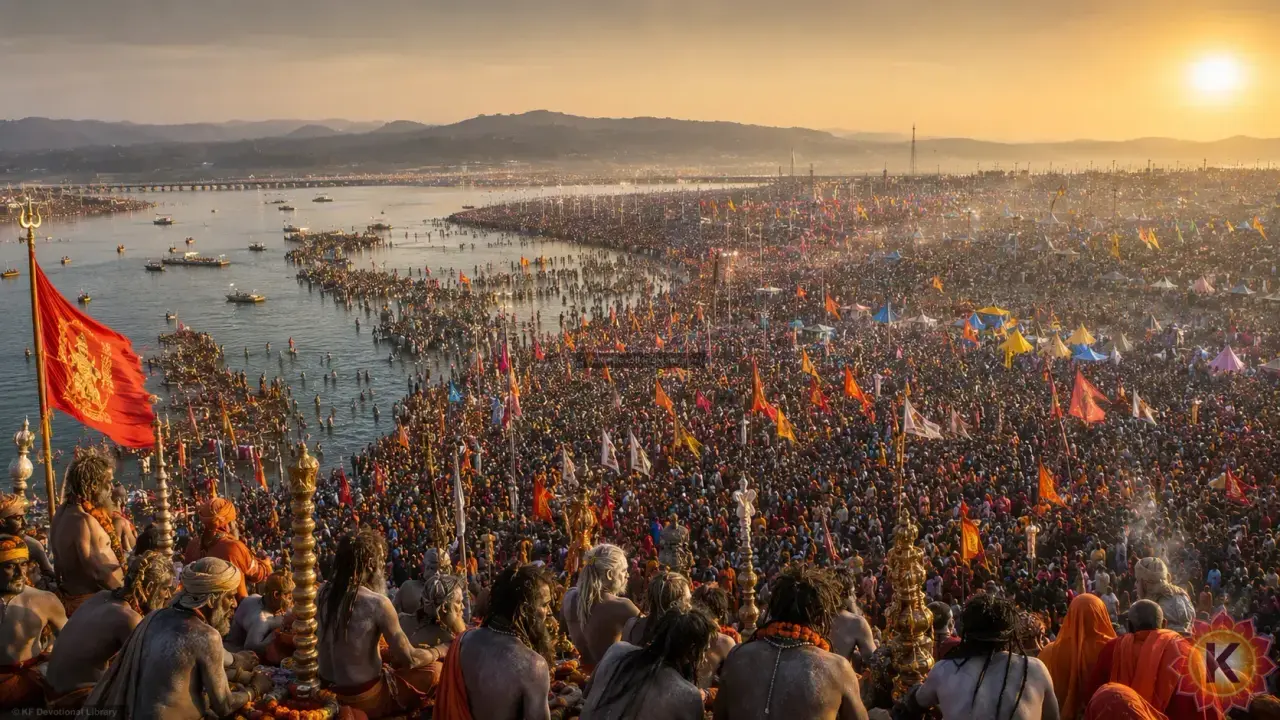
कुंभ मेला दुनिया का सबसे बड़ा धार्मिक जमावड़ा है, जहाँ लाखों हिंदू एक पवित्र नदी में स्नान करने के लिए इकट्ठा होते हैं। यह 12 वर्षों के दौरान चार अलग-अलग स्थानों पर मनाया जाता है: प्रयागराज, हरिद्वार, उज्जैन और नासिक।
The Kumbh Mela is the largest religious gathering in the world, where millions of Hindus gather to bathe in a sacred river. It is celebrated four times over a course of 12 years at four different locations: Prayagraj, Haridwar, Ujjain, and Nashik. Bathing in the holy rivers during this time is believed to cleanse all sins and bring one closer to Moksha.
Overview
केवल एक त्योहार से अधिक, कुंभ मेला हिंदू आध्यात्मिकता और एकता की एक जीवित अभिव्यक्ति है। यह दुनिया भर के संतों, साधुओं (रहस्यमयी नागा बाबाओं सहित) और आम गृहस्थों को एक साथ लाता है।
More than just a festival, the Kumbh Mela is a living manifestation of Hindu spirituality and unity. It brings together saints, sadhus (including the mysterious Naga Babas), ascetics, and ordinary householders from across the globe. Recognized by UNESCO as an Intangible Cultural Heritage, it is a spectacular display of devotion.
समुद्र मंथन की पौराणिक कथा
The Legend of Samudra Manthan
कुंभ मेले की उत्पत्ति 'समुद्र मंथन' की प्राचीन पौराणिक कथा में निहित है। देवताओं और असुरों ने 'अमृत' प्राप्त करने के लिए समुद्र का मंथन किया। संघर्ष के दौरान, अमृत की चार बूंदें पृथ्वी पर प्रयागराज, हरिद्वार, उज्जैन और नासिक में गिरीं।
The origins of the Kumbh Mela lie in the ancient Puranic story of the 'Samudra Manthan' (Churning of the Ocean of Milk). The Devas (gods) and Asuras (demons) churned the ocean to obtain 'Amrit' (the nectar of immortality). When the pot (Kumbh) of nectar emerged, a 12-day cosmic battle ensued over it. During the struggle, four drops of the nectar fell on earth at Prayagraj, Haridwar, Ujjain, and Nashik.
ज्योतिष की भूमिका
The Role of Astrology
कुंभ मेले की तिथियां और स्थान पूरी तरह से ज्योतिष द्वारा निर्धारित होते हैं, विशेष रूप से सूर्य, चंद्रमा और बृहस्पति की ग्रहों की स्थिति।
The dates and locations for the Kumbh Mela are entirely determined by astrology, specifically the planetary positions of the Sun, the Moon, and Jupiter (Brihaspati). For example, when Jupiter is in Aries and the Sun and Moon are in Capricorn, the Kumbh is held at Prayagraj.
Frequently Asked Questions
The Shahi Snan (Royal Bath) is the most auspicious bathing time during the Mela. The Naga Sadhus and heads of various Akharas (monastic orders) are given the first right to bathe, followed by the general public.
An Ardh (Half) Kumbh is celebrated every six years at Prayagraj and Haridwar, marking the halfway point between the 12-year full Kumbh cycle.
Cultural Significance
The Kumbh Mela represents the eternal flow of knowledge and spirituality in India. It is a time for debate, discourse, and the transfer of wisdom from Gurus to their disciples. It dissolves all barriers of caste, wealth, and status, uniting people in the pursuit of the Divine.
Disclaimer
The content provided on this page is for educational and informational purposes only. OneSanatan makes no claims or guarantees regarding spiritual results, historical absolute accuracy, or religious outcomes. We are not responsible or liable for any personal interpretations or actions taken based on this information.
Explore More Panchang Modules
Continue Reading