Char Dham Yatra - चार धाम यात्रा
Discover the significance of the Char Dham Yatra in Hinduism. Learn about the four sacred abodes—Badrinath, Dwarka, Puri, and Rameshwaram—and their spiritual importance.
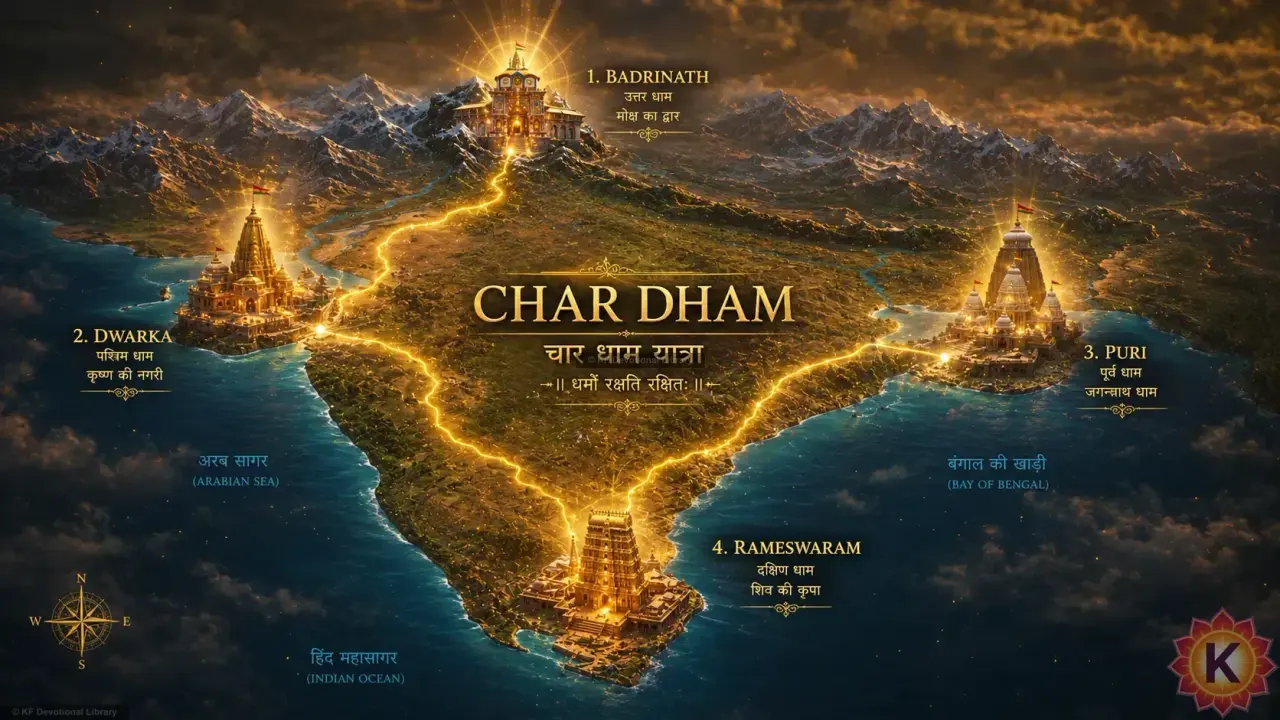
चार धाम यात्रा भारत के चार दिशाओं में स्थित चार पवित्र स्थलों की तीर्थयात्रा है: बद्रीनाथ (उत्तर), द्वारका (पश्चिम), जगन्नाथ पुरी (पूर्व) और रामेश्वरम (दक्षिण)। माना जाता है कि यह यात्रा मोक्ष प्राप्ति में सहायक होती है।
The Char Dham Yatra refers to the pilgrimage to four sacred sites in India: Badrinath (North), Dwarka (West), Jagannath Puri (East), and Rameshwaram (South). Established by Adi Shankara, this journey is believed to wash away sins and help achieve Moksha. It covers the four cardinal directions of the Indian subcontinent.
Overview
हिंदू धर्म में, चार धाम यात्रा को सबसे महत्वपूर्ण तीर्थयात्रा माना जाता है। ये चार मंदिर भगवान विष्णु और भगवान शिव को समर्पित हैं, जो पूरे भारत में दैवीय एकता का प्रतिनिधित्व करते हैं।
In Hinduism, the Char Dham Yatra is considered the ultimate pilgrimage that every Hindu should undertake at least once in their lifetime. These four temples are dedicated to Lord Vishnu (Badrinath, Dwarka, Puri) and Lord Shiva (Rameshwaram), representing the unity of the divine across the vast landscape of India.
चार प्रमुख धामों का विवरण
The Four Cardinal Dhams
चारों धाम अलग-अलग युगों और दिशाओं का प्रतिनिधित्व करते हैं: 1. **बद्रीनाथ**: हिमालय में स्थित, यह सतयुग का प्रतिनिधित्व करता है। 2. **रामेश्वरम**: दक्षिण में स्थित, यह त्रेतायुग का प्रतिनिधित्व करता है। 3. **जगन्नाथ पुरी**: पूर्व में स्थित, यह द्वापरयुग का प्रतिनिधित्व करता है। 4. **द्वारका**: पश्चिम में स्थित, यह कलियुग का प्रतिनिधित्व करता है।
Each of the four Dhams represents a different era (Yuga) and a specific direction: 1. **Badrinath**: Located in the Himalayas, it is dedicated to Lord Vishnu in his form as Badrinarayan. It represents Satya Yuga. 2. **Rameshwaram**: Located on Pamban Island, it is where Lord Rama worshipped Lord Shiva. It represents Treta Yuga. 3. **Jagannath Puri**: Located on the eastern coast, it is famous for the Rath Yatra. It represents Dvapara Yuga. 4. **Dwarka**: Located on the western tip, it was the kingdom of Lord Krishna. It represents Kali Yuga.
छोटा चार धाम और बड़ा चार धाम में अंतर
Chota Char Dham vs. Bada Char Dham
भारत भर में फैले 'बड़े चार धाम' और उत्तराखंड में स्थित 'छोटे चार धाम' (यमुनोत्री, गंगोत्री, केदारनाथ और बद्रीनाथ) के बीच अंतर को समझना महत्वपूर्ण है।
It is important to distinguish between the 'Bada Char Dham' (Badrinath, Dwarka, Puri, Rameshwaram) which spans all of India, and the 'Chota Char Dham' located entirely within Uttarakhand (Yamunotri, Gangotri, Kedarnath, and Badrinath). Both are highly revered but serve different spiritual purposes.
Frequently Asked Questions
Badrinath is open from May to November. The other three Dhams are open throughout the year, but the winter months are ideal for Rameshwaram and Puri, while Dwarka is pleasant in winter and monsoon.
The great philosopher and saint Adi Shankaracharya is credited with establishing the four cardinal Dhams in the 8th century AD to revive Hinduism.
Cultural Significance
The Char Dham Yatra is not just a physical journey but a spiritual awakening. It connects the diverse cultures of India through a shared thread of devotion. Adi Shankaracharya established these centers to unify the country under the umbrella of Sanatana Dharma.
Disclaimer
The content provided on this page is for educational and informational purposes only. OneSanatan makes no claims or guarantees regarding spiritual results, historical absolute accuracy, or religious outcomes. We are not responsible or liable for any personal interpretations or actions taken based on this information.
Explore More Panchang Modules
Continue Reading