Why do Hindus blow the Shankh? - पूजा में शंख क्यों बजाते हैं?
Discover the scientific and spiritual reasons why blowing the Shankh (conch shell) is considered highly auspicious at the start of Hindu rituals and battles.
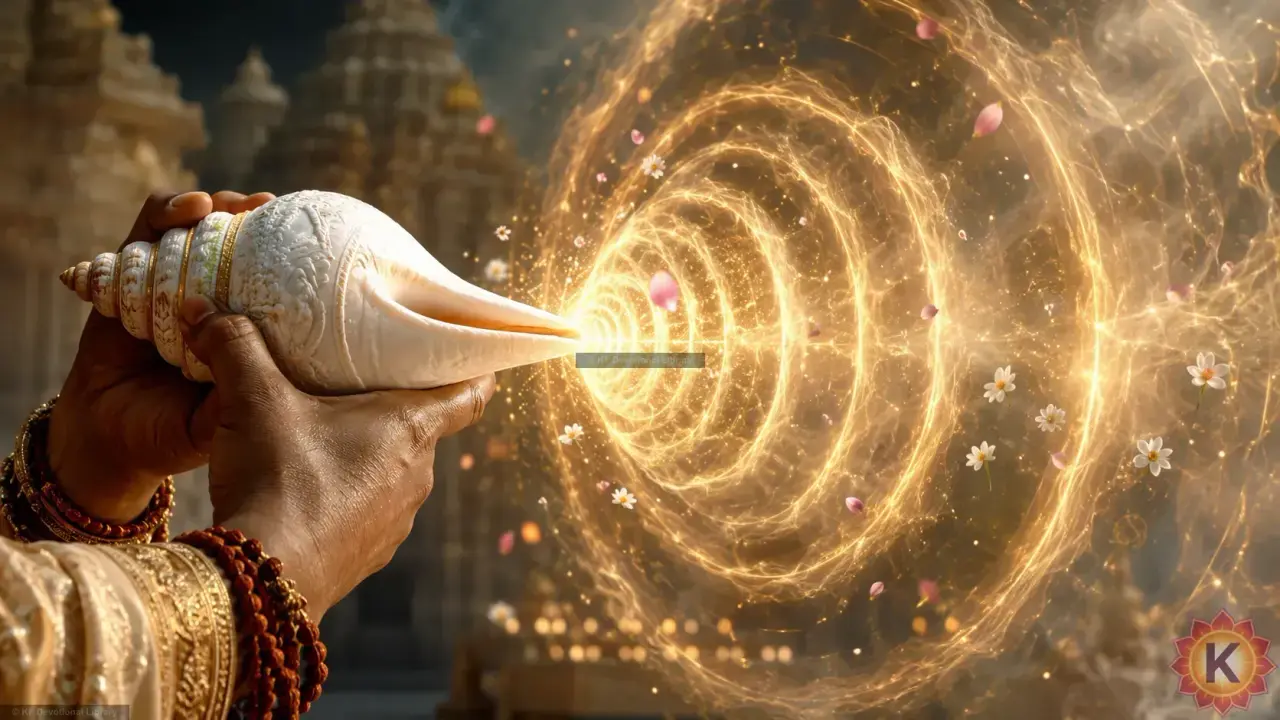
हिंदू धर्म में, शंख अत्यधिक शुभ है और प्रार्थना (पूजा) की शुरुआत की घोषणा करने के लिए बजाया जाता है। आध्यात्मिक रूप से, शंख द्वारा उत्पन्न ध्वनि 'ओम', निर्माण की मौलिक ध्वनि का प्रतिनिधित्व करती है। वैज्ञानिक रूप से, शंख बजाने से उत्पन्न शक्तिशाली कंपन हवा को शुद्ध करते हैं, और स्वयं बजाने का कार्य फेफड़ों और श्वसन प्रणाली के लिए एक उत्कृष्ट व्यायाम है।
In Hinduism, the Shankh (conch shell) is highly auspicious and is blown to announce the beginning of a prayer (Puja) or a battle. Spiritually, the sound produced by the Shankh represents 'Om', the primordial sound of creation. Scientifically, the powerful vibrations generated by blowing a conch shell purify the air, repel disease-causing insects, and the act of blowing itself serves as an excellent exercise for the lungs and respiratory system.
Overview
पुजारी द्वारा मंत्रोच्चारण शुरू करने से पहले, मंदिर में एक गहरी, गूंजती हुई ध्वनि गूंजती है: शंख का बजना। यह तुरंत ध्यान आकर्षित करता है। पूरे भारतीय इतिहास में, चाहे वह एक पवित्र यज्ञ शुरू करना हो या महान महाभारत युद्ध की शुरुआत की घोषणा करना हो, शंख हमेशा से जागरण का अंतिम साधन रहा है।
Before the priest begins the chanting, a deep, resonant sound echoes through the temple: the blowing of the Shankh. It commands immediate attention. Throughout Indian history, whether it was to commence a sacred yajna (fire ritual) or to declare the start of the great Mahabharata war, the conch shell has always been the ultimate instrument of awakening.
ओम की ध्वनि
The Sound of Om
यदि आप प्राकृतिक शंख को अपने कान में पकड़ते हैं, तो आपको समुद्र की सूक्ष्म ध्वनि सुनाई देगी। हिंदू धर्म में, इस गुनगुनाहट को 'ओम' की ध्वनि माना जाता है। शंख बजाने से यह पवित्र कंपन बढ़ जाता है, जो तुरंत वातावरण को सांसारिक से दिव्य में बदल देता है।
If you hold a natural conch shell to your ear, you will hear the subtle sound of the ocean. In Hinduism, this hum is considered the acoustic manifestation of 'Om', the sound of the universe. Blowing the Shankh amplifies this sacred vibration, instantly transforming the atmosphere from mundane to divine, making it the perfect environment to invoke the gods.
वैज्ञानिक और स्वास्थ्य लाभ
Scientific and Health Benefits
शंख बजाने के लिए गहरी साँस लेने और बलपूर्वक छोड़ने की आवश्यकता होती है, जिससे छाती का विस्तार होता है और डायाफ्राम, थायरॉयड और मुखर डोरियों का व्यायाम होता है। प्राचीन ऋषियों ने देखा कि इस अभ्यास से फेफड़ों की क्षमता में सुधार हुआ। इसके अलावा, तीव्र ध्वनि तरंगें आसपास के हानिकारक जीवाणुओं को नष्ट कर देती हैं।
Blowing a Shankh requires deep inhalation and forceful exhalation, expanding the chest and exercising the diaphragm, thyroid, and vocal cords. Ancient sages observed that this practice improved lung capacity and stamina. Furthermore, the intense sound waves generated by a properly blown Shankh are said to destroy harmful bacteria in the immediate vicinity, effectively purifying the temple space.
Frequently Asked Questions
The shell is rich in natural calcium and phosphorus. When water is kept overnight in a Shankh and sprinkled the next day, it acts as a gentle, natural purifier. Devotees also sometimes drink a few drops of this holy water (Tirtham).
No, generally only the 'Dakshinavarti' (right-turning) and 'Vamavarti' (left-turning) shells are considered auspicious. The left-turning is mostly used for blowing, while the rare right-turning shell is used specifically for offering water to deities like Vishnu and Lakshmi.
Cultural Significance
In the Bhagavad Gita, the great war of Kurukshetra literally begins with the blowing of celestial conch shells. Lord Krishna blows his legendary conch, 'Panchajanya', while Arjuna blows the 'Devadatta', shattering the hearts of their enemies with the sheer power of the sound.
Disclaimer
The content provided on this page is for educational and informational purposes only. OneSanatan makes no claims or guarantees regarding spiritual results, historical absolute accuracy, or religious outcomes. We are not responsible or liable for any personal interpretations or actions taken based on this information.
Explore More Panchang Modules
Continue Reading