Meaning of Aarti - आरती का अर्थ और महत्व क्या है?
Understand the spiritual significance of Aarti in Hinduism. Discover why a flaming lamp is waved in a circle before deities during worship.
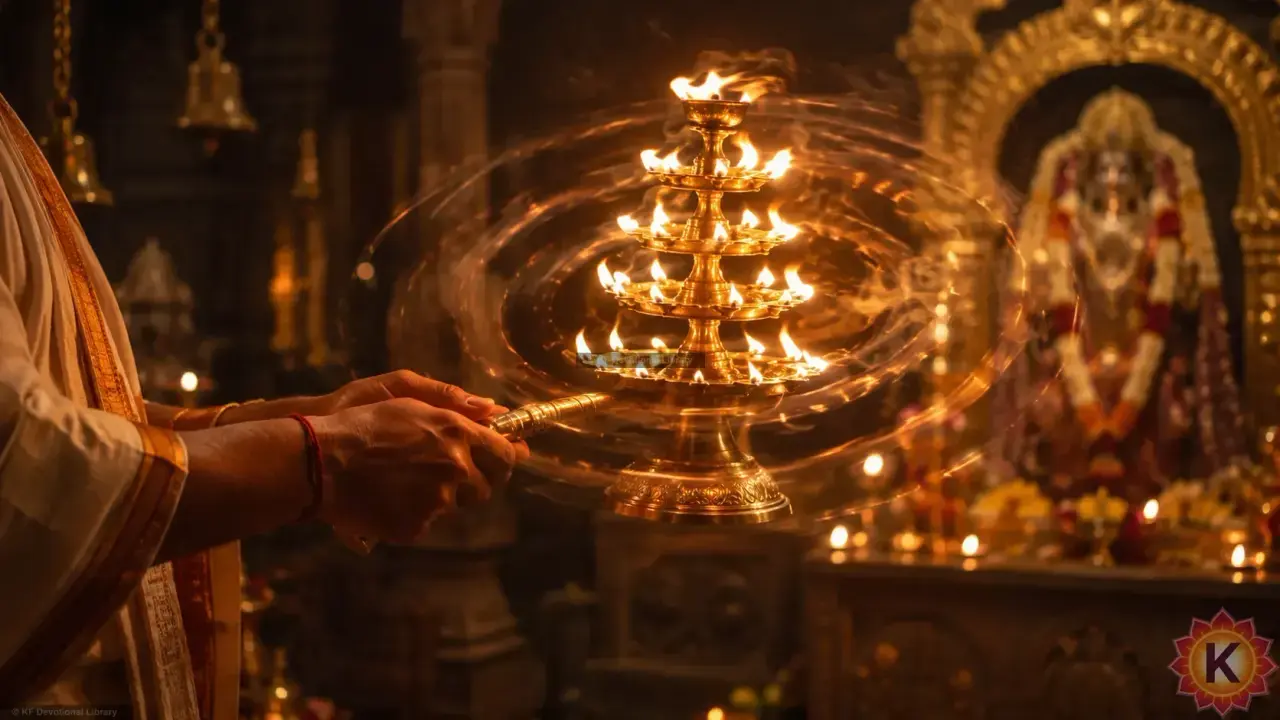
आरती हिंदू पूजा का एक मुख्य अनुष्ठान है जिसमें एक ज्वलंत दीपक (आमतौर पर घी या कपूर से भरा हुआ) देवता के सामने दक्षिणावर्त (clockwise) घुमाया जाता है। आरती आध्यात्मिक अंधकार (अज्ञानता) को दूर करने और परमात्मा के प्रकाश के सामने भक्त के पूर्ण समर्पण का प्रतीक है।
Aarti (or Aarati) is a core Hindu ritual of worship in which a flaming lamp (usually fueled by ghee or camphor) is rhythmically waved in a clockwise circle before a deity. Rooted in the Vedic concept of fire as the ultimate purifier, Aarti symbolizes the removal of spiritual darkness (ignorance) and the devotee's total surrender of their ego to the light of the Divine.
Overview
आरती के भव्य समापन के बिना कोई भी हिंदू पूजा पूरी नहीं होती है। जैसे ही घंटियाँ जोर से बजती हैं, शंख बजते हैं, और भक्त ताली बजाते हैं या गाते हैं, पुजारी मूर्ति के सामने जलता हुआ दीपक घुमाता है। यह तीव्र भावनात्मक संबंध (भक्ति) का क्षण है, जिसका उद्देश्य सभी पांच इंद्रियों को संलग्न करना है।
No Hindu puja (prayer) is complete without the grand finale of the Aarti. As bells ring loudly, conch shells blow, and devotees clap or sing, the priest waves a brightly burning lamp in front of the idol. It is a moment of intense emotional connection (Bhakti), meant to engage all five senses so the mind has no choice but to focus entirely on the present moment and the Divine.
कपूर का प्रतीकवाद
The Symbolism of Camphor (Kapur)
आरती अक्सर कपूर का उपयोग करके की जाती है। कपूर का एक अनूठा गुण है: जब यह जलता है, तो यह बिना कोई राख या अवशेष छोड़े पूरी तरह से वाष्पित हो जाता है। हिंदू दर्शन में, कपूर मानव अहंकार का प्रतिनिधित्व करता है। अनुष्ठान का अर्थ है कि जब अहंकार ईश्वर की सच्ची भक्ति की आग में जलता है, तो इसे पूरी तरह से गायब हो जाना चाहिए।
Aarti is often performed using camphor. Camphor has a unique property: when it burns, it evaporates completely without leaving any ash or residue. In Hindu philosophy, camphor represents the human ego. The ritual signifies that when the ego burns in the fire of true knowledge and devotion to God, it should disappear completely, leaving no trace of arrogance behind.
आरती लेना
Taking the Light (Aarti lena)
देवता के सामने दीपक घुमाने के बाद, इसे भक्तों को पेश किया जाता है। लोग लौ पर हाथ फेरते हैं और फिर अपनी आंखों या सिर को छूते हैं। यह कार्य शुद्ध करने वाले आशीर्वाद और दिव्य ऊर्जा प्राप्त करने का प्रतीक है जिसे अग्नि ने अभी देवता से अवशोषित किया है।
After the lamp is waved before the deity, it is offered to the devotees. People hover their hands over the flame and then touch their eyes or head. This act signifies receiving the purifying blessings and divine energy that the fire has just absorbed from the deity. It is a physical gesture of bringing God's light into one's own vision and thoughts.
Frequently Asked Questions
Clockwise represents the natural rotation of the Earth and the path of the Sun. Moving in harmony with the cosmic order (Dharma) is a fundamental principle in all Hindu rituals.
The loud, continuous sound of bells (Ghanta) serves to drown out all inauspicious or distracting worldly noises. It instantly snaps the wandering mind into sharp focus, forcing it to concentrate solely on the ritual.
Cultural Significance
Aarti is not just restricted to temple deities. It is performed to welcome honored guests (Atithi Devo Bhava), to bless newlyweds, and even to show reverence to sacred rivers like the Ganga or Yamuna at sunset.
Disclaimer
The content provided on this page is for educational and informational purposes only. OneSanatan makes no claims or guarantees regarding spiritual results, historical absolute accuracy, or religious outcomes. We are not responsible or liable for any personal interpretations or actions taken based on this information.
Explore More Panchang Modules
Continue Reading