What is Mantra Japa? - मंत्र जाप क्या है?
Discover the ancient practice of Mantra Japa. Learn why repeating sacred Sanskrit syllables can profoundly alter your mind, body, and spiritual awareness.
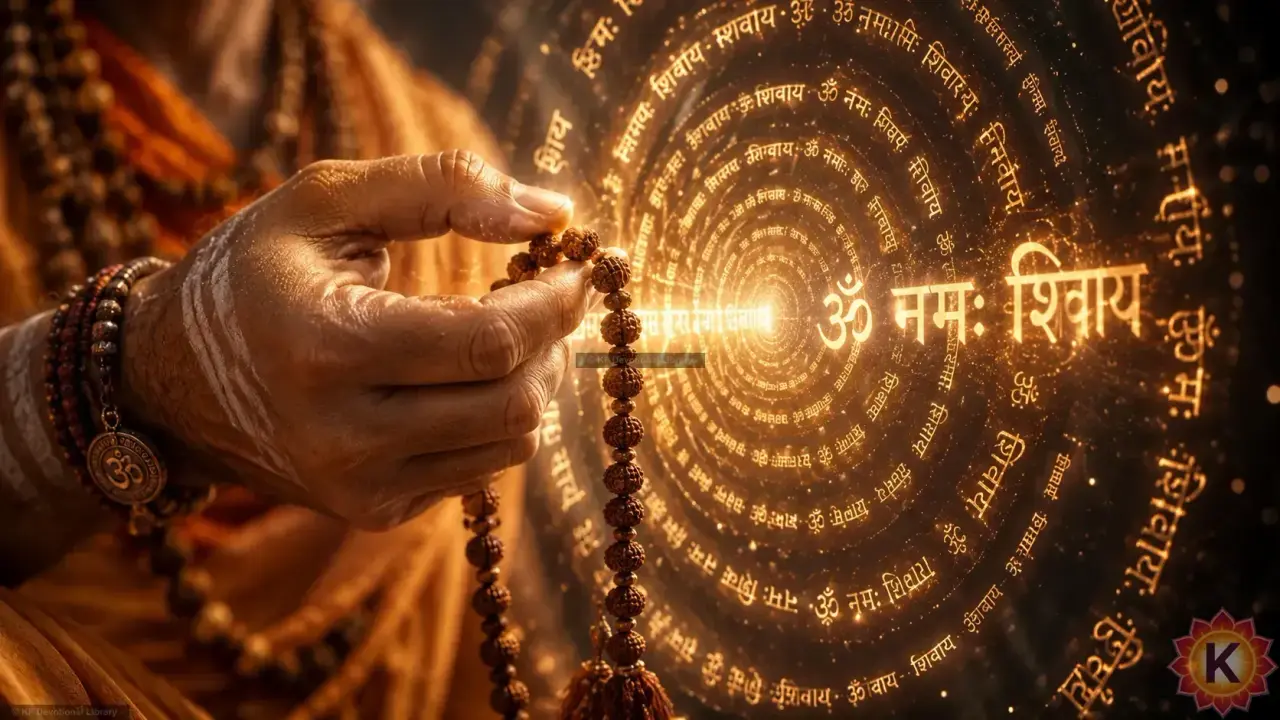
'मंत्र जाप' एक पवित्र संस्कृत वाक्यांश, ध्वनि या देवता के नाम को ध्यानपूर्वक दोहराने का आध्यात्मिक अभ्यास है। मंत्र का शाब्दिक अर्थ है 'मन का वाहन'। बार-बार एक मंत्र का जाप करके (आमतौर पर 108 बार), अभ्यासी बिखरे हुए मन को केंद्रित करता है और अपनी व्यक्तिगत ऊर्जा को परमात्मा के कंपन से जोड़ता है।
'Mantra Japa' is the spiritual practice of meditatively repeating a sacred Sanskrit phrase, sound, or deity's name. A mantra is literally a 'mind vehicle' (Man = mind, Tra = vehicle). By repeatedly chanting a mantra, usually 108 times using a Mala (rosary), the practitioner focuses the scattered mind, overrides negative thought loops, and attunes their personal energy to the specific vibration of the divine.
Overview
क्या आपके दिमाग में कभी कोई आकर्षक गाना अटका है जिसे आप गुनगुनाना बंद नहीं कर पाए? ऐसा इसलिए होता है क्योंकि मन स्वाभाविक रूप से दोहराए जाने वाले लय पर चिपक जाता है। प्राचीन ऋषियों ने आध्यात्मिक विकास के लिए इस मनोवैज्ञानिक तथ्य का उपयोग किया।
Have you ever had a catchy song stuck in your head that you couldn't stop humming? That happens because the mind naturally latches onto repetitive rhythms. The ancient sages weaponized this psychological quirk for spiritual growth. Instead of letting the mind passively loop anxious or negative thoughts, Mantra Japa gives the mind a high-frequency, divine sound to loop instead.
ध्वनि कंपन का विज्ञान
The Science of Sound Vibrations
संस्कृत को एक ऊर्जावान भाषा माना जाता है। जब आप 'ओम' या 'श्रीं' जैसे 'बीज' मंत्र का जाप करते हैं, तो आप केवल एक शब्द नहीं कह रहे होते हैं; आप भौतिक रूप से एक ध्वनि तरंग बना रहे हैं जो आपके तंत्रिका तंत्र के साथ प्रतिध्वनित होती है। दोहरावदार जाप हृदय गति को धीमा करता है और रक्तचाप को कम करता है।
Sanskrit is considered an energetic language where the sound of the word carries the actual vibrational essence of the object it describes. When you chant a 'Bija' (seed) mantra like 'Om' or 'Shreem', you are not just saying a word; you are physically creating a soundwave that resonates with your nervous system. Modern neuroscience shows that repetitive chanting slows down the heart rate, lowers blood pressure, and activates the parasympathetic nervous system (the 'rest and digest' state).
जाप के तीन स्तर
The Three Levels of Japa
जाप का अभ्यास तीन चरणों में किया जाता है। पहला है वैखरी (जोर से बोलना)। दूसरा है उपांशु (फुसफुसाना या होंठों को चुपचाप हिलाना)। उच्चतम और सबसे शक्तिशाली रूप मानसिक (मानसिक जाप) है, जहाँ होंठ नहीं हिलते हैं और मंत्र पूरी तरह से मन के भीतर जपा जाता है।
Japa is practiced in three stages. The first is **Vaikhari** (spoken out loud), which is great for beginners to block out external noise. The second is **Upanshu** (whispering or moving the lips silently), which requires more focus. The highest and most powerful form is **Manasika** (mental chanting). In Manasika Japa, the lips do not move, and the mantra is chanted entirely within the silent theater of the mind, requiring immense concentration.
Frequently Asked Questions
The number 108 is sacred in Hinduism for many cosmic reasons. The distance between the Earth and Sun is roughly 108 times the Sun's diameter. Astrologically, there are 12 zodiac houses and 9 planets (12 x 9 = 108). There are also 108 primary energy channels (Nadis) forming the heart chakra.
General mantras like 'Om' or 'Om Namah Shivaya' can be chanted by anyone. However, specific highly powerful Tantric or Beej mantras should ideally be received directly from a Guru (initiation/Diksha) to ensure you handle the energy correctly.
Cultural Significance
The practice of using prayer beads for repetition originated with the Hindu Japa Mala and later spread to almost every major world religion, including the Catholic Rosary and the Islamic Misbaha.
Disclaimer
The content provided on this page is for educational and informational purposes only. OneSanatan makes no claims or guarantees regarding spiritual results, historical absolute accuracy, or religious outcomes. We are not responsible or liable for any personal interpretations or actions taken based on this information.
Explore More Panchang Modules
Continue Reading