Who is Lord Ganesha? - भगवान गणेश कौन हैं?
Learn about Lord Ganesha (Vighnaharta), the beloved Hindu deity of beginnings, wisdom, and obstacle removal. Discover his symbolism and the story of his birth.
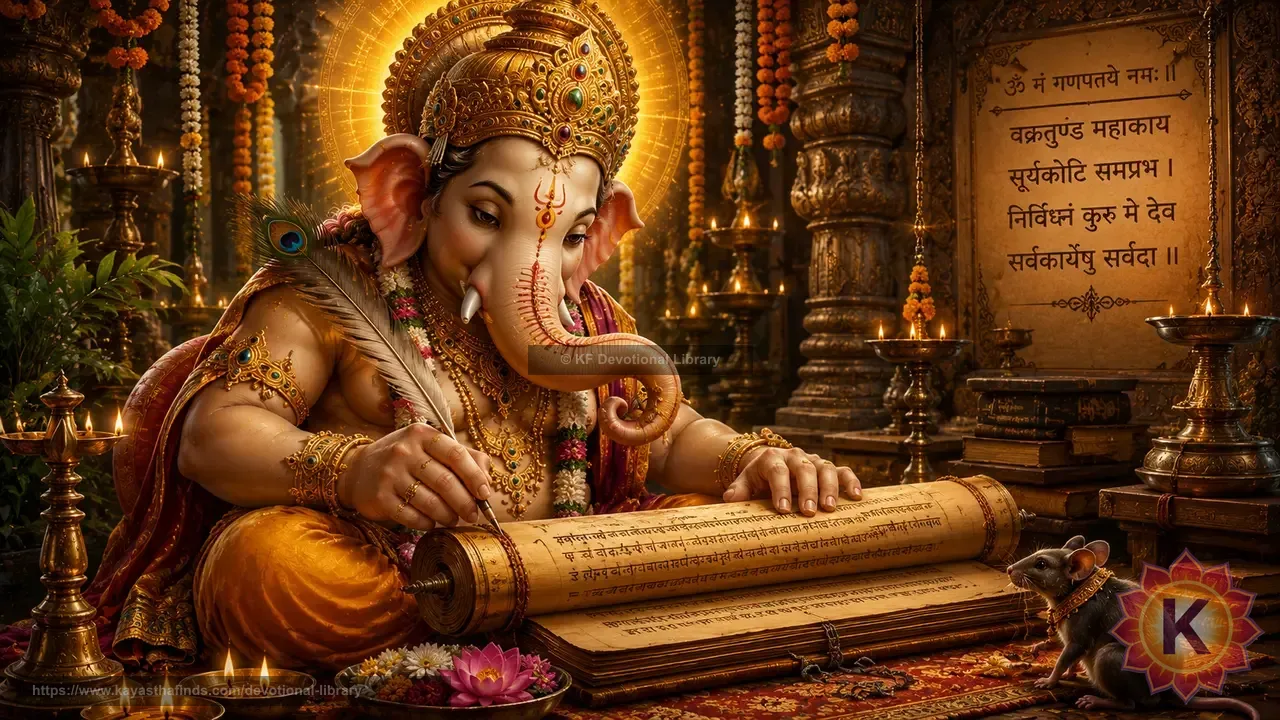
भगवान गणेश, जिन्हें गणपति या विनायक के नाम से भी जाना जाता है, हिंदू धर्म में सबसे अधिक पूजे जाने वाले देवताओं में से एक हैं। अपने हाथी के सिर से तुरंत पहचाने जाने वाले, उन्हें 'विघ्नहर्ता' (बाधाओं को दूर करने वाले) के रूप में पूजा जाता है। किसी भी अनुष्ठान या समारोह से पहले हमेशा उनका सम्मान किया जाता है।
Lord Ganesha, also known as Ganapati or Vinayaka, is one of the most worshipped deities in the Hindu pantheon. Instantly recognizable by his elephant head, he is revered as 'Vighnaharta' (the remover of obstacles), the patron of arts and sciences, and the deva of intellect and wisdom. He is always honored first before any ritual or ceremony.
Overview
भगवान शिव और देवी पार्वती के पुत्र, गणेश बुद्धि और भावनात्मक संतुलन के प्रतीक हैं। उनकी अनूठी उपस्थिति गहराई से प्रतीकात्मक है, जो एक सफल और संतुलित जीवन जीने का सबक देती है।
The son of Lord Shiva and Goddess Parvati, Ganesha is the embodiment of intelligence and emotional balance. His unique appearance is deeply symbolic, holding lessons on how to live a successful and grounded life. Across India and the world, millions invoke his name—'Om Gam Ganapataye Namaha'—to ensure the smooth success of their endeavors.
हाथी के सिर की कहानी
The Story of the Elephant Head
शिव पुराण के अनुसार, देवी पार्वती ने हल्दी के लेप से एक लड़का बनाया ताकि वह उनके स्नान करते समय दरवाजे की रक्षा कर सके। जब भगवान शिव लौटे, तो लड़के ने उन्हें प्रवेश करने से रोक दिया। क्रोध में आकर शिव ने लड़के का सिर धड़ से अलग कर दिया। बाद में पार्वती को शांत करने के लिए, शिव ने उसके धड़ पर हाथी का सिर लगा दिया।
According to the Shiva Purana, Goddess Parvati created a boy out of turmeric paste to guard her door while she bathed. When Lord Shiva returned, the boy refused to let him enter. In a fit of rage, Shiva severed the boy's head. When Parvati was devastated, Shiva instructed his ganas to bring the head of the first creature they found sleeping facing north. They brought an elephant's head, which Shiva placed on the boy's body, bringing him back to life and declaring him the chief of his ganas (Ganapati).
भगवान गणेश का प्रतीकवाद
Symbolism of Lord Ganesha
गणेश के रूप का हर पहलू एक दार्शनिक संदेश देता है: बड़ा सिर बड़ा सोचने का प्रतीक है, बड़े कान अधिक सुनने का, और छोटा मुंह कम बोलने का। उनका वाहन चूहा बेचैन अहंकार का प्रतिनिधित्व करता है, जिसे उन्होंने अपने नियंत्रण में रखा है।
Every aspect of Ganesha's form carries a philosophical message: * **Big Head**: Think big and pursue knowledge. * **Large Ears**: Listen more to others. * **Small Mouth**: Speak less and more purposefully. * **One Tusk**: Retain the good and throw away the bad. * **The Mouse (Mooshak)**: Represents the restless ego and desires, which Ganesha has perfectly under his control.
Frequently Asked Questions
Lord Shiva granted Ganesha a boon that he would be worshipped before any other god. Psychologically, worshipping the 'remover of obstacles' first calms the mind and ensures a smooth start to any task.
Legend says that the Moon God (Chandra) once laughed at Ganesha's physical appearance. Ganesha cursed him, saying whoever looks at the moon on Chaturthi will face false accusations (Mithya Dosha).
Cultural Significance
Ganesha transcends sect and caste. The 10-day festival of Ganesh Chaturthi, especially in Maharashtra, is a massive cultural phenomenon that brings communities together. He is also highly revered in Buddhism and Jainism.
Disclaimer
The content provided on this page is for educational and informational purposes only. OneSanatan makes no claims or guarantees regarding spiritual results, historical absolute accuracy, or religious outcomes. We are not responsible or liable for any personal interpretations or actions taken based on this information.
Explore More Panchang Modules
Continue Reading