Ganesh Chaturthi - गणेश चतुर्थी क्यों?
Understand the deep significance of Ganesh Chaturthi. Learn why we welcome Lord Ganesha, the spiritual meaning of the immersion (Visarjan), and the clay idol tradition.
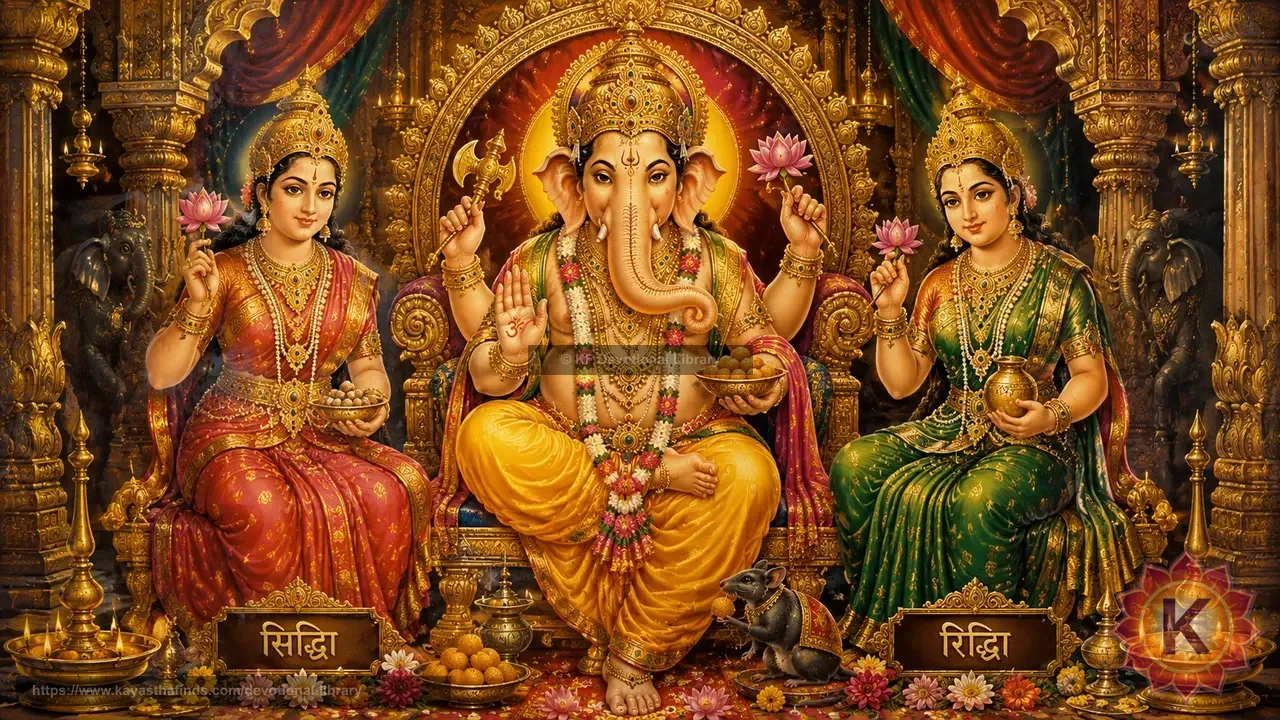
गणेश चतुर्थी, जिसे विनायक चतुर्थी के रूप में भी जाना जाता है, कैलाश पर्वत से पृथ्वी पर भगवान गणेश के आगमन और उनके जन्म का जश्न मनाने वाला एक प्रमुख हिंदू त्योहार है। वे 'शुरुआत के देवता' और 'विघ्नहर्ता' हैं। यह त्योहार ज्ञान, समृद्धि और सामुदायिक शक्ति का उत्सव है। इसका समापन विसर्जन के अनुष्ठान के साथ होता है।
Ganesh Chaturthi, also known as Vinayaka Chaturthi, is a major Hindu festival celebrating the birth and arrival of Lord Ganesha to Earth from Kailash Parvat. He is the 'God of Beginnings' and the 'Remover of Obstacles'. The festival is a celebration of wisdom, prosperity, and the power of the community. It concludes with the ritual of Visarjan, where the idols are immersed in water, symbolizing the cycle of creation and the return of the divine to its formless state.
Overview
गणेश चतुर्थी शायद भारत में विश्वास का सबसे जीवंत प्रदर्शन है। 10 दिनों तक 'गणपति बप्पा मोरया' के जयकारों से हवा गूंजती रहती है। लेकिन संगीत और विशाल जुलूसों से परे, यह त्योहार एक गहरा आध्यात्मिक रूपक है।
Ganesh Chaturthi is perhaps the most vibrant and public display of faith in India. For 10 days, the air is filled with the chants of 'Ganpati Bappa Morya'. But beyond the music and the massive processions, the festival is a deep spiritual metaphor. It is the story of how the infinite divine takes a finite form for its devotees, stays with them, and then returns to the infinite. It is a festival that celebrates the intellect (Buddhi) and the life-force (Siddhi) that Ganesha represents. Let's explore the layers of meaning behind this beloved festival.
प्राण प्रतिष्ठा: दिव्य उपस्थिति का आह्वान
Prana Pratishtha: Invoking the Divine Presence
त्योहार की शुरुआत 'प्राण प्रतिष्ठा' से होती है, एक ऐसा अनुष्ठान जहाँ गणेश की दिव्य ऊर्जा को मूर्ति में आमंत्रित किया जाता है। पूरे त्योहार के दौरान, मूर्ति को एक जीवित अतिथि के रूप में माना जाता है। यह सिखाता है कि ईश्वर दूर नहीं है बल्कि वह हर उस चीज़ में मौजूद है जिसे हम प्रेम से बनाते हैं।
The festival begins with 'Prana Pratishtha', a ritual where mantras are chanted to invite the divine energy of Ganesha into the idol. For the duration of the festival, the idol is treated as a living guest — offered food, clothes, and prayers. This ritual teaches that the divine is not distant but is present in everything we create with love. It highlights the 'Saguna' (with form) aspect of God that helps human beings relate to the absolute reality through a tangible symbol.
मिट्टी के गणेश: पर्यावरण और आध्यात्मिक बंधन
Clay Ganesha: The Environmental and Spiritual Bond
पारंपरिक रूप से, गणेश की मूर्तियाँ नदी के किनारों की मिट्टी से बनाई जाती थीं। त्योहार के बाद, मिट्टी को वापस नदी में लौटा दिया जाता था। यह जीवन के चक्र की प्राचीन हिंदू समझ का प्रतिनिधित्व करता है — हम मिट्टी से आते हैं और मिट्टी में ही मिल जाते हैं।
Traditionally, Ganesha idols were made of clay (Shado-mati) from the riverbanks. After the festival, the clay would be returned to the river. This represents the ancient Hindu understanding of the circle of life — we come from the earth and we return to it. Worshipping a clay idol is a lesson in sustainability and detachment. It reminds us that even the most beautiful form is temporary, and what matters is the energy it represented. Today, the movement back to eco-friendly Ganesha is a return to these sacred roots.
विसर्जन का दर्शन
The Philosophy of Visarjan (Immersion)
विसर्जन अक्सर भक्तों के लिए दुख का क्षण होता है, लेकिन दार्शनिक रूप से, यह मुक्ति का उत्सव है। जब मूर्ति पानी में विलीन हो जाती है, तो यह सार्वभौमिक चेतना में वापस विलीन होने वाली आत्मा का प्रतीक है। यह मोह त्यागने का पाठ सिखाता है।
Visarjan is often a moment of sadness for devotees, but philosophically, it is a celebration of liberation. When the idol is immersed in the ocean or a river, it dissolves and becomes one with the water. This symbolizes the 'Atman' (soul) merging back into the 'Brahman' (universal consciousness). It teaches the lesson of letting go. We welcome the Lord with joy, we serve him with devotion, and we let him go with the promise that he will return next year. It is a powerful exercise in non-attachment (Vairagya).
Key Rituals of Ganesh Chaturthi
| Ritual Name | Action | Spiritual Meaning |
|---|---|---|
| Prana Pratishtha | Invoking life into the idol | Acknowledging the divine in the material |
| Shodashopachara | 16-step worship service | Honoring the guest with full devotion |
| Naivedya | Offering Modaks and sweets | Sharing the sweetness of life with God |
| Visarjan | Immersion in water | Return to the formless source |
| Uttar Puja | Final prayer before farewell | Gratitude for the divine visit |
Frequently Asked Questions
The mouse represents the wandering mind and uncontrolled desires. By riding the mouse, Ganesha signifies that he has mastered the mind and turned it into a useful vehicle for spiritual growth.
It is customary to offer 21 Modaks and 21 blades of Durva grass to Ganesha. The number 21 represents the 5 organs of perception, 5 organs of action, 5 vital breaths (Pranas), 5 elements, and the mind.
Using clay idols ensures that we do not pollute the water bodies during Visarjan. It aligns with the spiritual principle of 'Ahimsa' (non-violence) toward nature and the traditional cycle of earth-to-earth.
Cultural Significance
Ganesh Chaturthi was popularized as a public festival by Lokmanya Tilak during the Indian independence movement to unite people across castes. Today, it remains a symbol of social harmony and community strength. It is a time when people of all backgrounds come together to celebrate 'Buddhi' (intellect) and 'Viddhi' (wisdom).
Disclaimer
The content provided on this page is for educational and informational purposes only. OneSanatan makes no claims or guarantees regarding spiritual results, historical absolute accuracy, or religious outcomes. We are not responsible or liable for any personal interpretations or actions taken based on this information.
Explore More Panchang Modules
Continue Reading