Surya Namaskar - सूर्य नमस्कार क्या है?
Discover the spiritual depth of Surya Namaskar (Sun Salutation). Learn the 12 mantras, the physical postures, and why the Sun is worshipped in Hinduism as the source of all life.
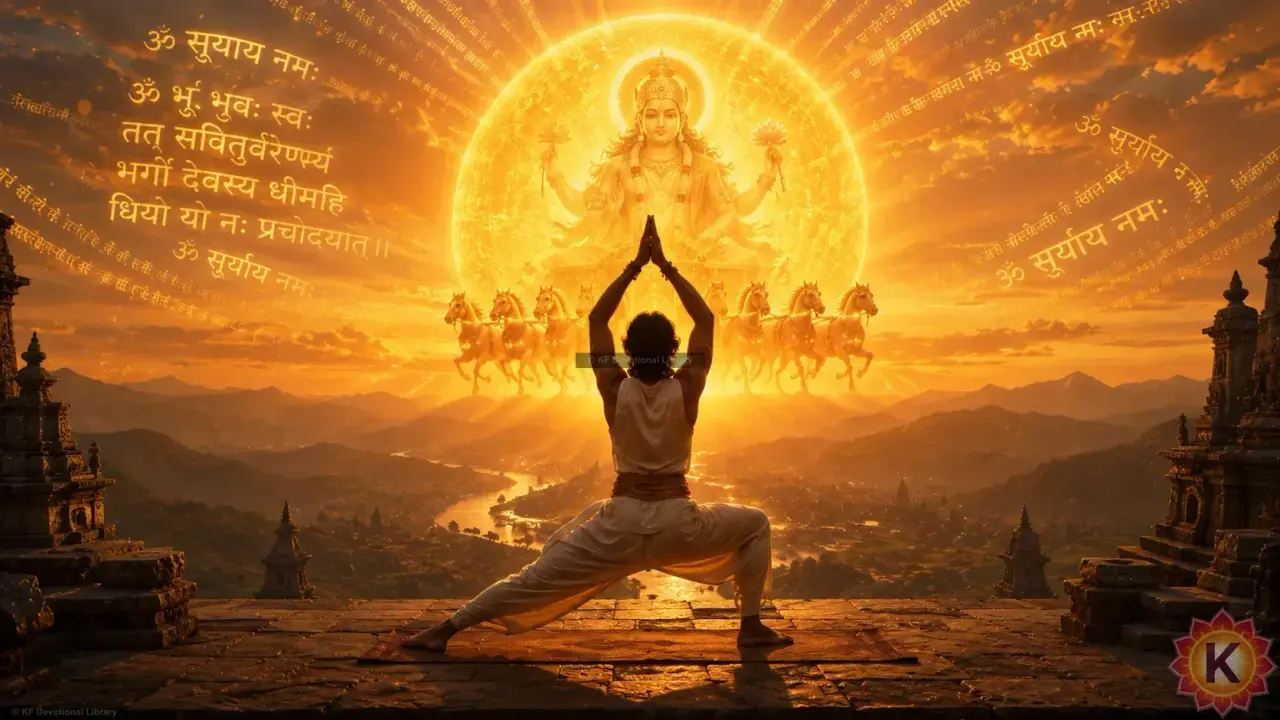
सूर्य नमस्कार, 12 शक्तिशाली योग मुद्राओं का एक क्रम है। हिंदू धर्म में, यह केवल एक शारीरिक व्यायाम नहीं है; यह सूर्य के प्रति आभार व्यक्त करने का एक आध्यात्मिक अभ्यास है, जिन्हें जीवन के स्रोत के रूप में देखा जाता है।
Surya Namaskar, or Sun Salutation, is a sequence of 12 powerful yoga postures performed in a continuous flow. In Hinduism, it is more than just a physical workout; it is a spiritual practice to pay gratitude to the Sun (Surya), who is seen as the physical representation of the Divine and the source of all energy on Earth.
Overview
वैदिक काल से ही भारत में सूर्य को 'प्रत्यक्ष देवता' के रूप में पूजा जाता रहा है। सूर्य नमस्कार शरीर की लय को सौर चक्र के साथ जोड़ने के लिए आसन, प्राणायाम और मंत्र को जोड़ता है।
The Sun has been worshipped in India since Vedic times as 'Pratyaksha Devata' (the God who can be seen). Surya Namaskar combines Asana (posture), Pranayama (breath), and Mantra (sound) to harmonize the body's rhythm with the solar cycle. It is ideally performed at dawn, facing the rising sun.
सूर्य नमस्कार के 12 मंत्र
The 12 Mantras of Surya Namaskar
सूर्य नमस्कार के प्रत्येक चरण के साथ सूर्य के विभिन्न गुणों का सम्मान करने वाला एक विशिष्ट मंत्र होता है: जैसे 'ॐ मित्राय नमः', 'ॐ रवये नमः', 'ॐ सूर्याय नमः' आदि।
Each of the 12 steps is accompanied by a specific mantra honoring different attributes of the Sun: 1. **Om Mitraya Namaha**: Salutations to the friend of all. 2. **Om Ravaye Namaha**: Salutations to the shining one. 3. **Om Suryaya Namaha**: Salutations to the guide of all. 4. **Om Bhanave Namaha**: Salutations to the bestower of luster. 5. **Om Khagaya Namaha**: Salutations to the one who moves through the sky. 6. **Om Pushne Namaha**: Salutations to the giver of strength. 7. **Om Hiranyagarbhaya Namaha**: Salutations to the golden cosmic self. 8. **Om Marichaye Namaha**: Salutations to the lord of dawn. 9. **Om Adityaya Namaha**: Salutations to the son of Aditi. 10. **Om Savitraye Namaha**: Salutations to the benevolent mother. 11. **Om Arkaya Namaha**: Salutations to the one who is fit to be praised. 12. **Om Bhaskaraya Namaha**: Salutations to the bestower of enlightenment.
शारीरिक और आध्यात्मिक लाभ
Physical and Spiritual Benefits
सूर्य नमस्कार पूरे शरीर का व्यायाम प्रदान करता है। आध्यात्मिक रूप से, यह 'मणिपुर चक्र' को सक्रिय करता है, जो शक्ति और जीवन शक्ति का केंद्र है।
Surya Namaskar provides a complete body workout, stretching every muscle and improving flexibility. Spiritually, it activates the 'Solar Plexus' (Manipura Chakra), which is the center of personal power and vitality. It helps in balancing the 'Pingala Nadi' (solar energy channel) in the body.
शास्त्रीय संदर्भ
Scriptural References
यद्यपि "सूर्य नमस्कार" का एक संहिताबद्ध 12-आसनी विन्यास के रूप में सटीक अनुक्रम पिछले कुछ शताब्दियों में एक अधिक आधुनिक विकास हो सकता है, फिर भी इसके मूल तत्व प्राचीन वैदिक और पौराणिक परंपराओं में गहराई से निहित हैं। सूर्य देव के प्रति श्रद्धा उतनी ही पुरानी है जितना कि स्वयं हिंदुत्व, ऋग्वेद और यजुर्वेद के अनगिनत भजनों में केंद्र बिंदु, जहाँ सूर्य को जीवन-प्रदाता, अंधकार को दूर करने वाला और रोगों का नाशक बताया गया है। *सूर्य उपनिषद* जैसे ग्रंथ स्पष्ट रूप से सूर्य को ब्रह्म के अवतार और समस्त सृष्टि के स्रोत के रूप में महिमामंडित करते हैं। सूर्य को प्रणाम करने की प्रथा, जिसमें अक्सर सूर्योदय के समय प्रणाम (नमस्कार) और जल अर्पण (अर्घ्यम्) शामिल होते हैं, विभिन्न स्मृति ग्रंथों और पुराणों में वर्णित है, जो ऐसे कृत्यों से प्राप्त आध्यात्मिक और शारीरिक शुद्धि पर जोर देते हैं। उदाहरण के लिए, *भविष्य पुराण* में सूर्य पूजा और आदित्योपासना के गुणों का विस्तार से वर्णन किया गया है। यहाँ तक कि प्राचीन योग ग्रंथ भी, "सूर्य नमस्कार" नाम से इसे निर्धारित नहीं करते, बल्कि भक्ति के साथ शारीरिक अनुशासन (आसन), श्वास नियंत्रण (प्राणायाम) और ध्यान (ध्यान) की वकालत करते हैं, ये सभी सूर्य नमस्कार की भावना के अभिन्न अंग हैं। इस प्रकार, यह अभ्यास सूर्य के प्रति सहस्राब्दियों पुरानी भक्ति को संरचित योगिक गति के साथ खूबसूरती से संश्लेषित करता है, एक प्राचीन आध्यात्मिक अनुशासन को गतिशील रूप में प्रकट करता है।
While the precise sequence of "Surya Namaskar" as a codified 12-pose vinyasa may be a more recent development within the last few centuries, its foundational elements are deeply rooted in ancient Vedic and Puranic traditions. The reverence for Surya Deva, the Sun God, is as old as Hinduism itself, central to countless hymns in the Rigveda and Yajurveda, where Surya is lauded as the life-giver, remover of darkness, and dispeller of disease. Texts like the *Surya Upanishad* explicitly glorify Surya as the embodiment of Brahman and the source of all creation. The practice of offering obeisance to the Sun, often involving prostrations (namaskar) and water oblations (arghyam) at sunrise, finds mention in various Smriti texts and Puranas, emphasizing the spiritual and physical purification derived from such acts. The *Bhavishya Purana*, for instance, extensively details the merits of Surya Puja and adityopasana. Even the ancient Yogic texts, while not prescribing "Surya Namaskar" by name, advocate for physical discipline (asana), breath control (pranayama), and meditation (dhyana) in conjunction with devotion, all of which are integral to the spirit of Surya Namaskar. Thus, this practice beautifully synthesizes millennia-old devotion to the Sun with structured yogic movement, manifesting an ancient spiritual discipline in a dynamic form.
समकालीन प्रासंगिकता
Contemporary Relevance
हमारे तेज़-तर्रार आधुनिक संसार में, सूर्य नमस्कार की प्राचीन प्रथा गहन समकालीन प्रासंगिकता रखती है, जो दैनिक जीवन के तनावों के लिए एक शक्तिशाली मारक के रूप में कार्य करती है। मात्र एक अनुष्ठानिक अभ्यास से कहीं अधिक, यह कल्याण के लिए एक समग्र दृष्टिकोण प्रदान करता है जो आधुनिक स्वास्थ्य चेतना के साथ प्रतिध्वनित होता है। कई अभ्यासी, पारंपरिक हिंदू ढाँचों से बाहर के लोग भी, अपने व्यापक शारीरिक लाभों—लचीलेपन, शक्ति और हृदय स्वास्थ्य में सुधार—के लिए सूर्य नमस्कार को अपनी दैनिक दिनचर्या में एकीकृत करते हैं, जो समकालीन फिटनेस लक्ष्यों के साथ पूरी तरह से मेल खाता है। शारीरिक लाभों से परे, श्वास और गति के सिंक्रनाइज़ेशन पर इसका जोर सचेतनता पैदा करता है और चिंता को कम करता है, जो डिजिटल विकर्षणों के प्रभुत्व वाले युग में बहुत आवश्यक मानसिक राहत प्रदान करता है। यह स्वयं के गहरे अर्थ और प्राकृतिक दुनिया से जुड़ने का एक सुलभ मार्ग प्रदान करता है, अनुशासन और आंतरिक शांति की भावना को बढ़ावा देता है। सूर्य नमस्कार को विश्व स्तर पर तनाव प्रबंधन, एकाग्रता बढ़ाने और समग्र जीवन शक्ति को बढ़ावा देने के लिए एक शक्तिशाली उपकरण के रूप में तेजी से मान्यता मिल रही है, जिससे यह एक कालातीत अभ्यास बन जाता है जो 21वीं सदी में सार्वभौमिक कल्याण प्रदान करने के लिए सांस्कृतिक सीमाओं को पार करता है।
In our fast-paced modern world, the ancient practice of Surya Namaskar holds profound contemporary relevance, serving as a powerful antidote to the stresses of daily life. Far from being a mere ritualistic exercise, it offers a holistic approach to well-being that resonates with modern health consciousness. Many practitioners, even those outside traditional Hindu frameworks, integrate Surya Namaskar into their daily routines for its comprehensive physical benefits—improving flexibility, strength, and cardiovascular health—which align perfectly with contemporary fitness goals. Beyond the physical, its emphasis on synchronized breath and movement cultivates mindfulness and reduces anxiety, providing a much-needed mental respite in an age dominated by digital distractions. It offers an accessible pathway to connect with a deeper sense of self and the natural world, fostering a sense of discipline and inner peace. Surya Namaskar is increasingly recognized globally as a potent tool for stress management, enhancing focus, and promoting overall vitality, making it a timeless practice that transcends cultural boundaries to offer universal well-being in the 21st century.
Frequently Asked Questions
While morning is ideal, it can be performed in the evening at sunset. However, it should be done on an empty stomach.
Beginners can start with 2-4 rounds and gradually increase to 12 rounds (one for each month of the year or each zodiac sign).
Cultural Significance
Surya Namaskar is a daily ritual for millions of Hindus. It serves as a reminder of our connection with the cosmos and our dependence on the natural elements for survival and wisdom.
Disclaimer
The content provided on this page is for educational and informational purposes only. OneSanatan makes no claims or guarantees regarding spiritual results, historical absolute accuracy, or religious outcomes. We are not responsible or liable for any personal interpretations or actions taken based on this information.
Explore More Panchang Modules
Continue Reading