Pranayama - प्राणायाम क्या है?
Understand Pranayama, the fourth limb of Yoga. Learn how breath control (Prana) influences the mind, the major types of Pranayama like Nadi Shodhana, and its spiritual significance.
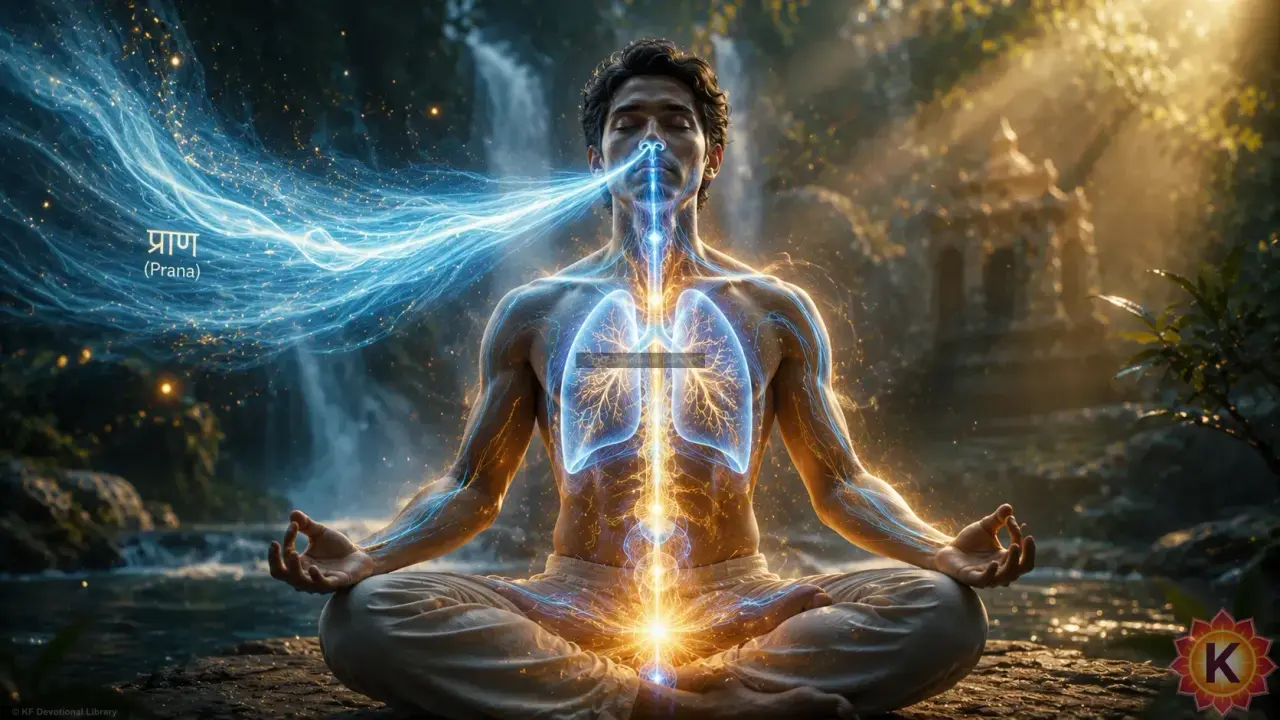
प्राणायाम श्वास नियंत्रण का वैदिक विज्ञान है। हिंदू धर्म में, 'प्राण' वह जीवन-शक्ति है जो सभी जीवित प्राणियों को बनाए रखती है। श्वास को नियंत्रित करके, एक साधक शरीर में ऊर्जा के प्रवाह को नियंत्रित कर सकता है।
Pranayama is the Vedic science of breath control. In Hinduism, 'Prana' is the vital life-force that sustains all living beings, and 'Ayama' means to extend or regulate. By controlling the breath, a practitioner can regulate the flow of energy in the body, calm the mind, and prepare for deeper meditation (Dhyana).
Overview
उपनिषद श्वास को भौतिक शरीर और चेतना के बीच के सेतु के रूप में वर्णित करते हैं। प्राणायाम केवल 'गहरी सांस लेना' नहीं है; यह ऊर्जा चैनलों (नाड़ियों) को शुद्ध करने की तकनीकों का एक समूह है।
The Upanishads describe breath as the bridge between the physical body and the consciousness. Pranayama is not just 'deep breathing'; it is a precise set of techniques to purify the energy channels (Nadis) and increase the 'Pranic' level in the system. It is a fundamental practice in Hatha Yoga and Raja Yoga.
प्राणायाम के प्रमुख प्रकार
Major Types of Pranayama
प्राणायाम की कई तकनीकें हैं: 1. **नाड़ी शोधन**: मस्तिष्क को संतुलित करता है। 2. **कपालभाति**: फेफड़ों और पाचन तंत्र के लिए शुद्धिकरण। 3. **भ्रामरी**: तंत्रिका तंत्र को शांत करता है।
There are several techniques, each with unique effects: 1. **Nadi Shodhana (Alternate Nostril Breathing)**: Balances the two hemispheres of the brain and the solar/lunar energies. 2. **Kapalbhati (Skull Shining Breath)**: A powerful cleansing technique for the lungs and digestive system. 3. **Bhastrika (Bellows Breath)**: Generates heat and increases vitality. 4. **Bhramari (Bee Breath)**: Calms the nervous system and reduces anxiety.
श्वास के तीन चरण
The Three Phases of Breath
प्राणायाम में श्वास के तीन भाग होते हैं: पूरक (अंदर लेना), रेचक (बाहर छोड़ना) और कुंभक (रोकना)।
In Pranayama, every breath consists of three parts: * **Puraka**: Controlled inhalation. * **Rechaka**: Controlled exhalation. * **Kumbhaka**: Breath retention (either after inhaling or after exhaling). Retention is considered the most powerful phase for energy transformation.
Frequently Asked Questions
Basic techniques like Nadi Shodhana can be learned easily. However, advanced practices involving long breath retentions should always be learned under the guidance of an experienced teacher.
People with high blood pressure, heart conditions, or pregnancy should avoid certain fast-paced techniques like Kapalbhati or Bhastrika. Always consult a professional.
Cultural Significance
Pranayama is a prerequisite for any serious spiritual seeker in India. It is used as a tool to gain mastery over the mind, as the breath and mind are said to be two sides of the same coin.
Disclaimer
The content provided on this page is for educational and informational purposes only. OneSanatan makes no claims or guarantees regarding spiritual results, historical absolute accuracy, or religious outcomes. We are not responsible or liable for any personal interpretations or actions taken based on this information.
Explore More Panchang Modules
Continue Reading